10 Ultimate Barber Shop Design Ideas Luxury Modern Setup
- Shop Design
 Ben
Ben- 0
- 47 minutes read
Look, I’m gonna be straight with you—walking into a barber shop shouldn’t feel like entering a sterile hospital room or your grandpa’s dusty garage (unless that’s the vibe you’re intentionally going for, which we’ll get to). Your barber shop design says everything about your brand before you even pick up those clippers. I’ve seen guys drop serious cash on top-tier equipment but completely bomb the interior design, and guess what? Customers walked right past their door.
Whether you’re launching your first shop or giving your current space a much-needed facelift, these ten design concepts will transform your barbering business from “meh” to “take my money.” I’ve personally visited dozens of barber shops across different cities, and I can tell you that the ones crushing it on Instagram and packing their appointment books all have one thing in common—they nailed their aesthetic. Ready to create a space that makes clients feel like VIPs the second they step through the door? Let’s get into it.
Modern Minimalist Barber Shop Interior Setup
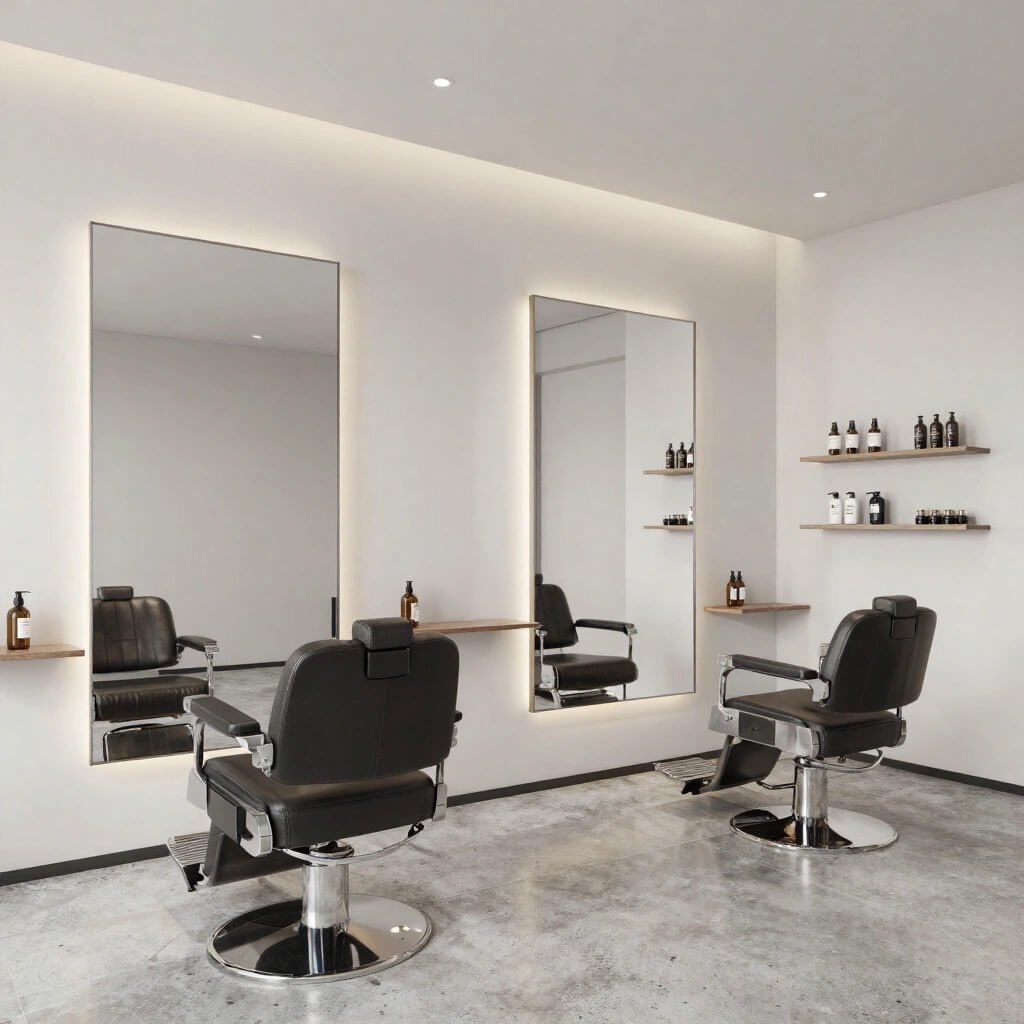
Minimalism isn’t just a trend—it’s a whole mood that screams sophistication without trying too hard. When you strip away the clutter and focus on clean lines and intentional design choices, you create a space that feels both calming and professional.
The beauty of modern minimalist design lies in its “less is more” philosophy. You’re working with neutral color palettes—think whites, grays, blacks, and the occasional earth tone accent. The furniture becomes sculptural. Every mirror, every station, every waiting area piece serves a purpose and looks damn good doing it.
Key Elements That Make It Work
Here’s what you need to nail this look:
- Sleek barber chairs in black or white leather with chrome finishes
- Floating shelves instead of bulky cabinets (keeps everything airy)
- Hidden storage solutions because clutter is the enemy
- Large mirrors with simple frames or frameless designs
- Recessed lighting combined with statement pendant lights
- Polished concrete or light wood flooring
- Minimal product display using geometric shelving units
I visited this minimalist shop in Portland last year, and honestly, the space felt like a meditation retreat that just happened to give incredible fades. The barber told me his clients specifically mentioned how “zen” they felt during their appointments. That’s the power of intentional minimalism—it affects the entire customer experience.
Color Scheme Strategy
Stick to a maximum of three colors in your palette. My recommendation? A primary neutral (white or light gray), a secondary neutral (charcoal or black), and one accent color for those subtle pops. Maybe a deep forest green or burnt orange on a single accent wall or in your product bottles.
The minimalist approach also makes your barber shop photograph like a dream. Clean backgrounds mean your before-and-after shots will pop on social media without competing visual noise. Smart move for marketing, if you ask me.
Luxury Black and Gold Barber Shop Design Concept
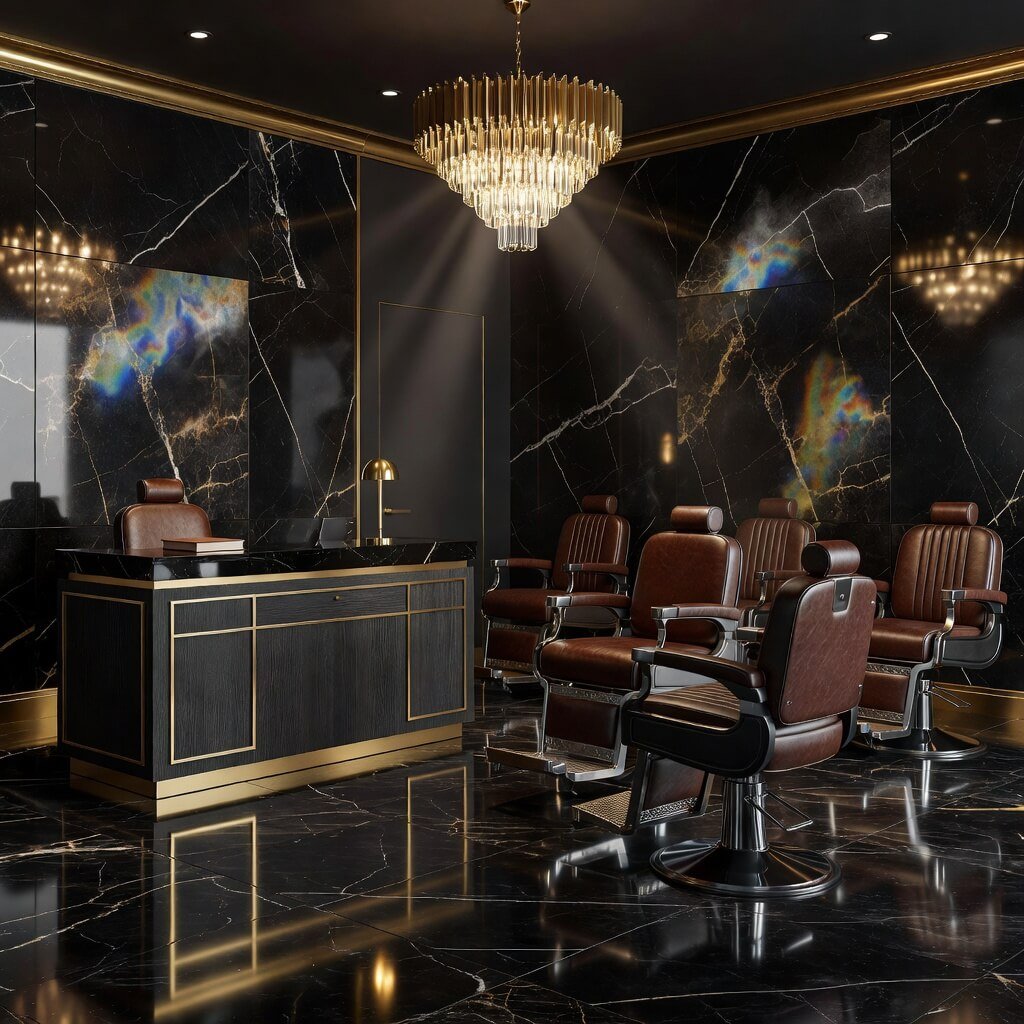
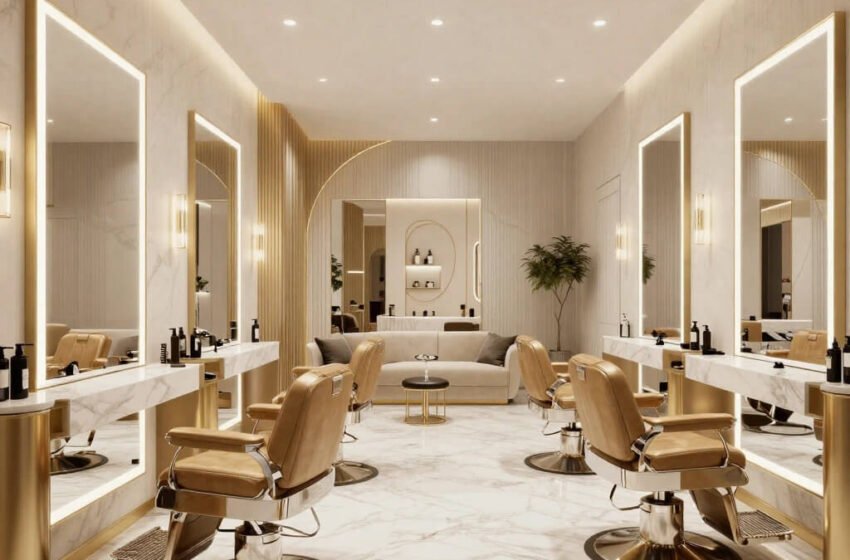
Want to make clients feel like royalty? Black and gold is your power couple. This combo has been screaming luxury since, well, forever, and it translates beautifully into barber shop design when you don’t go overboard with it.
I’m talking sophisticated opulence here, not a Vegas casino explosion. The key is balance—too much gold and you look tacky, too much black and you feel like you’re in a cave. Get the ratio right, and you’ve created an upscale environment that justifies premium pricing.
Creating the Luxury Feel
The devil’s in the details with this design concept:
- Matte black walls as your foundation (one or two feature walls work better than all four)
- Gold or brass fixtures on mirrors, door handles, and lighting
- Black marble or granite countertops at stations
- Gold-framed mirrors with beveled edges
- Plush black leather seating in the waiting area
- Gold accent stripes or geometric patterns on one statement wall
- Crystal or gold chandeliers for that extra “wow” factor
- High-end dark wood for shelving and trim
FYI, lighting becomes crucial here because black absorbs light. You’ll need layered lighting—ambient, task, and accent—to prevent your luxury shop from feeling like a dungeon. LED strips with warm tones behind mirrors or under shelving add that subtle glow that photographs beautifully.
Product Display Matters
With this design, your product shelves become gallery displays. Those bright-colored product bottles? They’ll pop against black backgrounds. Consider backlit glass shelving with gold brackets. Every beard oil, pomade, and clay becomes part of the aesthetic.
I personally think this design works best for shops in upscale neighborhoods or targeting the executive crowd. When you’re charging $75+ for a cut and beard trim, your environment needs to match that price point. Black and gold delivers that message loud and clear.
Small Space Barber Shop Layout Optimization Ideas
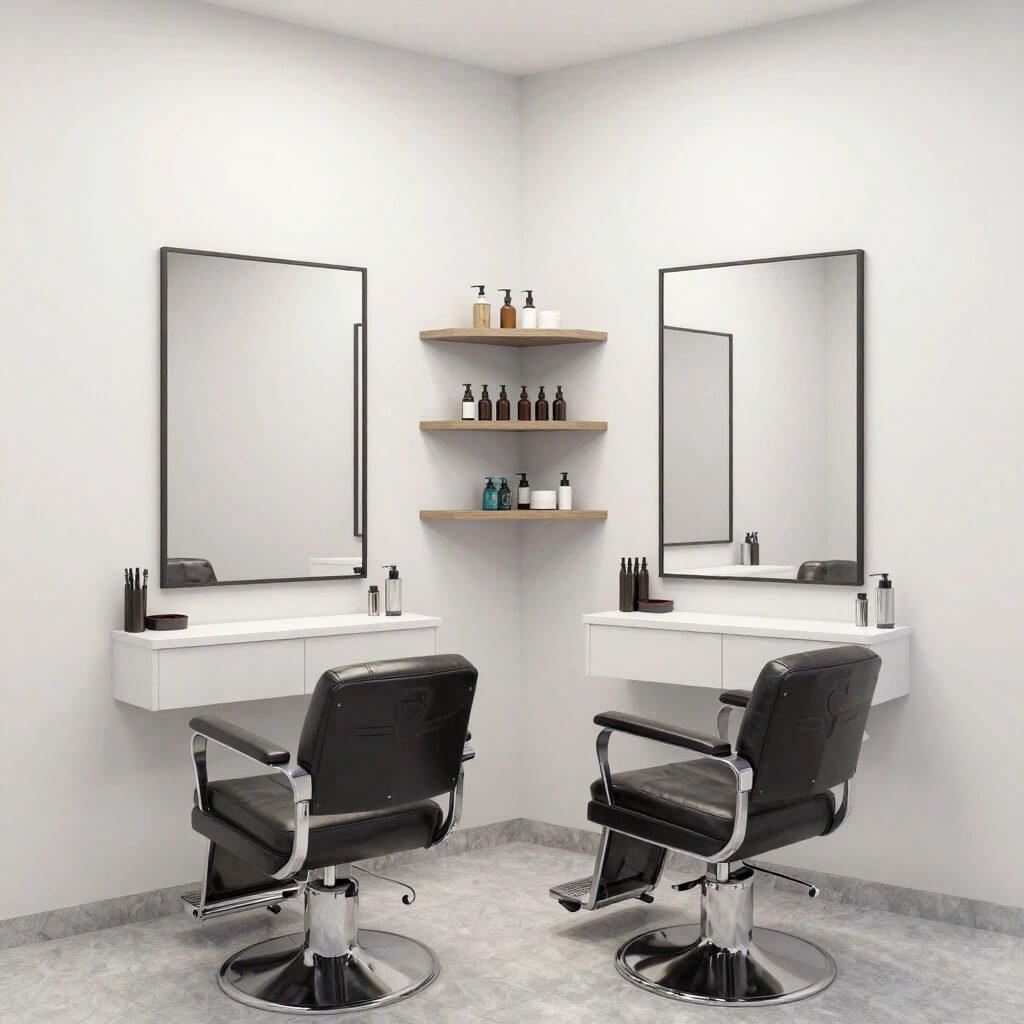
Not everyone can afford a massive retail space, and honestly? You don’t need one. I’ve seen 400-square-foot shops generate more revenue than 1,200-square-foot spaces because they maximized every single inch strategically.
Small spaces force you to get creative, and that creativity often results in unique, memorable designs that larger shops can’t pull off. Your constraint becomes your competitive advantage.
Smart Layout Strategies
Here’s how you make small spaces work hard:
- Wall-mounted everything—stations, storage, even fold-down seating
- Corner utilization with custom-fitted stations
- Vertical storage solutions that draw the eye upward (makes ceilings feel higher)
- Mirrors placed strategically to create the illusion of depth
- Multi-functional furniture (ottoman that stores products, bench with built-in shelving)
- Sliding doors instead of swing doors (saves clearance space)
- Light color palette to make the space feel larger
One clever shop owner I know installed barber stations along opposing walls instead of the traditional row setup. This created a center aisle that made the narrow space feel intentional rather than cramped. Genius, right?
The Psychology of Space
Ever wondered why some tiny restaurants feel cozy while others feel claustrophobic? Lighting and sight lines. In your small barber shop, you need:
- Excellent lighting (dark corners make spaces feel smaller)
- Clear pathways (even if they’re narrow)
- Minimal visual clutter (every item should have a designated spot)
- One focal point that draws attention (a feature wall, a statement light fixture)
Don’t fight the small space—embrace it. Market yourself as “intimate,” “exclusive,” or “boutique.” I’ve seen shops with two chairs command higher prices than six-chair shops because they positioned their size as a feature, not a limitation. Perception is everything.
Also Read:
Industrial Style Barber Shop with Brick Wall Look
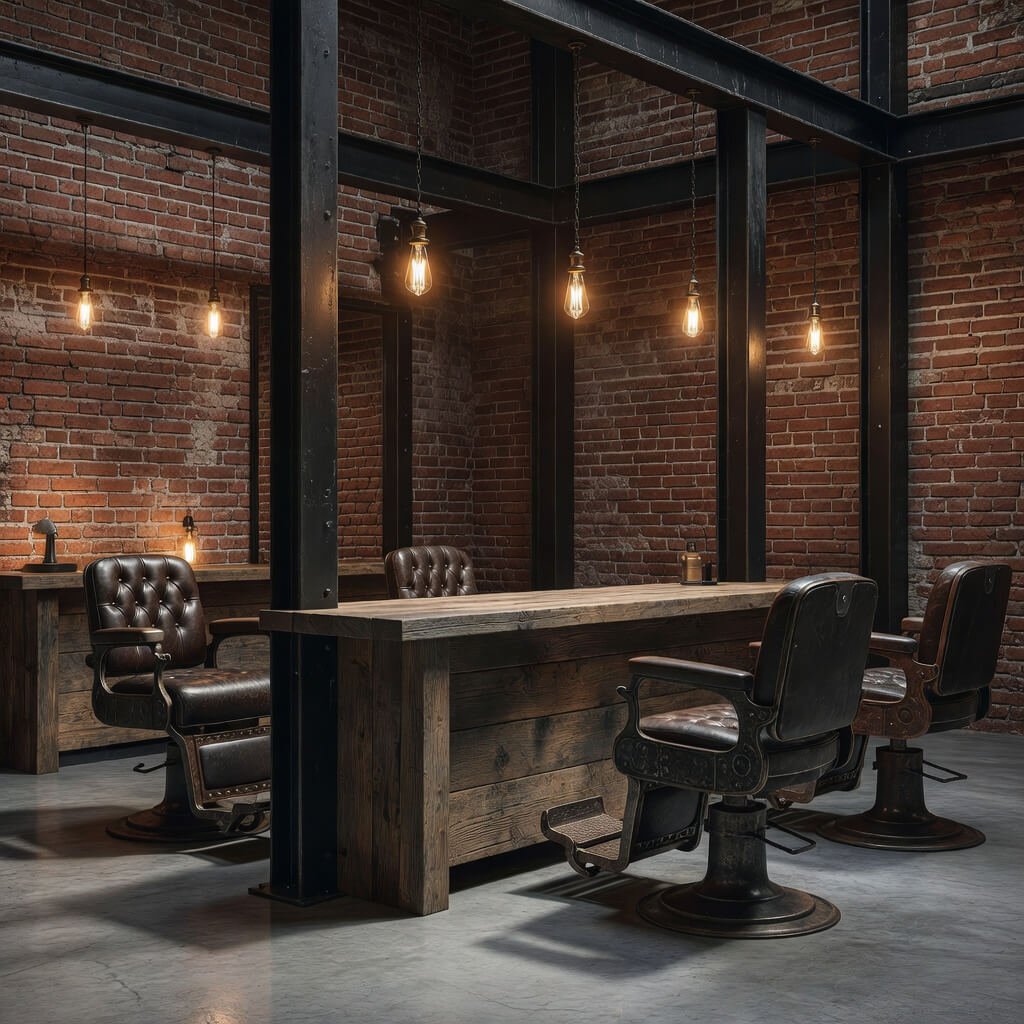
There’s something undeniably cool about exposed brick, metal fixtures, and that raw, unfinished aesthetic. Industrial design taps into that “authentic craftsman” vibe that pairs perfectly with traditional barbering.
This style works exceptionally well if you’re in an older building or urban location. You’re not hiding the building’s history—you’re celebrating it while cutting hair. IMO, this creates instant character that brand-new construction simply can’t replicate.
Essential Industrial Elements
To nail the industrial look, you need these components:
- Exposed brick walls (real or faux brick panels work)
- Concrete or stained concrete flooring
- Metal and reclaimed wood furniture combination
- Edison bulb lighting or industrial cage lights
- Exposed ductwork and pipes (if possible, or faux versions)
- Vintage barber chairs refurbished with leather
- Metal shelving units with wood shelves
- Chalkboard walls for menu boards or art
- Subway tile in bathroom or wash area
I watched a barber transform a former auto repair shop into an industrial-styled cutting space, and he kept the original garage door as a feature wall. During nice weather, he’d open it up. Customers absolutely loved it—felt like getting a haircut in a cool workshop.
Balancing Raw and Refined
The challenge with industrial design is avoiding the “unfinished construction site” look. You want intentional rawness, not actual neglect. Here’s the trick:
Balance those hard industrial elements with softer textures—leather chair seats, area rugs in the waiting space, plants (yes, plants look amazing against brick), and warm-toned lighting. The contrast creates visual interest and prevents the space from feeling too cold or harsh.
Your color palette should lean toward earth tones and metals: browns, grays, blacks, coppers, and bronzes. A pop of deep green or navy blue works as an accent without disrupting the industrial vibe.
Vintage Classic Barber Shop Traditional Design Ideas
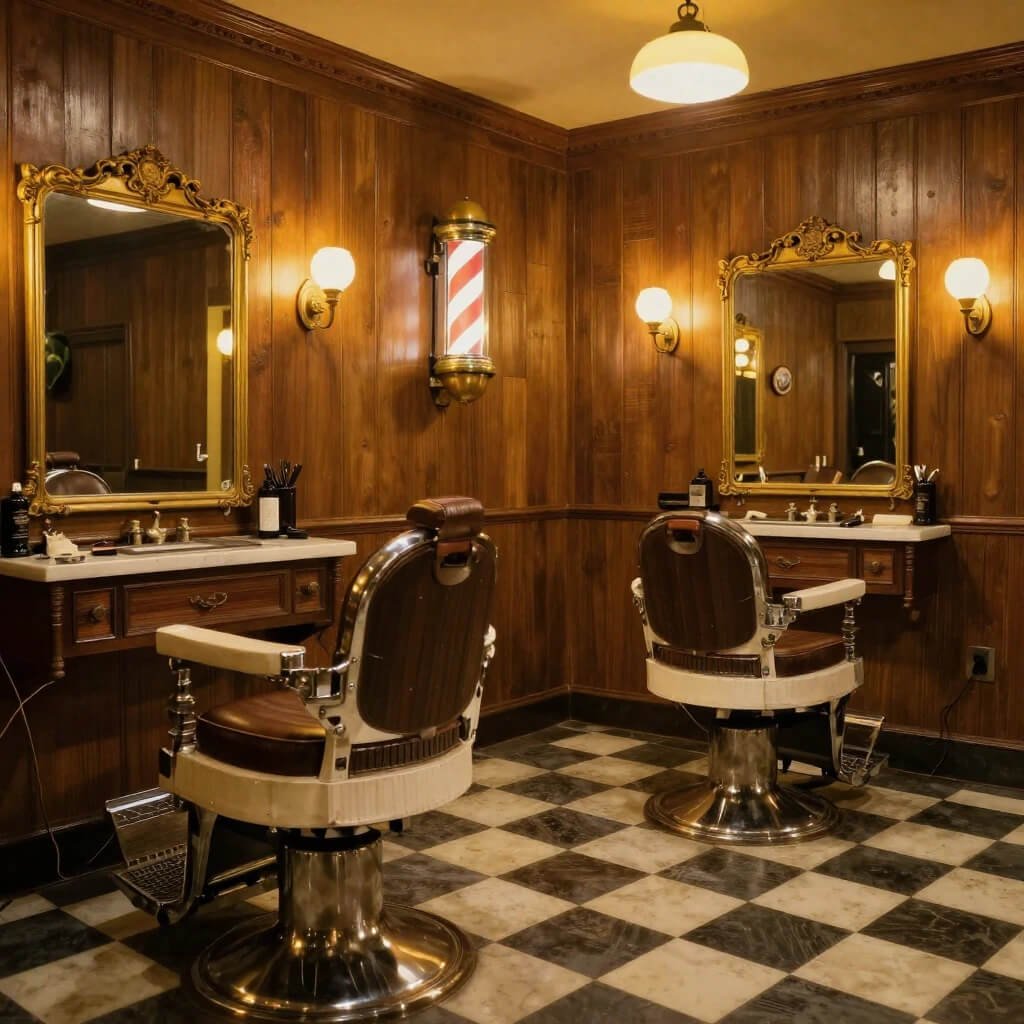
Sometimes the old ways are the best ways. Vintage barber shop design taps into nostalgia and craftsmanship—a time when getting a shave meant hot towels and straight razors, not five-minute discount chains.
This aesthetic appeals to customers who want the full traditional experience. They’re not just buying a haircut; they’re buying a ritual, a throwback to when barbering was considered an art form.
Traditional Design Components
Classic barber shop design includes these timeless elements:
- Red, white, and blue color scheme (classic barber pole colors)
- Antique or reproduction barber chairs with porcelain, leather, and chrome
- Checkerboard flooring in black and white
- Wood paneling on walls (dark stained wood works beautifully)
- Vintage barbering tools displayed as decor
- Classic barber pole outside (obviously)
- Antique mirrors with ornate frames
- Tin ceiling tiles or vintage-style pressed ceilings
- Old-school product displays with glass cases
The shop where I got my first proper straight-razor shave looked like it hadn’t changed since 1952—because it actually hadn’t. The owner’s grandfather opened it, and three generations kept everything original. That authenticity? You can’t fake it, but you can definitely draw inspiration from it.
Modernizing the Vintage Look
Here’s the thing—you want vintage aesthetics without vintage plumbing or electrical issues :/ The solution is selective modernization: Keep the vintage look but update where it matters.
Install modern HVAC that’s hidden from view. Use reproduction chairs that look antique but have hydraulic pumps that actually work smoothly. Get vintage-style light fixtures with LED bulbs. Your customers get the nostalgic atmosphere with contemporary comfort and functionality.
Authentic vintage pieces mixed with high-quality reproductions create the best results. Maybe you score an actual antique cash register for display (non-functional, just aesthetic) while your point-of-sale system runs on an iPad tucked away. It’s about creating the feeling, not running a museum.
Neon Light Aesthetic Barber Shop Modern Branding
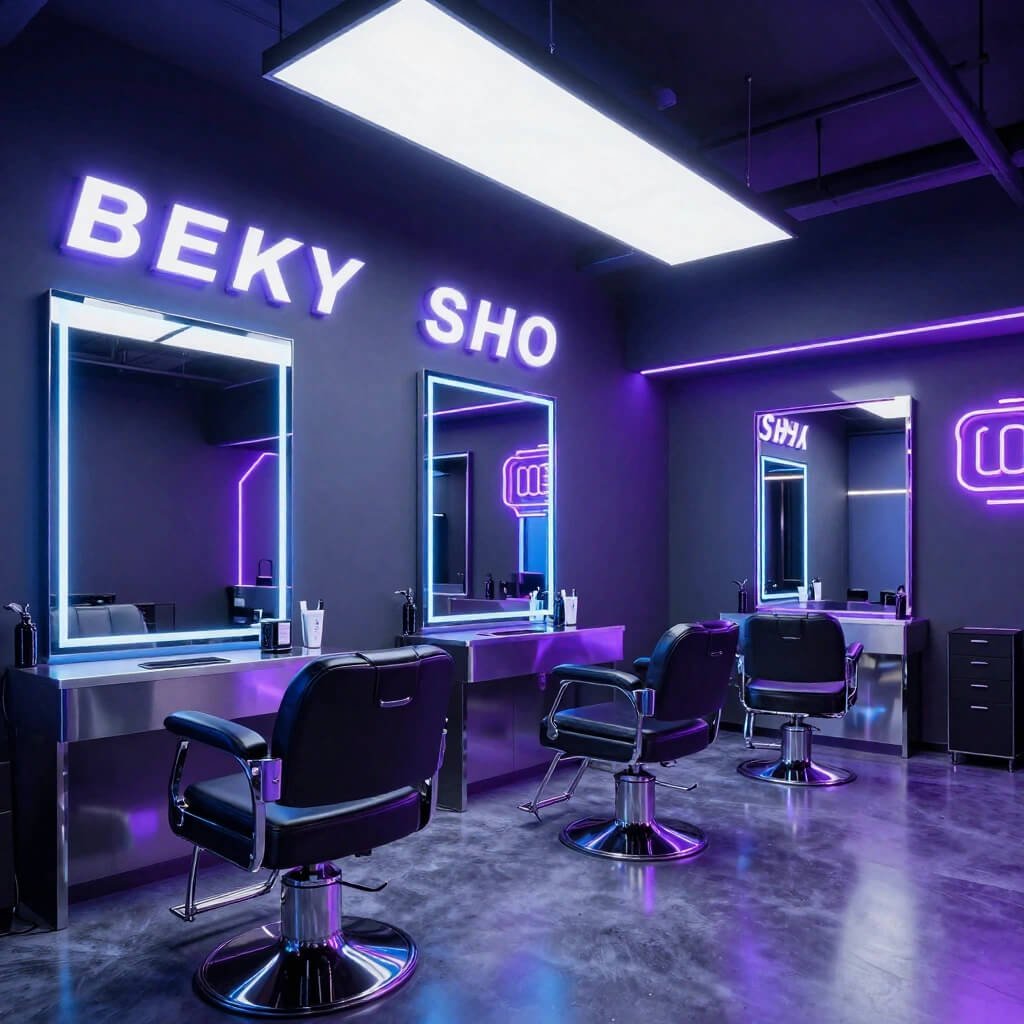
Neon is having a massive moment right now, and barber shops are absolutely crushing it with this aesthetic. Custom neon signs add personality, create incredible photo opportunities, and give your shop a modern, edgy vibe that younger clients especially love.
I’ll be honest—when I first saw the neon trend hitting barber shops, I was skeptical. But after seeing it done right? It’s a game-changer for brand recognition. That glowing sign with your shop name or a clever barbering phrase becomes your signature, your calling card.
Neon Integration Strategies
Here’s how to use neon without looking like a ’80s movie set:
- One custom neon sign with your shop name or motto as the focal point
- Dark walls (charcoal, black, or deep navy) to make neon pop
- Complementary LED accent lighting in coordinating colors
- Minimalist surrounding decor so neon remains the star
- Strategic placement—usually behind the main stations or waiting area
- Photo-friendly positioning for that Instagram content
- Color coordination with your overall brand (don’t just pick colors randomly)
I’ve seen shops go with classic white or warm gold neon (classy and versatile), electric blue (modern and cool), or even red (bold and attention-grabbing). The color you choose communicates different brand personalities, so choose wisely.
Making It Work Financially
Real neon is expensive, no way around it. A custom neon sign can run you $500 to $2,000+ depending on size and complexity. But here’s the deal—it’s a one-time investment that provides unlimited marketing value.
Every client who photographs themselves in your chair with that glowing sign in the background? Free advertising. Every time you post a client photo? That neon sign reinforces your brand. The ROI is actually pretty solid when you think about content creation and brand consistency.
Can’t swing real neon? LED neon alternatives have gotten incredibly good and cost a fraction of the price. I’ve seen some LED versions that honestly fool most people and still photograph beautifully. Do what works for your budget, but definitely consider adding this element somehow.
Also Read: 10 Luxury Jewellery Shop Design Ideas Premium Style
Wooden Warm Tone Barber Shop Cozy Interior Design
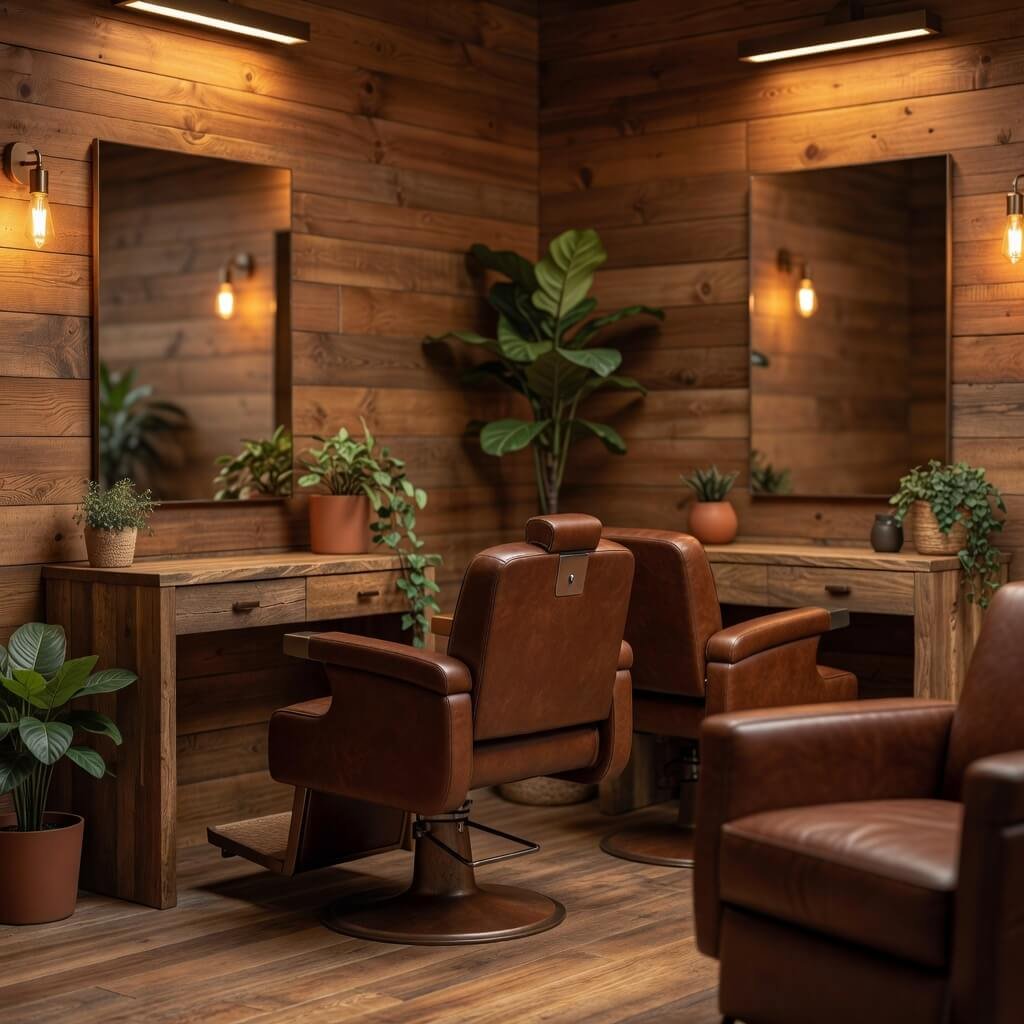
Wood brings warmth that metal and concrete simply can’t match. When you design around wooden elements and warm tones, you create an inviting, comfortable space that feels less “sterile salon” and more “welcoming craftsman studio.”
This approach works particularly well if your brand emphasizes the personal touch, relationship-building, and community. You’re creating a space where clients actually want to hang out, not just get in and get out.
Wood Selection and Application
Different woods create different vibes:
- Light woods (maple, birch, light oak) create Scandinavian-inspired warmth
- Medium woods (walnut, cherry, teak) offer rich, sophisticated warmth
- Reclaimed wood adds character and sustainability points
- Wood planking on feature walls creates texture and interest
- Wooden ceiling beams (real or faux) add architectural character
- Wood-topped stations and counters with metal bases
- Wooden shelving for product display
- Wood-framed mirrors instead of metal
One of my favorite shops used reclaimed barn wood for an accent wall behind their stations. Every piece had a unique patina and history, making that wall a conversation starter. Clients constantly asked about it, which led to great rapport-building conversations.
Creating the Cozy Factor
Warmth isn’t just visual—it’s environmental. Combine wood elements with:
- Warm lighting (2700K-3000K color temperature)
- Comfortable seating with cushioned chairs and sofas
- Area rugs that define zones and add softness
- Plants (wood and greenery are best friends)
- Warm color palette: creams, tans, warm grays, terracotta, rust
- Coffee or beverage station (nothing says “cozy” like complimentary drinks)
- Acoustic treatment with wood panels (reduces echo, adds warmth)
The goal is making clients feel like they’re visiting a friend’s really well-designed home rather than a commercial establishment. That emotional comfort translates to loyalty and positive word-of-mouth.
High-End Premium Barber Shop Celebrity Style Setup
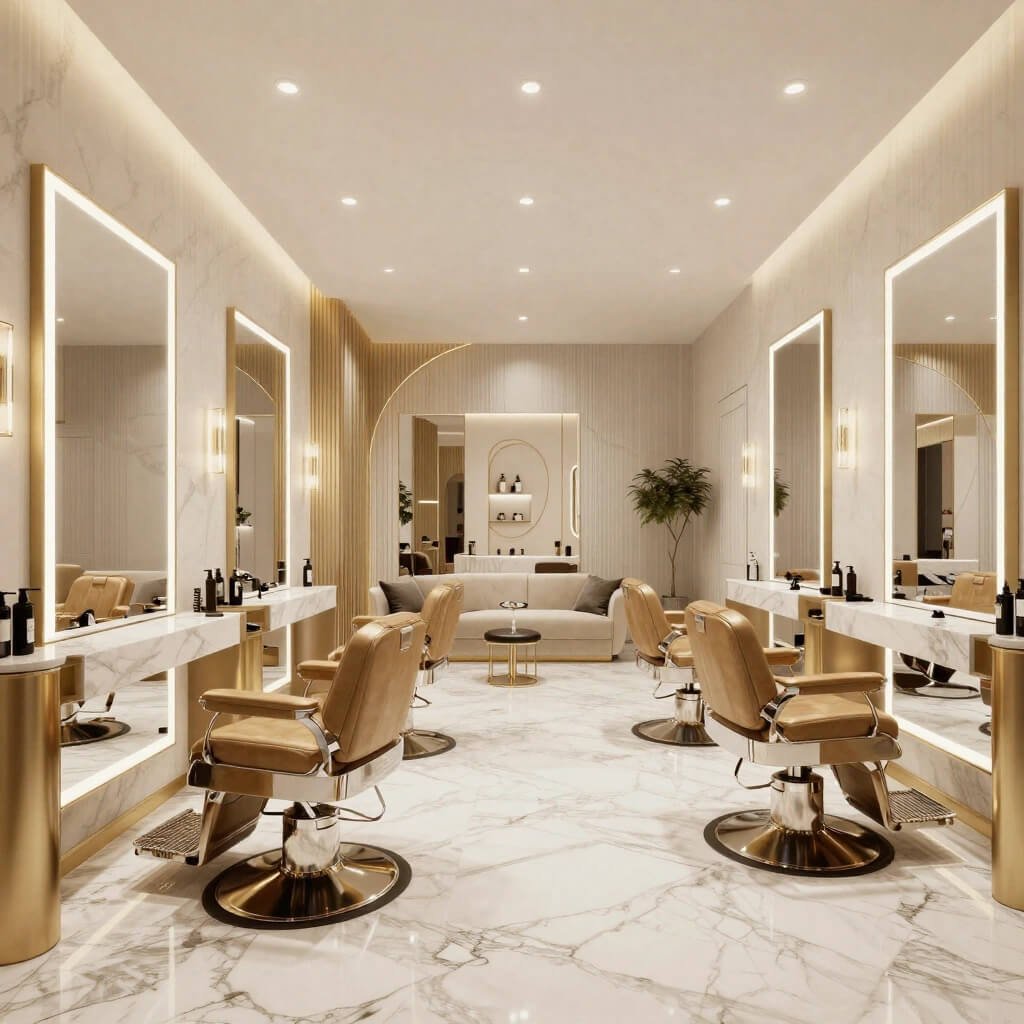
Want to attract high-income clients who view grooming as an investment, not an expense? Your design needs to scream exclusivity, luxury, and premium service from every angle.
Celebrity-style barber shops aren’t just about expensive furniture—they’re about creating an experience that justifies premium pricing. You’re competing with high-end salons and spas, so your space needs to match or exceed their level of sophistication.
Premium Design Elements
Here’s what separates premium from standard:
- Private or semi-private cutting stations (curtains or partial walls)
- High-end barber chairs ($2,000+ range) that look and feel luxurious
- Premium flooring: hardwood, marble, or high-end tile
- Custom millwork and cabinetry built specifically for your space
- Designer lighting fixtures that serve as art pieces
- Lounge area with leather furniture and entertainment
- Beverage service (espresso machine, premium water, even a whiskey selection)
- High-quality finishes on every surface—no cheap laminate in sight
- Art collection featuring local artists or prints
- Smart technology integration: iPad check-in, digital displays
The celebrity barber shops I’ve toured feel more like upscale lounges than traditional barber shops. One place had a cigar lounge adjacent to the cutting area. Another offered complimentary shoe shines while clients waited. These value-added experiences justify $100+ haircuts.
The VIP Treatment Blueprint
Premium isn’t just aesthetic—it’s operational:
Create appointment-only policies (walk-ins cheapen the experience). Offer consultations before cutting. Provide hot towel service as standard, not an add-on. Use premium products exclusively and retail them.
Your staff should dress the part too—well-fitted, coordinated uniforms that look professional and expensive. Every detail contributes to the perception of premium value.
Budget-Friendly Stylish Barber Shop Design Ideas
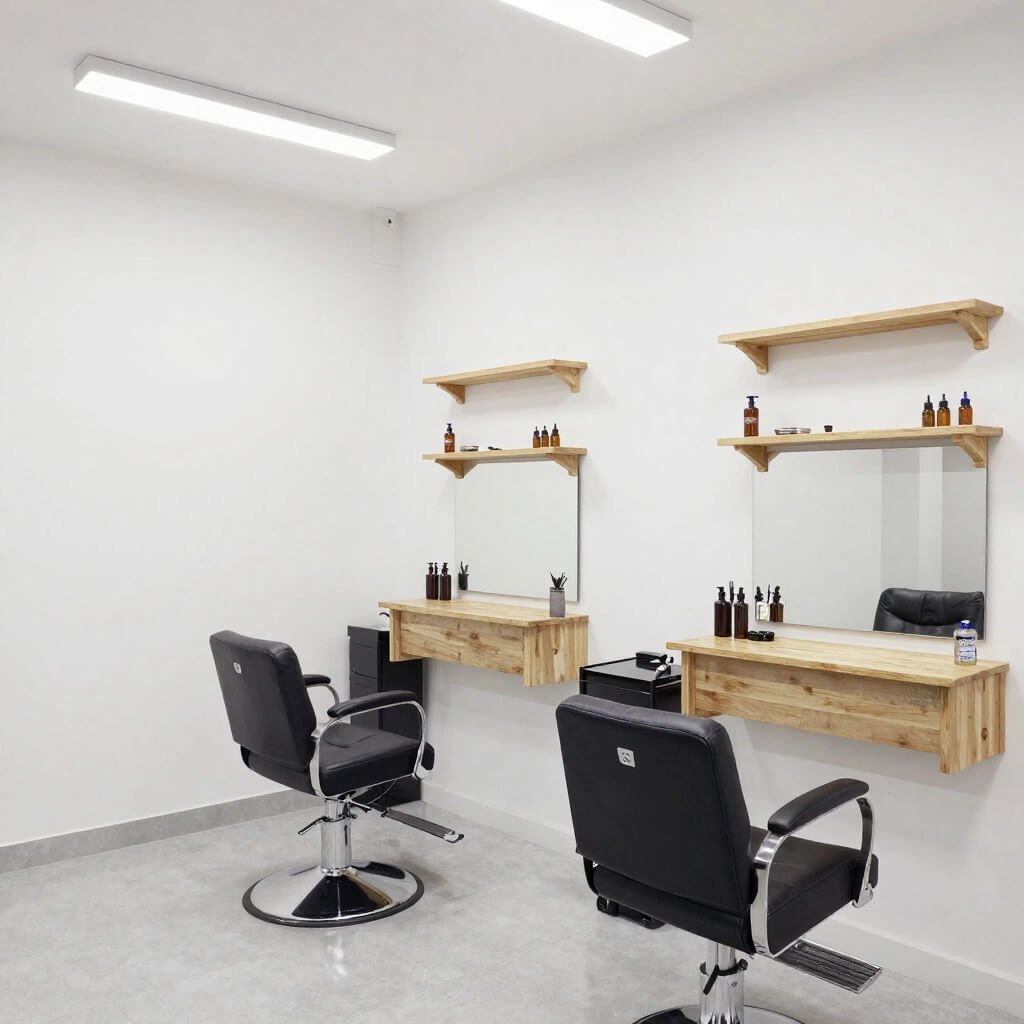
Look, not everyone has $100,000 to drop on build-out costs, and that’s completely fine. Some of the coolest barber shops I’ve visited were designed on shoestring budgets by creative owners who knew where to splurge and where to save.
Budget-friendly doesn’t mean cheap-looking—it means smart spending and creative problem-solving. You focus resources on the elements that create the biggest visual and functional impact.
Where to Save Money Without Sacrificing Style
Here’s the reality: clients can’t tell the difference between certain expensive and affordable elements:
- Paint is incredibly cost-effective transformation (accent walls = instant style)
- Peel-and-stick materials: faux brick, wood planks, tile (seriously, these have gotten good)
- IKEA and budget furniture hacks (everyone does it, no shame)
- DIY elements: build your own shelves, refinish found furniture
- Secondhand chairs professionally reupholstered (fraction of new cost)
- Affordable statement lights (lighting transforms spaces cheaply)
- Concrete stain instead of expensive flooring
- One feature wall instead of elaborate full-room design
- Minimalist approach (less stuff = less money)
I know a barber who literally built his stations from reclaimed doors mounted on cinder blocks he painted black. Total cost per station: maybe $150. They looked intentionally industrial and unique. Clients loved them specifically because they weren’t cookie-cutter.
The Investment Priorities
When money’s tight, spend on these first:
- Excellent lighting (cheap furniture looks better in good light)
- One quality mirror per station (doesn’t have to be fancy, just clean and clear)
- Comfortable client seating (doesn’t need to be expensive, just not painful)
- Your sign and storefront (this gets people through the door)
- One signature element that makes your shop memorable
Everything else? Make it work with what you’ve got. Your cutting skills matter way more than your interior design budget. A talented barber in a basic space will always outperform a mediocre barber in a beautiful space. But if you can combine talent with strategic design choices? That’s the sweet spot.
Also Read: 10 Affordable Shop Design Ideas for Budget Friendly Stores
Instagram-Worthy Barber Shop Interior Decoration Ideas
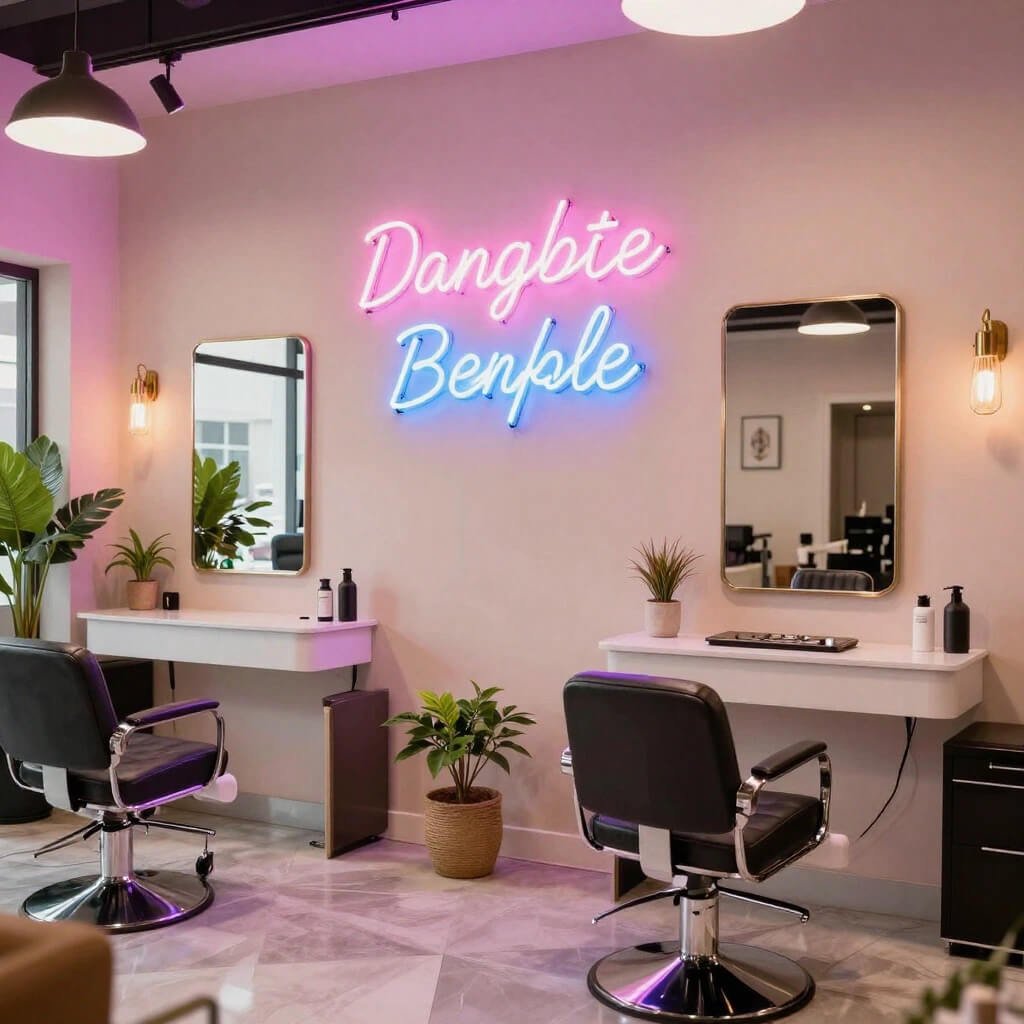
Let’s be real—if it’s not on Instagram, did it even happen? Social media has fundamentally changed how we approach barber shop design. Your space isn’t just functional; it’s content creation infrastructure.
Every wall, every corner, every station is a potential backdrop for photos that will circulate on social media. Smart designers now think about “Instagrammability” as a core design principle, not an afterthought.
Creating Photo Opportunities
Here’s what makes spaces photograph well:
- Contrast and color: Bold against neutral creates visual interest
- One statement wall: geometric patterns, murals, textured materials, or bold color
- Consistent lighting: harsh overhead lighting kills photos; warm, even lighting wins
- Greenery: plants photograph amazingly well and add life to shots
- Branded elements: your logo, custom neon, unique signage
- Clean lines and uncluttered backgrounds: messy spaces photograph poorly
- Interesting textures: brick, wood grain, tile patterns add depth to photos
- Seating positioned for photos: chairs angled for best lighting and background
The barber shops crushing it on social media all have designated photo spots—specific areas designed for maximum visual impact. Maybe it’s a chair positioned in front of a mural. Maybe it’s a neon sign above a vintage bench. Whatever it is, it’s intentional.
Content-Friendly Design Strategy
Think about sight lines and angles. Stand where clients will stand when photographing themselves in the mirror. What do they see in the background? Is it interesting, or is it storage clutter and random walls?
Mirror placement becomes crucial for both functional cutting and customer selfies. Full-length mirrors in strategic spots give clients opportunities to photograph their full look, not just their head and shoulders.
Consider adding a dedicated selfie station—a well-lit spot with an exceptional background specifically for post-cut photos. Some shops include props: vintage cameras, barbering tools, interesting chairs. Give people a reason to photograph your space beyond just their haircut.
Your waiting area deserves special attention too. Clients spend time there, often scrolling their phones. Make it photograph-worthy with interesting decor, comfortable seating with photogenic backgrounds, and good natural or artificial lighting.
Bringing It All Together
So there you have it—ten completely different approaches to barber shop design, each creating a distinct vibe and targeting different client demographics. The beautiful thing? You’re not locked into just one style. I’ve seen successful shops blend elements from multiple concepts to create something uniquely theirs.
Your barber shop design should ultimately reflect your brand personality, your target market, and your personal style. A vintage shop with a neon sign? Why not. Industrial minimalism with gold accents? Could be amazing. The rules are more like guidelines anyway.
The most important thing is intention. Every design choice should have a reason behind it, whether that reason is functional, aesthetic, or brand-related. Random design elements thrown together look exactly like that—random and thoughtless.
Start by defining what experience you want clients to have. Should they feel relaxed and pampered? Energized and trendy? Connected to tradition and craftsmanship? Once you nail that emotional target, your design choices become much clearer.
Remember that design trends come and go, but good fundamental design principles remain constant: proper lighting, comfortable seating, functional layout, and consistent branding. Get those basics right, then add your stylistic flair on top.
One last thing—your barber shop will evolve over time, and that’s perfectly fine. Start with a solid foundation and add elements as your budget and vision expand. Some of the best spaces I’ve visited clearly grew organically over years, with layers of personality added gradually. That authenticity shows and clients appreciate it.
Now go create a space that makes people excited to get their hair cut. Your shop should be so good that clients show up early just to hang out. That’s when you know you’ve absolutely nailed it 🙂