10 Incredible Hotel Corridor Design Ideas for Chic Look
- Corridor Design
 Ben
Ben- 0
- 40 minutes read
So you’re scrolling through hotel design inspiration at 2 AM (don’t worry, I’ve been there), and you suddenly realize something: hotel corridors get no love. Everyone obsesses over lobby grandeur and room aesthetics, but the hallway? That’s the forgotten middle child of hospitality design. Here’s the thing though—your corridor is basically the first impression guests get before they even unlock their room door. Mess this up, and you’ve already lost the vibe you worked so hard to create everywhere else.
I’ve walked through enough depressing hotel hallways that felt like hospital wings or prison blocks to know that corridor design can make or break the entire guest experience. The good news? You don’t need a million-dollar budget to transform these transitional spaces into Instagram-worthy moments. Let me walk you through ten corridor design concepts that’ll make your guests actually want to take the long way to their room.
Luxury LED Minimalist Hotel Corridor Glow Concept
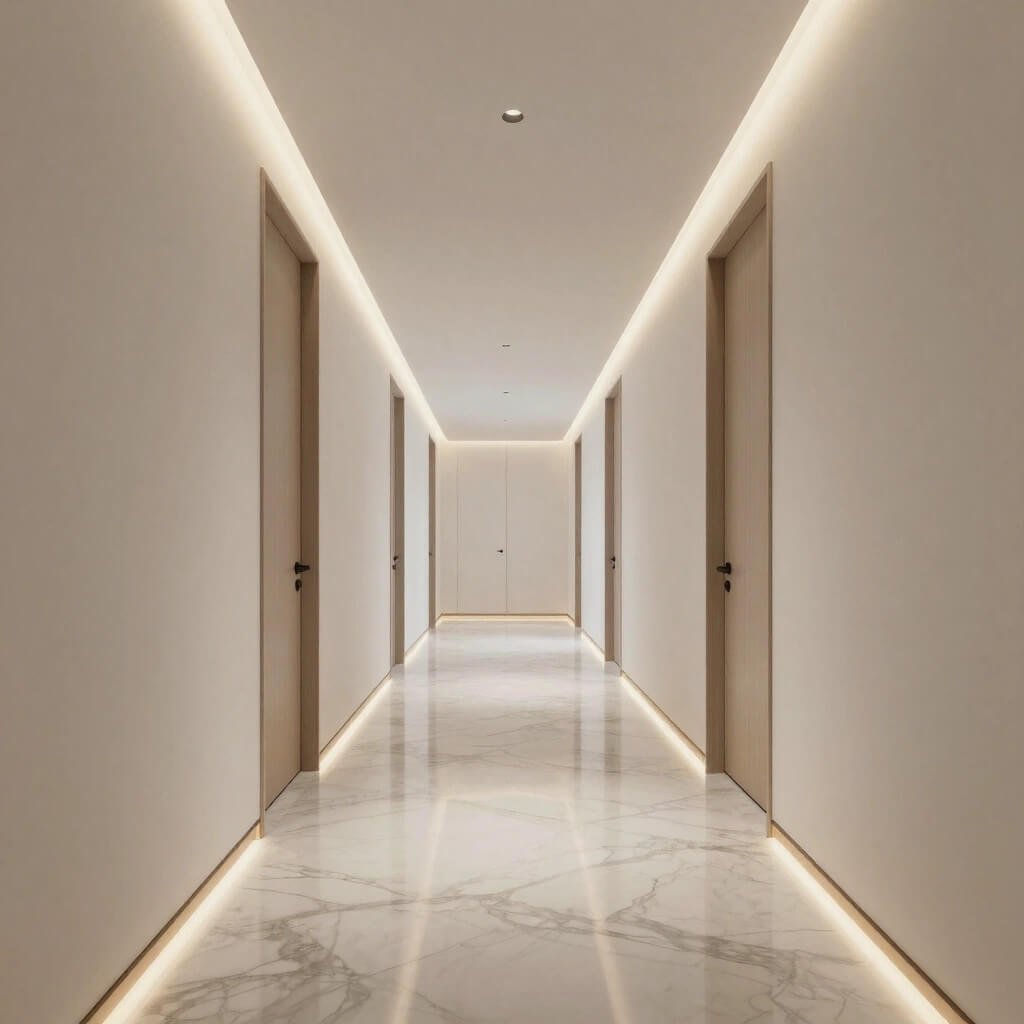
Remember when minimalism meant boring white walls and calling it a day? Yeah, those days are dead. The luxury LED minimalist approach takes “less is more” and adds a sci-fi glow that makes your corridor feel like you’re walking into the future.
I’m talking about clean lines, neutral color palettes (think whites, grays, soft beiges), and strategic LED lighting that transforms the entire space. The magic happens when you install recessed LED strips along the baseboards or ceiling coves. This creates this gorgeous indirect lighting that literally makes the walls glow without any visible fixtures cluttering the view.
Here’s what makes this work:
- Hidden LED channels that run continuously along the corridor length
- Motion sensors that adjust brightness as guests approach (energy-efficient and cool)
- Monochromatic color schemes that let the lighting do all the talking
- Seamless wall panels without visible joints or interruptions
The beauty of this design? It feels expensive without requiring you to gold-plate everything. You’re essentially using light as your decorative element, which is way smarter than filling the space with stuff that needs dusting. Plus, guests feel like they’re staying somewhere futuristic and high-end, even if your budget was actually pretty reasonable.
One hotel I visited in Singapore nailed this concept. The corridor literally glowed blue-white, and the walls were so smooth and seamless you couldn’t even tell where the light was coming from. Felt like walking through a spaceship in the best way possible. 🙂
Modern Boutique Hotel Warm Aesthetic Hallway Design
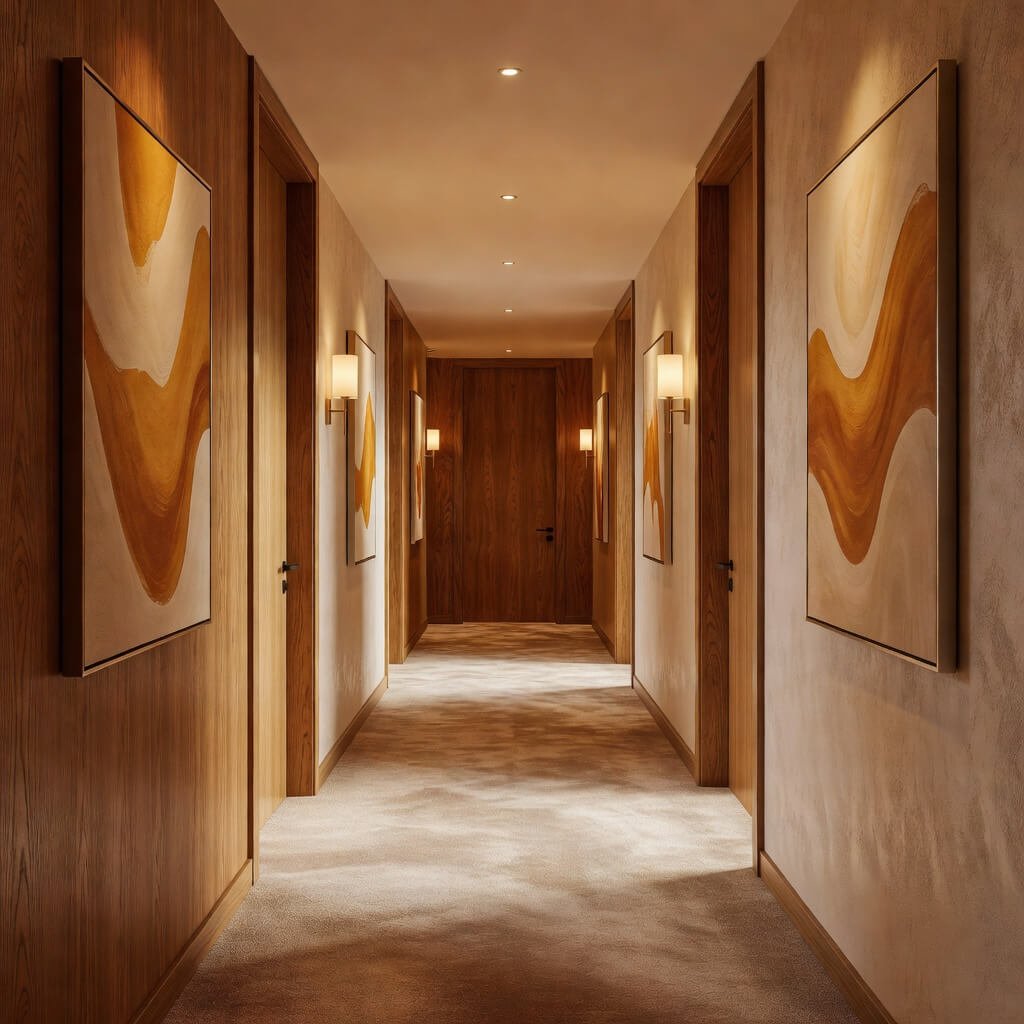
Now, if the minimalist LED thing feels too cold for your brand, let me introduce you to the warm aesthetic hallway that boutique hotels absolutely crush. This design philosophy says “cozy” without screaming “grandma’s house.”
Think warm wood accents, brass fixtures, textured wallpapers in earthy tones, and lighting that mimics golden hour sunlight. You want guests to feel like they’re walking into a thoughtfully curated home rather than a commercial space. The trick is balancing sophistication with approachability.
Here’s your design toolkit for this style:
- Warm-toned LED bulbs (2700K-3000K color temperature)
- Natural wood wall panels or wainscoting in walnut or oak finishes
- Artistic wall sconces with fabric shades or frosted glass
- Textured accent walls using grasscloth, linen wallpaper, or even exposed brick
- Decorative console tables placed strategically with fresh flowers or art pieces
The key difference between this and looking dated? Restraint. You’re not wallpapering every surface or cramming in a chandelier every three feet. You’re thoughtfully placing warm elements that complement each other. One accent wall in a rich terracotta wallpaper paired with simple warm lighting can transform the entire corridor mood.
IMO, this style works best for boutique hotels, bed-and-breakfasts, or any property trying to create that “design hotel” vibe without alienating guests who find ultra-modern spaces intimidating. It’s approachable luxury, which is honestly what most travelers are actually looking for.
Marble Elegance Hotel Corridor With Golden Lighting
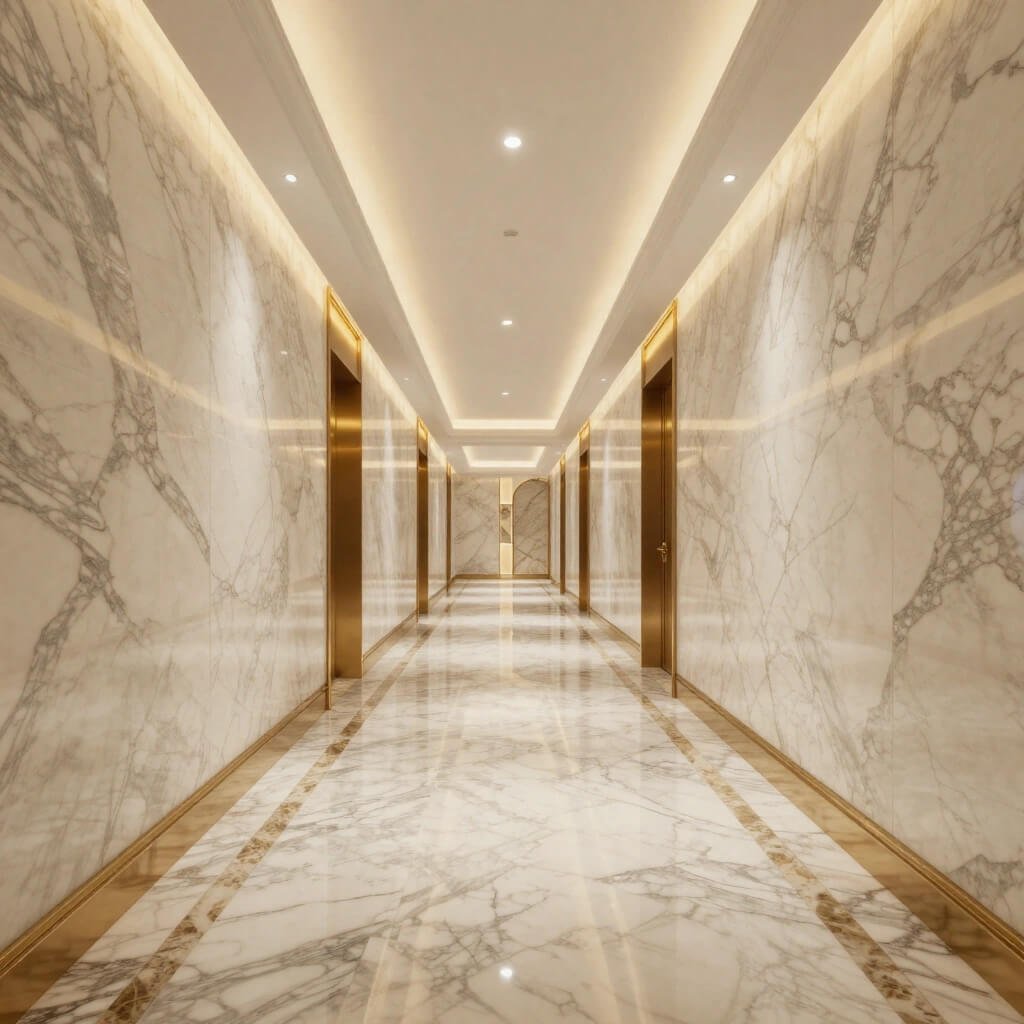
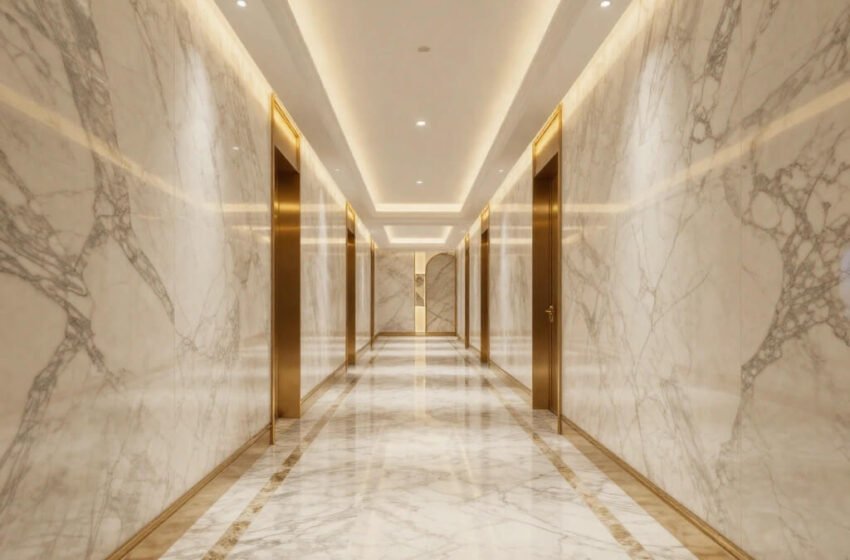
Want to go full luxury? Like, “I definitely belong here sipping champagne” luxury? Marble and gold is your move, and no, it doesn’t have to look like a tacky palace if you do it right.
Real marble (or high-quality porcelain that mimics it) on walls or floors instantly elevates your corridor from “meh” to “wow.” We’re talking Carrara, Calacatta, or even dramatic dark marbles like Nero Marquina. Pair this with golden or brass lighting fixtures, and you’ve created a corridor that photographs beautifully and makes guests feel like royalty.
But here’s the catch—this design walks a tightrope between elegant and over-the-top gaudy. You need balance.
How to nail marble and gold without looking ridiculous:
- Use marble as an accent rather than covering every surface—maybe one feature wall or floor borders
- Choose brushed gold or antique brass instead of shiny yellow gold (way more sophisticated)
- Install contemporary light fixtures in gold finish rather than traditional ornate chandeliers
- Mix in neutral elements like soft gray walls or warm white ceilings to calm the richness
- Add subtle mirrors with gold frames to reflect light and create depth
I once stayed at a hotel in Dubai that used book-matched marble panels on one wall with integrated golden LED strips running through the natural veining. Absolutely stunning. The opposite wall was simple warm gray, which kept it from feeling like a marble quarry exploded.
The lighting is crucial here. Golden-toned warm lights hitting marble surfaces create this luxurious glow that makes everything feel expensive. Cool-toned lighting with marble just looks cold and commercial—total vibe killer.
Also Read: 10 Amazing Corridor Design Ideas for Small Space Magic
Small Space Hotel Corridor Mirror Illusion Design
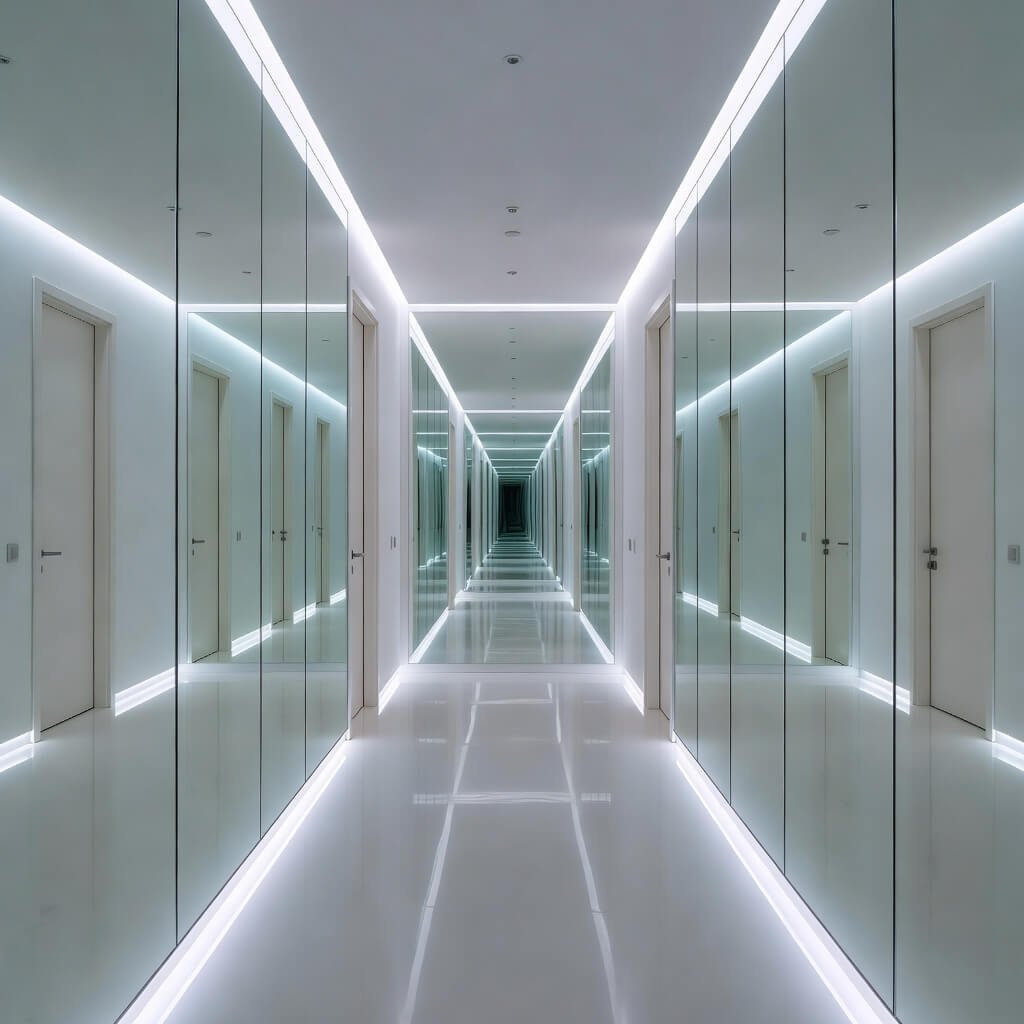
Got narrow corridors that feel like walking through a shoebox? Yeah, you’re not alone. Most older buildings weren’t exactly designed with spacious hallways in mind. But here’s a design trick that literally changes perceived reality: strategic mirror placement.
Mirrors are basically magic when used correctly. They bounce light, create the illusion of doubled space, and add visual interest. The key is placing them thoughtfully rather than just slapping mirrors everywhere and hoping for the best (which just makes your corridor look like a budget gym).
Smart mirror strategies for small corridors:
- Full-length mirror panels on one wall create the illusion the corridor is twice as wide
- Mirrored strips alternating with wall panels add interest without overwhelming
- Decorative mirrors with interesting frames placed at regular intervals double as art
- Ceiling mirrors (sounds weird, but elegant frosted mirror tiles can expand vertical space)
- Mirrors opposite windows or light sources maximize natural light distribution
The psychology here is real. Guests walking down a narrow corridor lined with mirrors genuinely perceive the space as larger and less claustrophobic. You’re literally hacking their spatial perception, which is pretty cool when you think about it.
One boutique hotel I visited in New York had these huge antiqued mirror panels running along one side of their admittedly tiny corridors. Combined with good lighting, the space felt twice as wide. Without those mirrors? It would’ve felt like a sardine can with carpet.
Just remember: keep mirrors clean. Smudged mirrors are worse than no mirrors. And maybe skip the mirrors if your hotel caters to the superstitious crowd—some cultures aren’t fans of corridor mirrors. FYI.
Nature Inspired Green Wall Hotel Corridor Concept
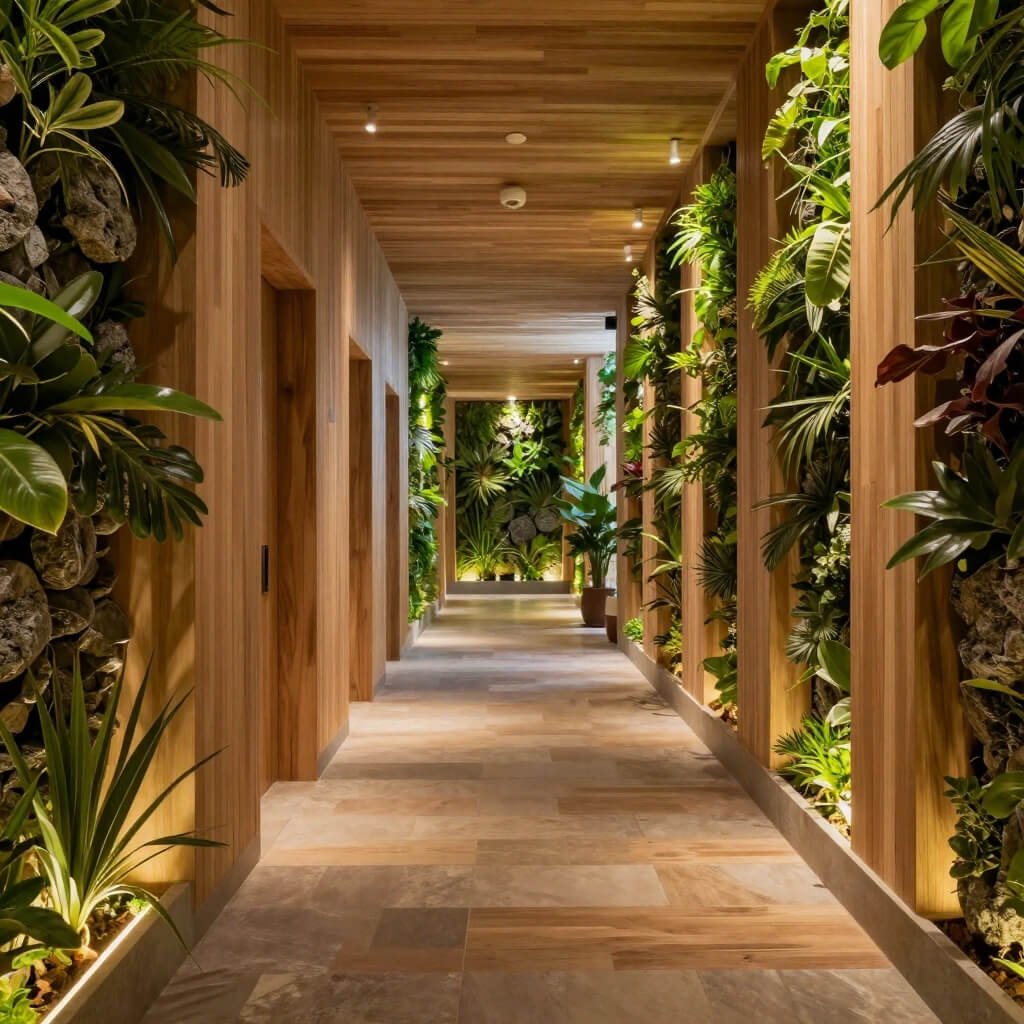
Ever wonder why walking through a garden feels so damn good? Biophilic design taps into our hardwired connection to nature, and green walls in hotel corridors are one of the most effective ways to create that instant calm.
I’m talking about actual living plant walls, high-quality artificial green walls, or even creative wallpaper and installations that bring nature indoors. This trend exploded over the past few years, and honestly? It deserves the hype.
Why green walls work so well:
- They improve perceived air quality (real plants actually do improve air; fake ones just make guests think they do)
- They create natural noise absorption, reducing corridor echo
- They provide visual interest and texture without harsh geometric patterns
- They promote psychological wellbeing and stress reduction
- They’re incredibly photogenic, giving you free social media marketing
Real living walls require maintenance, irrigation systems, and proper lighting, which means higher upfront costs and ongoing care. But the payoff in guest experience and brand differentiation can be huge. If that’s not feasible, high-quality preserved moss walls or artificial green panels have gotten so realistic that guests often can’t tell the difference from ten feet away.
One eco-resort I visited in Costa Rica had these floor-to-ceiling living walls running the entire corridor length, with small LED grow lights hidden in the ceiling. The air literally smelled fresher, and the visual impact was incredible. Guests would stop and take photos constantly—automatic Instagram marketing.
Pair your green walls with natural wood flooring, stone accents, and warm organic lighting to complete the nature-inspired vibe. The goal is making guests feel like they’re walking through a sophisticated garden path rather than a hotel hallway.
Ultra Modern Black & Gold Luxury Hotel Hallway Style
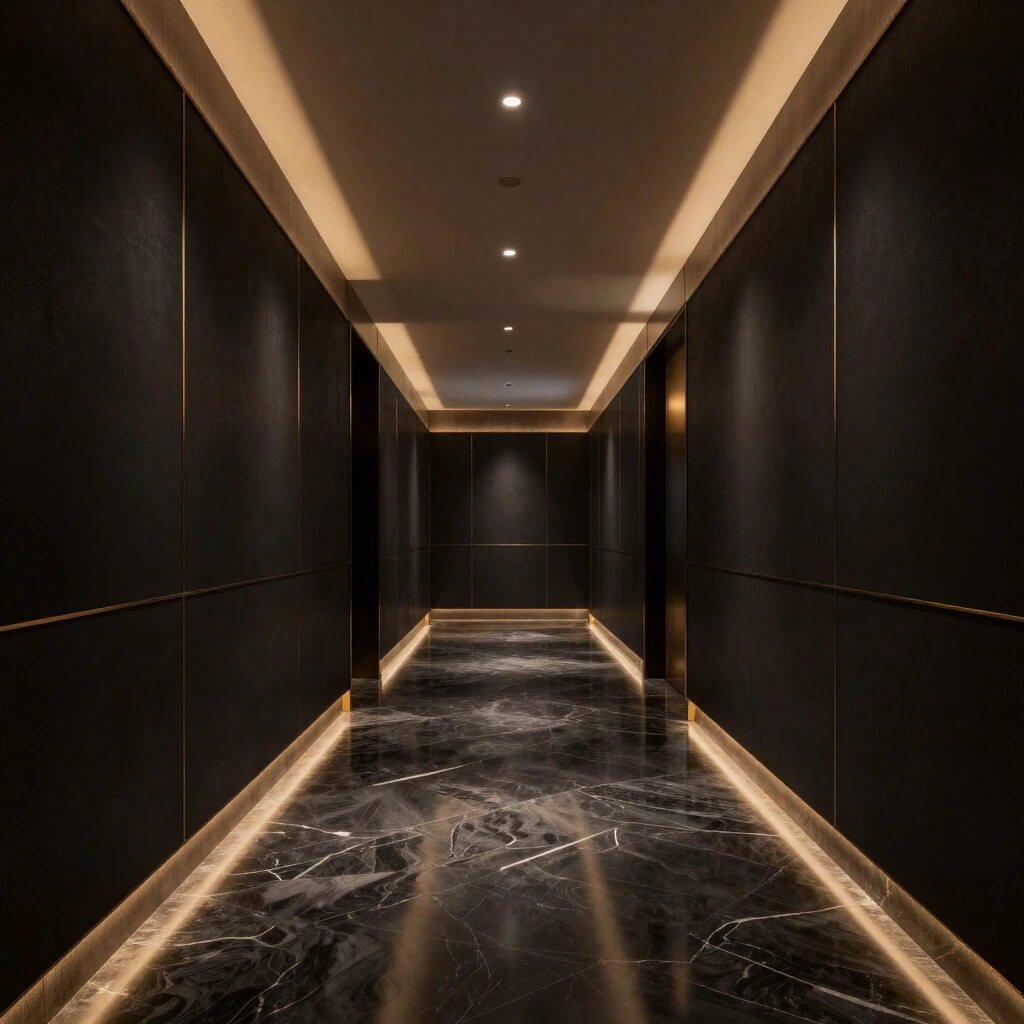
Want to go bold? Like, really bold? Black and gold is the power couple of luxury design. It’s dramatic, it’s confident, and when executed properly, it absolutely screams high-end sophistication.
This isn’t for every property—if you’re running a family beach resort, maybe skip this one. But for urban hotels, design-forward properties, or anywhere targeting the style-conscious traveler, black and gold creates an unforgettable visual impact.
The secret to pulling this off? Contrast and lighting. Black absorbs light, so you need excellent illumination to prevent your corridor from feeling like a cave. Gold accents catch and reflect that light, creating focal points that guide the eye.
How to execute black and gold without creating a dark dungeon:
- Use matte black walls rather than glossy (less harsh, more sophisticated)
- Install plenty of layered lighting—ambient, accent, and decorative
- Incorporate gold geometric patterns on black backgrounds for visual interest
- Add reflective surfaces like polished floors or strategic mirrors
- Keep ceiling light or neutral to maintain brightness
- Use gold-framed artwork or photography to break up black wall expanses
I’ve seen this done brilliantly in a boutique hotel in London. They had charcoal-black textured walls with these stunning geometric brass light fixtures every few feet. The floor was polished dark gray with gold inlay strips. Combined with warm lighting, it felt like walking through a jewelry box—luxurious without being dark.
The lighting temperature matters hugely here. You want warm white to golden lighting (2700K-3000K) to complement the gold accents. Cool white lighting with black and gold looks cheap and conflicts with the warm metal tones.
Also Read: 10 Gorgeous Cosmetic Shop Design Ideas Premium Beauty Vibes
Soft Ambient Lighting Hotel Corridor Relaxing Theme
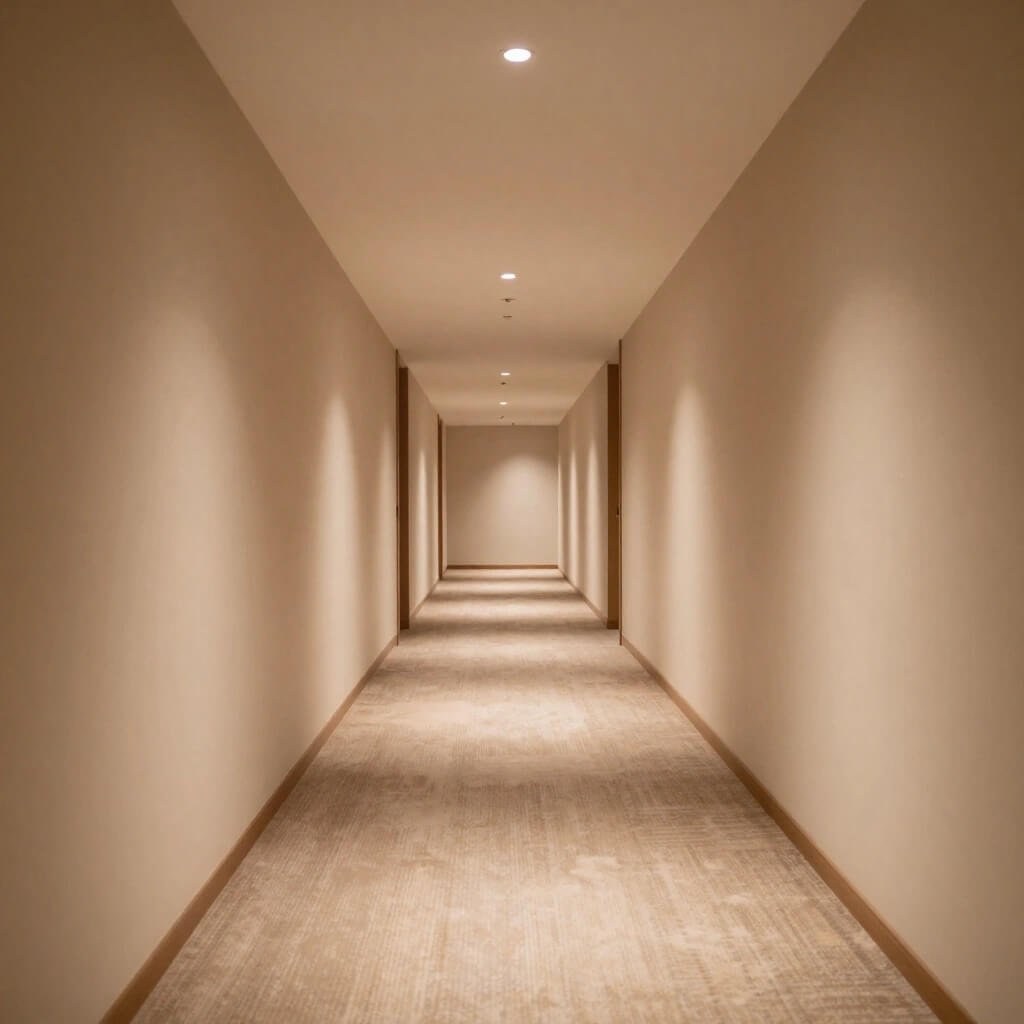
Not every corridor needs to make a bold statement. Sometimes the best design simply makes people feel relaxed and comfortable, which is honestly what most exhausted travelers actually want.
Soft ambient lighting creates a calming atmosphere that reduces stress and helps guests transition from the energy of the lobby to the privacy of their room. Think of your corridor as a decompression chamber—it should gradually dial down the stimulation.
Elements of a relaxing ambient-lit corridor:
- Indirect lighting from coves, valances, or wall washers rather than harsh overhead fixtures
- Dimmable systems that adjust throughout the day (brighter morning, softer evening)
- Layered light sources at different heights creating gentle pools of illumination
- Soft color palettes in neutrals, soft blues, or gentle greens
- Acoustic treatments like padded wall panels or sound-absorbing materials
- Natural materials such as wood, stone, or fabric textures
The color temperature sweet spot for relaxation is usually 2700K-3000K—that warm, slightly golden light that mimics candlelight or sunset. It triggers our bodies to chill out, unlike the 5000K+ cool white lights you see in hospitals that keep people alert.
One resort I stayed at in Bali absolutely mastered this. Their corridors had these beautiful wooden slatted screens with soft backlighting, paired with dim floor-level path lights. Combined with subtle incense scent and soft background music, walking to your room felt like a spa treatment. Sounds extra, but guests genuinely loved it.
The goal here isn’t flashy or impressive—it’s forgettable in the best way. Guests shouldn’t remember your corridor because it was annoying or harsh; they should arrive at their room feeling calm without even realizing the design did that to them.
Geometric Wall Pattern Contemporary Hotel Corridor Design
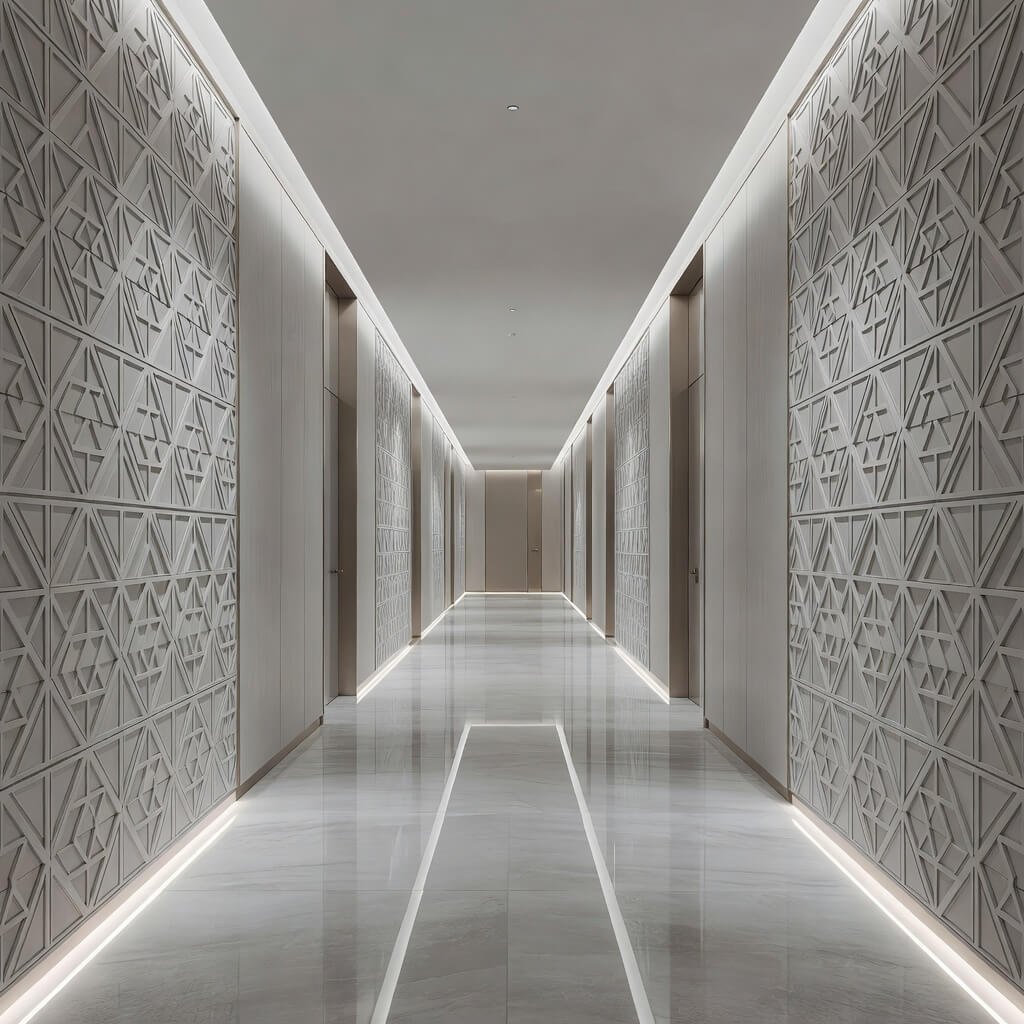
If you want visual interest without going full maximalist, geometric patterns offer the perfect middle ground. They’re modern, they’re dynamic, and they create movement and energy without overwhelming the space.
Geometric designs work because our brains love patterns. We’re wired to find them satisfying and engaging. In a long, potentially boring corridor, geometric elements give the eye something interesting to follow, making the walk feel shorter and more engaging.
Geometric pattern applications for corridors:
- 3D textured wall panels creating shadow patterns that change with light
- Wallpaper with bold geometric prints in complementary colors
- Floor tiles arranged in geometric patterns like hexagons, chevrons, or tessellations
- Painted geometric murals as feature walls at corridor endpoints or intersections
- Laser-cut metal screens with geometric cutouts creating shadow play
- Lighting fixtures with geometric shapes that cast interesting shadows
The trick is choosing patterns that complement rather than clash. If your floor has a busy geometric pattern, keep walls simple. If walls are the star, keep flooring neutral. You’re creating visual interest, not visual chaos.
I visited a contemporary hotel in Melbourne that used these incredible 3D geometric concrete panels on one wall. The panels cast different shadows throughout the day as natural light shifted, so the corridor literally changed appearance. Super cool effect that made a potentially boring space genuinely artistic.
Color choices matter too. Monochromatic geometric patterns feel sophisticated and modern. High-contrast patterns (black and white, or complementary colors) create energy and boldness. Tone-on-tone patterns are subtle and elegant. Choose based on the energy level you want to create.
Premium Carpet Runner Classic Hotel Corridor Interior
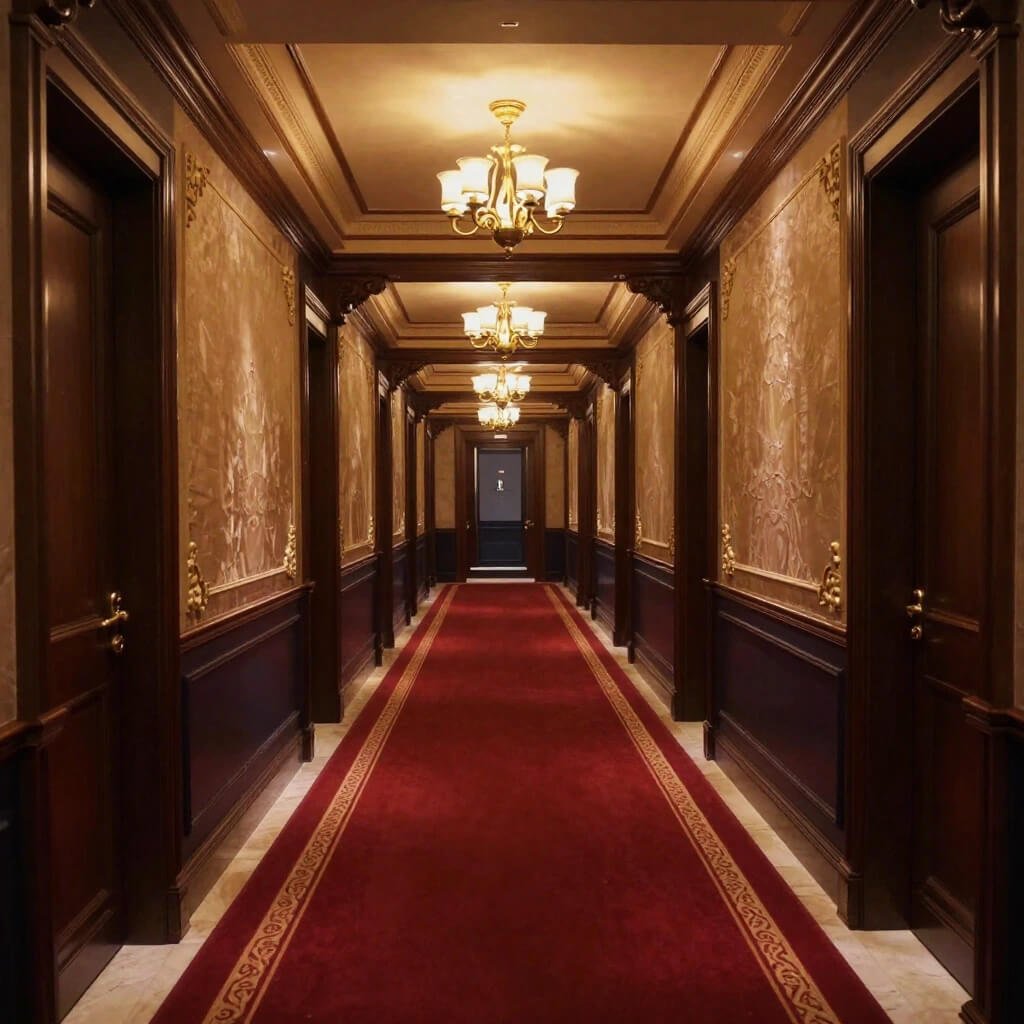
Sometimes the classics are classic for a reason. A premium carpet runner down a hotel corridor is traditional, sure, but it’s also practical, comfortable, and can look absolutely stunning when done with quality materials and thoughtful design.
Carpet runners offer benefits that hard flooring simply can’t match. They absorb sound (reducing that annoying echo of heels clicking at 3 AM), they feel luxurious underfoot, and they provide a clear visual path that guides guests naturally toward their rooms.
What makes a carpet runner design work:
- High-quality, durable materials like wool blends or solution-dyed nylon
- Interesting patterns that hide wear in high-traffic areas
- Colors that complement the overall corridor aesthetic without showing every stain
- Proper installation with quality padding underneath
- Border definition with contrasting flooring material creating visual structure
- Thoughtful pattern scale appropriate to corridor width
The key difference between a cheap-looking carpet runner and a luxurious one? Texture, pattern complexity, and border treatment. A basic solid runner on basic flooring looks institutional. A patterned runner with beautiful borders, on wood or stone flooring, with detailed wall moldings? That looks intentional and upscale.
I stayed at a historic hotel in Boston with these absolutely gorgeous custom-designed carpet runners featuring traditional patterns in updated colors. The runners sat on beautifully finished wood floors with brass stair rods at each room threshold. Combined with classic wall sconces and wainscoting, the whole corridor felt like elegant understated luxury. :/
Modern takes on classic runners include bold geometric patterns, ombre color transitions, or contemporary abstract designs that keep the practical benefits of carpet while updating the aesthetic for current tastes.
Also Read: 10 Modern Small Laundry Shop Design Ideas for Luxury Look
Smart Lighting Futuristic Hotel Corridor Experience Design
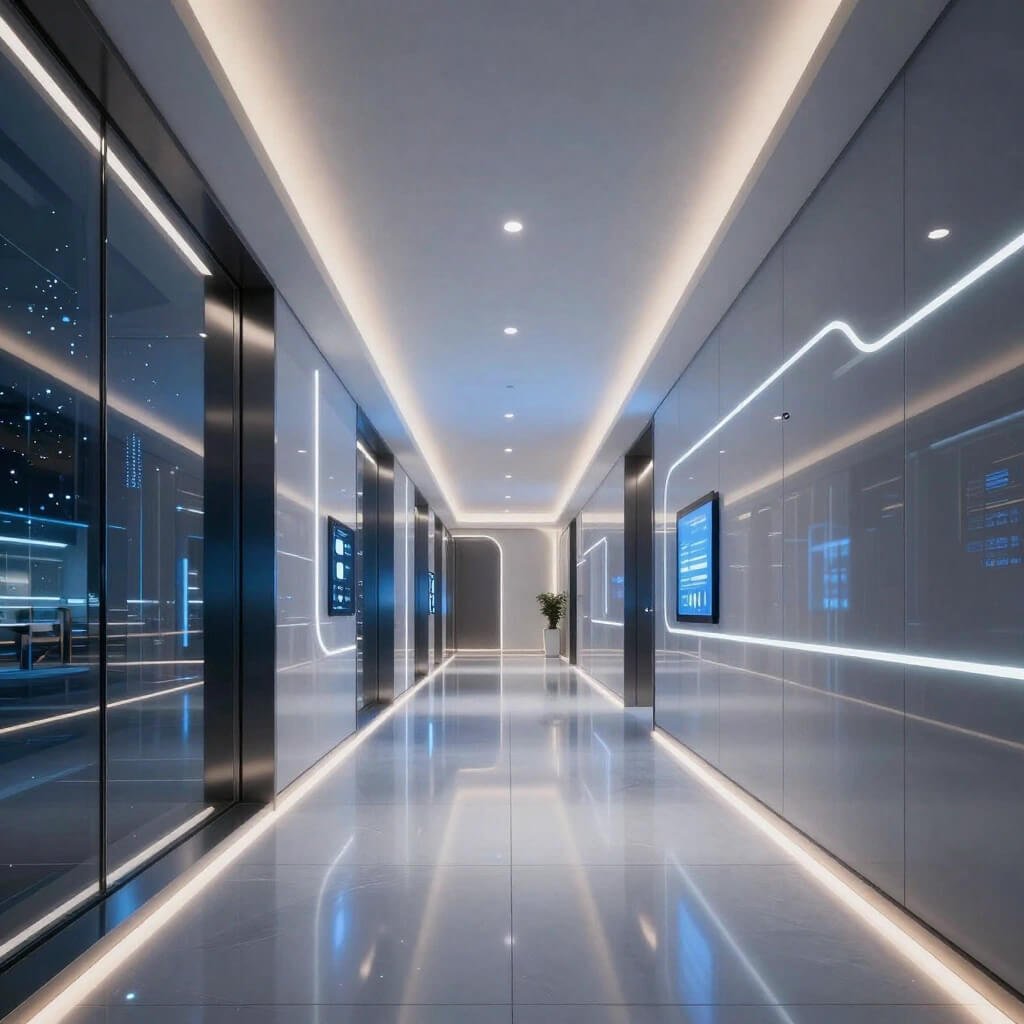
Ready for the future? Smart lighting systems are transforming hotel corridors from static spaces into dynamic, responsive environments that adapt to guest needs and create genuine “wow” moments.
We’re talking lighting that responds to motion, time of day, occupancy levels, and even guest preferences. It’s technology meeting design in a way that actually improves the experience rather than just being tech for tech’s sake.
Smart lighting features that actually matter:
- Motion-activated lighting that illuminates paths as guests approach, saving energy and creating a personalized experience
- Circadian rhythm programming that adjusts color temperature throughout the day (cooler/brighter morning, warmer/dimmer evening)
- Integration with room systems that can pre-light the path to a guest’s specific room
- Color-changing LED systems that can adjust atmosphere for events or seasons
- Emergency way-finding that automatically lights exit paths during power failures
- App control allowing staff to adjust lighting remotely
The experience of walking down a corridor that lights up just for you feels legitimately futuristic and personalized. One hotel in Tokyo I visited had this system where the corridor would progressively light up leading to your specific room when you approached from the elevator. Sounds gimmicky, but it actually felt really cool and welcoming.
Beyond the tech-wow factor, smart lighting has serious practical benefits. Energy savings are substantial when lights aren’t constantly running at full blast in empty corridors. Maintenance becomes easier with systems that alert staff when bulbs need replacement. And the ability to adjust atmosphere quickly means your corridors can shift from energetic daytime vibes to calming evening moods automatically.
The investment in smart systems is higher upfront, but the operational savings and guest experience improvements typically justify the cost for mid to high-end properties. Plus, you get serious bragging rights about your tech-forward approach, which appeals to a growing segment of tech-savvy travelers.
Implementation tips: Don’t go so futuristic that you alienate guests who just want to walk to their room without feeling like they’re in a sci-fi movie. The best smart lighting works intuitively in the background, enhancing rather than dominating the experience. Your 70-year-old guests should benefit from motion-activated lighting without needing to understand the technology behind it.
Pulling It All Together
Here’s what nobody tells you about hotel corridor design: you don’t need to pick just one approach. The best corridor designs often blend elements from multiple concepts to create something unique to your property’s brand and guest expectations.
Maybe you combine the warm boutique aesthetic with smart lighting. Or merge minimalist LED concepts with nature-inspired green walls. The geometric pattern approach works beautifully with black and gold luxury themes. A classic carpet runner can absolutely coexist with contemporary ambient lighting. You get the idea.
The critical questions to ask yourself before committing to a design:
- Who are your guests? Business travelers want different vibes than resort vacationers
- What’s your brand personality? Your corridors should reflect your overall design language
- What’s your maintenance capacity? Living walls need care; LED strips don’t
- What’s your actual budget? Be realistic about installation and ongoing costs
- What problems are you solving? Narrow corridors need different solutions than long, boring ones
I’ve seen hotels spend fortunes on lobby design and then treat corridors as afterthoughts, slapping up beige paint and calling it done. Don’t be that hotel. Your corridor is where guests spend time alone, between public and private spaces. It’s an opportunity to reinforce your brand, enhance comfort, and create those Instagram moments that turn into free marketing.
The design approach that works for a 500-room convention hotel is completely different from what a 20-room boutique property needs. A beach resort shouldn’t copy an urban design hotel’s corridor aesthetic. Context matters more than trends.
And honestly? Sometimes the best design is simply the one that makes your specific guests feel welcome, comfortable, and impressed without trying too hard. A well-lit, thoughtfully detailed, clean corridor with personality will always beat a trendy design that doesn’t match your property’s character or guest expectations.
Final Thoughts
Hotel corridor design has come a long way from those depressing beige tunnels we all suffered through in the ’90s. Today’s options let you create spaces that genuinely enhance guest experience, support your brand identity, and yes, look damn good on social media.
Whether you go full futuristic with smart lighting, embrace timeless elegance with marble and gold, create calm with ambient lighting, or bring nature inside with green walls, the key is intentionality. Every design choice should serve a purpose—aesthetic, functional, or both.
The corridors I remember years after staying somewhere aren’t necessarily the most expensive or trendy. They’re the ones that felt thoughtful, that made the journey to my room pleasant rather than forgettable or annoying. They’re the ones where someone clearly cared about the entire guest experience, not just the lobby and rooms.
So take these ten concepts and figure out which resonates with your property’s identity and your guests’ expectations. Mix and match elements. Add your own creative twists. Test ideas on a single floor before committing to the whole property. And for the love of good design, please prioritize proper lighting—nothing kills a design concept faster than bad illumination.
Your corridors deserve better than beige afterthought status. Give them some personality, and watch how guests respond. They might not consciously think “wow, great corridor,” but they’ll definitely feel more positive about their overall experience. And in hospitality, that feeling is literally everything.
Now stop procrastinating on Pinterest and actually make some design decisions. Your corridors are waiting. 🙂