10 Creative Apartment Corridor Design Smart Space Solutions
- Corridor Design
 Ben
Ben- 0
- 43 minutes read
You know that awkward stretch of space between your front door and the rest of your apartment? Yeah, that corridor you basically sprint through while juggling groceries and pretending it doesn’t exist? Time to stop treating it like the forgotten middle child of your home.
I’ll be honest—I used to think apartment corridors were just necessary evils. Wasted space that served one purpose: getting from point A to point B. But after cramming myself into one too many cramped hallways and stubbing my toe on that random shoe pile for the millionth time, I realized something. These narrow stretches of real estate are actually goldmines of untapped potential. You just need to know how to work them.
So grab your coffee (or wine, no judgment here), and let’s talk about transforming that bland, boring hallway into something that actually makes you smile when you walk through it.
1. Minimalist Apartment Corridor Makeover
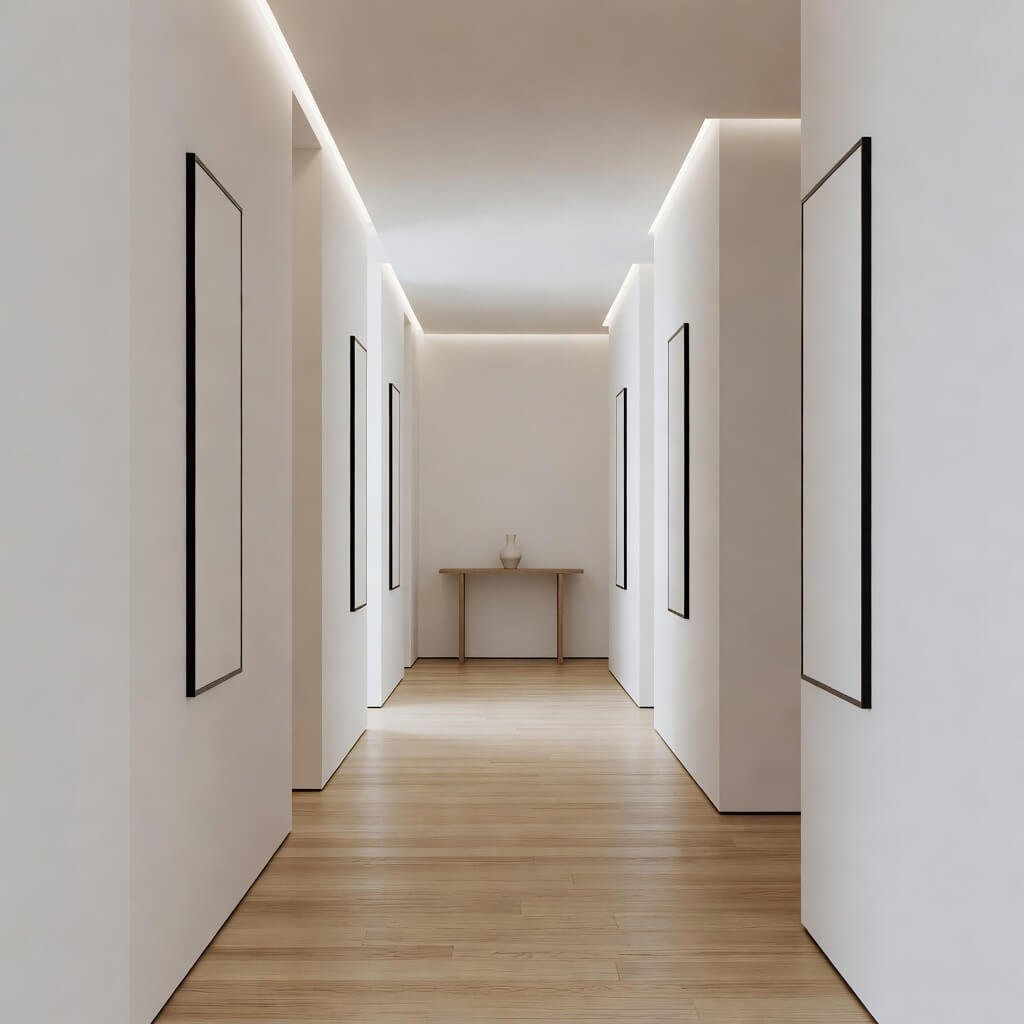
Less really is more when you’re working with limited square footage. I learned this the hard way after trying to cram every decorative idea I’d ever pinned on Pinterest into a 3-foot-wide hallway. Spoiler alert: it looked like a home goods store exploded.
The minimalist approach strips everything down to the essentials, and honestly? It’s kind of liberating. You’re focusing on clean lines, purposeful pieces, and a whole lot of breathing room. Think one statement piece instead of seventeen little knickknacks fighting for attention.
Key Elements for Minimalist Success
Here’s what actually works:
- One focal point: A single piece of art, a sleek console table, or a geometric light fixture
- Neutral color palette: Whites, grays, beiges—basically anything that doesn’t scream for attention
- Hidden storage: Built-in cabinets that blend seamlessly into the walls
- Quality over quantity: One beautiful mirror beats five cheap ones every single time
I swapped out my cluttered hallway mess for a simple floating shelf with one ceramic vase and a small abstract print above it. The difference? Night and day. The corridor suddenly felt twice as wide, and I stopped feeling claustrophobic every time I walked through it.
The secret sauce here is intentionality. Every single item you place in a minimalist corridor needs to earn its spot. Does it serve a function? Does it bring you joy? If you answered no to both, it doesn’t belong there.
2. Luxury Narrow Hallway Lighting Design
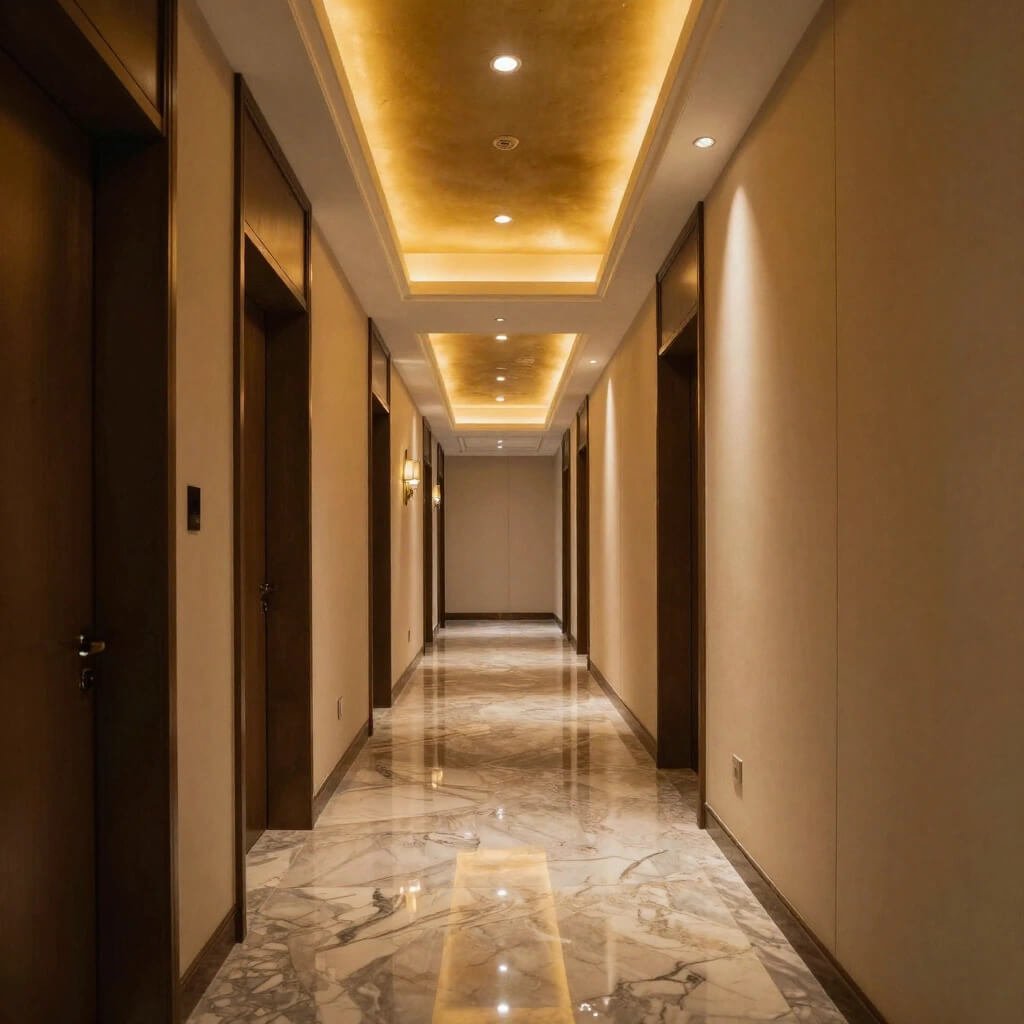
Ever notice how fancy hotels make even their hallways feel expensive? The secret isn’t just good taste—it’s strategic lighting that could basically qualify as art.
Your apartment corridor probably came with one sad overhead light that makes everything look like a crime scene. Time to change that. Lighting can transform a depressing tunnel into a sophisticated passage, and you don’t need a trust fund to make it happen.
Layering Your Light Sources
Professional designers swear by the three-layer approach:
- Ambient lighting: Recessed ceiling lights or a statement pendant
- Task lighting: Wall sconces at eye level for actual visibility
- Accent lighting: LED strips under shelving or picture lights above artwork
I installed two simple brass wall sconces in my hallway last year, and people literally started complimenting my “fancy” apartment. Same apartment, different lighting. Magic, right? 🙂
Dimmer switches are your best friend, by the way. Being able to adjust the mood from “bright enough to find my keys” to “moody evening ambiance” makes you feel like you’re living in a luxury apartment even when you’re definitely not.
Warm vs. Cool: The Temperature Debate
Here’s where people get it wrong: they slap in any old bulb and wonder why their corridor feels off. Color temperature matters. Warm light (2700K-3000K) makes spaces feel cozy and welcoming. Cool light (4000K+) feels clinical and stark.
For corridors, I’m team warm light all the way. You want that welcoming glow when you come home, not the fluorescent vibe of a dental office.
3. Modern Mirror Wall Corridor Styling Ideas
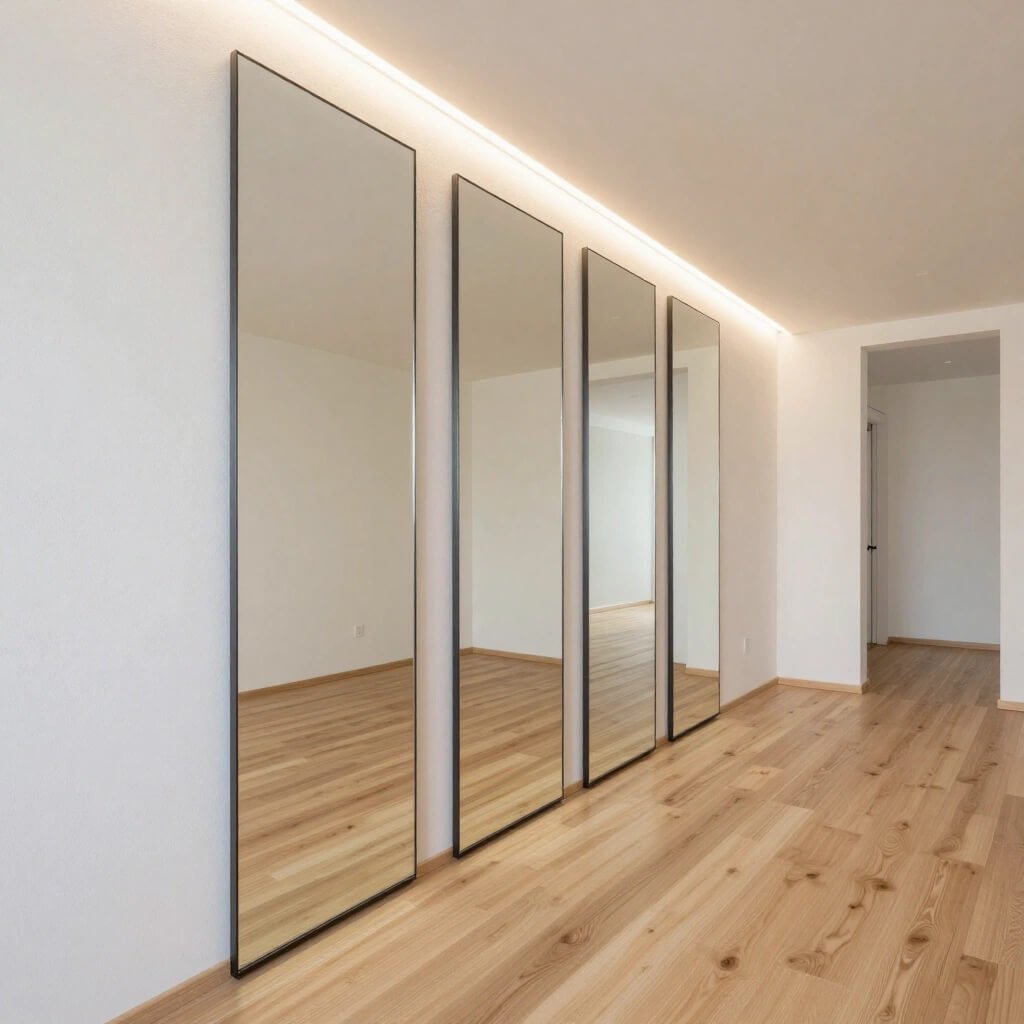
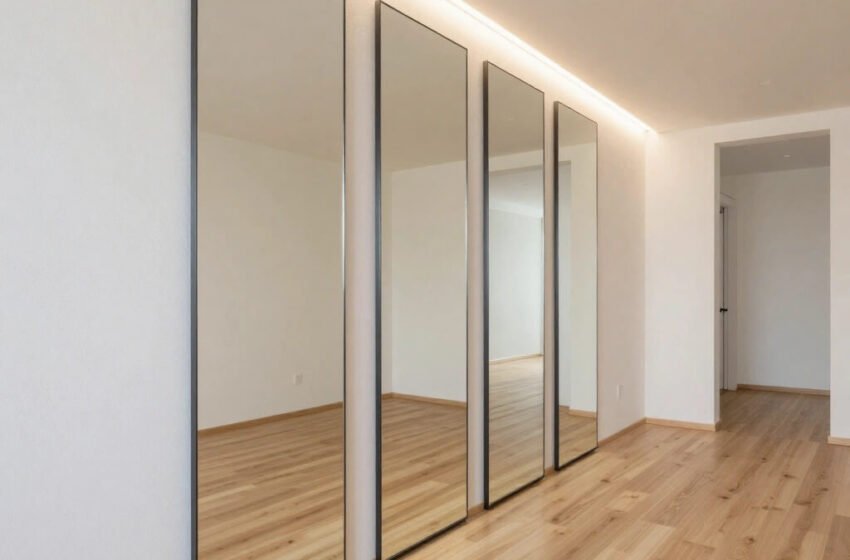
Okay, can we talk about how mirrors are basically sorcery? You stick some reflective glass on your wall, and suddenly your cramped corridor looks twice as spacious. Physics? Design magic? Who knows, but it works.
A mirror wall isn’t just about making your space look bigger—though that’s a pretty sweet bonus. It also bounces light around, adds depth, and gives you one last chance to check your outfit before you leave. (You’re welcome for saving you from that spinach-in-teeth disaster.)
Mirror Placement Strategy
Don’t just slap a mirror anywhere and expect miracles. Here’s what actually makes a difference:
- Opposite windows or light sources: Maximizes the light-bouncing effect
- End of the corridor: Creates the illusion of the hallway continuing
- Full-length on one wall: Makes narrow spaces feel dramatically wider
- Gallery wall of small mirrors: Adds visual interest while still opening up the space
I went with a series of three circular mirrors in different sizes along one wall. It looks modern, breaks up the monotony of a long hallway, and honestly makes the whole space feel less like a bowling alley and more like an actual design feature.
Frame Choices Matter
FYI, the frame you choose completely changes the vibe. Sleek black frames scream modern sophistication. Gold or brass brings in that luxury hotel energy. Frameless keeps things ultra-minimal. Match it to your overall aesthetic, or go rogue and let the mirrors be the statement piece.
Also Read: 10 Elegant School Corridor Design Ideas Clean Minimalist Halls That
4. Small Apartment Corridor Space-Saving Hacks
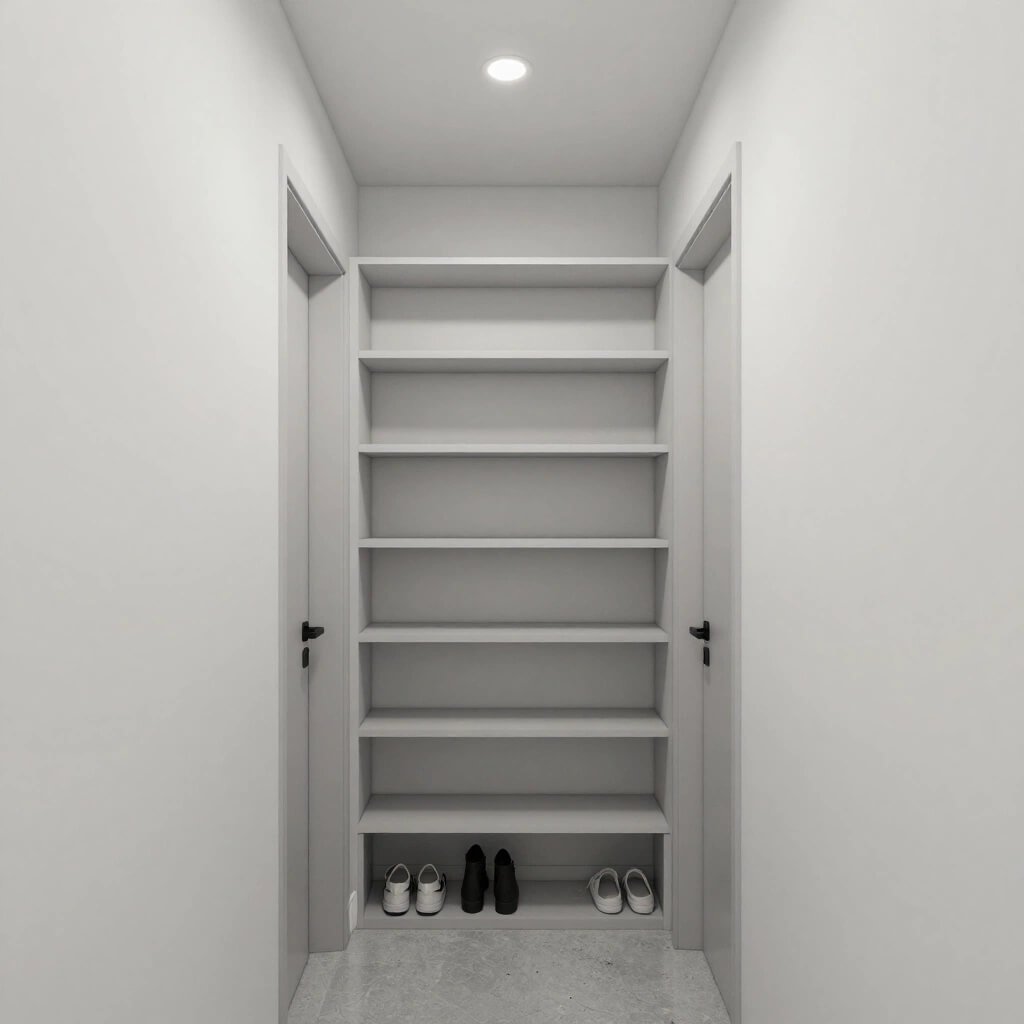
Look, small apartment dwellers—we need to have a real talk about making every single inch count. That corridor might seem like wasted space, but it’s actually prime real estate you’ve been ignoring.
I lived in a 450-square-foot studio for three years where the hallway was literally the only space I hadn’t optimized. Once I figured out these hacks, I gained what felt like an entire closet’s worth of storage. Not kidding.
Vertical Is Your Vocabulary
When you can’t go wide, go up:
- Floor-to-ceiling shelving: Skinny bookcases that don’t jut out more than 8-10 inches
- Wall-mounted hooks: For bags, keys, jackets—anything you’d otherwise dump on a chair
- Overhead storage: Shallow cabinets above doorways that you’d never notice but add tons of space
- Pegboard walls: Customizable, functional, and surprisingly stylish when done right
The game-changer for me? Installing a narrow shoe rack that runs the entire length of one wall. It’s only 6 inches deep, sits right at baseboard level, and suddenly I had a place for every pair instead of that chaotic pile by the door.
Furniture That Actually Fits
Forget standard furniture dimensions—they weren’t made for apartment corridors. You need pieces specifically designed for tight spaces:
- Console tables under 12 inches deep
- Slim storage benches (bonus points if they lift up for hidden storage)
- Fold-down desks that disappear when you’re not using them
- Corner shelving that utilizes those weird angles
Ever thought about turning your corridor into a mini home office? Because I did, and it’s weirdly perfect. A narrow wall-mounted desk, a fold-down chair, and boom—workspace achieved without sacrificing a whole room.
5. Scandinavian Style Bright Corridor Design
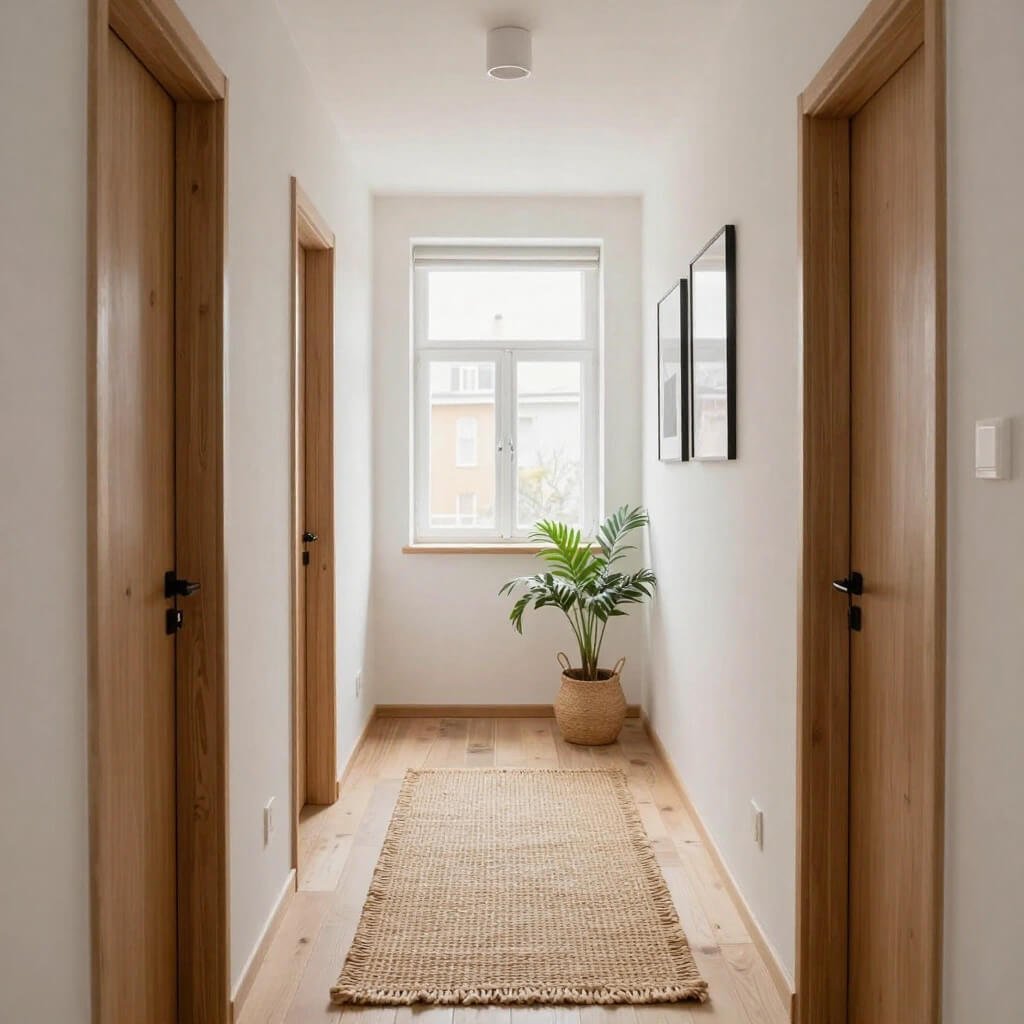
If you want your corridor to feel like a breath of fresh air instead of a dark tunnel, let me introduce you to Scandinavian design principles. These folks live in places with like six hours of winter daylight, so they know a thing or two about making spaces feel bright and welcoming.
The whole philosophy centers on light, functionality, and simplicity. No fuss, no clutter, just clean and cheerful design that makes you want to slow down instead of speed-walk through.
The Scandi Color Palette
Here’s your shopping list for paint and decor:
- White walls (obviously)
- Light wood tones: Think birch, ash, or pale oak
- Soft grays and beiges
- Pops of black for contrast and definition
- Muted pastels if you’re feeling adventurous (dusty pink, sage green, pale blue)
I painted my previously beige corridor walls a crisp white, and the difference was almost comical. It went from “dungeon adjacent” to “actually pleasant” in one weekend. White reflects every bit of available light, making even windowless hallways feel brighter.
Natural Materials and Textures
Scandinavian design loves natural materials, and your corridor should too:
- Wood flooring or runners: Adds warmth without visual weight
- Woven baskets: For storage that doesn’t look like storage
- Linen or cotton textiles: A simple runner or wall hanging
- Natural fiber rugs: Jute or sisal work great in high-traffic areas
The trick is balancing all that white and light wood with texture so it doesn’t feel sterile. A chunky knit throw draped over a slim bench, a jute runner on the floor, some ceramic vases—these little touches make it feel cozy instead of cold.
6. Budget-Friendly DIY Corridor Wall Decor
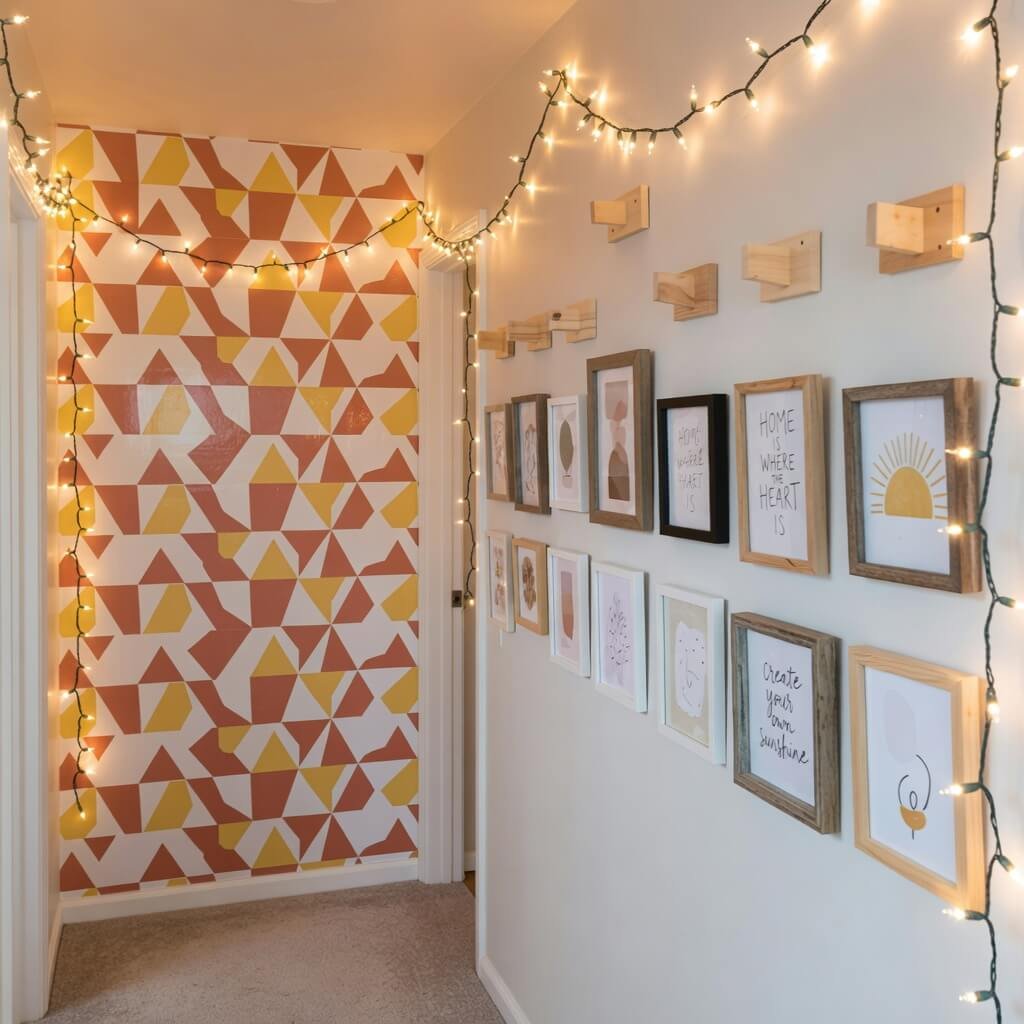
Real talk: you don’t need to drop a month’s rent on fancy art to make your corridor look intentional. Some of the best-looking hallways I’ve seen were decorated on shoestring budgets by people who got creative instead of reaching for their wallets.
DIY doesn’t mean cheap-looking if you do it right. It means personalized, unique, and actually meaningful instead of just filling space with mass-produced stuff everyone else has.
Gallery Wall on a Budget
Gallery walls can look expensive even when they’re not:
- Frame your own prints: Download free artwork or print your own photos
- Thrift store frame collection: Spray paint them all the same color for a cohesive look
- Pressed botanical prints: Free if you have plants, frames from the dollar store
- Postcards and vintage maps: Frame these for an eclectic, well-traveled vibe
I created an entire gallery wall for under $50 by printing black-and-white photography from free stock photo sites, buying cheap IKEA frames, and arranging them in a grid. People assume I spent hundreds, and I just smile and nod. 😉
Creative Wall Treatment Ideas
Who said walls need to be plain paint?
- Washi tape geometric designs: Removable, renter-friendly, and costs like $10
- Fabric wall hangings: Buy a yard of cool fabric and hang it like a tapestry
- Painted accent wall: One wall in a bold color or pattern makes a huge impact
- Floating shelves with styled items: Books, plants, small objects create visual interest
The washi tape trick is chef’s kiss for renters. You can create intricate patterns, fake wallpaper looks, or simple accent lines without losing your security deposit. I did a geometric mountain design in my last apartment, and it became the most photographed wall in the place.
Also Read: 10 Creative Small Corridor Design Ideas for Narrow Spaces
7. Elegant Neutral Tone Hallway Inspiration
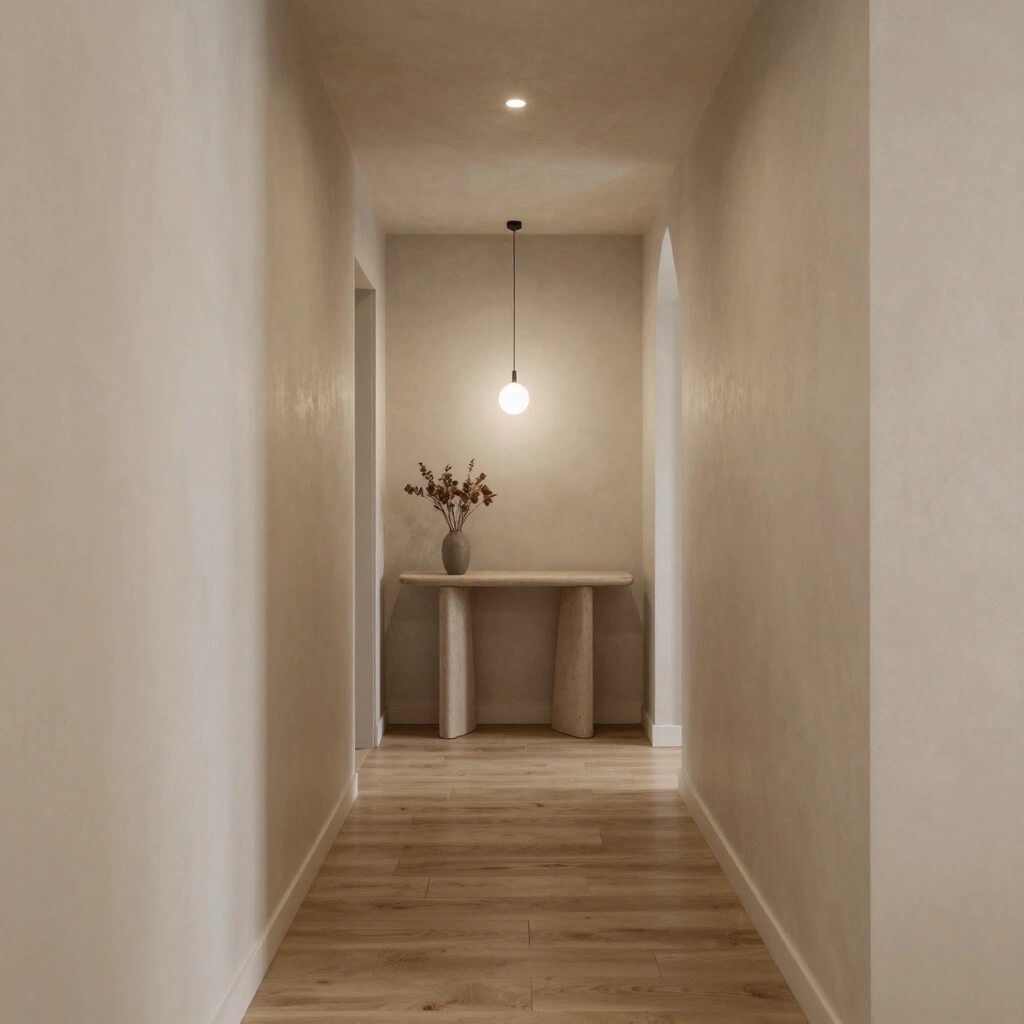
Not everyone wants bold colors or dramatic statements, and that’s totally fine. Neutral tones done well can be just as impactful—sometimes even more so—than a bright, busy corridor.
The key word here is “elegant.” We’re not talking boring beige builder-grade neutrals that make you want to nap from boredom. We’re talking sophisticated, layered, intentional neutral palettes that feel expensive and calming.
Building a Neutral Palette with Depth
Neutrals only work when you layer different tones and textures:
- Base: Warm white or soft greige walls
- Mid-tone: Taupe, mushroom, or warm gray accents
- Dark anchor: Charcoal, chocolate brown, or deep navy details
- Texture variety: Matte, glossy, rough, smooth surfaces
I learned this from a designer friend who basically yelled at me for thinking “neutral” meant “one shade of beige everywhere.” You need contrast and variation within your neutral palette, or everything blends together into a bland mush.
Materials That Elevate Neutrals
Certain materials automatically make neutral spaces feel more luxurious:
- Natural stone: Even small details like bookends or decorative objects
- Brass or bronze hardware: Cabinet pulls, light fixtures, picture frames
- Linen textiles: Inherently elegant and textured
- Aged wood: Brings warmth and character
- Leather accents: A small leather tray or wall hooks add richness
My corridor has cream walls, light oak flooring, a charcoal gray runner, and brass light fixtures. Nothing wild, nothing trendy, but it feels polished and timeless. Neutrals let good design speak for itself without competing for attention.
8. Green Plant Filled Apartment Corridor Ideas
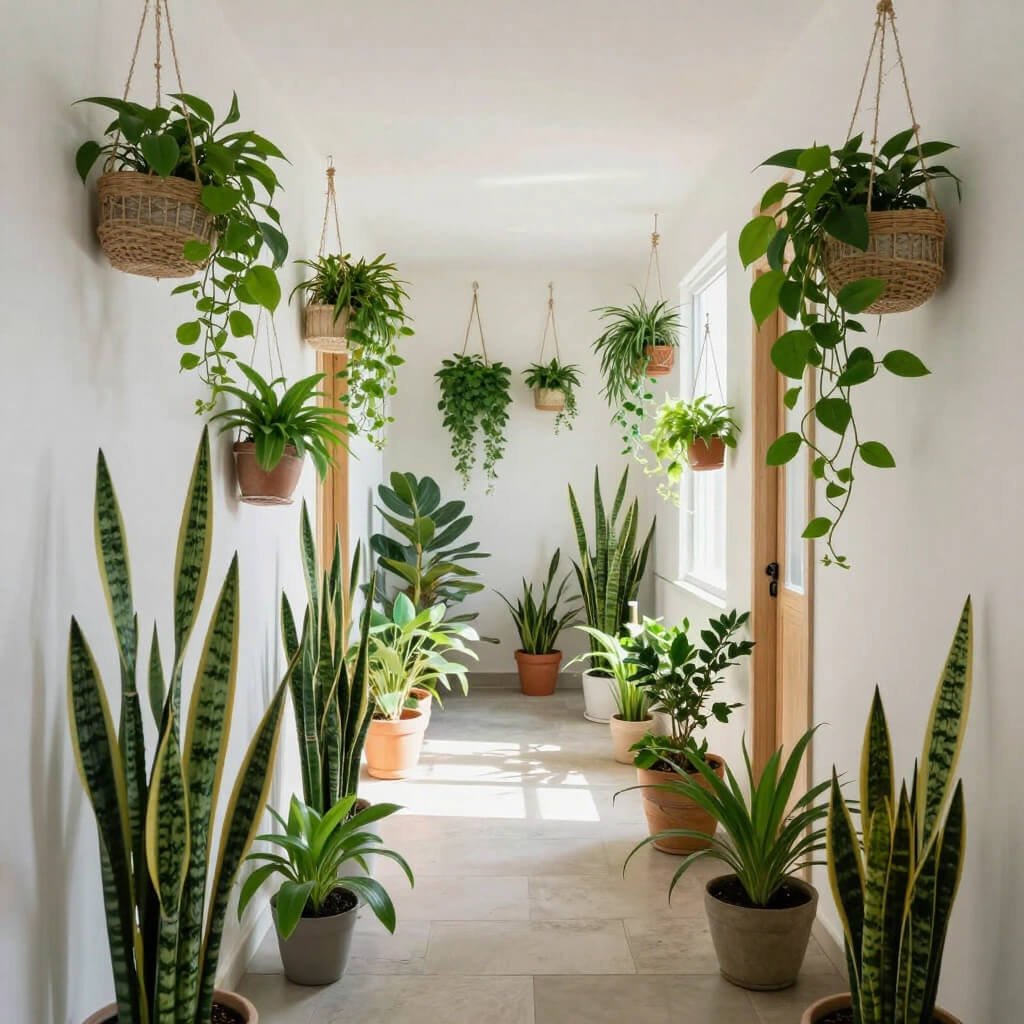
Want to know the easiest way to make your corridor feel alive and welcoming? Plants. Seriously, just add plants.
Even if you think you have a black thumb (which probably just means you haven’t found the right plants yet), you can absolutely incorporate greenery into your hallway design. And no, I’m not suggesting you turn it into a jungle—though honestly, if that’s your vibe, go for it.
Low-Light Plant Champions
Most corridors don’t have windows, which limits your options but doesn’t eliminate them:
- Pothos: Basically indestructible, trails beautifully, tolerates neglect
- Snake plants: Thrives on neglect, needs minimal light, looks architectural
- ZZ plants: Glossy, modern, survives in a cave basically
- Cast iron plant: Literally named for being tough as nails
I have pothos on a high shelf at one end of my corridor, and the vines trail down about four feet. It adds so much life and movement to a space that would otherwise feel static. Plus, plants improve air quality, so you’re basically being healthy just by walking to your bedroom.
Creative Plant Display Methods
Don’t just stick plants on the floor and call it done:
- Wall-mounted planters: Save floor space while adding vertical interest
- Hanging planters: Perfect for trailing varieties
- Ladder shelf: Lean it against the wall and style with plants at different heights
- Window box style: Mount long planters along one wall like outdoor window boxes
One warning: make sure you can actually access plants for watering without doing gymnastics. I once put a plant on a super high shelf and basically needed a ladder every time it needed water. Not sustainable, friends. Learn from my mistakes.
9. Smart Storage Solutions for Narrow Corridors
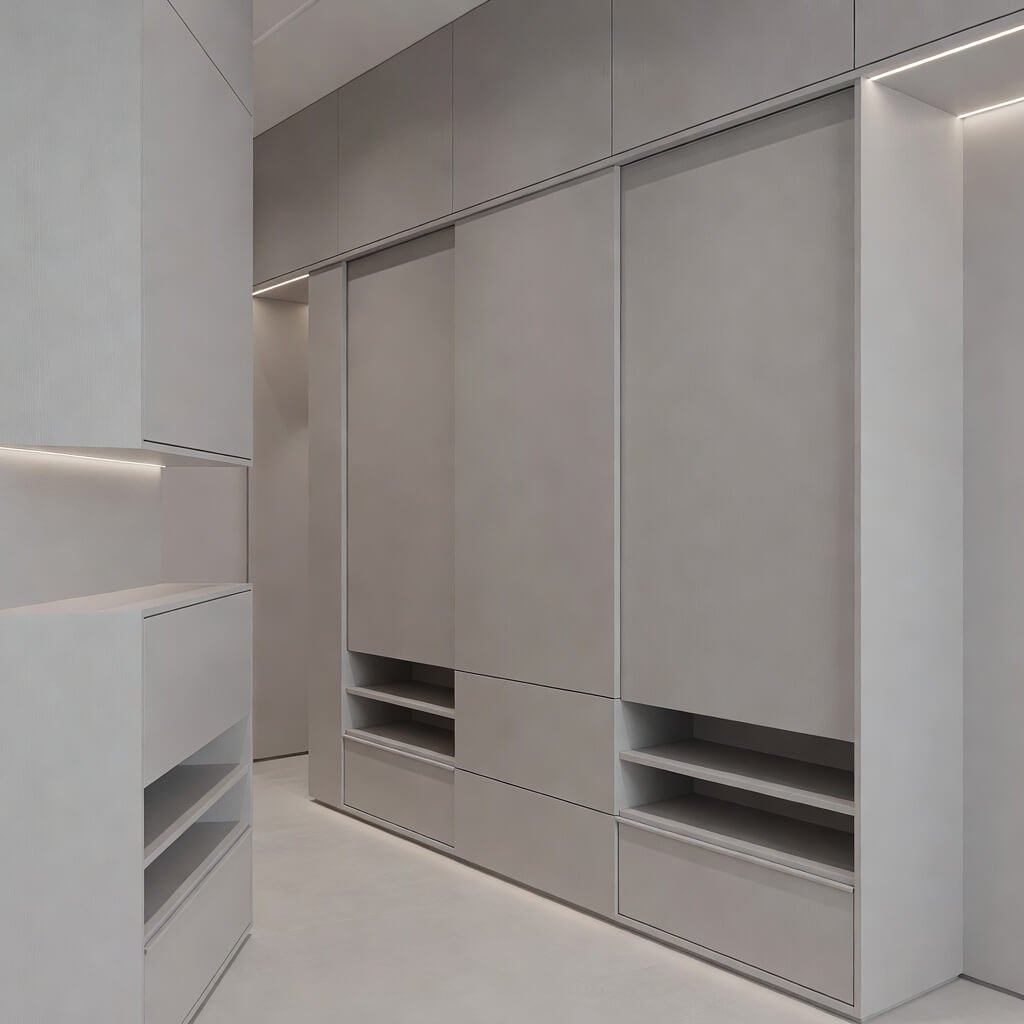
IMO, the biggest missed opportunity in apartment corridors is storage potential. Everyone just sees empty wall space and keeps walking, when they could be solving half their organizational problems right there.
Your corridor runs between different rooms, making it the perfect transitional storage zone for items you need accessible but not necessarily in your main living spaces.
Built-In vs. Freestanding Options
You’ve got two routes here, depending on whether you own or rent:
Built-in solutions (better for homeowners):
- Floor-to-ceiling cabinets with flush doors
- Recessed shelving between wall studs
- Custom closet systems
- Built-in bench with storage underneath
Freestanding solutions (renter-friendly):
- Narrow bookcases and shelving units
- Stackable storage cubes
- Wall-mounted modular systems
- Over-door organizers
I went the freestanding route with a slim 8-inch-deep bookcase that I stuck right against the wall. It holds books, decorative boxes full of random stuff, and looks intentional instead of desperate. You’d be shocked what you can fit in 8 inches of depth when you commit to using vertical space.
Zone Your Storage Strategically
Think about what actually makes sense where:
- Entry end: Keys, mail, bags, shoes, jackets
- Middle stretch: Books, decor, linens, seasonal items
- Bedroom end: Extra clothing, accessories, bathroom overflow
Creating storage zones that match how you actually move through your apartment just makes life easier. I keep a basket for dog walking supplies right by the door, and it’s saved me countless minutes of searching for poop bags at 6 AM. Romance isn’t dead, folks.
Also Read: 10 Beautiful Office Corridor Design Ideas Minimal Luxury Spaces
10. Dark to Bright Corridor Transformation Ideas
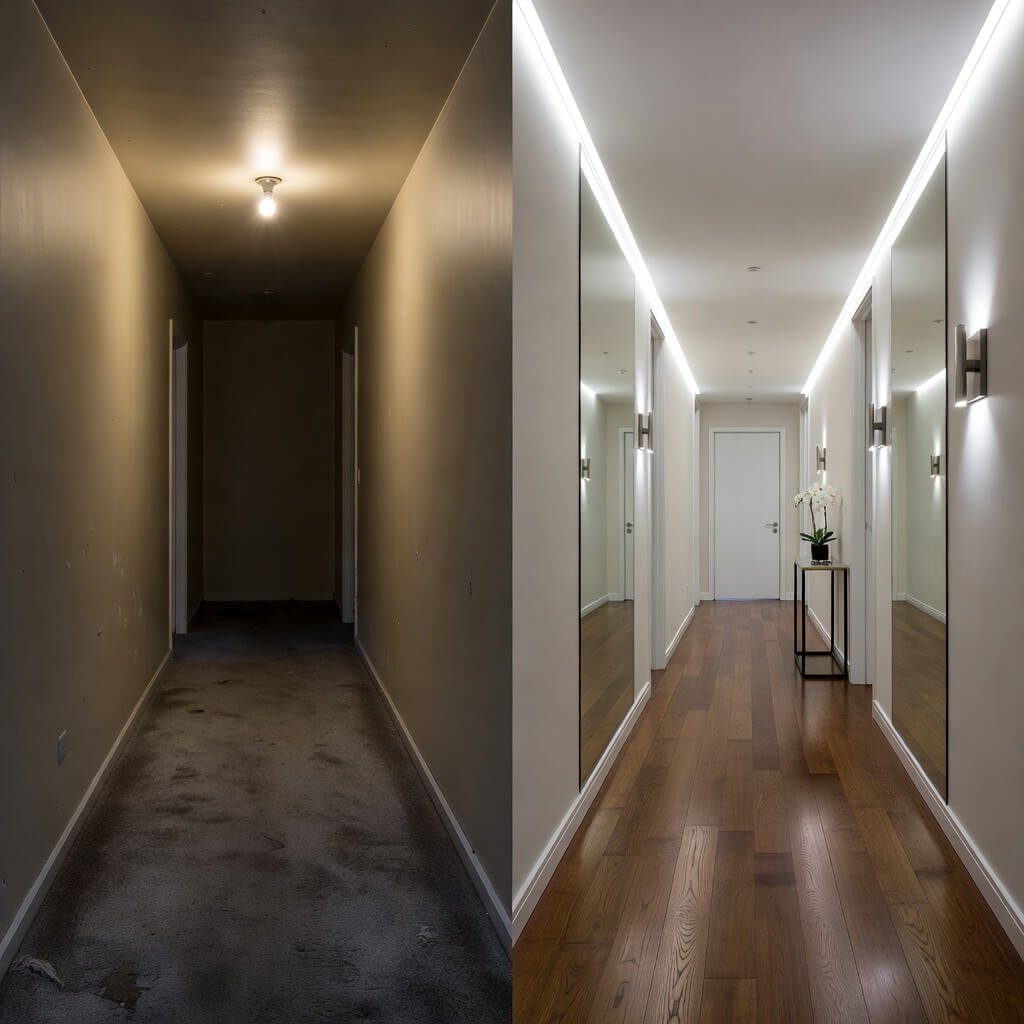
Alright, let’s talk about the corridors that genuinely feel like you’re walking through a cave. No windows, bad lighting, dark floors or walls—the whole depressing package. These spaces need more than just a coat of paint; they need a complete transformation strategy.
I’ve seen corridors go from “actually creepy” to “wait, this is gorgeous” with the right combination of changes. It’s not always easy, and it might take some investment, but the payback in daily quality of life is huge.
The Foundation: Paint and Flooring
Start with the biggest surfaces:
- Paint everything light: Walls, ceiling, even trim—go lighter than you think
- High-gloss or semi-gloss paint: Reflects more light than matte
- Light flooring: If possible, lighten your floors or add a light-colored runner
- White or light-colored baseboards: Creates contrast and brightens the bottom of walls
When I moved into my current place, the corridor had dark brown walls (why?!) and dark laminate flooring. I couldn’t change the floor, but I painted the walls white and added a cream-colored runner. The transformation was honestly stunning. Sometimes the simplest changes have the biggest impact.
Amplifying Light Sources
Every bit of light needs to work overtime:
- Maximum wattage bulbs (within safe limits for your fixtures)
- Multiple light sources: Overhead plus wall sconces plus accent lighting
- Reflective surfaces: Mirrors, glossy paint, metallic accents
- Light-colored or sheer window treatments if you’re lucky enough to have windows
One clever trick? Paint the inside of any alcoves or recesses a slightly lighter shade than your walls. This creates subtle depth and makes those areas feel like they’re catching light instead of creating shadows.
Optical Illusion Techniques
Work smarter, not harder:
- Horizontal stripes: Make narrow corridors feel wider
- Light-colored ceiling: Makes low ceilings feel higher
- Strategic mirror placement: We covered this earlier, but it bears repeating
- Minimal visual clutter: Dark corridors can’t handle busy patterns without feeling claustrophobic
I’ve seen people paint one horizontal stripe about three feet up from the floor in a slightly lighter shade than the rest of the wall. It sounds weird, but it genuinely makes the corridor feel wider. Your eye reads it as expanded space even though intellectually you know nothing changed.
Bringing It All Together
Here’s the thing about apartment corridors—they’re not just transition spaces. They’re opportunities. Chances to make your entire home feel more cohesive, more functional, and honestly just more pleasant to live in.
You don’t need to implement every single idea we talked about. Pick the ones that actually solve problems you’re having or match your style, and ignore the rest. Minimalist lighting with smart storage? Cool. Scandinavian plant-filled gallery wall? Also cool. Dark maximalist corridor with moody lighting and dramatic art? Absolutely cool if that’s your vibe.
The real secret is just paying attention to these spaces instead of treating them like necessary evils. Your corridor sees you every single day—multiple times. Shouldn’t it be something that makes you smile instead of something you barely tolerate?
I challenge you to look at your apartment corridor with fresh eyes today. What’s one thing—just one—that you could change this weekend to make it better? A coat of paint? Some strategically placed hooks? A plant? Start there. Small improvements compound, and before you know it, you’ll have guests complimenting your hallway design and you’ll get to act all casual like “Oh, this old thing?” while secretly being super proud.
Now stop reading and go measure your corridor. You’ve got design magic to work. 🙂