10 Dreamy Long Corridor Design Ideas Soft & Bright
- Corridor Design
 Ben
Ben- 0
- 39 minutes read
You know that awkward narrow space connecting your rooms that everyone just rushes through without a second thought? Yeah, that corridor. Most people treat it like architectural dead space, but honestly, it’s one of the most underrated design opportunities in your home. I used to think hallways were just… there. Boring. Functional. Until I realized they could actually steal the show.
Look, I get it. When you’re planning a home renovation or styling your space, corridors usually land at the bottom of your priority list. But here’s the thing—these long passages are the first thing people see when they enter different areas of your home. They set the mood, create transitions, and if you do them right, they can absolutely blow your guests’ minds. So let’s talk about ten corridor designs that’ll make you actually want to linger in your hallway. Soft, bright, and dreamy? Oh yes, we’re going there.
Modern Minimalist Long Corridor with Soft LED Lighting
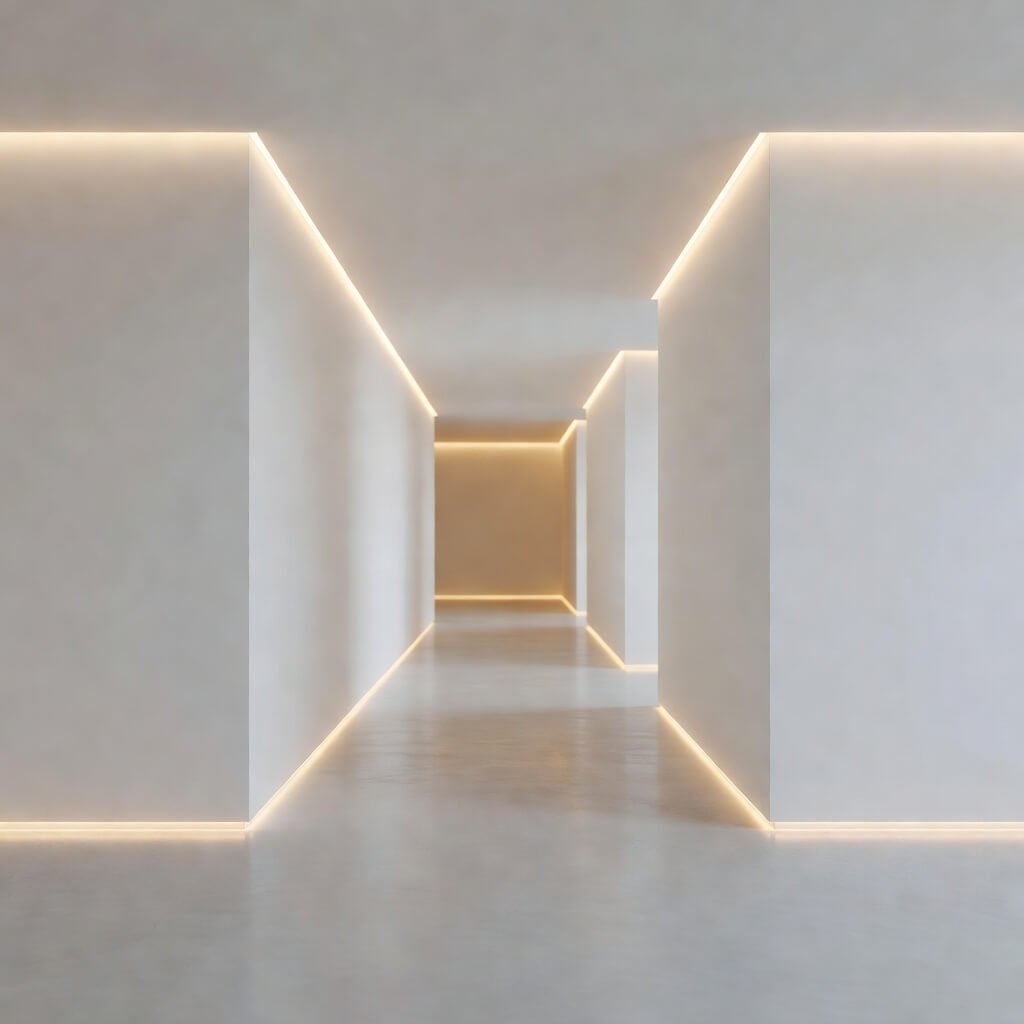
Let me start with my personal favorite because minimalism just hits differently when you nail it. Picture this: clean lines, neutral colors, and LED strips that create this gorgeous soft glow along your corridor. No clutter. No chaos. Just pure, intentional design.
The beauty of a minimalist corridor lies in what you don’t include. I’m talking white or light gray walls, maybe a subtle texture if you’re feeling adventurous. The real star here? Strategic LED lighting. Install recessed LED strips along the ceiling edges or even at baseboard level. Trust me on this—the indirect lighting creates depth without overwhelming the space.
Here’s what works brilliantly:
- Recessed ceiling lights that wash the walls with soft illumination
- Floor-level LED strips that guide the path like a modern runway (fancy, right?)
- Minimal color palette: whites, grays, maybe a single accent color
- Clean flooring in light wood or polished concrete
The trick is balancing brightness with warmth. LED lights can sometimes feel cold and clinical, so choose warm white temperatures (around 2700-3000K). You want soft and inviting, not operating room vibes. I learned this the hard way when I installed cool white LEDs in my first apartment corridor—it literally felt like walking through a hospital. Not the aesthetic I was going for 🙂
One thing I absolutely love about this design? It makes small corridors feel spacious. The continuous light flow tricks your eye into perceiving more space than actually exists. Plus, minimalist designs age beautifully because they’re timeless. You won’t look at it in five years and cringe at outdated trends.
Luxury Hotel-Style Narrow Hallway Design
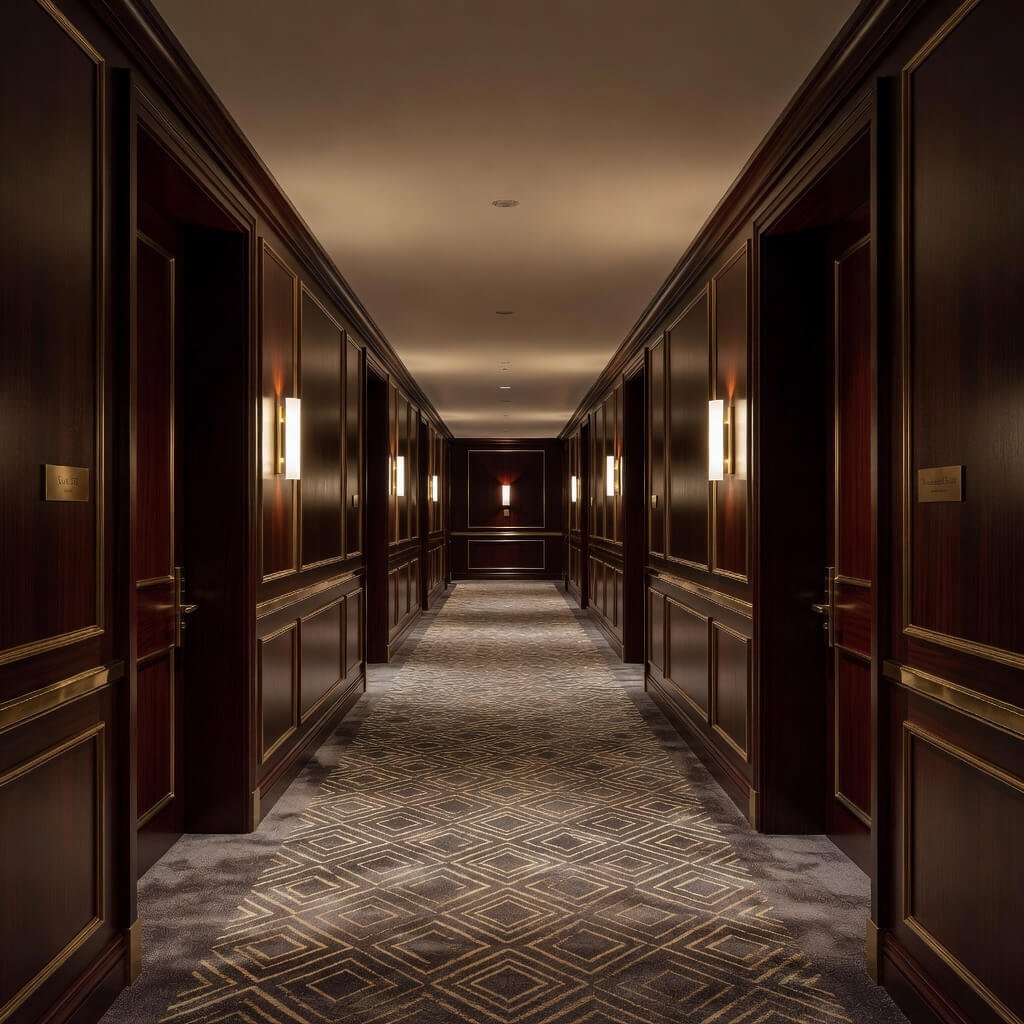
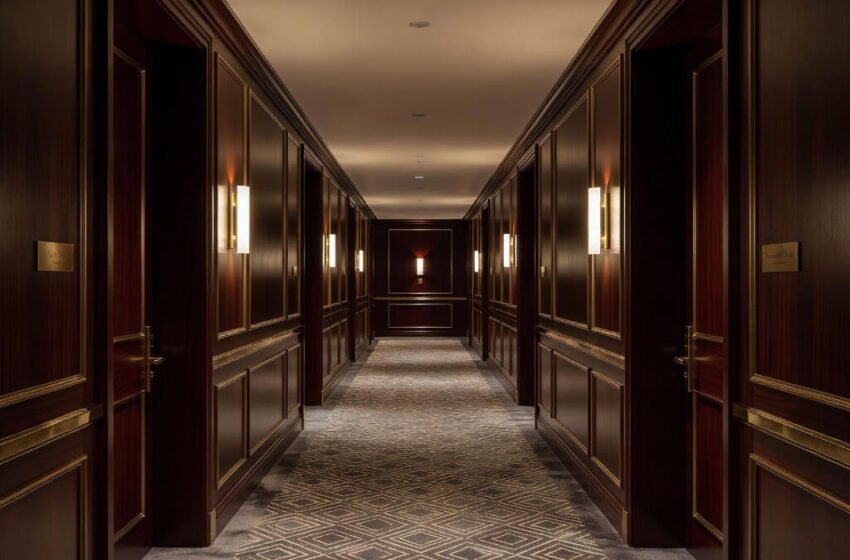
Ever walked through a five-star hotel corridor and thought, “Why can’t my home feel like this?” Spoiler alert: it totally can. Hotel corridors nail that perfect balance of elegance and comfort, and you can absolutely recreate that magic.
The hotel aesthetic revolves around a few key elements. First, rich textures. Think plush carpeting or runners that muffle sound and add luxury underfoot. Hotels use carpets for acoustic reasons (nobody wants to hear footsteps at 2 AM), but the bonus is that instant opulence they bring.
Second, symmetrical design. Hotels love matching wall sconces, evenly spaced artwork, and identical doors. This symmetry creates visual harmony that feels incredibly sophisticated. You don’t need a 50-meter corridor to pull this off—even a modest hallway benefits from balanced design.
Key features to include:
- Matching wall sconces every few feet for consistent, warm lighting
- Neutral, sophisticated color scheme: creams, taupes, navy, or charcoal
- Plush runner carpet down the center
- Consistent door hardware in brass, matte black, or brushed nickel
- Small console tables with fresh flowers or decorative objects
Here’s my hot take: hotel-style doesn’t mean boring or generic. You personalize it with your hardware choices, artwork, and those little decorative touches. I added vintage brass sconces to mine, and suddenly my hallway went from “trying too hard” to “just right.” The warm brass catches the light beautifully and adds character without screaming for attention.
Pro tip? Scent matters. Hotels often have signature scents, and you can do the same with a subtle diffuser or scented candle on that console table. Your corridor becomes an experience, not just a walkway.
Mirror Wall Long Corridor to Create Wide Illusion
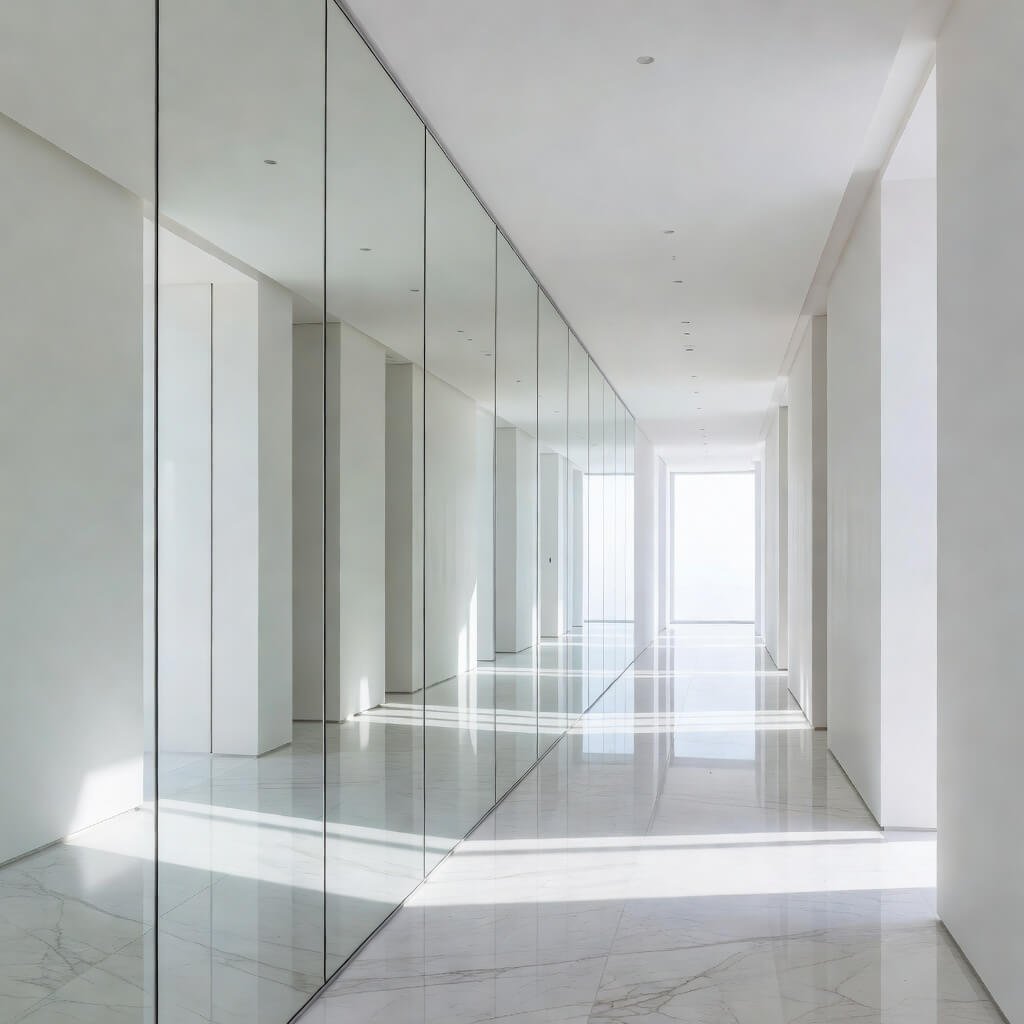
Okay, let’s talk about magic tricks. If you’ve got a narrow corridor that feels like a claustrophobic tunnel, mirrors are your new best friend. And I’m not talking about a single decorative mirror—I mean going all in with a mirror wall.
The science is simple: mirrors reflect light and space, instantly doubling the perceived width of your corridor. But the execution? That’s where it gets fun. You can install floor-to-ceiling mirrors on one entire wall, or create a more subtle effect with large mirror panels interspersed with wall sections.
I’ll be honest—when I first considered this for my own narrow hallway, I worried it might feel too “funhouse.” But when done right, it’s absolutely stunning. The key is quality mirrors with minimal frames. Cheap mirrors with visible seams or distortions ruin the effect entirely.
Installation options that work:
- Full wall mirror panels from floor to ceiling on one side
- Vertical mirror strips alternating with painted wall sections
- Strategically placed large mirrors opposite windows or light sources
- Mirrored closet doors if your corridor has built-in storage
The biggest advantage? Natural light multiplication. If your corridor has any windows or receives indirect light, mirrors bounce that brightness around like nobody’s business. Your hallway goes from cave-like to airy instantly.
One thing to watch out for—cleaning. Yeah, mirrors show fingerprints, dust, and basically every speck of dirt. If you’ve got kids or pets, you’ll become very familiar with glass cleaner. But honestly? The spatial effect is so worth it. My narrow corridor went from “avoid at all costs” to my favorite spot in the house for natural light.
Also Read: 10 Creative Apartment Corridor Design Smart Space Solutions
Gallery Wall Photo Frame Corridor Design
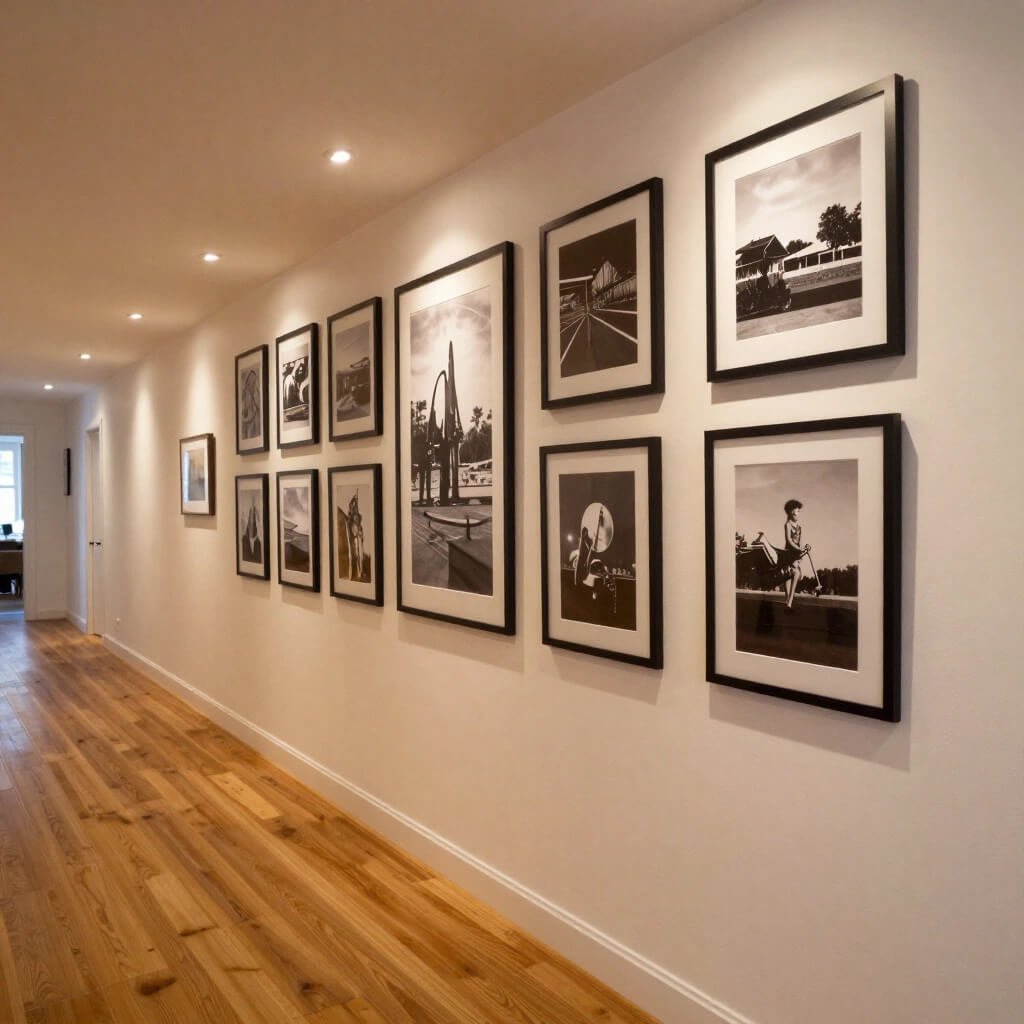
Want to know the most personal way to design a corridor? Turn it into your own private art gallery. I’m talking floor-to-ceiling photo frames, artwork, prints—the whole nine yards. This transforms a boring passageway into a storytelling journey.
The beauty of a gallery wall is that it’s completely customizable and tells your story. Family photos, travel memories, art prints you love, vintage finds from thrift stores—anything goes. But (and this is important) you need a cohesive strategy or it’ll just look messy.
Here’s how I approach gallery walls:
Frame consistency: This doesn’t mean identical frames, but there should be a unifying element. Maybe they’re all black frames, or all wood tones, or all vintage gold. Pick a theme and stick with it.
Layout planning: Do NOT just start hammering nails randomly. Lay everything out on the floor first. Take photos. Adjust. I use painter’s tape on the wall to map out frame positions before committing. Saved me from about a dozen unnecessary nail holes.
Lighting is crucial: Gallery walls need proper illumination. Install picture lights, track lighting, or strategically placed spotlights. Your beautiful collection deserves to be seen, especially in a corridor that might lack natural light.
Elements that make gallery walls pop:
- Mix of sizes: Combine large statement pieces with smaller photos
- Consistent matting: White or cream mats create visual breathing room
- Balanced arrangement: Heavier pieces at eye level, lighter ones above/below
- Personal narrative: Group photos by theme, timeline, or color story
IMO, the gallery wall approach works particularly well in longer corridors because you create visual interest along the entire journey. Your guests actually slow down to look at things instead of speed-walking through. Plus, it’s endlessly updateable. New memories? Swap out a frame. Found new art you love? Rearrange.
The only downside? Committing to the layout can feel overwhelming. Start with a corner or section, get comfortable with the process, then expand. I started with just five frames and now have over thirty lining my corridor. It’s become my favorite conversation starter when people visit.
Wooden Warm Tone Scandinavian Hallway Style
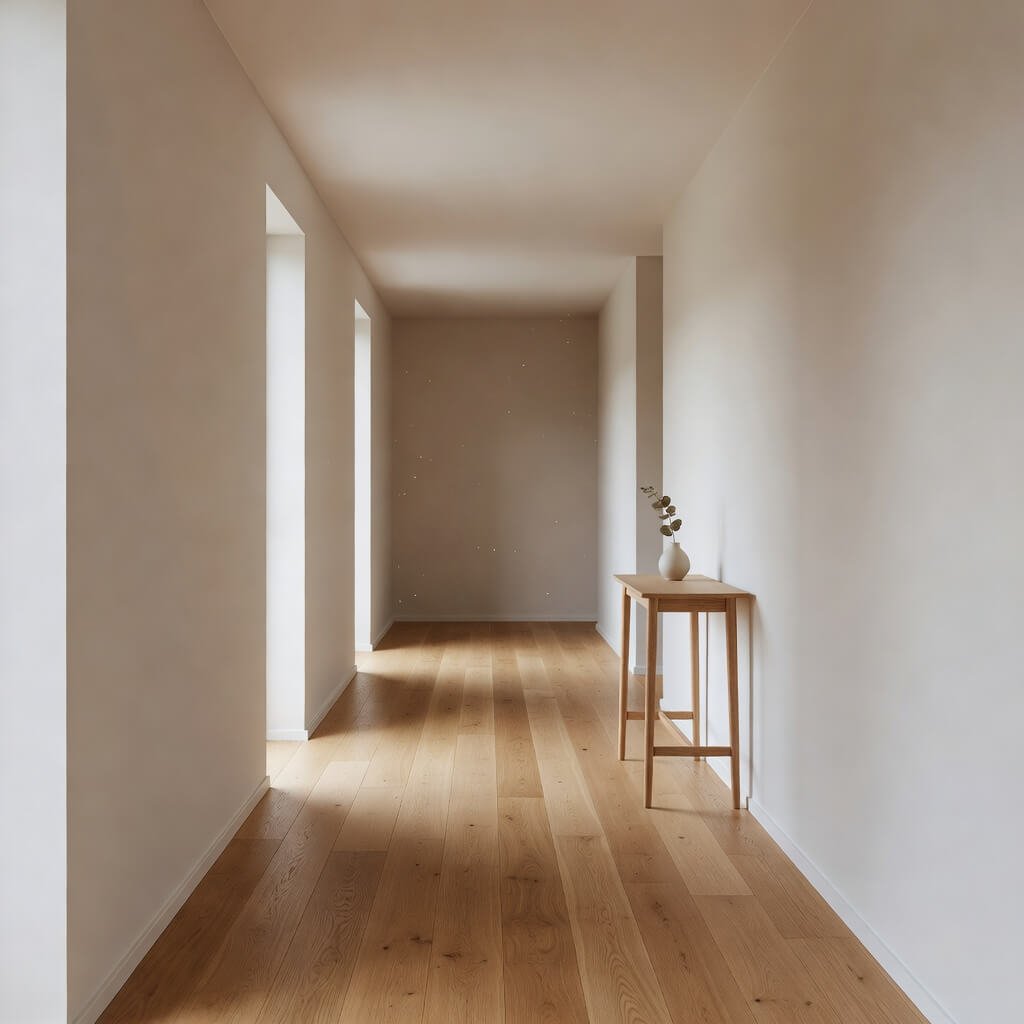
Nothing—and I mean nothing—beats the cozy warmth of Scandinavian design for making a corridor feel like a hug. This style centers on natural wood tones, simplicity, and functional beauty. If you crave that hygge feeling every time you walk through your hallway, this is your vibe.
Scandinavian corridors embrace light woods like birch, oak, or ash. The grain is visible, celebrated even. You’re not hiding the natural beauty under heavy stains—you’re showcasing it. Pair that with white or very light gray walls, and you’ve got instant warmth without darkness.
I converted my corridor to Scandi style last year, and the difference is unbelievable. The wood brings organic texture that makes the space feel alive and welcoming. Even on gray, dreary days, the honey tones of the wood flooring make everything feel brighter.
Scandinavian hallway essentials:
- Light wood flooring: Oak, ash, or birch in natural finishes
- White or light gray walls for maximum brightness
- Minimal decor: A simple bench, wooden hooks, maybe a single plant
- Natural textiles: Wool runners, linen storage baskets
- Functional lighting: Simple pendant lights or clean-lined sconces
The philosophy here is “less is more, but make it cozy.” Everything serves a purpose. That wooden bench? It’s for sitting while putting on shoes. Those wall hooks? Functional storage that looks beautiful. The design breathes.
Here’s what I love most about this approach—it never feels cold or sterile despite the minimal aesthetic. The warmth comes from the natural materials and the thoughtful curation. You’re not filling space just to fill it; you’re being intentional.
FYI, Scandinavian design also prioritizes natural light obsessively. If your corridor has windows, keep treatments minimal or skip them entirely. If there are no windows, compensate with warm LED lighting that mimics daylight. The goal is to fight those dark winter vibes year-round.
Luxury Marble Floor Long Passage Design
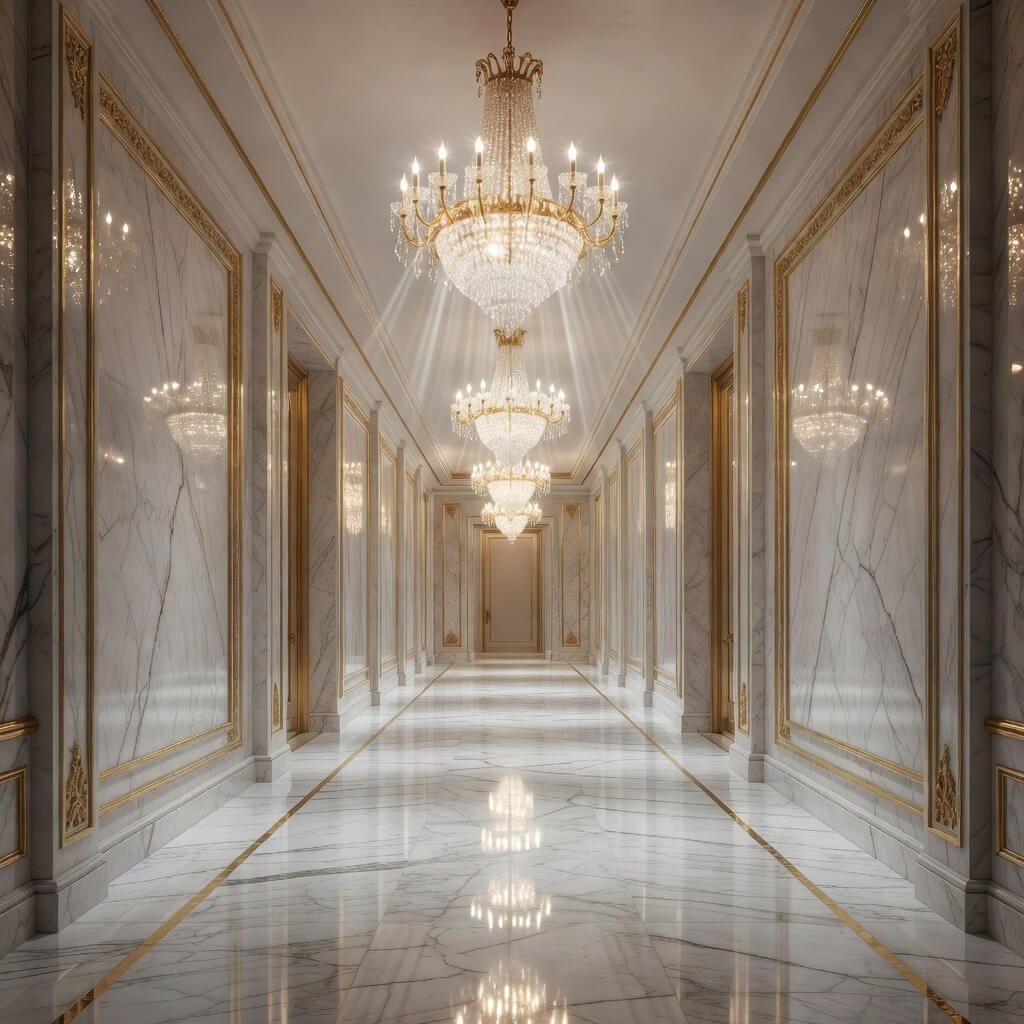
Let’s get fancy for a minute. We’re talking marble floors—the ultimate luxury statement. If you want your corridor to scream elegance and sophistication, marble delivers every single time. It’s timeless, it’s stunning, and yes, it’s a commitment.
I’ll level with you: marble isn’t cheap, and it requires maintenance. But if you can swing it, the visual impact is unmatched. The natural veining, the cool elegance, the way light plays across polished stone—it transforms a simple corridor into a grand entrance.
The variety in marble is actually mind-blowing. You’ve got classic white Carrara with soft gray veining, dramatic black marble with white streaks, warm beige travertine, or even rare colored varieties if you’re feeling adventurous. Each type creates a completely different mood.
What works beautifully with marble corridors:
- Large format tiles: Fewer grout lines mean cleaner, more luxurious appearance
- Book-matched slabs: Mirror the veining pattern for artistic effect
- Polished finish: Reflects light and amplifies brightness
- Neutral wall colors: Let the marble be the star
- Metallic accents: Brass or gold hardware complements marble perfectly
The practical stuff? Marble scratches and stains more easily than other flooring. You’ll need to seal it regularly, clean up spills quickly (especially acidic ones like wine or lemon juice), and accept that it’ll develop a patina over time. Some people love that aged look; others obsess over keeping it pristine.
I visited a friend’s home with Calacatta marble in the corridor, and honestly, I spent half the evening just staring at the floor. The dramatic veining created this natural artwork underfoot. Combined with subtle recessed lighting and minimal decor, the corridor felt like a luxury boutique.
One warning though—marble can feel cold (literally and figuratively). In colder climates, consider underfloor heating. And balance the cool elegance with warm lighting and maybe some wood or textile elements so it doesn’t feel too austere.
Also Read: 10 Elegant School Corridor Design Ideas Clean Minimalist Halls That
Green Indoor Plant Corridor with Natural Vibes
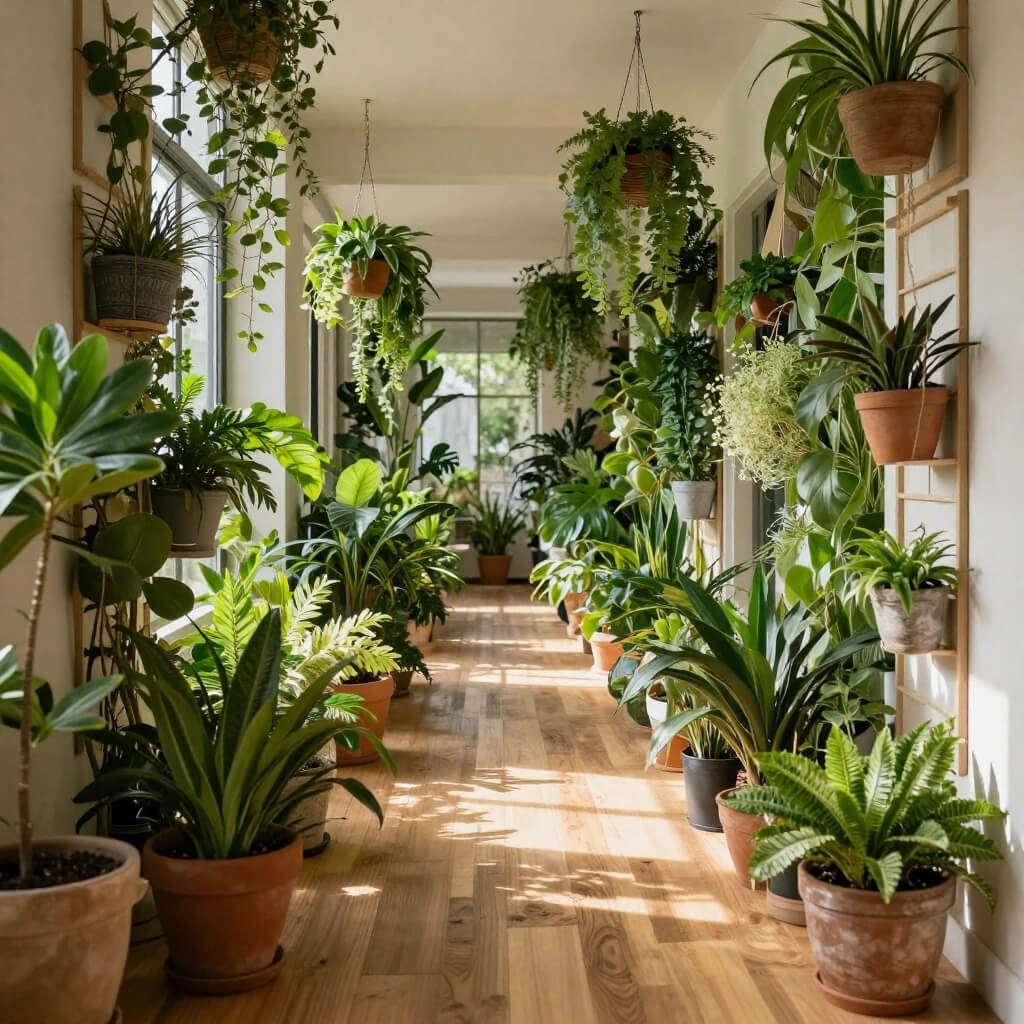
Ready to bring the outdoors in? A plant-filled corridor creates the most refreshing, oxygen-rich journey between rooms. I’m talking about transforming your hallway into an indoor garden pathway that makes you feel like you’re walking through a greenhouse.
This trend has exploded recently, and for good reason. Plants improve air quality, add vibrant color, and create this incredible living energy. But here’s the thing—corridors can be tricky for plants because they often lack natural light. You’ll need to be strategic.
The best approach combines lighting and plant selection. If your corridor has windows, you’re golden—load up on pothos, ferns, peace lilies, and other medium-light lovers. If you’re working with a windowless corridor, you’ll need grow lights and hardy low-light plants like snake plants, ZZ plants, or certain philodendrons.
Creating your plant corridor:
- Floating shelves at varying heights for plant display
- Floor plants in decorative pots along one or both walls
- Hanging plants from the ceiling to utilize vertical space
- Wall-mounted planters for compact greenery
- Grow lights disguised as regular fixtures if natural light is limited
I started with just three plants in my corridor—a snake plant, a pothos, and a peace lily. Now I have sixteen and counting. It’s become mildly addictive, I won’t lie. But every time I walk through that hallway, the greenery just makes me happy. There’s something psychologically soothing about being surrounded by living things.
Practical considerations: You’ll need to water these babies, so ensure you’ve got drainage trays or pots that won’t leak onto your floors. Also, consider the traffic flow—don’t place plants where they’ll get constantly bumped or knocked over. I learned this lesson when I placed a fiddle leaf fig too close to the wall; it got bruised from backpacks and bags brushing against it constantly.
The natural vibe approach works phenomenally well paired with wood elements, neutral walls, and warm lighting. You create this organic sanctuary feeling that makes even the most mundane corridor walk feel like a nature retreat.
Smart Storage Long Corridor with Hidden Cabinets
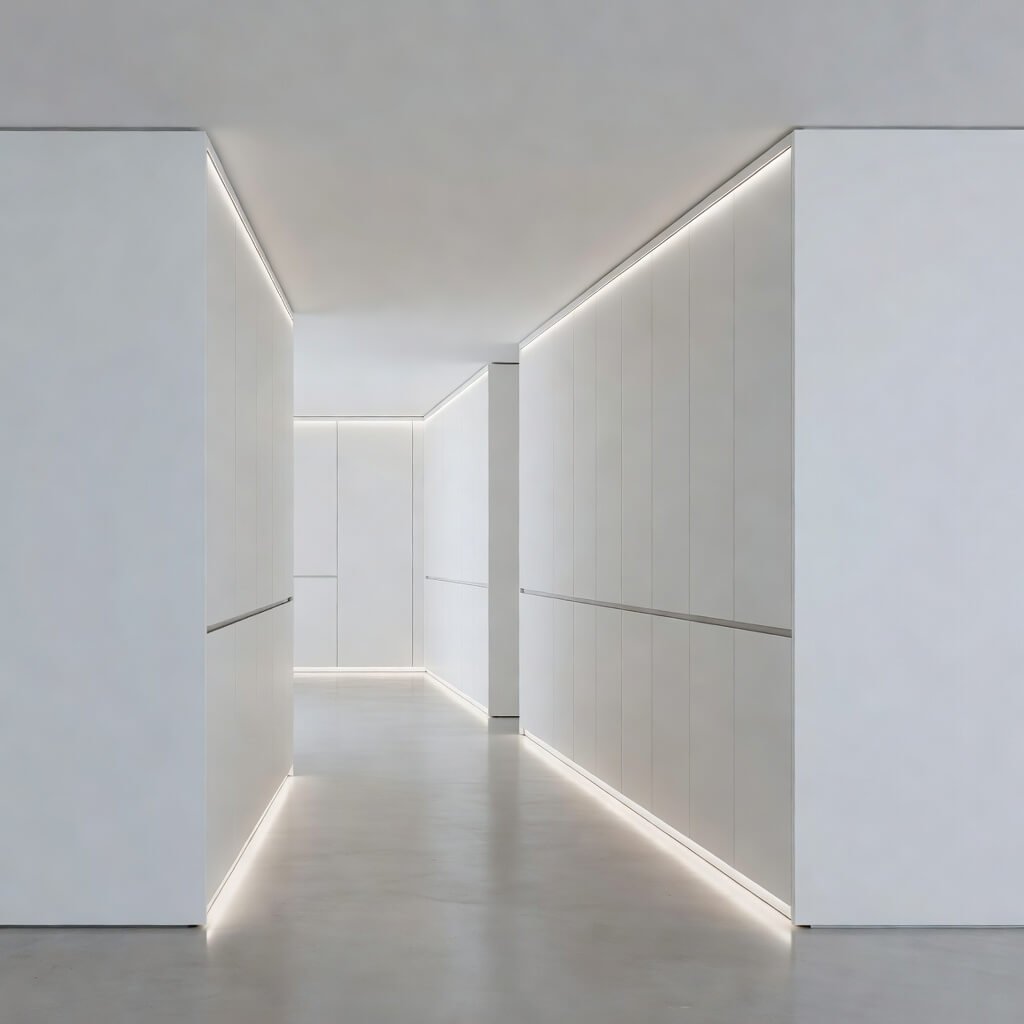
Let’s get practical for a second. Corridors represent valuable real estate in your home, and if you’re not using them for storage, you’re missing out big time. But we’re not talking about ugly, cluttered storage—we’re talking sleek, hidden cabinets that maintain aesthetic appeal while maximizing function.
The genius of corridor storage is that it utilizes space you’re already not using. That wall? It can be a floor-to-ceiling cabinet system. The area under a staircase corridor? Perfect for pull-out drawers. You add massive storage capacity without sacrificing any room footprint.
I retrofitted my corridor with hidden cabinets last year, and I swear I gained like 30% more storage in my home. Everything from seasonal clothing to cleaning supplies now has a designated spot. And because the cabinet fronts are clean and flush with the wall, visitors don’t even realize they’re looking at storage.
Smart corridor storage options:
- Floor-to-ceiling built-in cabinets with push-to-open mechanisms (no handles = cleaner look)
- Recessed wall niches for decorative storage
- Under-bench storage if you include seating
- Sliding door systems to conceal storage without swing-space requirements
- Multi-functional furniture: console tables with drawers, storage benches
The key is maintaining that soft and bright aesthetic even with storage. Choose cabinet fronts in light colors—white, cream, light gray, or natural wood tones. Install internal lighting in glass-front cabinets to showcase beautiful items while keeping them dust-free.
Handle-less designs with push-to-open mechanisms keep the corridor walls looking smooth and uncluttered. The lines remain clean, the space feels open, and you’ve got insane storage hiding in plain sight.
Here’s my favorite trick: install LED strip lighting along the top of the cabinet system. It washes the ceiling with soft light, making the corridor feel taller and brighter while showcasing the clean design of your storage solution. Function meets beauty, and honestly, it’s chef’s kiss.
Dark Elegant Moody Hallway Lighting Design
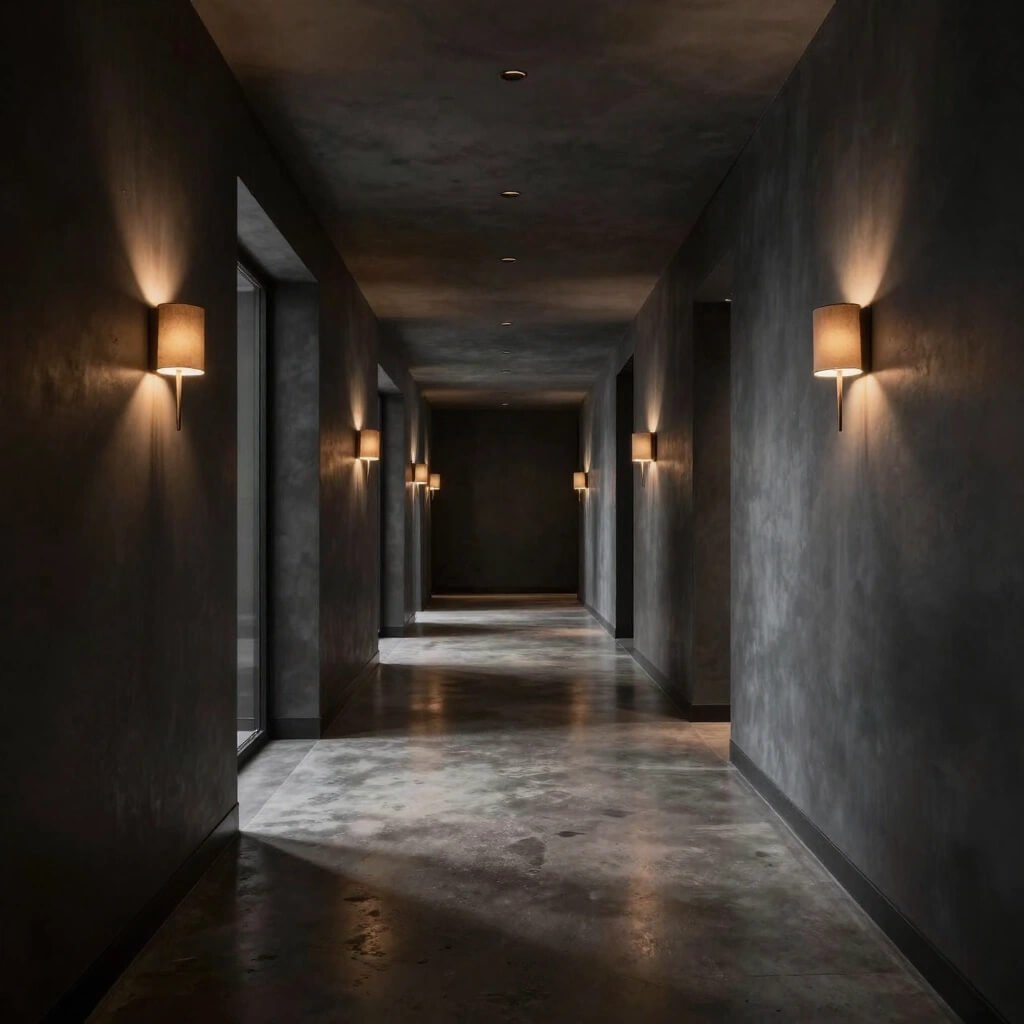
Okay, controversial opinion time: not every corridor needs to be bright and white. Sometimes dark and moody creates the most sophisticated, dramatic impact. We’re talking deep charcoal, navy, forest green, or even black walls with carefully curated lighting that creates ambiance.
I know, I know—this seems counterintuitive in a corridor where space and light are usually concerns. But hear me out. When you embrace darkness and complement it with strategic lighting, you create depth and luxury that bright corridors can’t match. It’s theatrical. It’s bold. It’s absolutely stunning when executed correctly.
The secret lies entirely in layered lighting. You cannot just paint walls dark and call it a day—that’s a recipe for a depressing dungeon. Instead, you need multiple light sources at different levels creating pools of illumination and shadow.
Dark corridor lighting strategy:
- Wall sconces with warm bulbs creating upward and downward light pools
- Recessed spotlights highlighting artwork or architectural features
- LED cove lighting along the ceiling for ambient glow
- Table lamps on console tables for accessible warmth
- Dimmer switches for adjustable mood setting
The dark walls actually make light sources appear more dramatic because of the contrast. A simple brass sconce that might look ordinary on white walls becomes a glowing jewel against charcoal. The interplay between light and shadow adds dimension.
I visited a home with a navy corridor lit by vintage Edison bulb sconces, and the atmosphere was incredible—intimate, sophisticated, and surprisingly welcoming. The warm-toned light against deep blue created this cocooning effect that made you want to slow down and appreciate the space.
Color choices matter hugely. Pure black can feel too harsh; instead, consider charcoal gray, deep navy, forest green, or even burgundy. These colors have depth and richness without feeling like a void. Pair with metallic accents—brass, copper, or gold—which pop beautifully against dark backgrounds.
The moody corridor approach isn’t for everyone, and that’s fine. But if you’re tired of safe, neutral design and want to make a statement? This is how you do it. Just commit to the lighting plan or you’ll regret it :/
Also Read: 10 Creative Small Corridor Design Ideas for Narrow Spaces
Arched Ceiling Classic Long Corridor Architecture
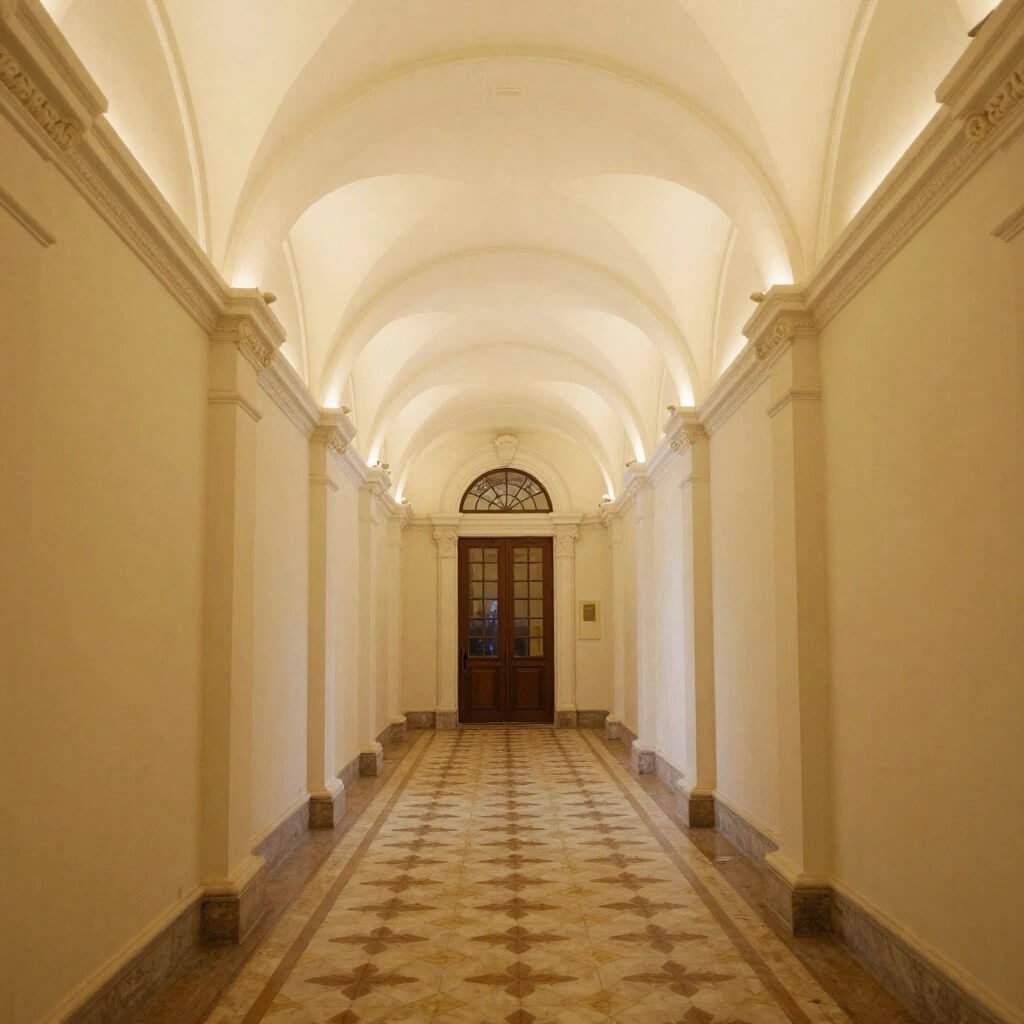
Let’s wrap up with something timelessly gorgeous: arched ceilings. If you’re lucky enough to have a corridor with architectural arches, or if you’re willing to add them, you’re creating instant classical elegance that never goes out of style.
Arched corridors have this old-world European charm—think Mediterranean villas, Spanish haciendas, or Italian estates. The curved ceiling draws the eye upward and forward, creating both visual interest and a sense of journey. You’re not just walking through a hallway; you’re processing through an architectural experience.
Now, adding arches to an existing flat ceiling isn’t a weekend DIY project. It requires construction, planning, and usually professional help. But if you’re doing a major renovation or building new, incorporating arches is absolutely worth considering for the wow factor they deliver.
Elements that maximize arched corridors:
- Consistent arch repetition creating rhythm and flow
- Soft white or cream paint to highlight the architectural curves
- Pendant lights hanging at varying heights within arch spans
- Minimal wall decoration letting architecture be the statement
- Classic flooring: terracotta, stone, or traditional tile patterns
The beauty of arched architecture is that it pairs beautifully with both maximalist and minimalist design. You can keep everything stark white and simple, letting the curves speak for themselves. Or you can go full Mediterranean with colorful tiles, ornate fixtures, and rich textures. The arches ground and elevate both approaches.
I’m personally obsessed with white-painted arched corridors with simple pendant lights. The repetition of curves creates this hypnotic rhythm, and the interplay of light and shadow on the curved surfaces changes throughout the day. It’s architecture as art.
Lighting arched ceilings requires special consideration. Recessed lights don’t work in curved ceilings, so you’ll rely on pendants, wall sconces, or track lighting. The goal is to highlight the curves and cast interesting shadows that emphasize the dimensional beauty.
If full architectural arches are beyond your budget or scope, consider faux arches using decorative molding or even painted arches. You won’t get the dimensional effect, but you can capture some of that classical elegance through visual suggestion.
Bringing It All Together
Look, corridors are weird, right? They’re necessary architectural elements that most people ignore or treat as afterthoughts. But here’s what I’ve learned after obsessing over hallway design for longer than I’d like to admit: these transition spaces hold massive potential for setting your home’s entire aesthetic tone.
Whether you’re drawn to minimalist LED magic, hotel luxury, space-expanding mirrors, personal gallery walls, Scandinavian coziness, marble opulence, indoor gardens, smart storage, moody drama, or classical arches—the common thread is intentionality. You’re making conscious design choices rather than accepting boring default corridors.
The soft and bright theme running through these ideas (okay, except maybe the moody one, but even that uses strategic brightness) creates welcoming, expansive feelings in spaces that could easily feel cramped or uninviting. You’re manipulating light, color, texture, and architecture to transform the mundane into the memorable.
My biggest piece of advice? Start with your lifestyle needs and aesthetic preferences. If you need storage, build from that requirement. If you crave nature, start with plants. If you want luxury, choose your materials accordingly. The design should serve you, not the other way around.
And please, don’t feel pressured to commit to one style entirely. I’ve seen gorgeous corridors that blend elements—Scandinavian wood tones with smart storage, minimalist design with a gallery wall accent, marble floors with indoor plants. Once you understand the core principles, you can mix and match to create something uniquely yours.
Your corridor is waiting to become something special. It’s time to stop rushing through it and start celebrating it. Now excuse me while I go rearrange my hallway plants for the third time this week. Design is never really finished, is it? 🙂