10 Stunning Formal Garden Design Ideas For Elegant Homes
- Garden Design
 Ben
Ben- 0
- 28 minutes read
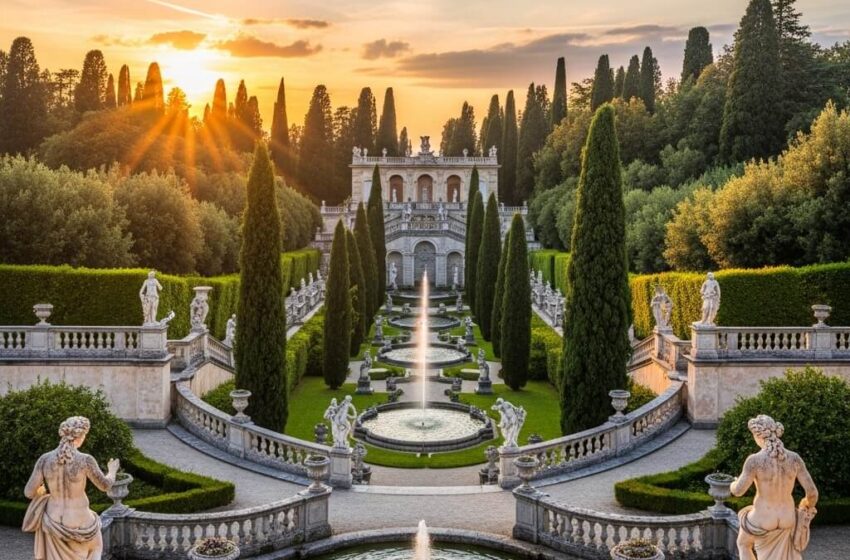
You know that moment when you walk into someone’s backyard and your jaw literally drops? Yeah, that’s what happens when you encounter a well-designed formal garden. I’ve been obsessed with these structured outdoor masterpieces for years, and honestly, there’s something almost magical about how they transform ordinary spaces into something that screams sophistication.
Here’s the thing about formal gardens – they’re not just pretty to look at. They’re like outdoor rooms that tell a story, create atmosphere, and frankly, make your neighbors a little envious. But where do you even start when you want that same elegant vibe for your own home?
I’ve spent countless hours wandering through formal gardens, taking notes (yes, I’m that person), and I’ve narrowed down the absolute best design ideas that actually work for real homes. Not just those massive estate gardens you see in magazines – I’m talking about designs you can adapt to your space, whether you’ve got a sprawling backyard or a more modest plot.
Ready to turn your outdoor space into something spectacular? Let’s explore these ten formal garden designs that’ll have your guests asking for your landscaper’s number.
1. Symmetrical Box Hedge Formal Garden Layout
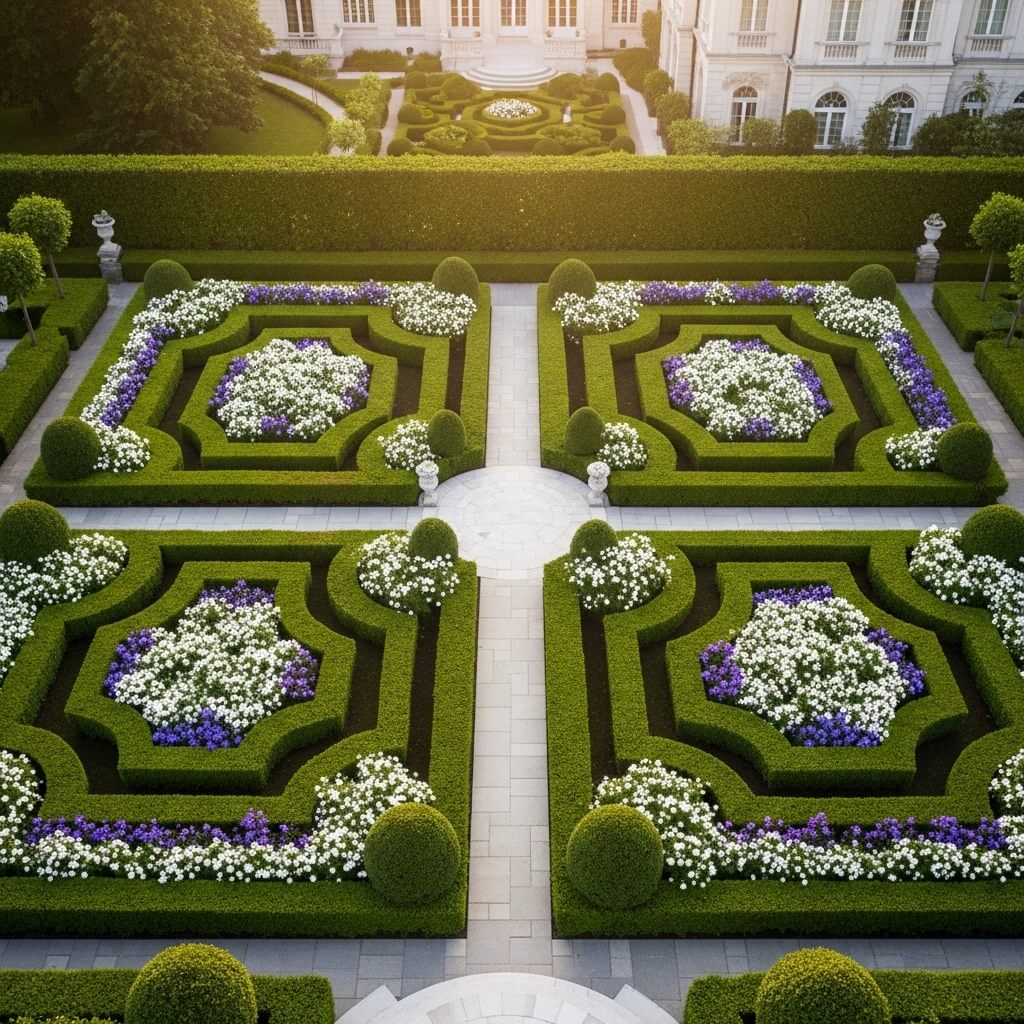
Let’s start with the granddaddy of formal garden design – the symmetrical box hedge layout. This is where geometry meets nature, and trust me, the results are absolutely stunning.
Box hedges work like living architecture. You plant them in mirror-image patterns that create perfect symmetry from a central point. Think of it as drawing with plants instead of pencils. I’ve seen homeowners create incredible spaces using this technique, and the best part? Once established, box hedges are surprisingly low-maintenance.
Here’s what makes this design so effective:
• Clean lines that never go out of style
• Year-round structure since box hedges stay green
• Flexible scale – works for small courtyards or large lawns
• Professional appearance without hiring a full landscaping crew
The secret sauce is planning your layout on paper first. Measure your space, mark the center point, and design outward in matching patterns. I always recommend starting with simple geometric shapes – rectangles, circles, or diamonds work beautifully.
Want to add some personality? Plant colorful flowers or ornamental grasses inside the hedge compartments. The contrast between the structured hedges and flowing plants inside creates visual interest that’s hard to beat.
2. Classic Central Fountain Courtyard Garden Design
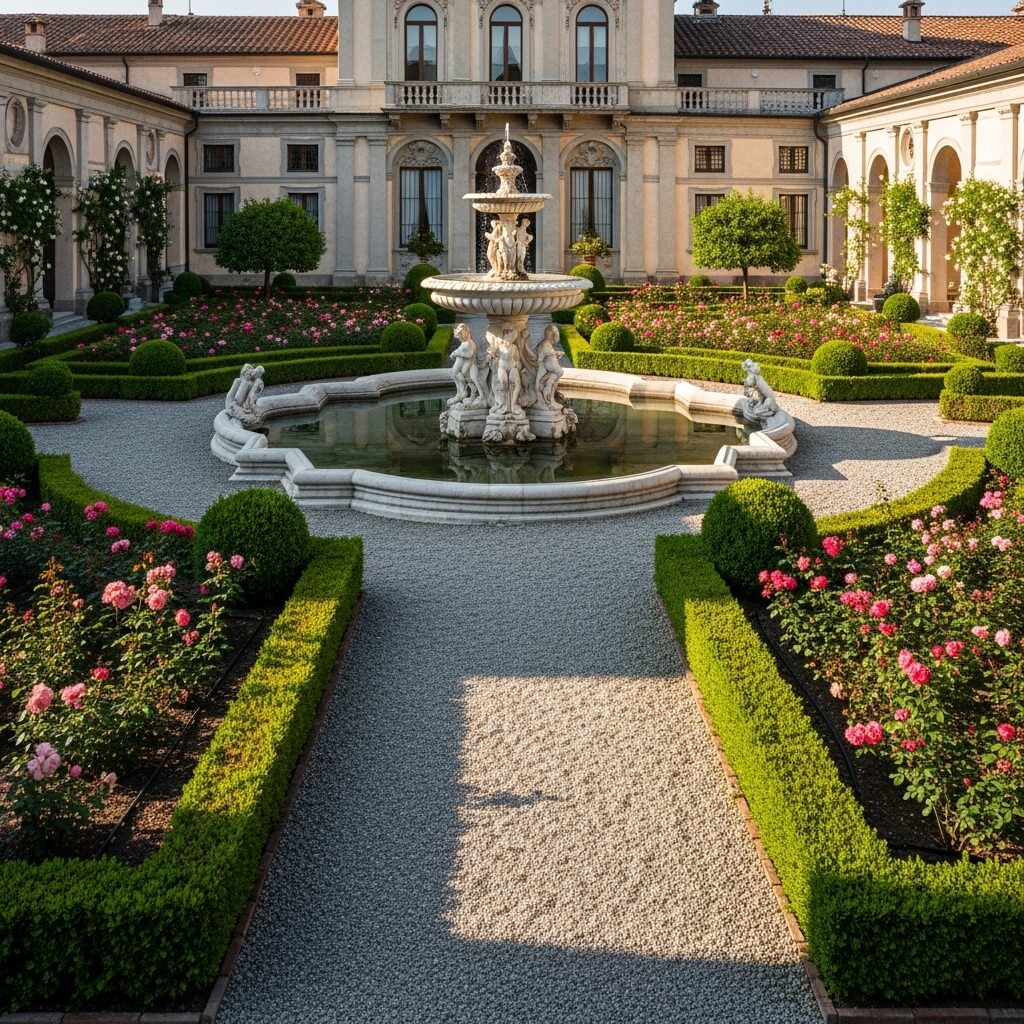
Nothing says “formal elegance” quite like a central fountain surrounded by structured landscaping. I’m not talking about those over-the-top Vegas-style water features – I mean elegant, proportioned fountains that become the heart of your garden design.
The magic happens when you design everything else around the fountain. Pathways radiate outward, planted areas mirror each other, and suddenly your backyard feels like a private resort. I’ve visited gardens where the sound of water completely transforms the atmosphere. There’s something about that gentle bubbling that makes even busy neighborhoods feel peaceful.
Here are the key elements that make this design work:
• Proper scale – your fountain should fit your space, not overwhelm it
• Strategic placement – position it where you can view it from multiple angles
• Complementary plantings – use plants that enhance rather than compete with the water feature
• Quality materials – invest in a fountain that’ll withstand your climate
Pro tip from my own experience: Consider solar-powered fountain pumps if you don’t want to run electrical lines. Modern solar pumps are surprisingly reliable, and you’ll save money on both installation and operation.
3. Geometric Stone Path Formal Lawn Garden
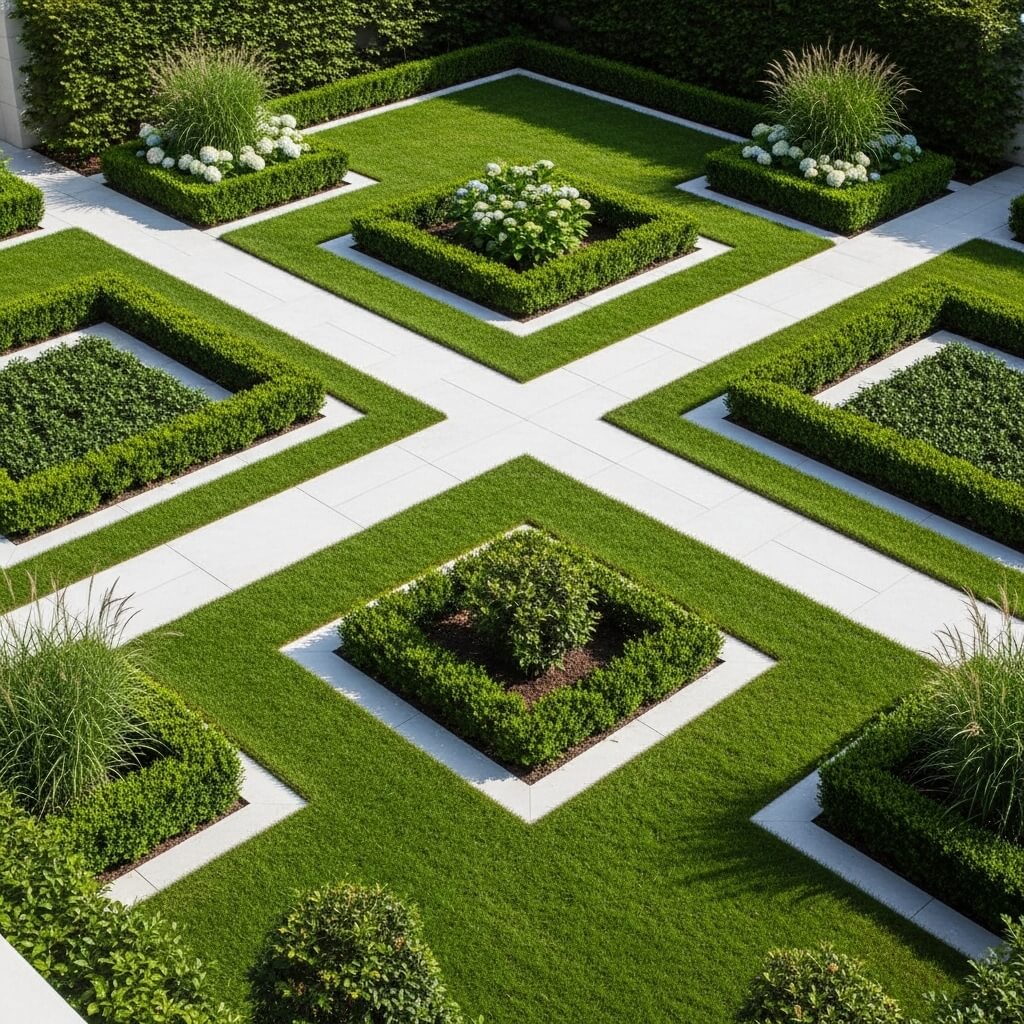
Ever noticed how a well-designed path can completely change how you experience a garden? Geometric stone paths create structure and guide movement through your space in ways that feel both natural and intentional.
I’m particularly fond of designs that use contrasting materials – think light-colored stone paths cutting through dark green lawn, or warm brick creating geometric patterns against cool-toned gravel. The key is choosing materials that complement your home’s architecture while creating enough contrast to define the pattern clearly.
The beauty of geometric paths lies in their versatility:
• Straight lines create formal, classical appeal
• Curved geometry adds sophistication with softer edges
• Mixed materials allow for creative pattern-making
• Various widths can emphasize different areas of importance
Here’s what I’ve learned works best: Plan your paths to connect important areas – seating spots, garden beds, entrances. Don’t just make them decorative; make them functional. People should want to walk on them, not just admire them from a distance.
Consider the maintenance angle too. Some stone types require more upkeep than others. Flagstone and bluestone age beautifully with minimal care, while lighter stones might show dirt more easily. Choose based on your lifestyle and maintenance preferences.
Also Read: 10 Fresh Vertical Garden Design Ideas for Home Makeovers
4. Elegant Rose Border Symmetry Garden Design
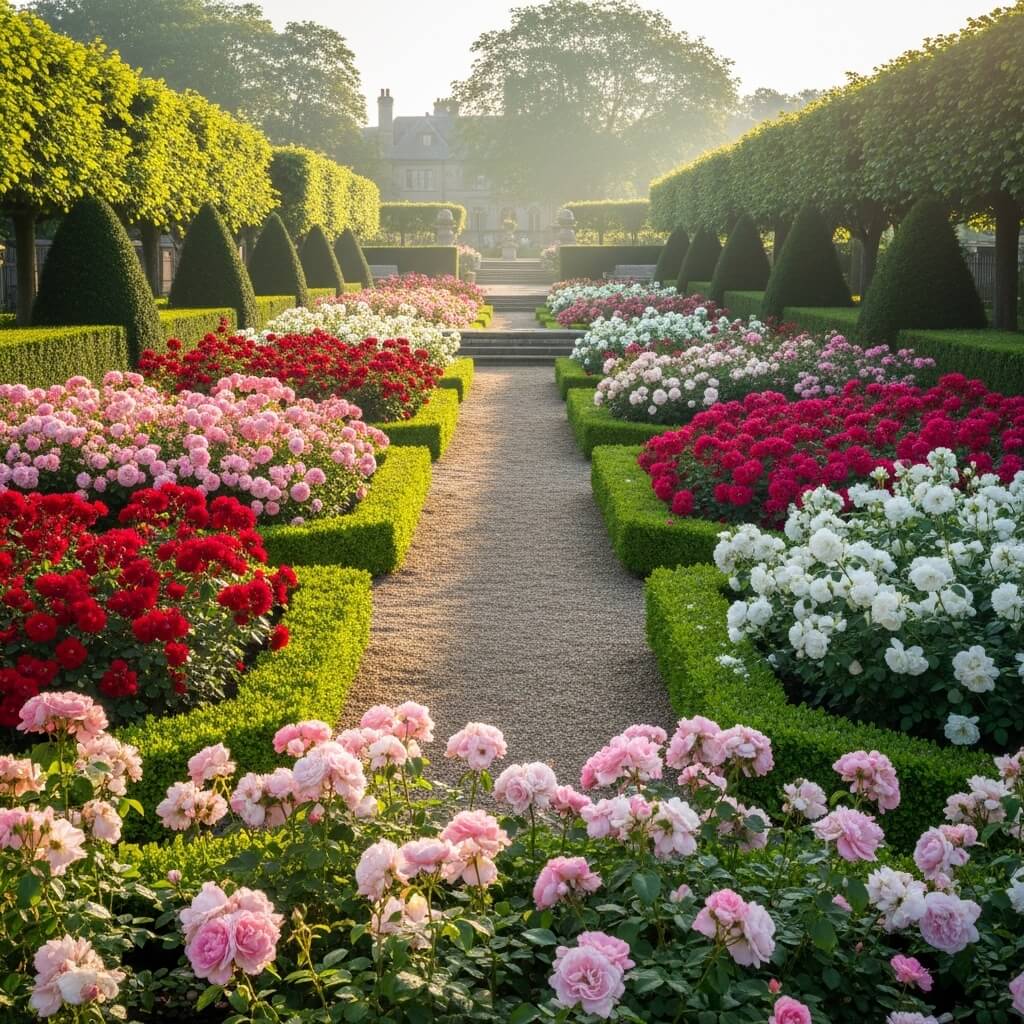
Roses and formal gardens go together like peanut butter and jelly – classic, timeless, and absolutely perfect when done right. Symmetrical rose borders create that romantic, sophisticated look that never gets old.
The trick is choosing roses that bloom consistently and maintain similar growth habits. I’ve made the mistake of mixing vigorous climbers with compact bushes, and let me tell you, symmetry goes right out the window when one side grows twice as fast as the other! 🙂
Here’s my foolproof approach to rose border symmetry:
• Choose matching varieties for each symmetrical position
• Plan for bloom timing – select roses with similar flowering schedules
• Consider mature size – account for how large each plant will grow
• Include supporting plants – add boxwood or lavender for structure between rose seasons
The most stunning rose borders I’ve seen combine multiple elements. Picture perfectly pruned rose bushes flanking a central pathway, with low hedges providing structure underneath, and maybe some ornamental grasses adding movement. The layering creates depth while maintaining that formal, organized appearance.
FYI, don’t overlook disease-resistant varieties. Modern roses often bloom more consistently and require less maintenance than older varieties, which means your symmetrical design stays looking symmetrical all season long.
5. Italian Villa Inspired Formal Landscape Garden
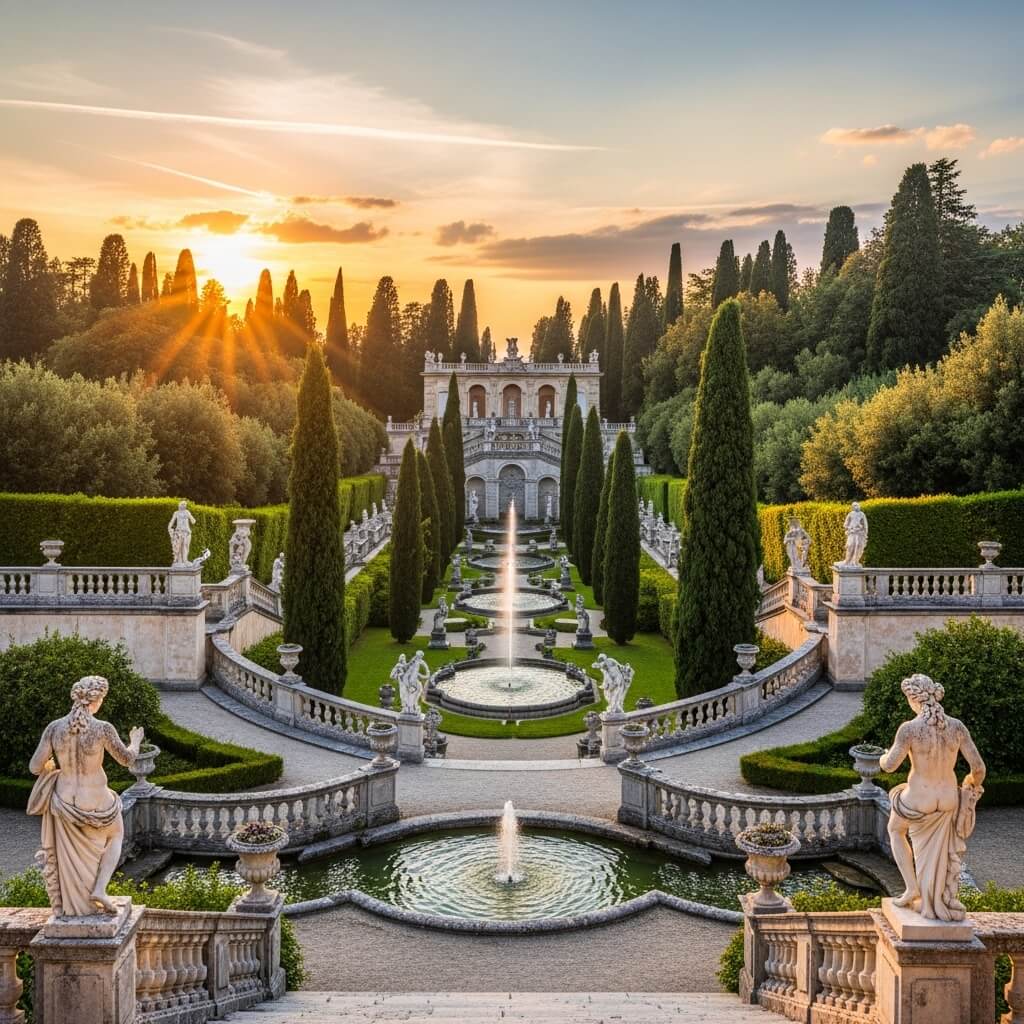
There’s something undeniably romantic about Italian villa gardens. They combine architectural elements with lush plantings in ways that feel both grand and intimate. I’ve been lucky enough to visit some authentic Italian gardens, and the design principles translate beautifully to home landscapes.
The Italian approach focuses on creating outdoor rooms using plants, hardscaping, and water features. Cypress trees provide vertical structure, gravel or stone surfaces define spaces, and formal plantings create boundaries without feeling closed-off.
Key elements of Italian villa style include:
• Terraced levels that create visual interest and define spaces
• Classical elements like urns, statuary, or pergolas
• Mediterranean plants such as lavender, rosemary, and olive trees
• Natural stone materials that age gracefully
What I love about this style is how it balances formality with warmth. Unlike some formal gardens that can feel cold or intimidating, Italian villa designs invite you to sit, relax, and enjoy the space. They’re formal enough to impress but comfortable enough for everyday use.
The plant palette usually includes drought-tolerant species that thrive in Mediterranean climates, but you can adapt the concept using plants suited to your region. The key is maintaining the proportions and structural elements while choosing plants that’ll flourish in your specific conditions.
6. Minimalist Gravel and Topiary Formal Garden
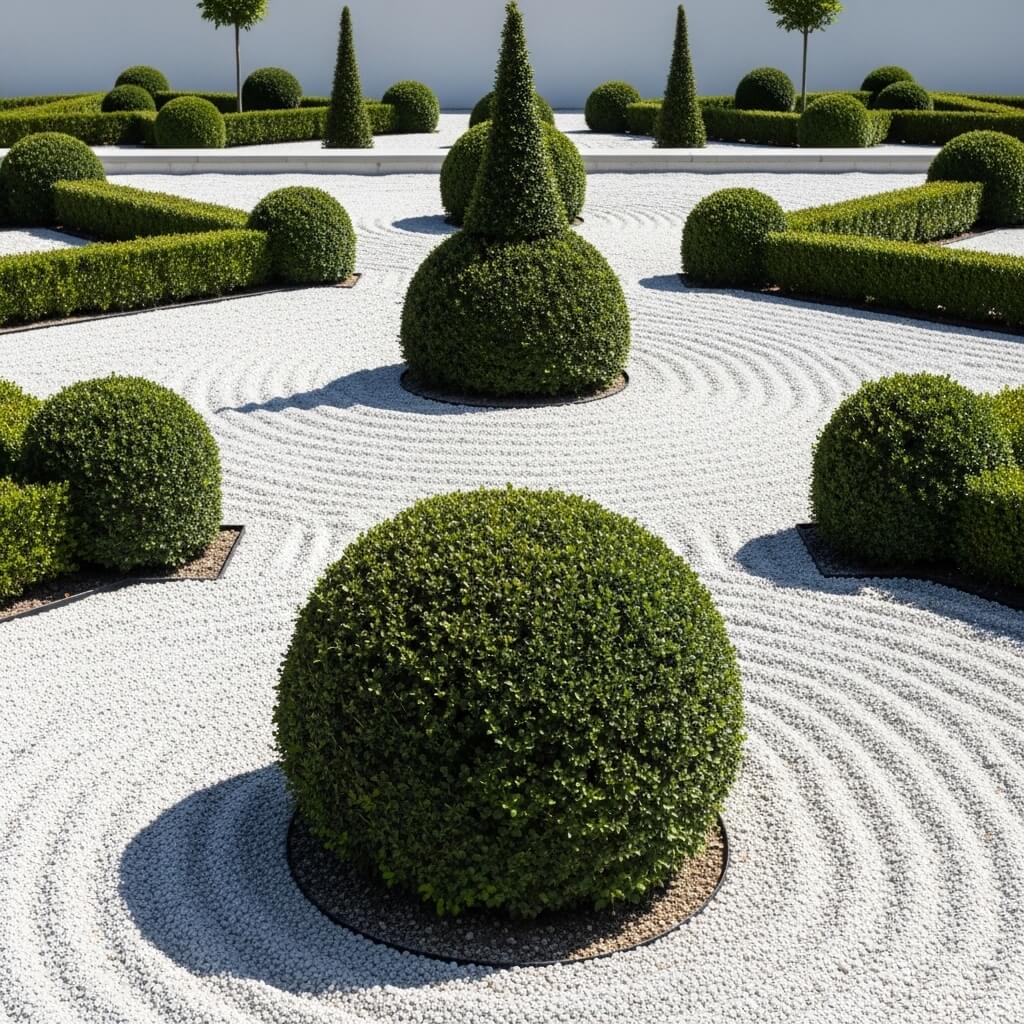
Sometimes less really is more, and minimalist gravel gardens with carefully placed topiaries prove this point beautifully. This design approach strips away everything non-essential, leaving only the most impactful elements.
I’m fascinated by how much drama you can create with just gravel, a few perfectly shaped plants, and maybe some strategic lighting. The contrast between the smooth, neutral gravel surface and the sculptural green forms creates visual tension that’s surprisingly engaging.
The minimalist approach offers several practical advantages:
• Low maintenance once established
• Year-round appeal that doesn’t depend on seasonal flowers
• Water conservation since gravel requires no irrigation
• Flexible design that’s easy to modify over time
Here’s what makes this style work: precision in every detail. The gravel should be evenly raked, the topiaries perfectly shaped, and any additional elements carefully chosen for maximum impact. One poorly placed element can throw off the entire design.
I recommend starting with simple topiary shapes – spheres, cones, or cubes work well for beginners. As you get more comfortable with maintenance, you can experiment with more complex forms. Box, yew, and privet are excellent choices for most climates.
Also Read: 10 Gorgeous Garden Layout Ideas for Relaxing Green Corners
7. Royal Palace Style Courtyard Garden Design
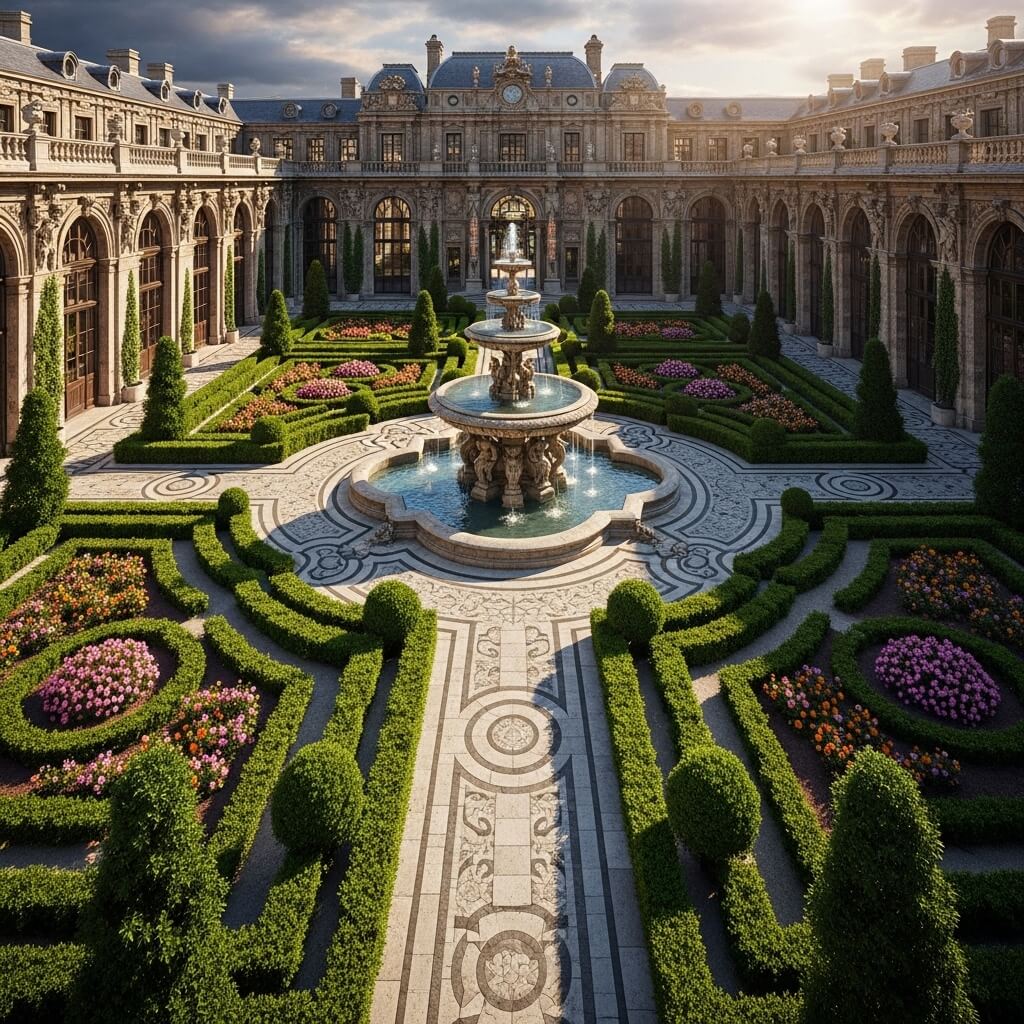
Want to feel like royalty every time you step outside? Palace-style courtyard gardens bring that sense of grandeur to residential spaces. These designs focus on creating impressive visual impact through scale, symmetry, and luxurious materials.
The palace garden approach emphasizes dramatic focal points, wide pathways, and substantial plantings that command attention. Think large urns overflowing with seasonal flowers, broad stone walkways, and perfectly manicured hedge walls that create a sense of enclosure and privacy.
Essential elements of palace-style design include:
• Grand scale proportions that create immediate visual impact
• High-quality materials like natural stone, wrought iron, and bronze
• Formal water features such as reflecting pools or tiered fountains
• Structured plantings that maintain perfect form year-round
Here’s the reality check: This style requires significant investment in both installation and maintenance. But IMO, if you have the space and budget, the results are absolutely worth it. These gardens don’t just look impressive – they create a sense of occasion every time you use them.
The key is adapting palace-scale ideas to your actual space. You don’t need acres to capture the essence of royal garden design. Focus on one or two dramatic elements rather than trying to recreate Versailles in your backyard.
8. Straight Line Hedge Maze Formal Garden Layout
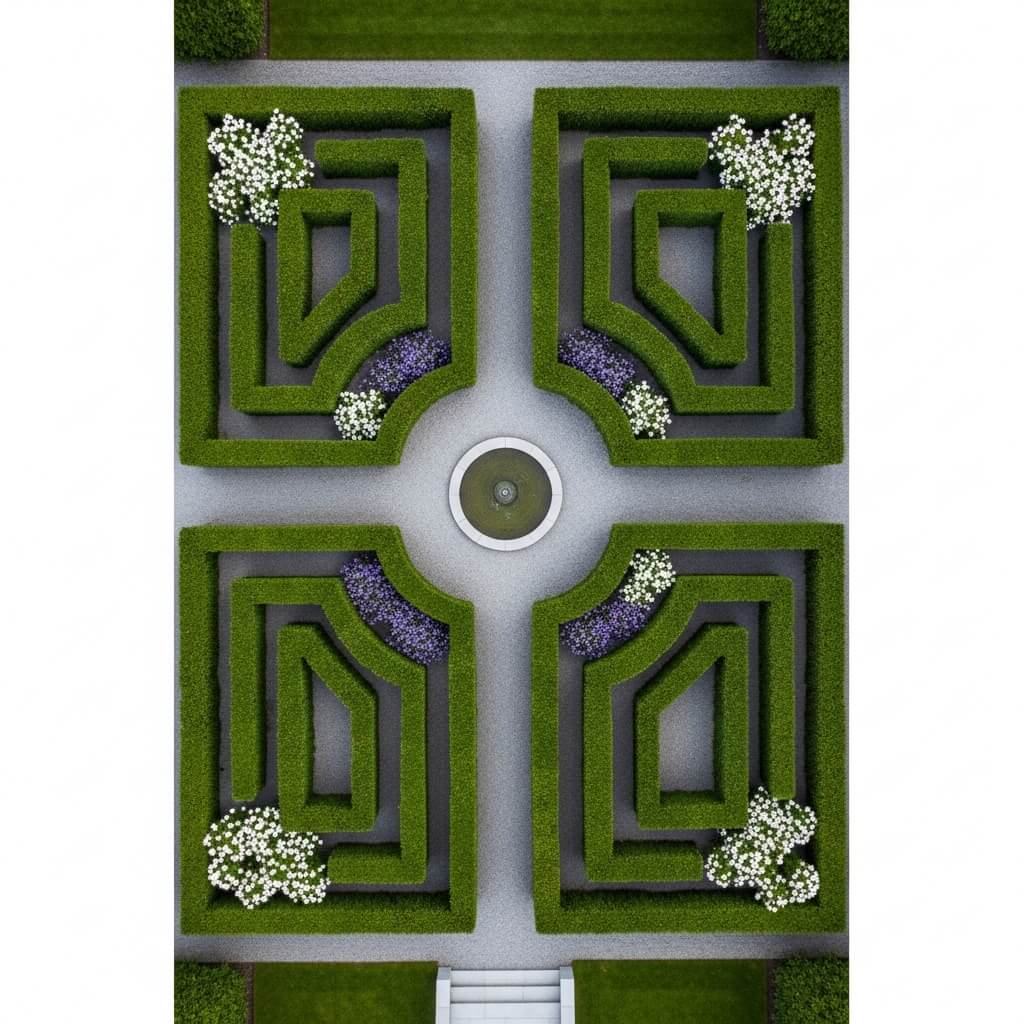
Hedge mazes aren’t just for storybooks – they make incredible focal points in formal garden designs. Straight-line hedge mazes offer all the visual drama of traditional mazes while being much more manageable for home gardens.
I’ve always been intrigued by how mazes create mystery and discovery in relatively small spaces. Unlike curving mazes that require enormous areas, straight-line designs can work in surprisingly compact settings while still providing that sense of journey and destination.
The design principles are straightforward:
• Parallel hedge rows create corridors and passages
• Strategic openings control movement and create views
• Central destination provides a goal and reward for navigation
• Consistent hedge heights maintain the formal appearance
What makes straight-line mazes particularly appealing is their geometric beauty when viewed from above. If you have a second-story window or deck overlooking the garden, the pattern creates stunning visual interest throughout the year.
Maintenance is definitely a consideration. Hedge mazes require regular trimming to maintain their shape and function. But honestly? There’s something deeply satisfying about the precision required to keep everything looking perfect.
9. White Gravel Path Formal Lawn Symmetry Garden
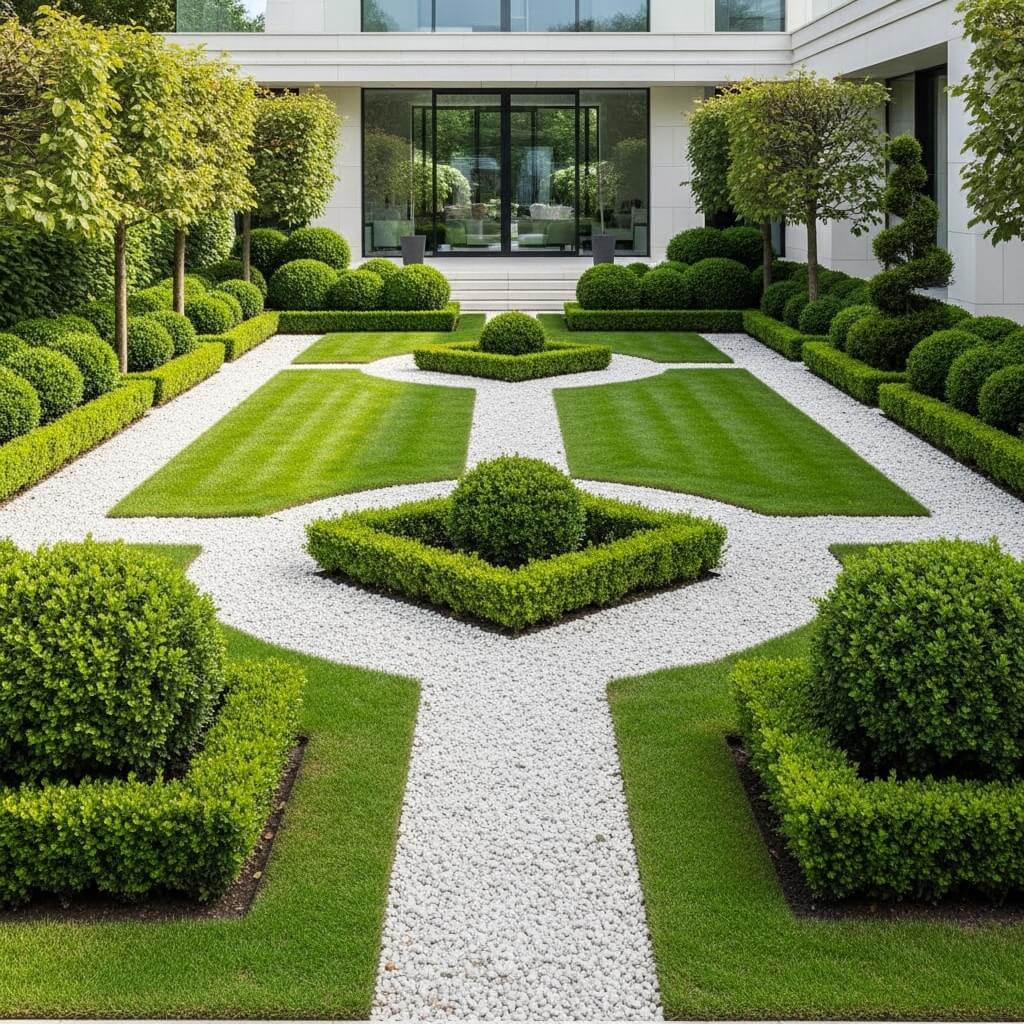
The contrast between white gravel paths and emerald green lawn creates one of the most striking formal garden combinations I’ve encountered. This design approach uses the stark color contrast to emphasize geometric patterns and create dramatic visual impact.
White gravel serves multiple design functions beyond just looking elegant. It reflects light, making gardens appear brighter and more spacious. It defines pathways clearly without requiring permanent hardscaping. And it provides textural contrast against soft lawn surfaces and planted areas.
Here’s what makes this combination so effective:
• High visual contrast that emphasizes garden geometry
• Flexible design options since gravel paths can be easily modified
• Practical benefits including drainage and weed suppression
• Cost-effective installation compared to permanent paving
The key to success lies in maintaining sharp, clean edges between gravel and lawn areas. I recommend installing proper edging materials to prevent gravel migration and keep lines crisp. Metal or stone edging works best for this purpose.
Consider the practical aspects too. White gravel shows dirt and debris more readily than darker materials, so you’ll need to rake and refresh it periodically. But the stunning visual impact makes the maintenance worthwhile.
Also Read: 10 Inspiring Tiny Garden Design Ideas for Modern Homes
10. Victorian Structured Flower Bed Garden Design
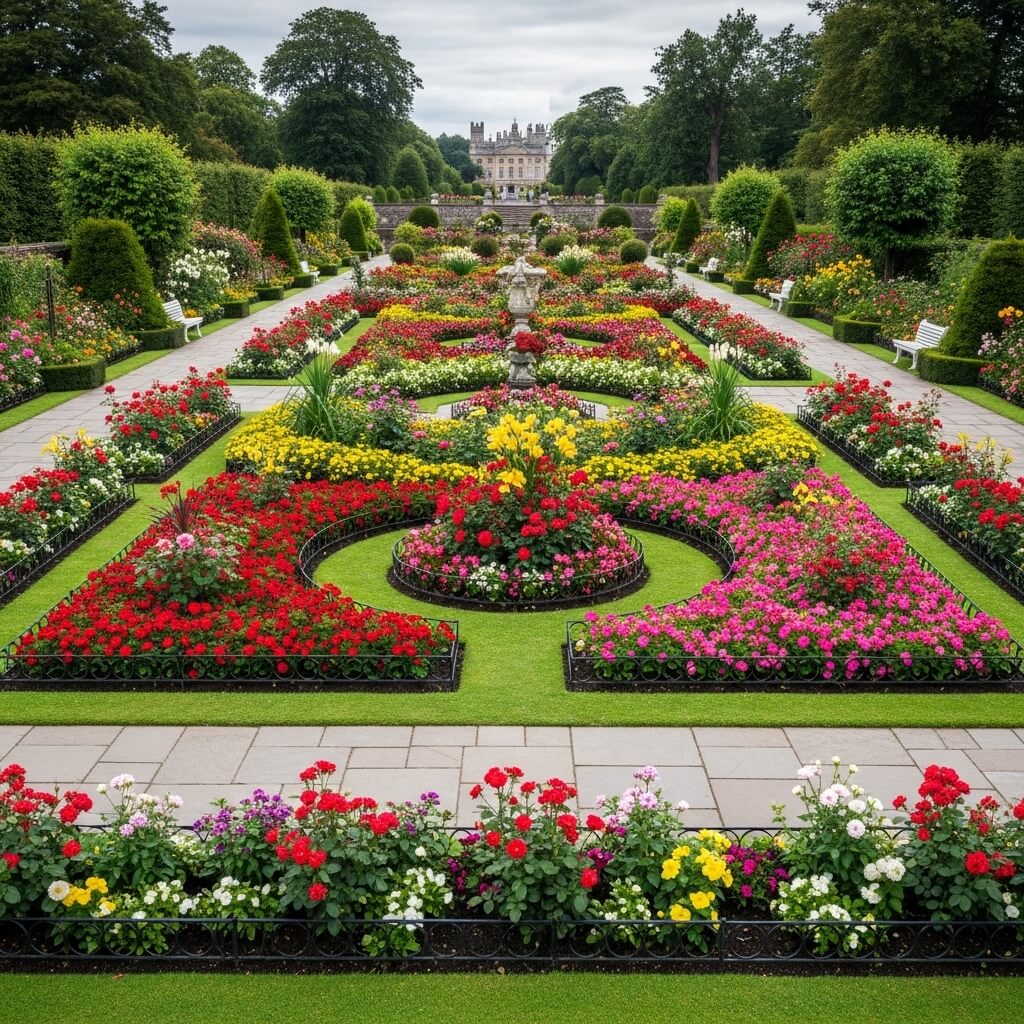
Victorian garden design brings ornate patterns and rich color combinations to formal landscaping. These gardens celebrate abundance while maintaining strict organizational principles that create order from complexity.
What I find most appealing about Victorian formal gardens is how they balance structure with exuberance. Geometric bed shapes provide the framework, while densely planted flowers create almost tapestry-like effects within each section. The result feels both disciplined and joyful.
Traditional Victorian formal elements include:
• Intricate geometric patterns often inspired by carpet designs
• Seasonal color schemes that change throughout the year
• Mixed plant heights creating layered, textural effects
• Decorative edging materials that emphasize bed shapes
The plant palette typically includes both annuals and perennials arranged in specific color combinations. Victorians loved contrast – think deep purple petunias against bright yellow marigolds, or silver dusty miller outlining beds of red salvia.
Here’s my modern take on Victorian formal gardens: Keep the structural principles but simplify the plant combinations. Choose fewer varieties but use them more boldly. This approach gives you that Victorian richness while being much more manageable to maintain.
Making It Work For Your Space
Ever wonder why some formal gardens feel welcoming while others seem intimidating? The difference usually comes down to scale and personalization. The most successful formal garden designs adapt classical principles to real-world spaces and lifestyles.
Start by honestly assessing your space, budget, and maintenance capabilities. Formal gardens require ongoing care to maintain their structured appearance. If you travel frequently or prefer low-maintenance landscaping, choose designs that emphasize hardscaping over plant-intensive approaches.
Consider your home’s architectural style too. A minimalist contemporary home might pair beautifully with a gravel and topiary garden, while a traditional colonial could be perfect for Victorian-inspired flower beds. The garden should feel like a natural extension of your home’s character.
Final Thoughts
Formal gardens prove that structure and beauty aren’t mutually exclusive. Whether you’re drawn to the geometric precision of box hedge layouts or the romantic abundance of Victorian flower beds, there’s a formal garden style that can transform your outdoor space into something truly special.
The best part? You don’t need to be a professional landscaper to create stunning results. Start with one element that speaks to you – maybe a simple symmetrical pathway or a central fountain – and build from there. Great formal gardens evolve over time, and half the fun is in the planning and planting process.
Your garden should reflect your personality while providing the elegant, structured beauty that makes formal designs so timelessly appealing. Trust me, once you experience the satisfaction of a well-designed formal garden, you’ll never look at ordinary landscapes the same way again.