
10 Magical Witch Garden Design Ideas for Enchanted Vibes
- Garden Design
 Ben
Ben- 0
- 40 minutes read
So you want to transform your outdoor space into something that would make even the most skeptical neighbor do a double-take? Welcome to the world of witch garden design, where practical gardening meets mystical aesthetics and your green thumb gets a serious magical upgrade.
I’ve been cultivating enchanted garden spaces for years, and let me tell you – there’s nothing quite like stepping into your own personal magical realm after a long day. Whether you’re drawn to the dark academia vibes or prefer something more celestial and ethereal, creating a witch garden isn’t just about throwing some crystals around and calling it mystical (though crystals definitely help!).
These ten design ideas will help you craft a space that’s both visually stunning and spiritually nourishing. Ready to turn your backyard into the kind of place where magic feels absolutely inevitable?
Moonlit Crystal Witch Garden Pathway
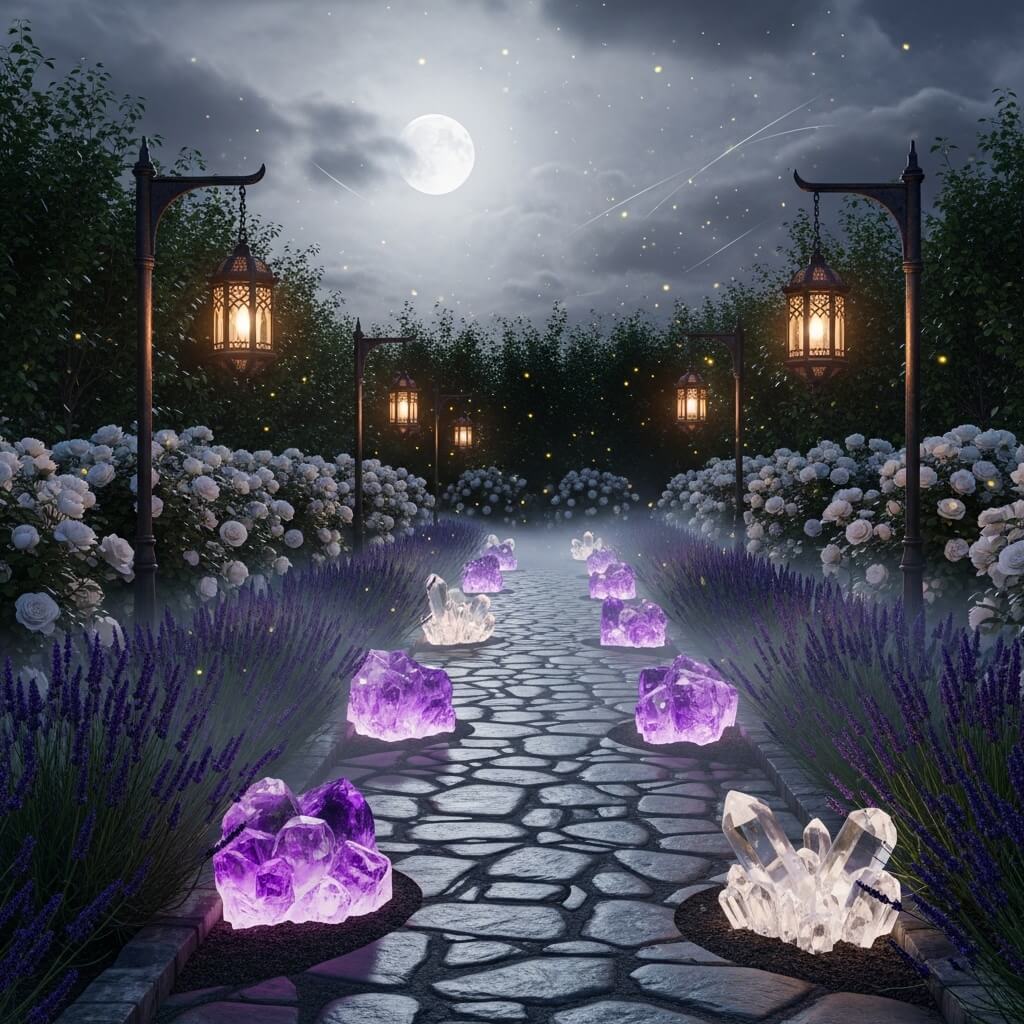
Ever walked through a garden at night and felt like you were stepping into another world? That’s exactly what a moonlit crystal pathway achieves, and honestly, it’s become my absolute favorite feature in any witch garden design.
The key here is strategic crystal placement combined with reflective surfaces that catch and amplify moonlight. I’ve found that larger quartz pieces work beautifully as pathway markers, especially when you partially bury them so they look like they’re naturally emerging from the earth. The effect is pure magic – literally.
For the pathway itself, consider these materials:
- Crushed white gravel or oyster shells that shimmer under moonlight
- Smooth river rocks in various shades of gray and silver
- Recycled glass mulch that catches and reflects light beautifully
- Strategic placement of solar-powered LED lights hidden among the crystals
Pro tip: Don’t go overboard with the crystals unless you want your garden to look like a new-age shop exploded. I learned this the hard way after my first attempt looked more like a geological museum than a mystical pathway.
The beauty of this design lies in its transformation throughout the day. During daylight hours, it’s an elegant stone walkway with interesting crystal accents. But come nightfall? Pure enchantment. The moonlight hits those crystals and creates this ethereal glow that makes every evening stroll feel like a spiritual journey.
Position your pathway to wind naturally through your garden space rather than creating a straight line. Curves add mystery and make the journey more contemplative. Plus, they give you more opportunities to showcase different crystal varieties along the way.
Gothic Herb Garden with Black Foliage
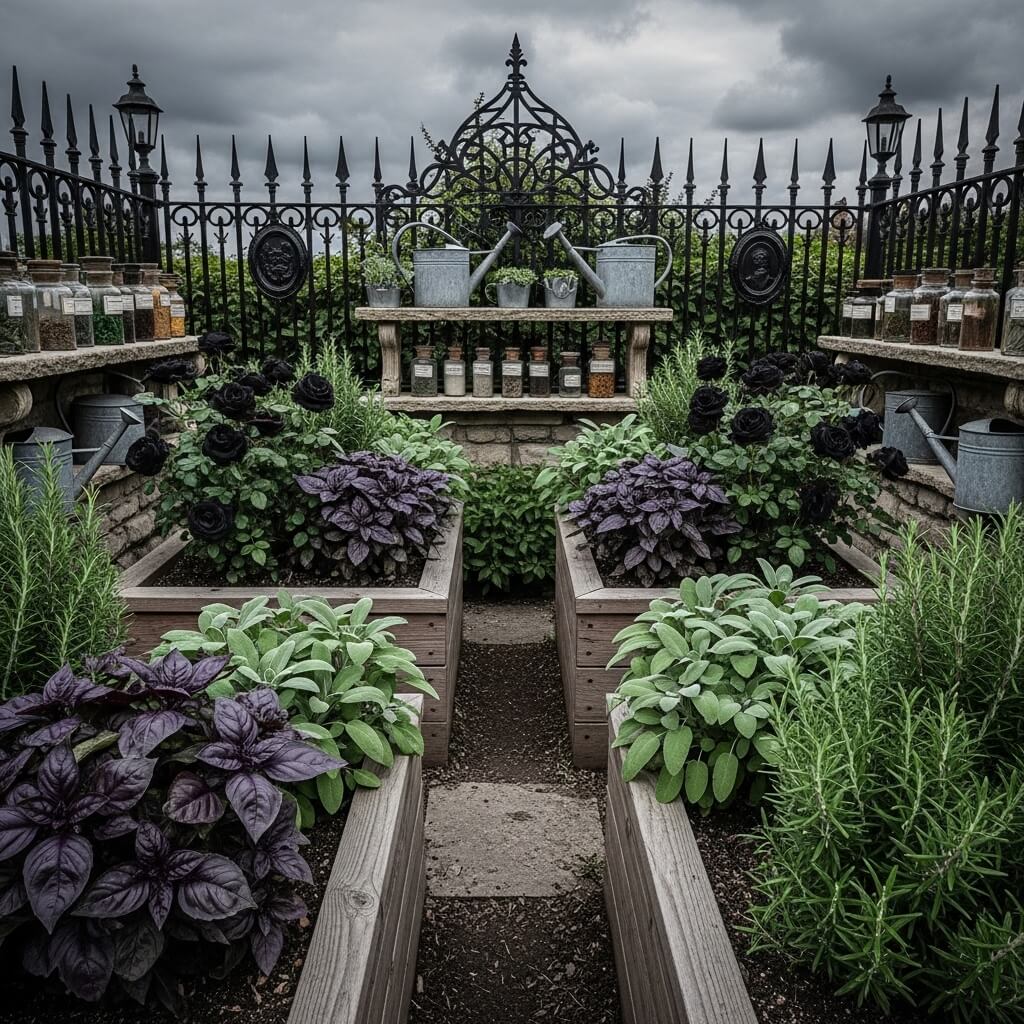
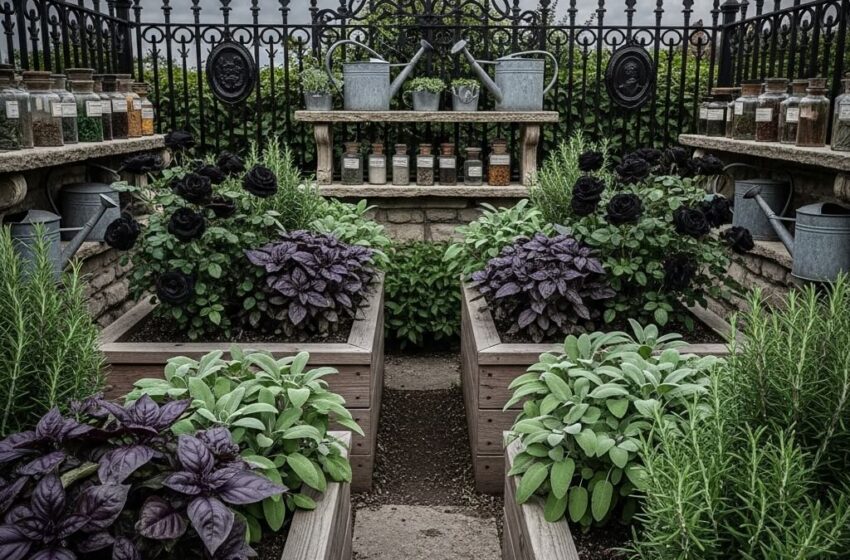
Who says herb gardens have to be all sunshine and cheerful green leaves? Sometimes you want something with a little more dramatic flair – enter the gothic herb garden, where dark foliage meets practical witchcraft.
This design focuses on herbs and plants with naturally dark or burgundy foliage, creating a moody aesthetic that’s both beautiful and functional. I’ve found that this approach works particularly well in shadier spots where other colorful plants might struggle.
Essential plants for your gothic herb collection:
- Purple basil – darker than regular basil and absolutely stunning
- Black pearl ornamental peppers – dramatic dark leaves with black berries
- Dark opal basil – deep purple-black foliage that’s almost shocking
- Burgundy coleus – not technically an herb, but the color is perfect
- Black hollyhocks – tall, dramatic, and surprisingly gothic
- Purple sage – silvery-purple leaves that add texture
The trick is balancing the dark elements with strategic pops of contrasting colors. I like to add white or pale purple flowers throughout to prevent the space from feeling too heavy. White cosmos or pale lavender work beautifully for this.
Container choices matter here. Skip the terracotta pots and go for black, charcoal, or dark bronze planters. Wrought iron plant stands add to the gothic aesthetic without overwhelming the plants themselves. And yes, a few strategically placed skulls or ravens (fake ones, obviously) can enhance the theme without crossing into tacky territory.
The practical side? All these herbs are completely usable for cooking, teas, or whatever magical purposes you have in mind. Dark doesn’t mean non-functional – it just means your herb garden has serious style credentials.
Enchanted Cottage Witch Garden Corner
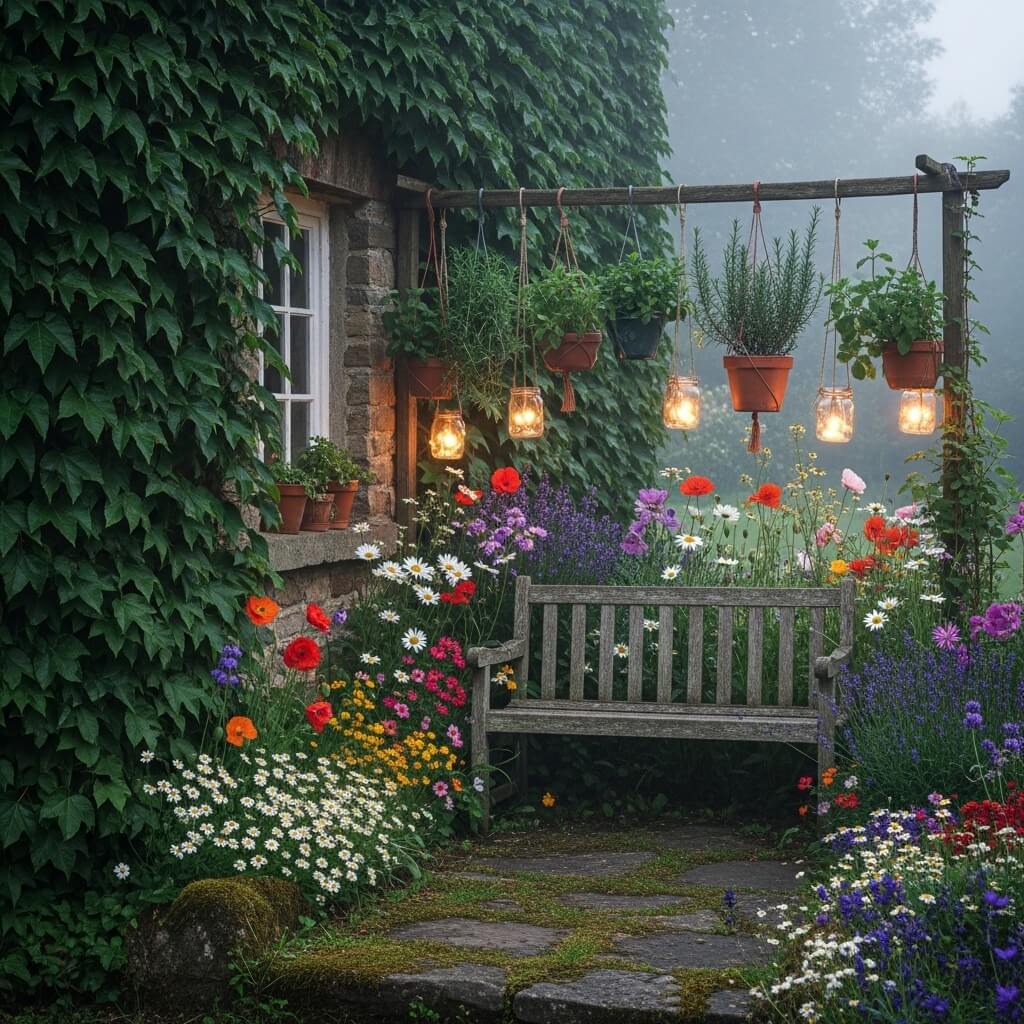
Picture this: a cozy corner that looks like it belongs in a fairy tale, complete with rambling roses, cottage plants, and that lived-in charm that takes most people decades to achieve. This is cottage witch gardening at its finest, and it’s surprisingly achievable even if you’re starting from scratch.
The secret sauce here is layered planting that looks effortless but is actually carefully planned. You want plants at different heights, with some spilling over edges and others reaching skyward. Think organized chaos with a magical twist.
Essential elements for your cottage witch corner:
- Climbing roses on a trellis or fence (go for varieties with thorns – they’re traditional)
- Foxgloves for that classic cottage garden poison plant aesthetic
- Lavender in multiple varieties for scent and practicality
- Chamomile scattered throughout for ground cover
- Wooden garden furniture that looks slightly weathered
- Vintage-style planters or repurposed containers
I’ve found that the key to nailing this look is embracing imperfection. That slightly overgrown, “I’ve been here for centuries” vibe is what you’re after. Don’t over-manicure or try to make everything perfectly symmetrical.
Color palette matters. Stick to soft purples, whites, pale pinks, and plenty of various greens. The occasional pop of deeper purple or burgundy works, but avoid anything too bright or modern-looking. This corner should feel timeless, like it existed before your house was even built.
Add some practical magic with a small herb section focused on traditional cottage garden herbs: thyme, rosemary, mint, and sweet woodruff. These have been used for centuries and add authenticity to your enchanted corner.
Also Read: 10 Stunning Formal Garden Design Ideas For Elegant Homes
Potion Bottle Fairy Light Garden Setup
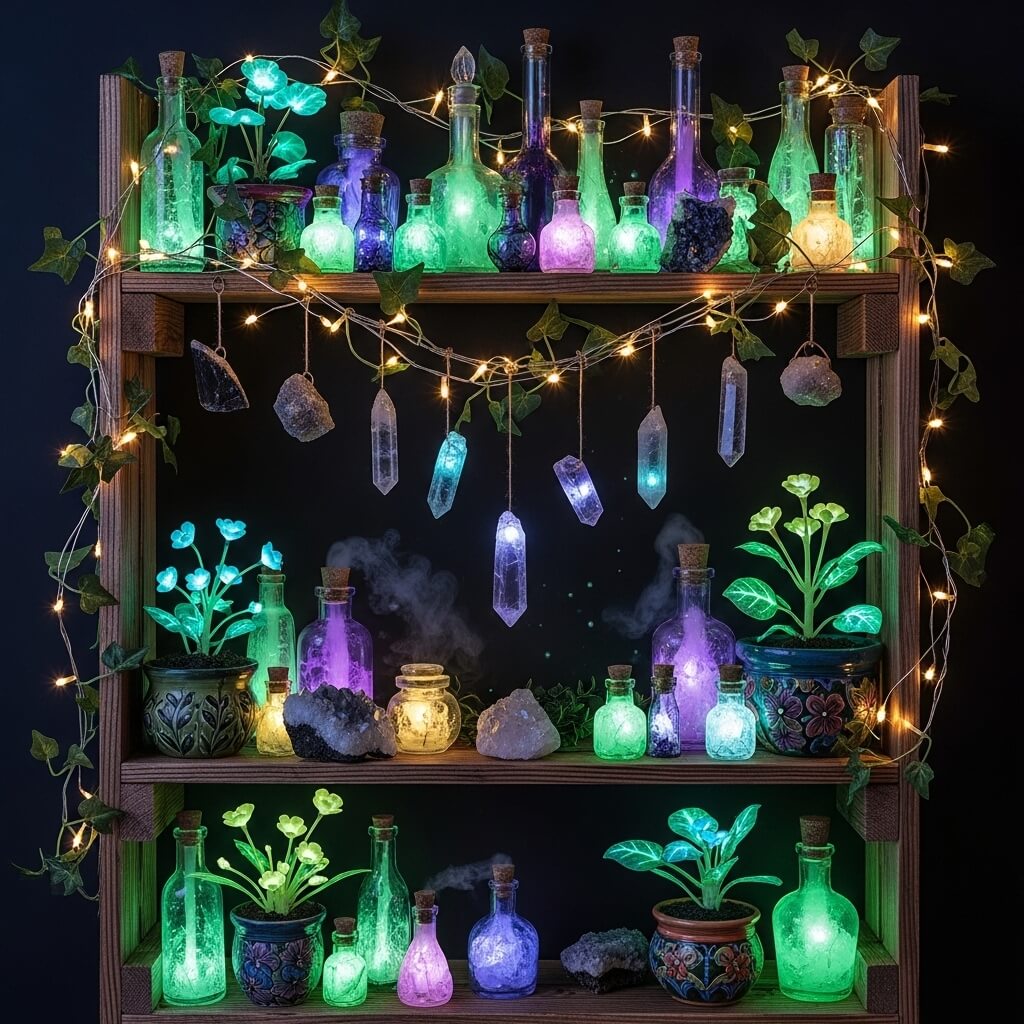
Nothing says “magical garden” quite like the warm glow of lights scattered throughout your plants, especially when those lights are housed in vintage-style bottles that look like they could contain anything from love potions to liquid moonlight.
This setup works particularly well as ambient evening lighting that transforms your garden from daytime practical to nighttime mystical. I’ve experimented with various bottle types and light combinations, and the results can be absolutely stunning when done right.
Best bottle options for this magical lighting:
- Vintage glass medicine bottles in amber or blue glass
- Old wine bottles in deep green or clear glass
- Apothecary jars with cork stoppers
- Mason jars for a more rustic witch aesthetic
- Colored glass bottles found at antique shops or flea markets
For the lighting element, battery-powered LED string lights work best. They’re safe, weather-resistant, and you can choose warm white or colored options depending on your vibe. Copper wire lights are particularly magical-looking because the thin wire practically disappears, leaving just floating points of light.
The installation is easier than you’d think. Drop a string of lights into each bottle, leaving the battery pack hidden behind plants or in decorative containers. Arrange the bottles at different heights throughout your garden using plant stands, hanging from tree branches, or nestled among larger plants.
Pro tip: Add a few drops of colored water or glycerin to some bottles for extra visual interest. Just make sure you’re using waterproof lights if you go this route! :/
The effect is pure enchantment, especially when you have multiple bottles creating pools of warm light throughout your garden space. It’s like having your own personal galaxy scattered among the plants.
Dark Academia Witch Greenhouse Garden
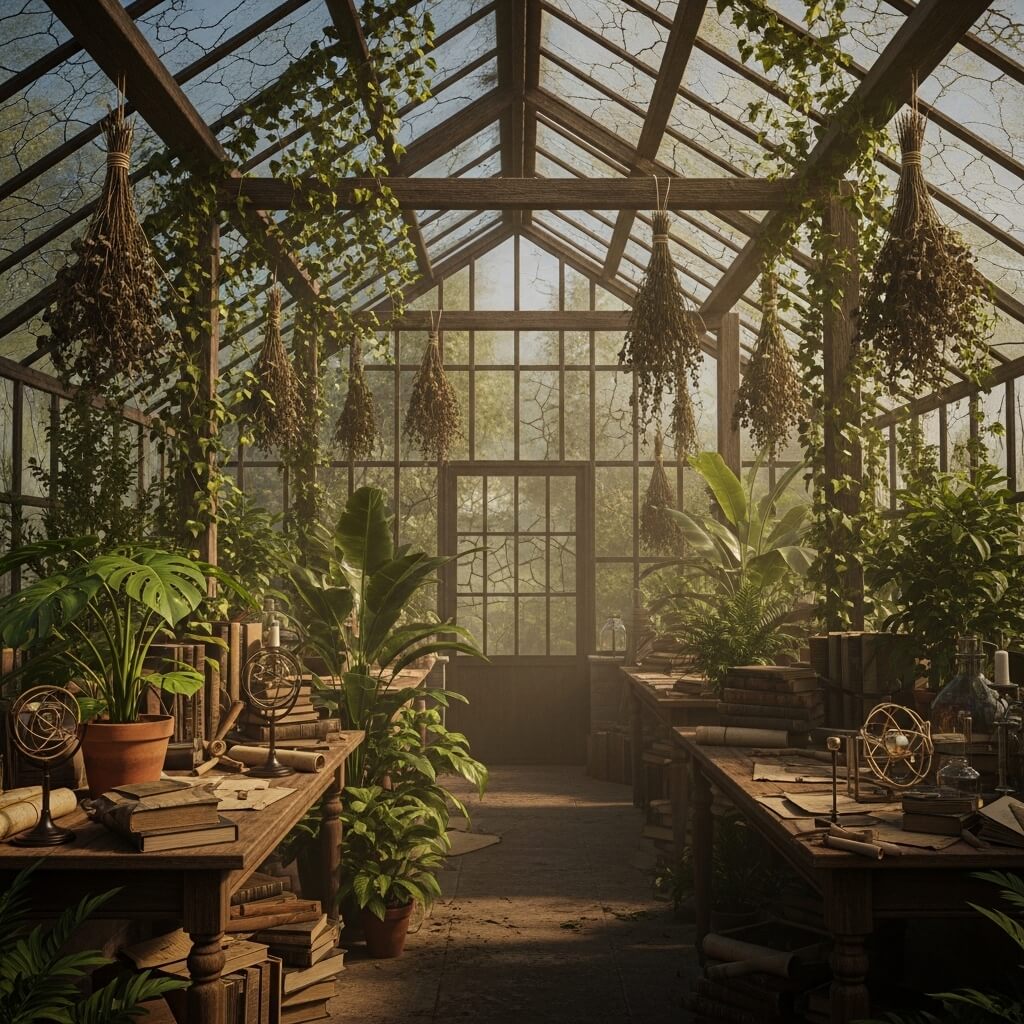
For those of us who love the aesthetic of old libraries, antique scientific instruments, and that general “scholarly witch” vibe, a dark academia greenhouse garden hits all the right notes. Think vintage botanical illustrations come to life with a serious dose of intellectual mysticism.
This design works whether you have an actual greenhouse structure or you’re creating the illusion of one with creative use of vintage frames, glass panels, and strategic plant placement. The key is that slightly weathered, “this has been here since the Victorian era” feeling.
Essential elements for your dark academia garden:
- Antique or reproduction scientific glassware as planters
- Vintage botanical prints in weatherproof frames
- Old books (damaged ones from thrift stores work perfectly)
- Wrought iron furniture with intricate details
- Plants with interesting textures and shapes
- Microscope or magnifying glass as decorative elements
Plant selection should focus on varieties that look like they belong in a Victorian botanical study. Ferns are absolutely perfect for this – they have that ancient, scholarly vibe and thrive in partially shaded conditions. Add some ivy for that overgrown academic building aesthetic.
Herb selection gets interesting here. Go for herbs with documented historical uses and interesting backstories: wormwood, mugwort, hyssop, and rue. These plants have fascinating histories and add authenticity to your scholarly witch garden.
The color scheme should lean toward deep greens, warm browns, aged brass, and weathered black. Nothing too bright or modern – you want everything to look like it could have belonged to a Victorian botanist with a secret interest in the occult.
IMO, the best part about this design is how it encourages you to actually study your plants. Keep a garden journal, research plant histories, and document your observations. You’re not just creating a beautiful space – you’re becoming the scholarly witch your garden suggests you are.
Mystical Moon Phase Flower Garden Design
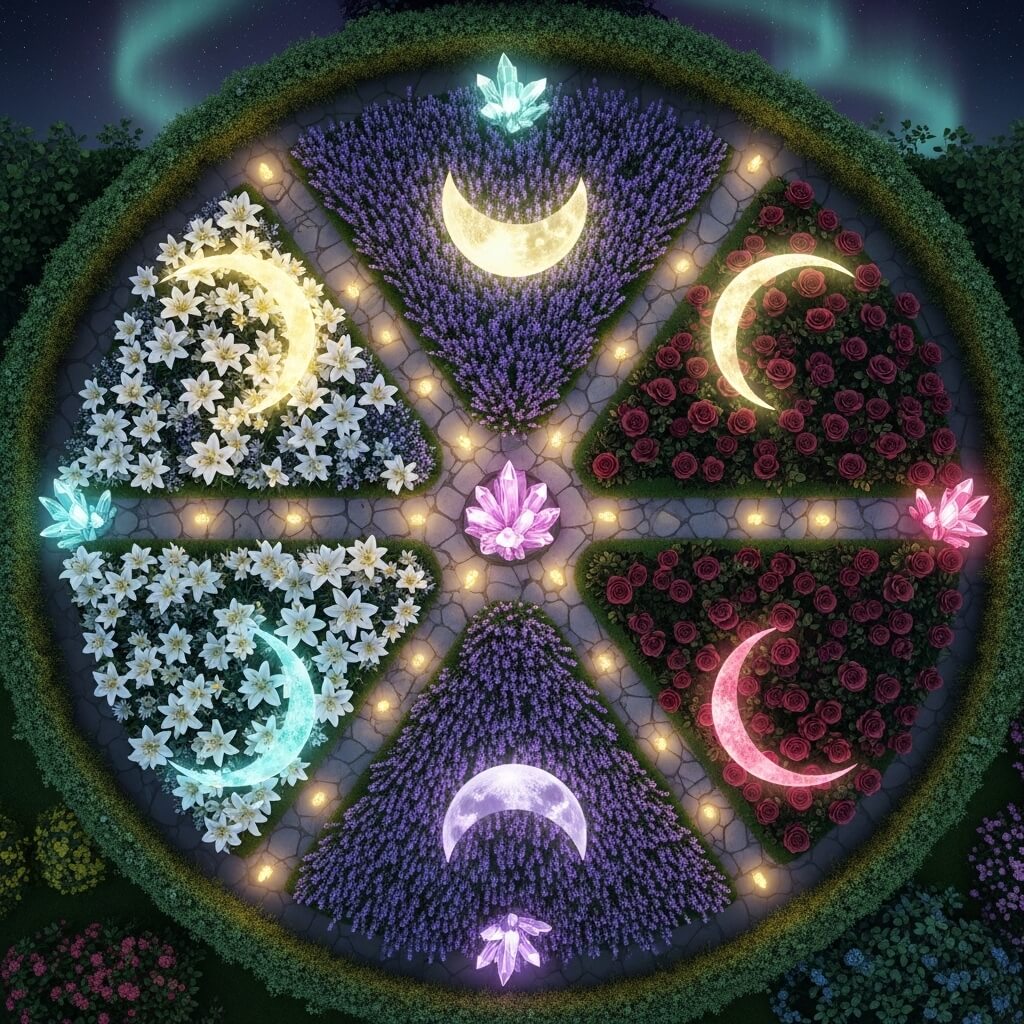
Want to create a garden that literally reflects the cosmic cycles? A moon phase flower garden uses strategic color placement and plant timing to mirror the lunar cycle throughout the year. It’s probably one of the more challenging designs to execute, but the results are absolutely magical.
The concept revolves around creating distinct sections or beds that represent different moon phases through color, texture, and seasonal blooming patterns. When planned correctly, different sections of your garden will be at their peak during different lunar phases, creating a ever-changing mystical landscape.
Moon phase garden layout ideas:
- New Moon section: Dark foliage plants, black flowers, quiet space for reflection
- Waxing Crescent: Pale yellows and whites beginning to emerge
- First Quarter: Bright whites and pale blues at their peak
- Waxing Gibbous: Silvery foliage and light-colored blooms
- Full Moon: All white flowers in full bloom, maximum impact
- Waning Gibbous: Beginning to fade, some spent blooms showing
- Last Quarter: Muted colors, seed pods forming
- Waning Crescent: Returning to dark foliage, preparing for the cycle to begin again
The trick is choosing plants that bloom and fade at different times throughout the growing season. This requires some serious planning and plant research, but it’s incredibly rewarding when it works.
White flowering plants are essential for the full moon section: white cosmos, white roses, white phlox, and white delphiniums all work beautifully. For the new moon areas, focus on dark foliage plants and deep purple or burgundy flowers.
Consider adding a central focal point that represents the moon itself – a white circular garden bed, a round mirror surrounded by white stones, or even a gazing ball that reflects the actual moon when positioned correctly.
Also Read: 10 Fresh Vertical Garden Design Ideas for Home Makeovers
Hidden Ritual Circle Forest Garden Space

Some garden spaces are meant to be discovered rather than immediately visible, and a hidden ritual circle creates that perfect sense of mystical discovery that makes every visit feel intentional and sacred.
The key to this design is using natural screening and pathways to create a sense of journey before arrival. You don’t want your ritual space visible from every angle – the approach should feel like entering a sacred grove, even if you’re working with a standard suburban backyard.
Creating natural screening elements:
- Tall ornamental grasses planted in strategic clumps
- Climbing vines on trellises or existing structures
- Dense shrub plantings that create natural walls
- Strategic use of existing trees as anchor points
- Bamboo screens for instant privacy (though check local regulations first)
The circle itself can be as simple or elaborate as you prefer. Natural stone circles work beautifully and weather well over time. Alternatively, you can create the boundary with plants, crystals, or even just a mowed circle in a larger meadow area.
Plant selection should feel native and wild rather than formal. Native wildflowers, ferns, and plants that attract beneficial insects all add to the natural sanctuary feeling. This isn’t the place for high-maintenance ornamental plants – you want everything to feel like it belongs in a sacred grove.
Consider the practical elements too: seating (even if it’s just a log or flat stone), storage for any tools or supplies you use, and perhaps a small altar area or focal point. A fire-safe area for candles or a small fire bowl can add to the ritual atmosphere.
The best ritual circles feel like they’ve been there for decades, even if you just finished installing them last week. Encourage some organized wildness and let the space develop its own character over time.
Boho Witch Garden with Hanging Lanterns
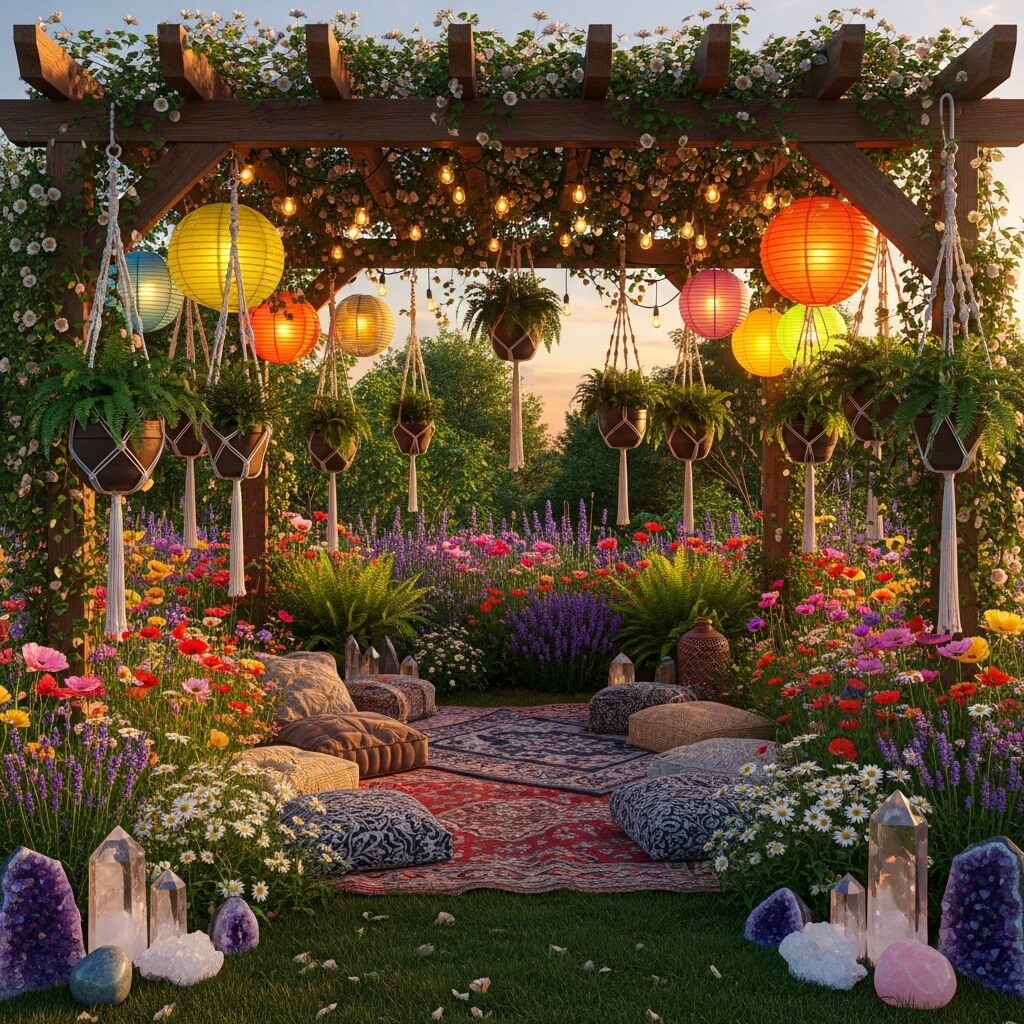
If your aesthetic leans more toward flowing fabrics, earthy textures, and that free-spirited witchy vibe, a boho witch garden with hanging lanterns creates the perfect relaxed magical atmosphere. This design is all about layered textures, warm lighting, and plants that move gracefully in the breeze.
The hanging lantern element is crucial here – multiple light sources at different heights create depth and visual interest while providing that essential magical ambiance. Mix lantern styles for an eclectic look that feels collected over time rather than purchased as a matching set.
Best lantern options for boho witch gardens:
- Moroccan-style metal lanterns in brass or copper tones
- Vintage glass hurricane lanterns with flickering candles
- Macramé hanging planters with integrated lighting
- Bamboo lanterns for natural texture
- Repurposed glass jars with wire hangers and battery lights
Plant selection should emphasize texture and movement. Ornamental grasses, plants with interesting seed pods, and varieties that sway beautifully in the breeze all contribute to the boho aesthetic. Think flowing rather than structured.
Essential boho witch plants:
- Fountain grasses in various heights for movement
- Lamb’s ear for silvery, soft texture
- Lavender for scent and classic boho appeal
- Trailing rosemary spilling from elevated planters
- Native wildflowers scattered throughout
- Moonflower vines that open at night (perfect timing!)
Color palette should be warm and earthy: terracotta, warm browns, muted golds, and sage greens. Add pops of deep purple or burgundy for depth, but keep everything feeling natural and sun-faded rather than bright and new.
Seating areas are essential for the boho vibe – think floor cushions, low wooden benches, or hammocks. This garden should invite lingering and contemplation, not just quick walks through.
Poison Plant Inspired Witch Garden Theme
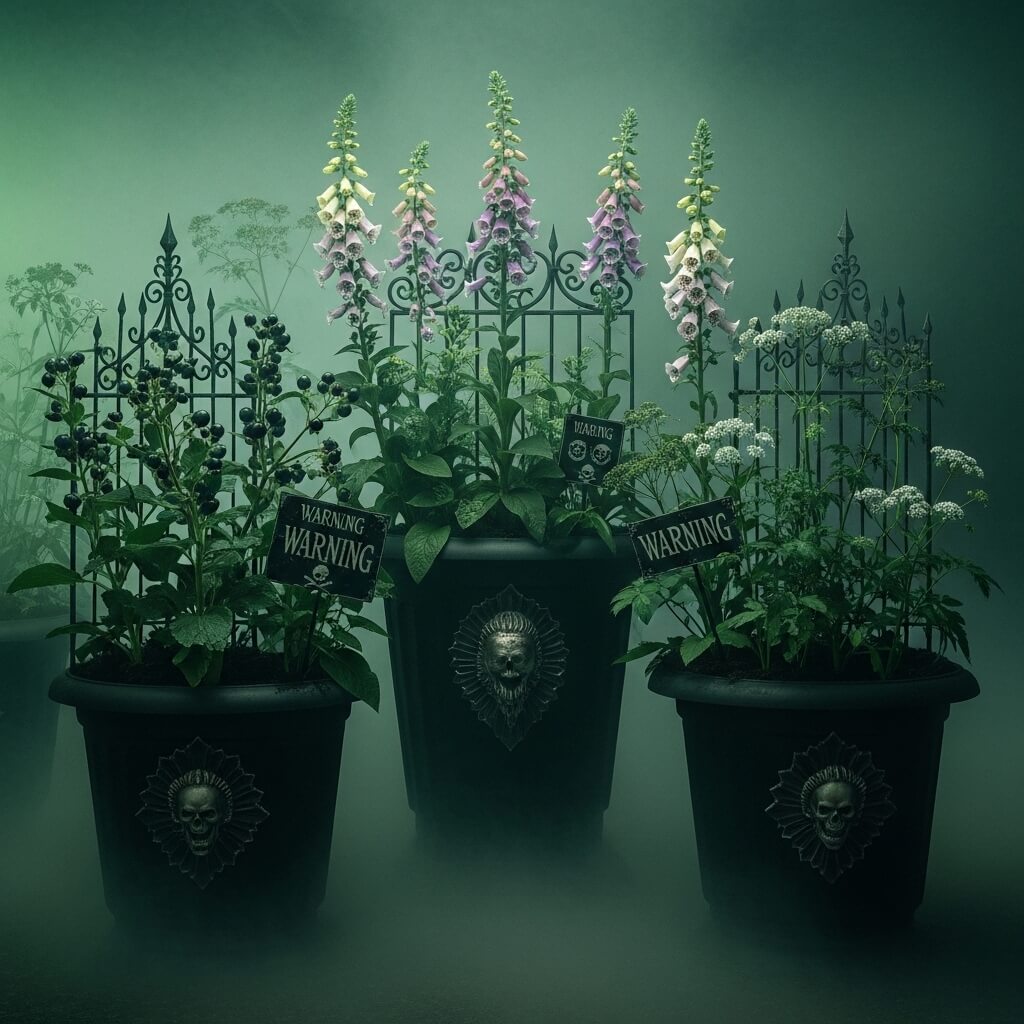
Before anyone gets worried – this is about plants with interesting histories and reputations, not about creating an actual danger zone! A poison plant themed garden focuses on historically significant plants that have fascinating folklore and striking beauty, all while being completely safe when properly handled and labeled.
This theme appeals to the witch who loves plant history, folklore, and the darker side of botanical knowledge. Plus, many of these plants are absolutely stunning and have been used in traditional gardens for centuries.
Safe “poison” plants for your themed garden:
- Foxgloves – gorgeous purple spires with dangerous reputation
- Castor beans – dramatic foliage, historically significant
- Angel’s trumpets – stunning hanging blooms, definitely intimidating
- Monkshood – deep blue flowers, classic poison garden resident
- Belladonna – if you can source it legally, small quantities only
- Hemlock (water hemlock) – actually avoid this one completely
- Yew – beautiful evergreen with toxic berries
Safety first, always. Label your plants clearly, research them thoroughly, and never consume anything you’re not 100% certain about. This garden is about admiration and historical interest, not experimentation.
The design aesthetic should lean gothic and dramatic. Dark planters, iron plant labels with historical information, and perhaps a small sign explaining that this is a historical reference garden. You want visitors to appreciate the beauty and history without anyone getting nervous about your gardening choices.
Educational elements make this garden even more interesting. Research the folklore and historical uses of each plant, and create small informational cards or a garden journal documenting what you learn. Some of these plants have absolutely fascinating histories that most people never hear about.
Consider adding a few antique botanical prints or old-style plant identification guides to enhance the educational and historical aspect. This garden tells stories, and the more you know about your plants, the better those stories become.
Also Read: 10 Gorgeous Garden Layout Ideas for Relaxing Green Corners
Celestial Star Map Outdoor Witch Garden
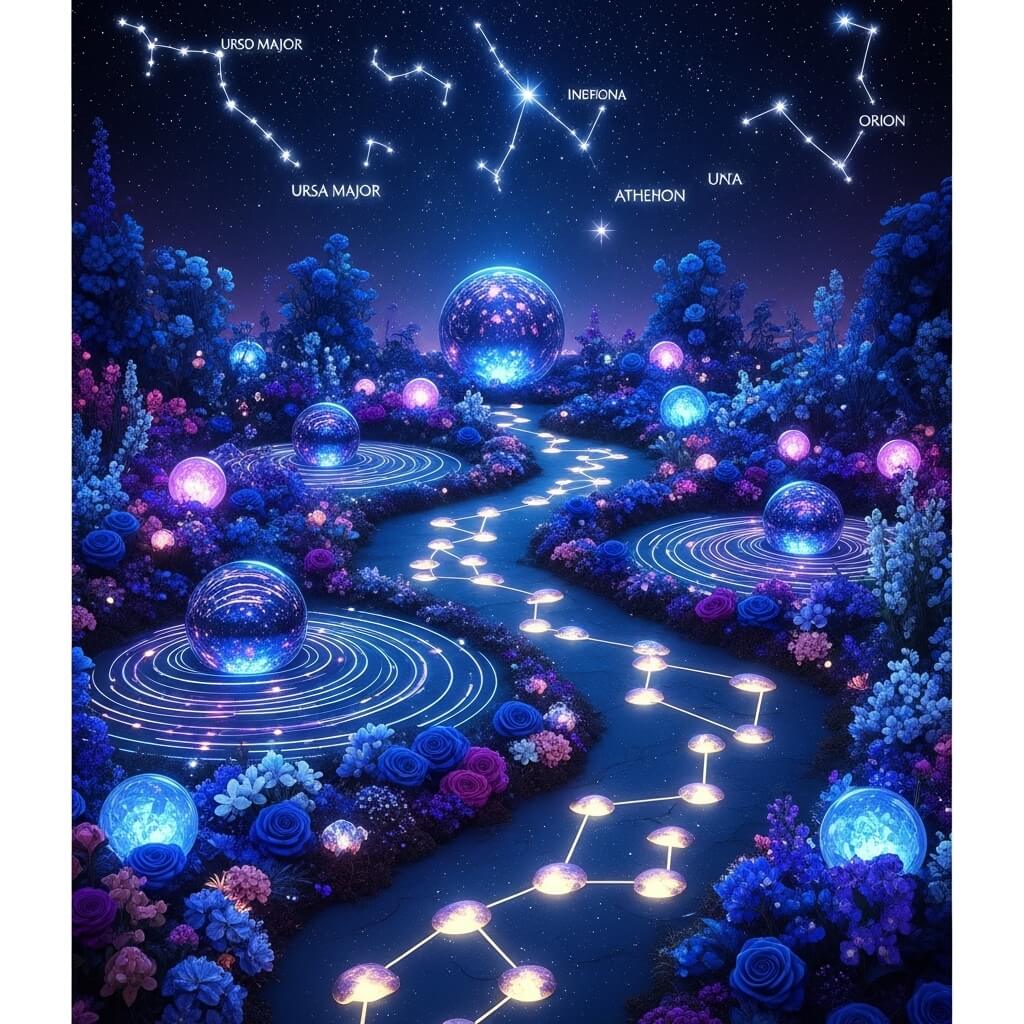
Ready for the ultimate ambitious project? A celestial garden that mirrors actual star patterns on the ground creates a stunning focal point that’s particularly magical for evening rituals or meditation. This design works best in larger spaces, but you can adapt the concept for smaller areas too.
The basic concept involves translating constellation patterns into garden bed shapes and plant arrangements. You can choose one significant constellation or create a larger design incorporating multiple star patterns that hold personal meaning.
Planning your celestial garden layout:
- Choose your constellation(s) based on personal significance or visibility in your location
- Scale the pattern to fit your available space
- Mark the “star” positions with plants, lights, or decorative elements
- Connect the stars with pathways or plant borders
- Add celestial decorative elements throughout
Plant selection should emphasize the nighttime garden experience. White and pale flowering plants show up beautifully in moonlight, while plants with silvery or gray foliage add to the celestial theme. Fragrant plants that release their scent in the evening enhance the magical atmosphere.
Perfect celestial garden plants:
- White cosmos for star-like flowers
- Silver artemisia for moon-colored foliage
- White roses for romantic celestial appeal
- Dusty miller for silvery texture
- White delphiniums for height and drama
- Evening primrose that opens at night
- Moonflowers for nocturnal blooms
Lighting is crucial for this design. Use white or blue LED lights to mark star positions, and consider solar-powered options for sustainability. Subtle lighting that enhances rather than overwhelms the natural beauty works best.
The pathways between star positions can be crushed white stone, glow-in-the-dark pebbles, or simply maintained grass. The key is creating clear sight lines so the constellation pattern remains visible even during daylight hours.
Add a central seating area positioned for optimal viewing of your ground-based constellation. This becomes your personal observatory where the earthbound meets the cosmic, perfect for evening contemplation or star-gazing sessions.
Bringing Your Magical Garden Vision to Life
Creating any of these magical garden designs doesn’t require a massive budget or professional landscaping skills – just patience, creativity, and a willingness to experiment. The best witch gardens develop personality over time, so don’t expect perfection from day one.
Start with the design that speaks most strongly to you, or combine elements from multiple ideas to create something uniquely yours. Remember, the most important element in any witch garden isn’t the plants or decorations – it’s the intention and energy you bring to the space.
Whether you choose the dramatic gothic herb garden or the ambitious celestial star map design, you’re creating more than just outdoor decoration. You’re crafting a space that nurtures your magical practice and provides a daily connection to the natural world. And honestly? In our increasingly digital world, we could all use a little more real magic in our lives 🙂
Happy gardening, and may your magical outdoor space bring you years of joy, inspiration, and perfectly enchanted vibes!