10 Elegant L Shape Sofa Design Living Room Ideas for Cozy Homes
- Living Room Decor
 Ben
Ben- 0
- 45 minutes read
Look, I get it. You’re staring at your living room right now, and that L-shape sofa you’ve been eyeing online suddenly feels like the answer to all your furniture prayers. Maybe you’re tired of that cramped two-seater that leaves half your guests sitting on the floor during movie night, or perhaps you’re just ready to give your space that grown-up, pulled-together vibe. Either way, L-shape sofas are basically the Swiss Army knife of furniture—versatile, stylish, and surprisingly accommodating for living rooms of all shapes and sizes.
I’ve been through this exact journey myself (twice, actually—long story involving a botched delivery and a very apologetic furniture store manager). After years of experimenting with different layouts and watching friends make both brilliant and questionable sofa choices, I’ve gathered some seriously solid ideas that work. So grab your coffee, get comfortable, and let’s talk about how to make an L-shape sofa work beautifully in your home without turning your living room into an obstacle course.
Modern Minimal L Shape Sofa Living Room Layout
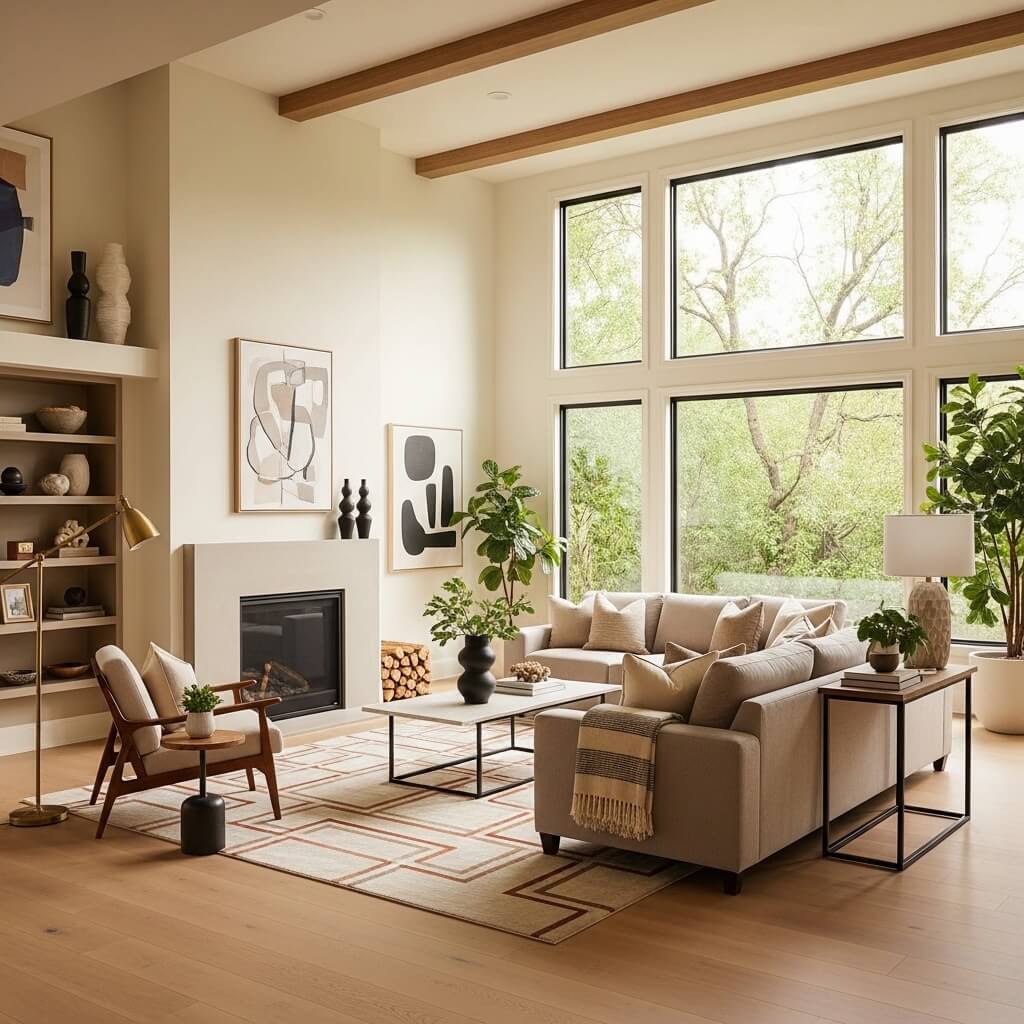
Ever walked into one of those impossibly clean Scandinavian design magazines and wondered if real humans actually live there? Well, the modern minimal approach with an L-shape sofa can actually be livable (shocker, I know).
The magic here lies in restraint. Choose an L-shape sofa in neutral tones—think clean whites, soft greys, or even a sophisticated charcoal. The beauty of minimalism is that your sofa becomes a sculptural element rather than just somewhere to sit. I once visited a friend who had this gorgeous low-profile grey L-shape sofa against a white wall, and honestly? It looked like something straight out of a design studio.
Here’s what makes this layout work:
- Clean lines: Pick a sofa with straight edges and slim arms
- Limited color palette: Stick to 2-3 colors max throughout the room
- Negative space: Don’t feel pressured to fill every corner—breathing room is your friend
- Geometric coffee table: A sleek glass or light wood table complements the angular sofa shape perfectly
Position your L-shape sofa to define the living area without blocking natural light flow. In minimal designs, every piece needs to earn its place, so that coffee table should be functional, not just decorative. Add one statement piece—maybe a striking floor lamp or a single piece of abstract art—and call it done.
The trick is resisting the urge to keep adding stuff. Your aunt’s decorative pillow collection? Probably not minimal. That vintage tapestry? Save it for another room. Keep accessories to an absolute minimum—maybe two textured throw pillows in complementary shades and one cashmere blanket draped casually over the chaise section.
Luxury L Shape Sofa Design with Marble Interior
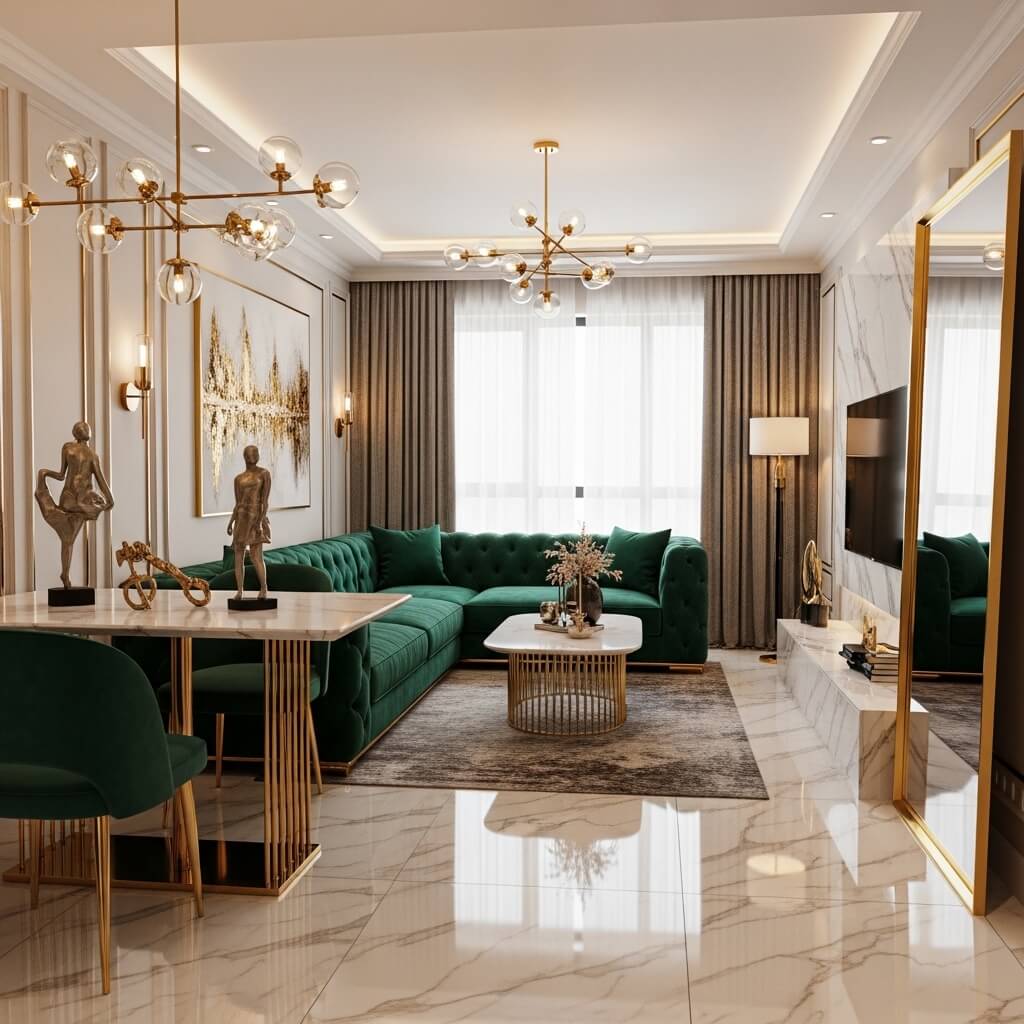
Alright, let’s talk about living that fancy life. If you’re going luxury, you might as well commit to the aesthetic fully, right? Pairing an L-shape sofa with marble elements creates instant sophistication that screams “I have excellent taste” without you actually having to scream anything.
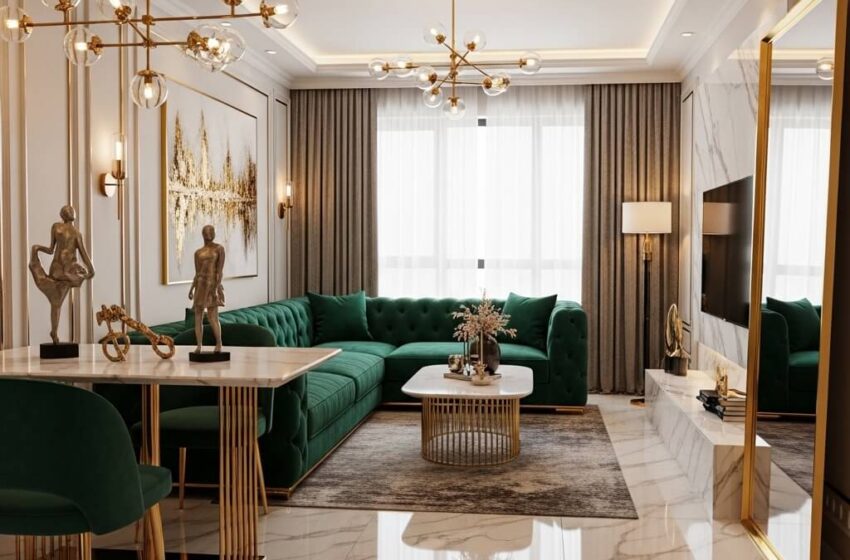
I visited a showroom last year that absolutely nailed this concept. They had this plush velvet L-shape sofa in deep emerald green positioned against a stunning marble-clad accent wall. The veining in the marble picked up the gold accents from the sofa’s metal legs, and honestly, I wanted to move in immediately.
Here’s how to pull off luxury without looking like you’re trying too hard:
Choose Rich Materials
- Velvet or premium leather upholstery in jewel tones (emerald, sapphire, burgundy)
- Gold, brass, or chrome legs and trim details
- High-density cushioning that maintains its shape (nobody’s impressed by saggy luxury)
Incorporate Marble Strategically
- Marble coffee table as the centerpiece
- Marble accent wall behind the sofa
- Marble side tables flanking the longer section
- Even marble-look porcelain flooring if you’re going all-in
The real game-changer? Layering textures. Your velvet sofa needs contrast, so throw in some silk cushions, a faux fur throw, and maybe a leather ottoman. This creates visual interest that keeps the space from feeling flat or one-dimensional.
Lighting matters immensely here. Install a statement chandelier or a contemporary pendant light that catches and reflects off your marble surfaces. Add some recessed lighting to highlight the texture of your sofa fabric. IMO, good lighting is what separates actual luxury from expensive-but-boring.
Don’t forget the accessories—but keep them refined. A sculptural vase here, a coffee table book there, maybe some fresh flowers in a crystal arrangement. You’re going for “effortlessly elegant,” not “I robbed a home goods store.”
Small Space L Shape Sofa Arrangement Ideas
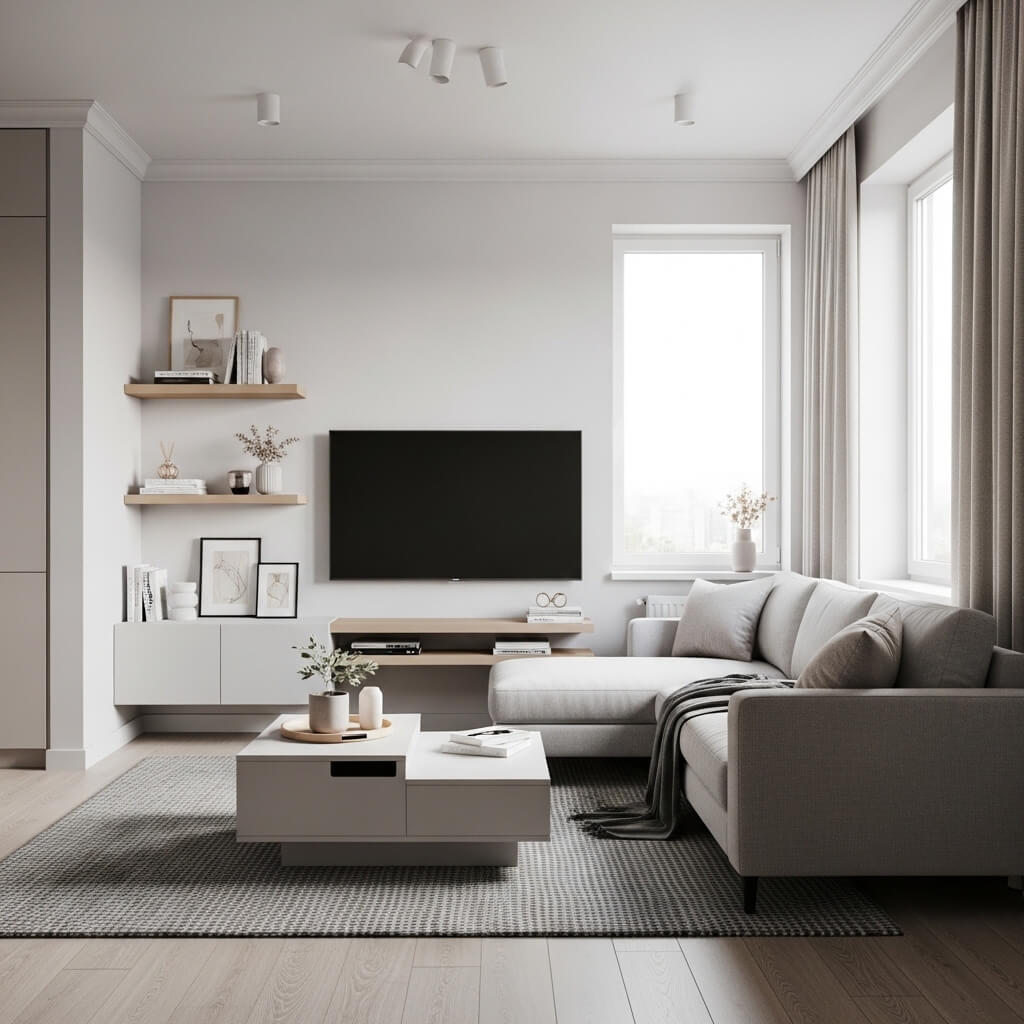
Okay, small space dwellers, this one’s for you. I know what you’re thinking: “An L-shape sofa in my shoebox apartment? Yeah, right.” But hear me out—the right L-shape sofa can actually make a small living room feel bigger and more functional when you arrange it properly.
I learned this the hard way in my first apartment, which was roughly the size of a generous walk-in closet. I squeezed in a regular sofa and loveseat perpendicular to each other, and the room felt claustrophobic. Then I swapped them for a compact L-shape sofa, and suddenly I had more floor space AND more seating. Wild, right?
Strategic placement is everything:
- Float it in the room: Push the L-shape sofa into a corner to maximize floor space in the center
- Use the chaise as a divider: In studio apartments, position the sofa to create subtle room separation
- Choose a compact design: Look for narrower arms and lower backs to avoid overwhelming the space
- Go light in color: Lighter tones visually expand small spaces (save the dark velvet for your next place)
Scale matters tremendously here. Measure your room three times before buying—trust me on this. You want to leave at least 18-24 inches of walking space around all sides. If you can’t manage that, consider a smaller L-shape configuration or even a modular sectional you can arrange differently.
Multi-functional furniture becomes your best friend in small spaces. Look for L-shape sofas with built-in storage underneath the chaise section. Some designs have pull-out beds hiding in there, which is perfect for guests (or for you when your roommate’s significant other won’t leave :/).
Keep the rest of the furniture minimal and proportional. A small round coffee table takes up less visual space than a rectangular one. Nesting tables can be tucked away when not needed. Wall-mounted shelves beat bulky bookcases every time.
Also Read: 10 Beautiful Sofa Back Wall Design Living Room Ideas Cozy
Cozy Family L Shape Sofa Living Room Setup
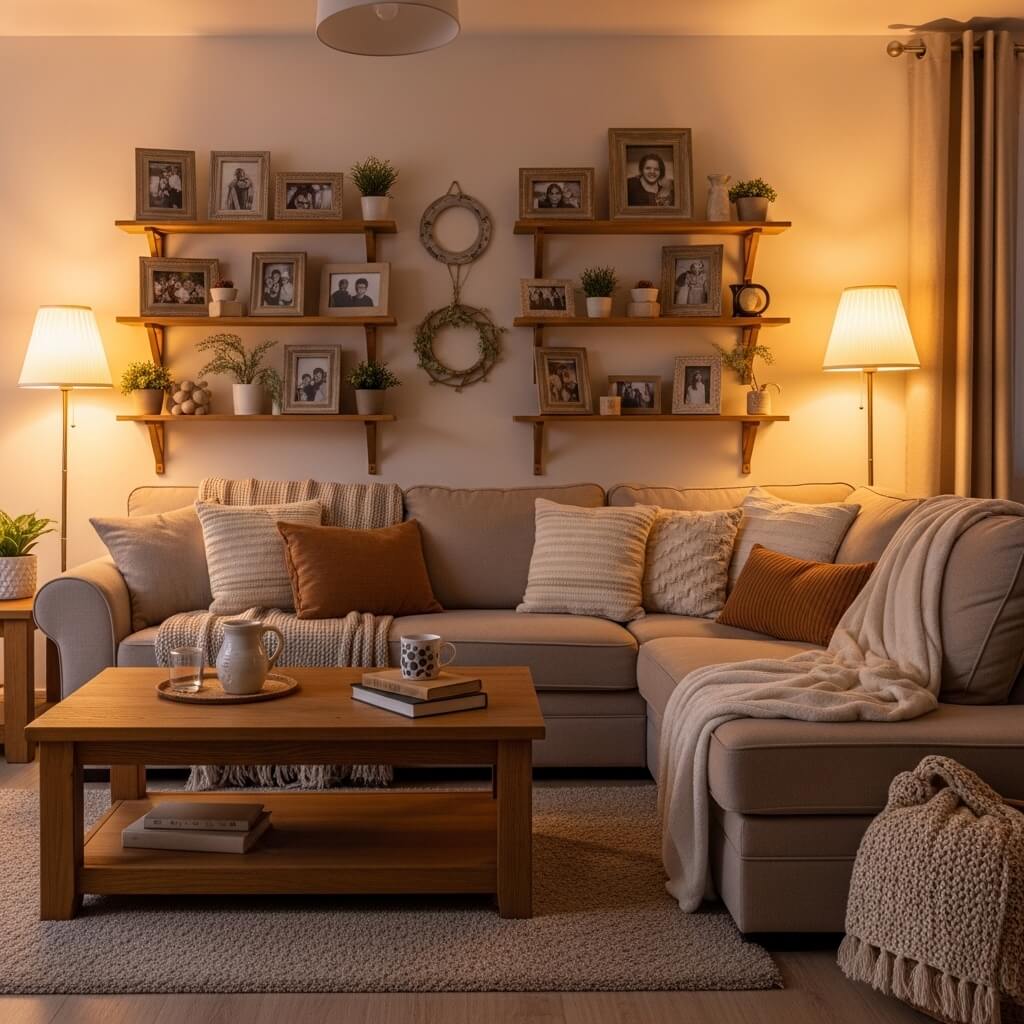
Let’s be real—family living rooms need to survive juice spills, jumping kids, dog fur, and the occasional dropped pizza slice. A family-friendly L-shape sofa setup prioritizes durability, comfort, and easy maintenance without sacrificing style (because you deserve nice things too, even with kids around).
My sister has three kids under eight, and her L-shape sofa has seen some things. She went with a performance fabric in a medium grey-brown shade (genius for hiding stains), and that thing has survived marker incidents, spilled chocolate milk, and a phase where her youngest insisted on eating crackers exclusively on the sofa.
Family-smart choices include:
- Performance fabrics: Microfiber, treated cotton, or leather alternatives that wipe clean easily
- Removable, washable covers: FYI, this feature alone will save your sanity
- Medium to dark colors: Lighter than black but darker than cream—the sweet spot for hiding daily wear
- Deep seats: Kids love to sprawl, and deeper seats accommodate family movie night better
Arrange the sofa to face the TV (let’s not pretend otherwise), but position it so you can still supervise kids playing in the room. The L-shape creates a natural gathering spot where everyone can pile on together without the awkward seating hierarchy of separate chairs.
Create designated zones within the L-shape. The chaise section becomes the prime spot for afternoon reading or naps. The corner works perfectly for cuddling during movie marathons. The longer section seats multiple people for gaming sessions or homework supervision.
Add practical elements:
- Ottomans with storage for toys and blankets
- Side tables within easy reach for sippy cups and snacks
- Baskets tucked under or beside the sofa for quick cleanup
- Throw blankets that are actually washable (not just decorative)
Honestly? The family living room doesn’t need to look like a daycare center exploded. Choose one or two statement pieces—maybe colorful throw pillows or a fun area rug—and keep everything else neutral and practical. Your future self (the one scrubbing crayon off surfaces at midnight) will thank you.
Scandinavian Style L Shape Sofa Living Room Design
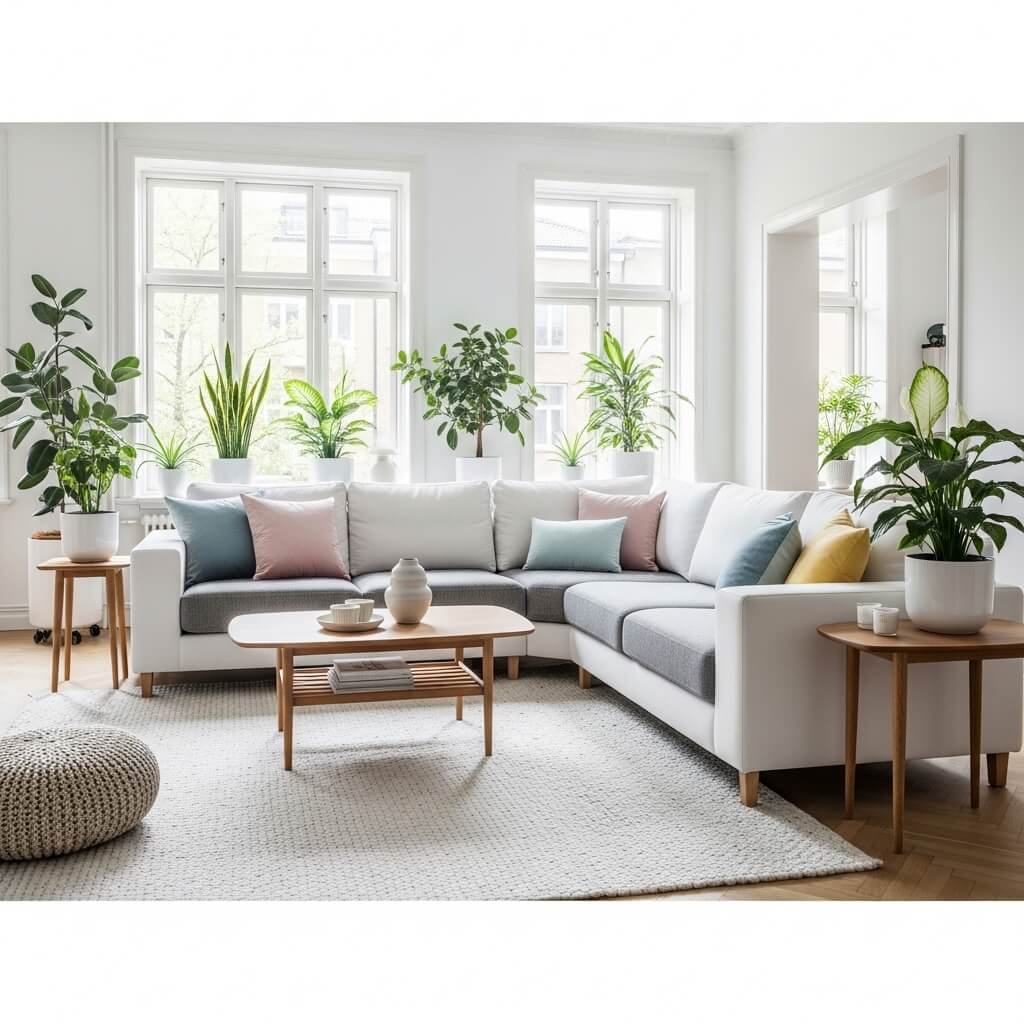
Ah, Scandinavian design—where less is more, and somehow everything looks expensive despite being from IKEA. The Scandi approach to L-shape sofas combines minimalism with warmth, creating spaces that feel both sophisticated and genuinely comfortable.
The Scandinavian aesthetic embraces natural materials, neutral colors, and functional beauty. Your L-shape sofa becomes the foundation for a room that’s equal parts serene and inviting. I’ve noticed that people who nail Scandi design never look like they’re trying too hard, which is precisely the point.
Core elements of Scandi L-shape styling:
The Sofa Itself
- Light grey, beige, or even white upholstery
- Simple, clean-lined silhouette without fussy details
- Natural wood legs (preferably light oak or birch)
- Medium-firm cushioning (Scandinavians aren’t about that sink-in-and-disappear softness)
Surrounding Elements
- Light wood flooring or neutral area rug
- White or light grey walls
- Plants—seriously, greenery everywhere
- Natural fiber textures (wool, linen, cotton)
The color palette stays deliberately restrained. Think whites, soft greys, beiges, and gentle earth tones. You can add warmth through wood tones and texture rather than bold colors. That said, Scandi design does embrace accent colors—just in small, intentional doses. A single mustard yellow throw pillow or a pale blue blanket adds personality without overwhelming the calm vibe.
Lighting makes or breaks Scandi design. Layer different light sources: a sculptural floor lamp beside the sofa, perhaps some pendant lights overhead, and definitely candles (Scandinavians burn through candles like nobody’s business, probably because their winters are brutal).
Keep accessories minimal but meaningful. A handmade ceramic vase, a few art prints in simple frames, maybe some woven baskets for storage. Everything should serve a purpose or bring genuine joy—if it doesn’t meet that criteria, it doesn’t belong in your Scandi space.
The overall effect should feel effortless and breathable. When someone walks into your living room, they should exhale and relax, not feel like they’re navigating a furniture showroom.
L Shape Sofa with TV Wall Modern Layout Ideas
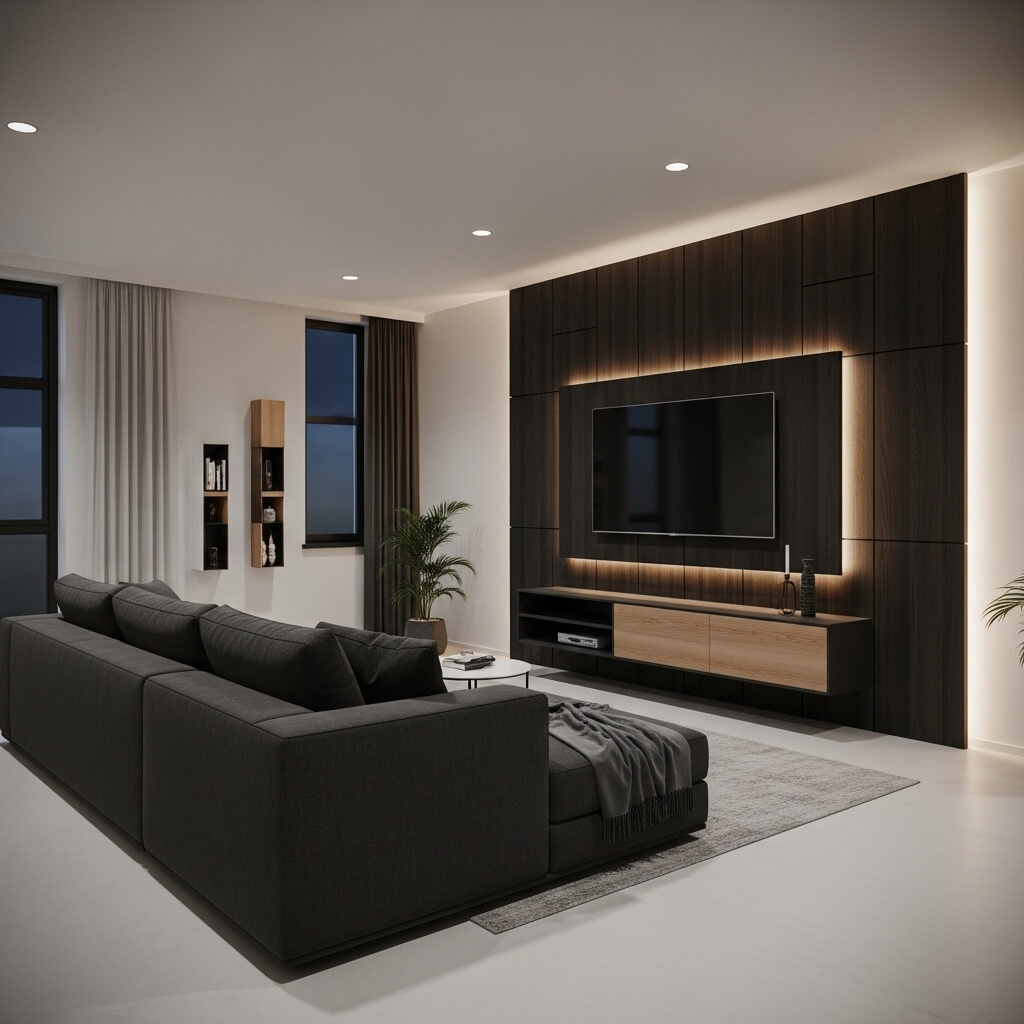
Let’s face it—most of us design our living rooms around the TV, and there’s zero shame in that. Positioning your L-shape sofa in relation to your TV wall creates the ultimate entertainment setup that’s both functional and visually appealing.
I spent probably too many hours rearranging my living room to find the perfect TV-to-sofa angle. Turns out, the L-shape configuration offers unique advantages for media viewing that regular sofas just can’t match.
Optimal positioning strategies:
The Classic Face-Off
Position the longest section of your L-shape directly facing the TV wall. This creates clear, unobstructed views for everyone seated. The chaise section extends to the side, offering a perfect spot for lounging during solo Netflix binges.
The Corner Anchor
Place your L-shape sofa in the corner opposite your TV wall, creating a diagonal sightline. This works brilliantly in square or nearly-square rooms, maximizing seating while maintaining good viewing angles.
Design the TV Wall Intentionally
Your TV deserves better than just hanging there awkwardly on a blank wall. Create a cohesive TV wall design:
- Floating media console: Keeps the floor visible and creates a modern look
- Built-in shelving: Frames the TV and provides storage for media equipment
- Accent wall treatment: Wood paneling, textured wallpaper, or a contrasting paint color
- Hidden cable management: Because dangling cords ruin even the best design
Distance matters more than you might think. Sit 1.5 to 2.5 times the diagonal screen size away from your TV for optimal viewing. For a 55-inch TV, that’s roughly 7-10 feet. Measure before committing to a furniture arrangement, or you’ll end up with neck strain and regret.
The beauty of the L-shape configuration? Everyone gets a decent view. No more fighting over the good seats or craning necks from awkward angles. The person on the chaise might have a slightly side view, but it’s still totally workable for casual viewing.
Add some ambiance with LED backlighting behind your TV (that subtle glow looks fantastic in the evening) and maybe some recessed lighting that you can dim during movie nights. Consider the glare from windows too—you might need blackout curtains or strategic sofa placement to avoid afternoon screen glare.
Also Read: 10 Stylish Sofa Design Living Rooms Ideas for Modern Homes
Open Concept L Shape Sofa Living Dining Room Idea
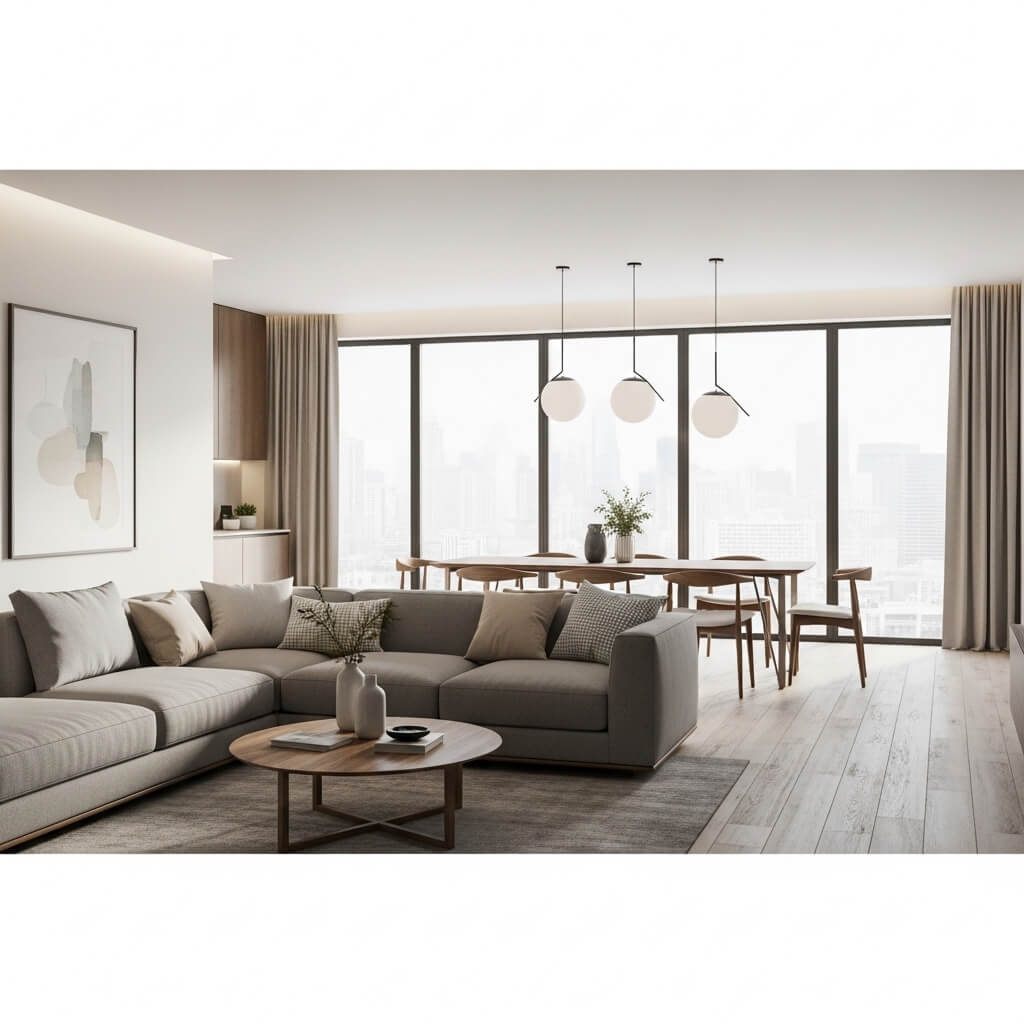
Open concept layouts are basically the standard in modern homes, which is great for spaciousness but tricky for defining separate areas. An L-shape sofa becomes your best tool for creating zones without building actual walls (because nobody wants to lose that open, airy feeling).
I’ve been in too many open-concept spaces that feel like furniture just got randomly scattered across one giant room. The L-shape sofa, when positioned thoughtfully, creates natural boundaries that help separate living from dining without blocking sightlines or flow.
Strategic zoning with your L-shape:
The Sofa as Divider
Float your L-shape sofa in the room—yes, pull it away from the walls—with the back facing your dining area. This creates a clear “living room” zone while maintaining visual openness. The back of the sofa becomes a subtle divider that doesn’t feel like a barrier.
Traffic Flow Considerations
Leave adequate pathways between your living and dining zones. You need at least 36 inches of clearance for comfortable walking space. Position the sofa so people can move naturally between areas without doing that awkward sideways shuffle.
Cohesive Design Elements
Since everything’s visible from everywhere, your living and dining areas need to speak the same design language:
- Coordinate color palettes between zones
- Repeat materials (if your sofa has wood legs, echo that wood tone in dining chairs)
- Use area rugs to anchor each zone separately
- Maintain consistent style (don’t go modern in living and farmhouse in dining—pick a lane)
The L-shape configuration naturally creates an intimate conversation area facing inward, which helps the living zone feel defined despite the lack of walls. Add a console table behind the sofa for extra definition and bonus surface space for lamps or decor.
Lighting becomes crucial in open concept spaces. Use different fixtures to define each zone—maybe a pendant light over your dining table and floor lamps flanking your sofa. This creates distinct atmospheres while maintaining the unified space.
One trick I love? Align your sofa with existing architectural elements like columns, beams, or the edge of different flooring materials. This makes the furniture placement feel intentional rather than random, which seriously elevates the whole look.
Boho Style L Shape Sofa Cozy Living Room Design
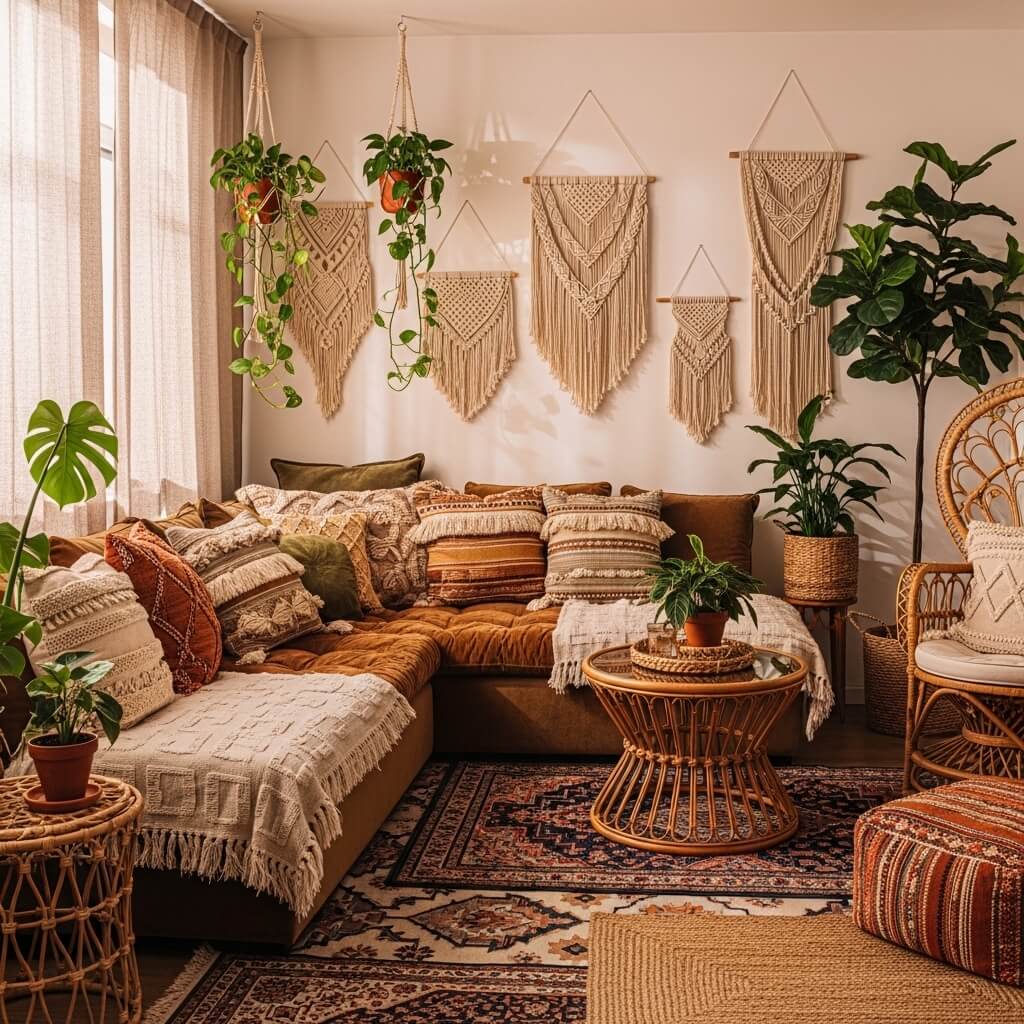
Alright, free spirits and pattern-lovers, this one’s for you. Boho style with an L-shape sofa means embracing texture, color, and that perfectly imperfect, collected-over-time aesthetic that makes spaces feel genuinely lived-in and loved.
The boho approach throws out the rulebook about matching sets and coordinated colors, which is honestly refreshing after all that minimalist restraint. Your L-shape sofa becomes a canvas for layering textiles, patterns, and personality.
Building your boho L-shape setup:
Start with the Sofa Base
Unlike minimal or modern styles, your sofa color can go anywhere:
- Neutral base (tan, cream, grey) that you’ll cover with textiles anyway
- Rich jewel tones (terracotta, deep teal, mustard)
- Even patterned upholstery if you’re feeling bold
Honestly, the fabric itself matters less because you’re going to pile it with pillows and throws until the original upholstery barely shows (which is kind of the point).
Layer, Layer, Layer
This is where boho gets fun:
- Mix pillow patterns freely (florals, geometric, tribal prints, solid textures)
- Throw blankets in different materials (chunky knit, woven, macramé, vintage quilts)
- Floor cushions and poufs clustered around the sofa
- Textured area rug(s)—yes, sometimes plural; layering rugs is totally a thing
Boho Accessories That Work
- Hanging plants in macramé holders
- Woven wall hangings above or beside the sofa
- Vintage or globally-inspired coffee table (rattan, carved wood, Moroccan tray tables)
- Lots of plants (on side tables, on the floor, hanging—just plants everywhere)
- Eclectic lighting (think beaded chandeliers or woven pendant lights)
The beauty of boho design? There’s no such thing as “too much.” Well, there is, but the line is refreshingly far out there. You can mix patterns that a designer would say clash, and somehow it works when you commit to the aesthetic fully.
Color palette flexibility is boho’s superpower. You can go earthy and neutral (terracotta, cream, sage, rust) or bright and saturated (fuchsia, turquoise, orange, purple). Just maintain some connecting thread between your choices—maybe all warm tones or all jewel tones—so it reads as intentional rather than chaotic.
Personal treasures make boho spaces special. Display that vintage find from the flea market, the handmade pottery from your trip, or the artwork your friend created. The lived-in, collected feel comes from actual living and collecting, not from buying everything in one shopping trip. 🙂
L Shape Sofa with Corner Window Seating Ideas
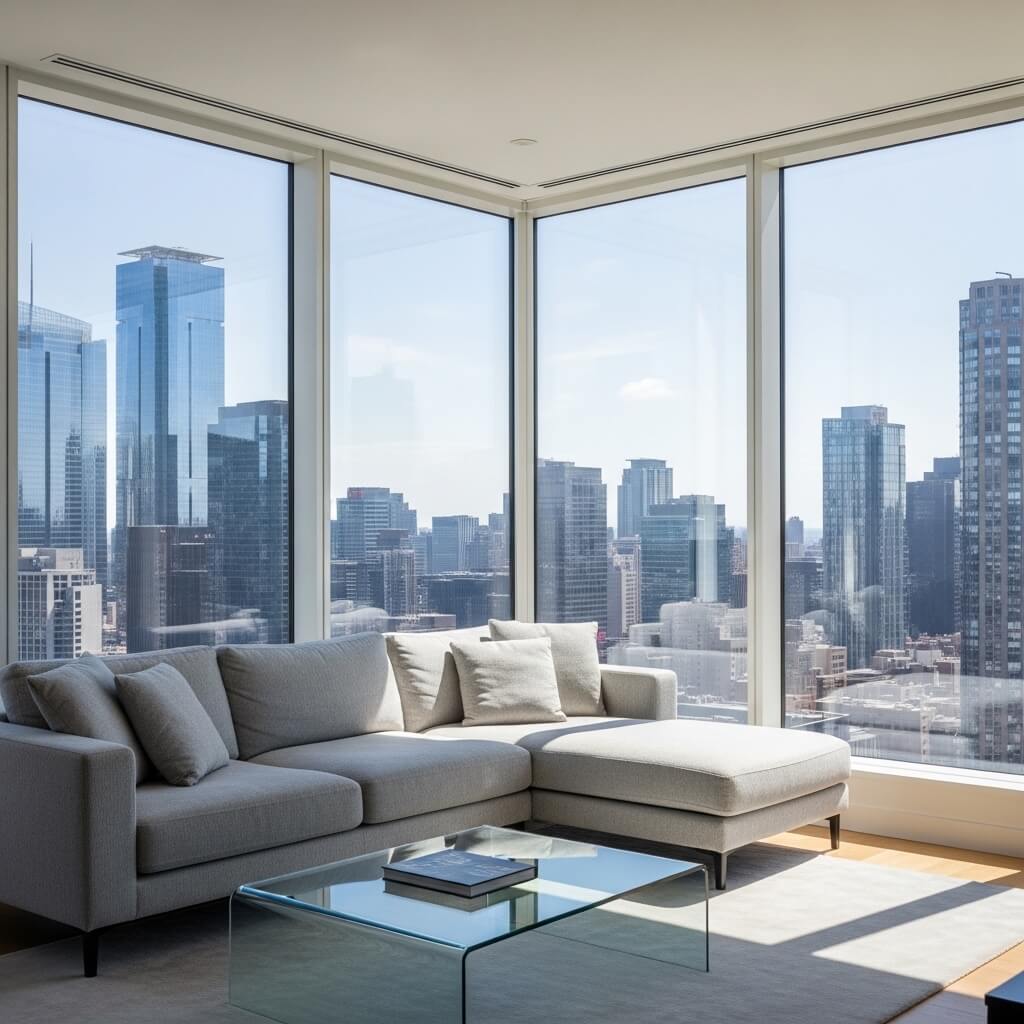
Corner windows are design gold—they flood rooms with natural light and create that coveted indoor-outdoor connection. Positioning your L-shape sofa near corner windows maximizes both the light and the view while creating a seriously enviable lounge spot.
I had an apartment with floor-to-ceiling corner windows that I initially wasted by shoving furniture against the opposite wall. Once I moved my L-shape sofa closer to the windows, the whole room transformed. Suddenly I was reading books in actual daylight and waking up to sunshine on weekend mornings (revolutionary, I know).
Strategic placement considerations:
The Snug Corner Approach
Nestle your L-shape sofa into the corner with the window, creating a cozy nook that takes full advantage of natural light. The sofa faces inward toward the room, but anyone seated enjoys proximity to the windows and views.
The Perpendicular Position
Place one section of the L-shape parallel to one window wall, with the other section extending into the room. This maintains the window view while creating better room flow if your space is narrow or long.
Window Treatment Decisions
You’ve got great windows—don’t cover them completely:
- Sheer curtains that filter light without blocking it
- Woven wood shades that add texture while providing privacy options
- Simply leave them bare if privacy isn’t a concern
- Avoid heavy drapes that hide your beautiful windows
Dealing with Sunlight
Here’s the thing nobody mentions about window seating: direct sunlight can fade fabrics and create glare. Choose fade-resistant upholstery fabrics if your windows face south or west. Consider adding a UV-protective window film that preserves views while protecting your furniture investment.
The corner window setup creates natural reading light that no lamp can replicate. Add a small side table for your coffee and book, maybe a floor lamp for evening reading, and you’ve created the perfect retreat within your living room.
Plants absolutely thrive near corner windows, so cluster some greenery around your sofa. The combination of natural light, plants, and comfortable seating creates an almost greenhouse-like atmosphere that feels nurturing and alive.
One caution: check for drafts before committing to this layout. Older windows can leak cold air in winter, making your beautiful window seating miserable from November through March. Weather stripping solves this problem easily, but test it first.
Also Read: 10 Relaxing Firepit Ideas Backyard Dreamy Outdoor Retreats
Elegant Neutral Tone L Shape Sofa Interior Design
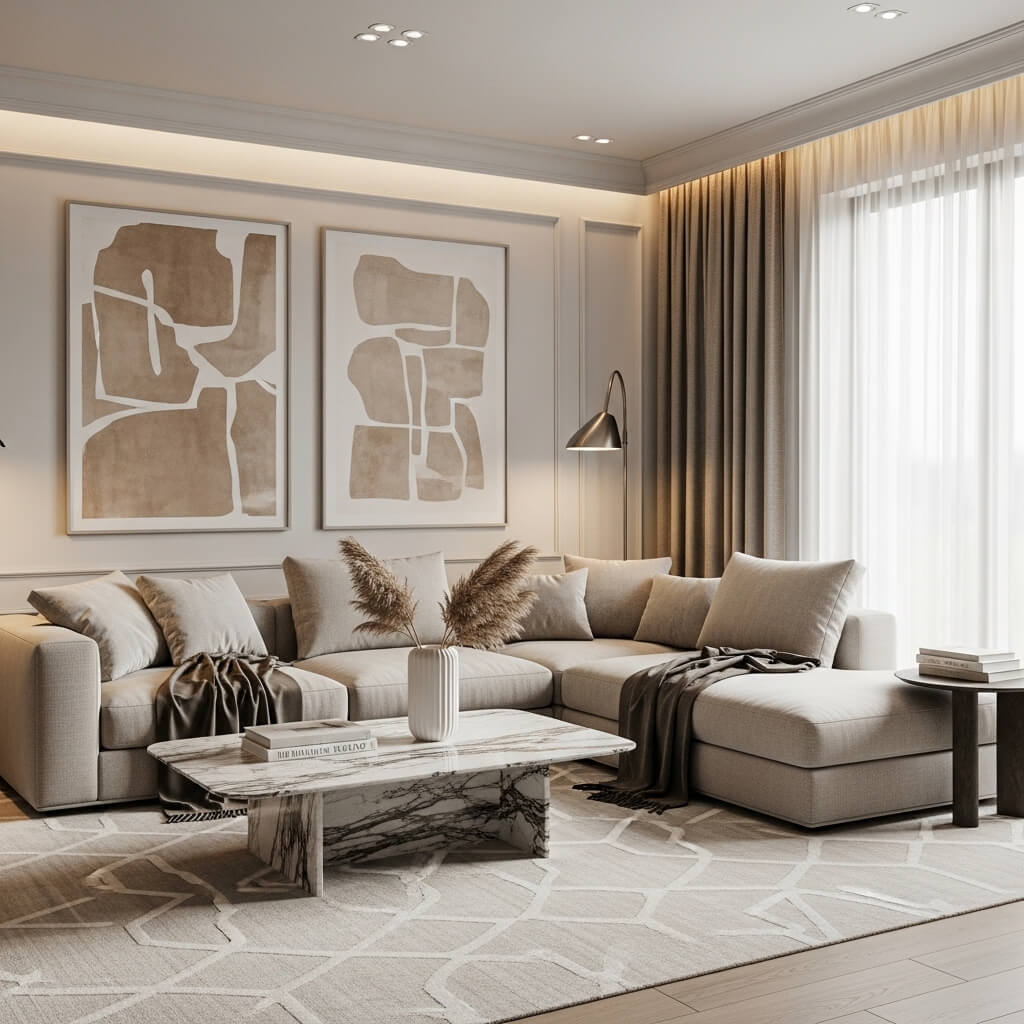
Sometimes you want sophistication without the fuss, elegance without the drama. Neutral-toned L-shape sofas create timeless, versatile spaces that adapt as your style evolves (because let’s be honest, your design preferences will change, and neutral choices age gracefully).
Neutral doesn’t mean boring—it means you’re creating a sophisticated foundation that you can accessorize and adjust seasonally without repainting walls or replacing major furniture pieces. I’ve had the same oatmeal-toned L-shape sofa for six years, and it’s worked through three completely different design phases in my home. That’s value, folks.
Choosing your neutral palette:
Warm Neutrals
- Beige, taupe, camel, warm grey, greige (grey-beige hybrid)
- These create cozy, inviting spaces
- Work beautifully with wood tones and brass accents
Cool Neutrals
- True grey, charcoal, soft white, cool taupe
- Create crisp, contemporary environments
- Pair well with chrome, glass, and marble
The sofa itself should anchor your neutral scheme. Go for quality upholstery in a mid-tone neutral that won’t show every speck of dirt but isn’t so dark that it feels heavy. Consider texture here—a neutral linen weave or subtle pattern adds interest without color.
Layering neutrals successfully:
The secret to elegant neutral design? Varying textures and tones within your palette. Don’t just grab all beige items and call it done—that’s how you end up with a flat, boring room.
Instead:
- Mix different neutral shades (pair warm taupe with cooler grey)
- Layer contrasting textures (smooth leather, nubby linen, soft velvet, rough jute)
- Incorporate different materials (wood, metal, glass, stone, ceramic)
- Add depth with different finishes (matte, glossy, brushed, distressed)
Strategic accent opportunities:
Neutral rooms let you play with accents seasonally:
- Swap throw pillows and blankets with the seasons (warm tones in fall, cooler in summer)
- Rotate artwork or decorative objects for fresh looks
- Change out one accent color annually without replacing major pieces
- Add greenery that pops against neutral backgrounds
Keep lines clean and proportions balanced. Neutral schemes highlight shape and form more than color-forward designs, so every piece of furniture needs to have good bones. Your L-shape sofa should have pleasing proportions and quality construction that looks good even without decorative distractions.
Lighting takes center stage in neutral rooms since you’re not using color for drama. Layer ambient, task, and accent lighting to create depth and interest. Consider the warmth of your light bulbs too—warm white (2700-3000K) enhances warm neutrals, while cooler white (3500-4000K) complements cool neutral palettes.
The result? A space that feels expensive, intentional, and effortlessly sophisticated—even when you’re sprawled on that elegant neutral sofa in your oldest sweatpants, which is really the dream, isn’t it?
Wrapping This Up
Look, choosing and arranging an L-shape sofa doesn’t require an interior design degree or an unlimited budget. It requires understanding your space, knowing how you actually live (not how you wish you lived), and being honest about what works for your lifestyle.
Whether you’re going full minimalist, embracing maximalist boho vibes, or creating a family-friendly zone that survives real life, the L-shape sofa adapts to your needs better than almost any other furniture configuration. Its versatility is genuinely unmatched.
Start by measuring your space (seriously, measure twice, buy once). Consider your daily routines, your design preferences, and your budget. Then pick the approach that resonates with your lifestyle rather than just what looks good on Pinterest. That Instagram-perfect white sofa might be stunning, but if you have kids and pets, you’re setting yourself up for stress, not style.
Remember that good design evolves over time. You don’t need to nail everything perfectly in one shopping trip. Start with your L-shape sofa as the foundation, then build around it gradually. Add pieces that genuinely improve your space and your life, not just things that fill empty corners.
And honestly? The best living room is one you actually use and enjoy. If that means your elegant neutral L-shape sofa occasionally hosts family movie nights complete with popcorn and chaos, then it’s doing its job perfectly. Furniture exists to serve your life, not the other way around.
Now go create that cozy, elegant space you’ve been daydreaming about—you’ve totally got this.