10 Beautiful Sofa Back Wall Design Living Room Ideas Cozy Vibes
- Living Room Decor
 Ben
Ben- 0
- 36 minutes read
You know that awkward blank wall staring back at you every time you plop down on your sofa? Yeah, that one. The wall that’s been quietly judging you for months (maybe years?) while you binge-watch your favorite shows. I’ve been there, and honestly, it’s like having an unfinished sentence hovering in your living space. Your sofa deserves better. Your guests deserve better. Heck, you deserve better.
Here’s the thing—the wall behind your sofa isn’t just dead space. It’s prime real estate that can completely transform your living room from “meh” to “wow, did you hire an interior designer?” And the best part? You don’t need a massive budget or a degree in design to pull off something stunning.
I’ve spent way too much time (and money, let’s be real) experimenting with different sofa back wall designs, and I’m here to share the cream of the crop. These ten ideas will give your living room those cozy, Instagram-worthy vibes everyone’s after. Let’s get into it.
Minimalist Gallery Wall Behind Sofa
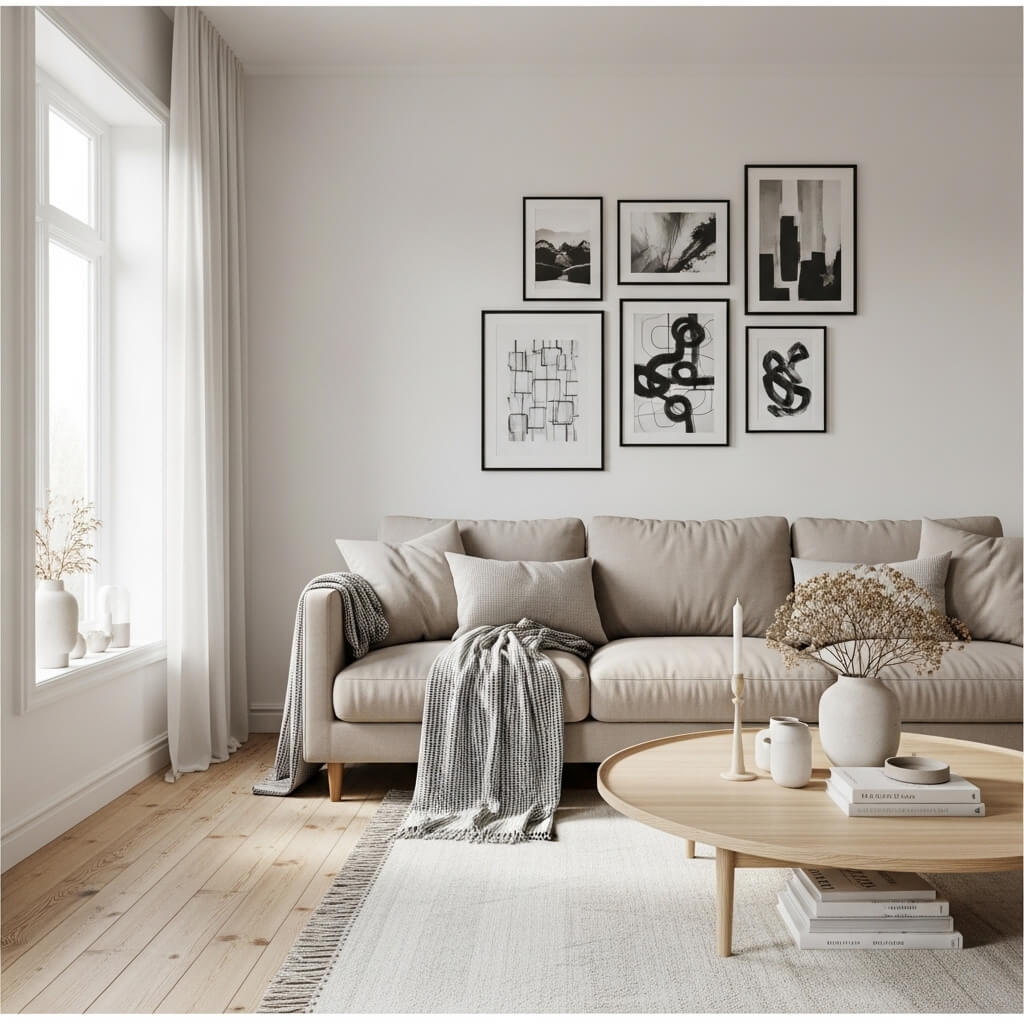
Starting strong with a classic that never gets old. A minimalist gallery wall is like the little black dress of interior design—timeless, versatile, and always makes you look good.
The beauty of a minimalist gallery wall lies in its restraint. You’re not slapping up every photo from your last vacation or cramming fifty frames onto one wall. Instead, you’re curating a collection of thoughtful pieces that speak to your aesthetic without screaming for attention.
I personally love using black and white photography mixed with simple line drawings. The key is maintaining consistent framing—either all black frames, all white, or all natural wood. This creates visual harmony even when your art pieces are different sizes. Space them evenly, and for the love of good design, use a level. Nothing kills the vibe faster than wonky frames.
Here’s my pro tip: stick to odd numbers. Three large frames, five medium ones, or seven small pieces. Why? Our brains find odd-numbered groupings more visually interesting. Science or interior design magic? Who knows, but it works.
Making It Work in Your Space
The minimalist approach works especially well in smaller living rooms where you don’t want to overwhelm the space. Choose pieces with clean lines and limited color palettes—think neutrals, blacks, whites, and maybe one accent color that picks up a tone from your sofa or throw pillows.
Start by laying everything out on the floor first. Seriously, do this step. I skipped it once and ended up with 27 nail holes in my wall. Not my finest moment. :/ Once you’re happy with the arrangement, trace the frames on kraft paper, tape them to the wall, and nail through the paper. Remove the paper and hang your frames. Boom—instant sophistication.
Wooden Slat Accent Wall Design
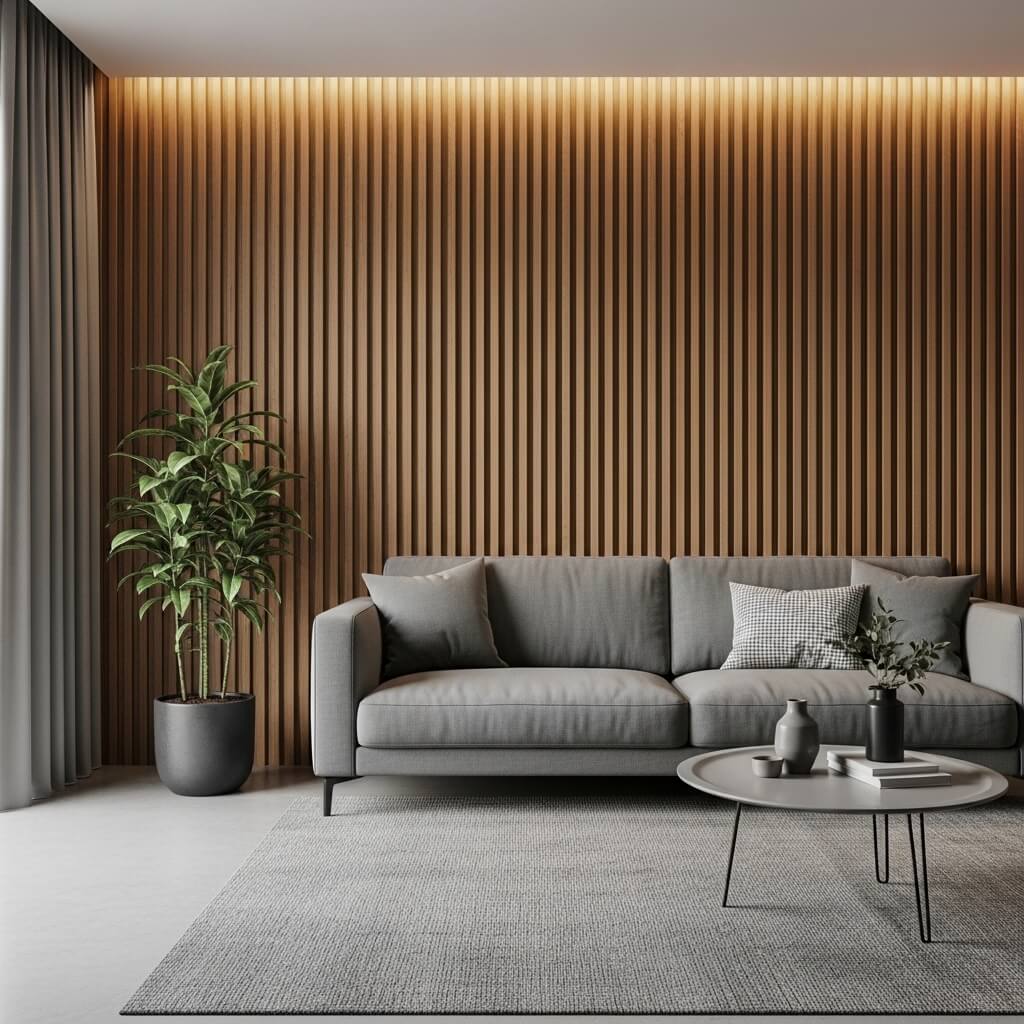
Ever walked into a room and immediately felt warmer and cozier? Chances are, wood had something to do with it. Wooden slat accent walls bring texture, warmth, and that modern architectural vibe that makes your living room look like it belongs in a design magazine.
The vertical or horizontal lines created by wood slats add dimension without adding clutter. They create visual interest through shadow play and texture rather than color or pattern. It’s subtle but incredibly effective.
I installed horizontal walnut slats behind my sofa last year, and let me tell you—the compliments haven’t stopped. The installation was surprisingly manageable too. You can buy pre-made slat panels (the easy route) or DIY it with wood strips from your local hardware store (the “I’m feeling ambitious” route).
Choosing Your Wood and Layout
You’ve got options here:
- Horizontal slats: Make your room feel wider—perfect for narrower living rooms
- Vertical slats: Draw the eye upward and make ceilings feel higher
- Mixed orientation: For the bold and adventurous (you know who you are)
Wood choice matters too. Lighter woods like pine or ash keep things bright and Scandinavian. Darker woods like walnut or mahogany add drama and richness. And if you’re renting or commitment-phobic about color, peel-and-stick wood slat wallpaper exists—FYI, it’s come a long way from the tacky stuff your grandma had.
The spacing between slats creates that gorgeous shadow effect. I went with 2-inch slats with 2-inch gaps, but you can adjust based on your preference. Just keep it consistent throughout.
Oversized Statement Art Wall
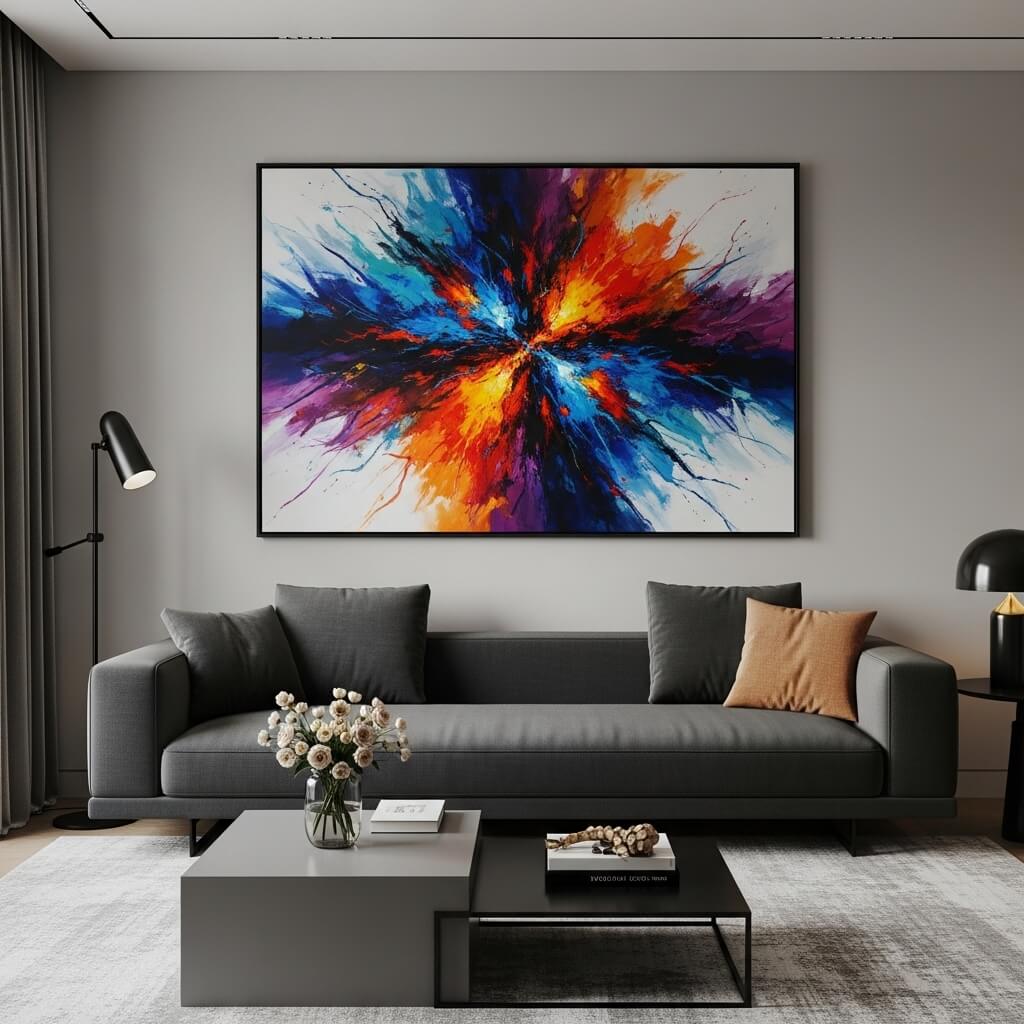
Sometimes you just need to go big or go home, right? An oversized statement piece behind your sofa makes an immediate impact and eliminates all that “what should I hang here?” anxiety. One piece. Done. Mic drop.
I’m talking about art that takes up a significant portion of your wall—think 60-80% of your sofa width. This creates a grounding effect and makes your seating area feel intentional and designed rather than randomly assembled.
The statement piece approach works particularly well if you’re not into fussy styling or don’t want to constantly rearrange multiple items. Pick something that resonates with you—abstract art, a massive photograph, a vintage map, or even a large textile piece.
Finding Your Perfect Statement Piece
Here’s where it gets personal. Your statement art should reflect something about you or set the mood you want in your space. Want calming vibes? Think blues and greens with flowing, organic shapes. Want energy? Bold colors and geometric patterns do the trick.
Where to find oversized art without selling a kidney:
- Local artists (support your community and get original work)
- Online marketplaces like Etsy or Society6
- Thrift stores and estate sales (seriously underrated)
- DIY abstract canvases (throw some paint around—it’s therapeutic)
Hang it at eye level when standing, which typically means the center of the piece sits about 57-60 inches from the floor. And please, please make sure it’s securely anchored. The last thing you need is a midnight crash and a destroyed masterpiece.
Also Read: 10 Stylish Sofa Design Living Rooms Ideas for Modern Homes
Floating Shelves Decor Styling Wall
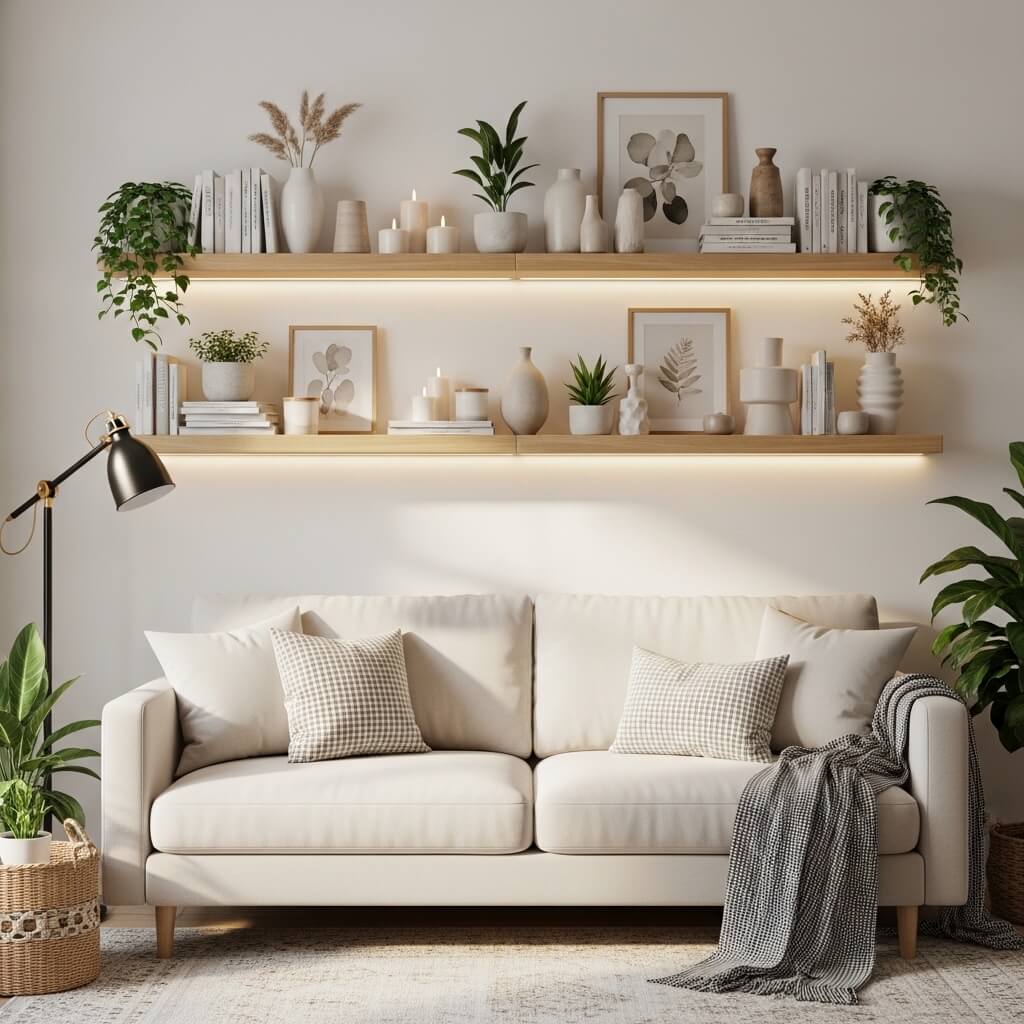
If you’re like me and love having functional decor, floating shelves behind your sofa are your new best friend. They give you display space without the visual weight of traditional shelving units, and you can switch up your styling whenever the mood strikes.
I’ve got three staggered floating shelves behind my guest room sofa, and they’re perfect for rotating seasonal decor, showcasing my book collection (okay, mostly unread books I swear I’ll get to), and displaying plants that haven’t met their unfortunate demise yet.
The beauty of floating shelves is their versatility. You can go symmetrical with evenly spaced shelves for a more traditional look, or get creative with asymmetrical arrangements that feel modern and dynamic.
Styling Your Shelves Like a Pro
Here’s the secret to shelves that don’t look cluttered or bare: the rule of thirds. Aim to fill about two-thirds of each shelf, leaving some breathing room. Layer items with varying heights, and mix different textures and materials.
My go-to shelf styling formula:
- Books: Stack some horizontally, line some up vertically
- Objects: Vases, sculptures, or meaningful trinkets
- Greenery: Real or faux plants add life
- Personal items: Photos in interesting frames or travel souvenirs
Group items in odd numbers (there’s that rule again), and don’t be afraid of negative space. White space isn’t wasted space—it lets your eye rest and makes everything look more curated and less chaotic.
Swap things seasonally to keep your living room feeling fresh. Spring? Lighter colors and fresh flowers. Fall? Warmer tones and mini pumpkins (I don’t make the rules).
Modern Wall Panel Molding Design
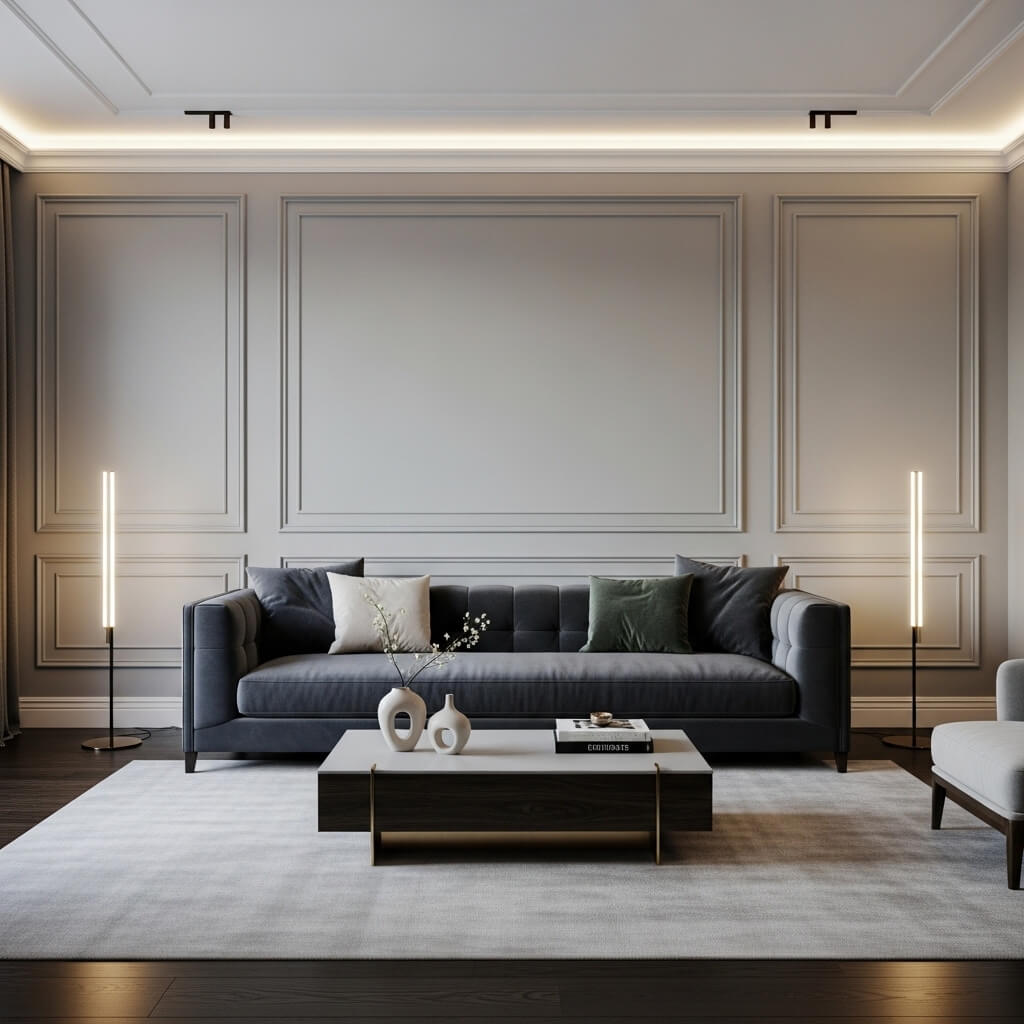
Want to add architectural interest without actual renovation? Wall panel molding is your answer. This trend has exploded recently, and for good reason—it adds instant elegance and dimension to flat, boring walls.
The beauty of panel molding is that it works with virtually any design style. Traditional picture frame molding feels classic and timeless. Vertical board and batten reads more modern farmhouse. Grid patterns hit that contemporary sweet spot.
I added simple rectangular panel molding behind my sofa, painted the same color as the wall but in a different sheen (walls in matte, molding in satin). The subtle contrast creates depth without being in-your-face about it. Sophisticated without trying too hard—my entire life philosophy, honestly.
DIY or Hire Out?
If you’re reasonably handy, this is totally a DIY project. You need:
- MDF boards or pre-made molding (lightweight and easy to cut)
- A miter saw (or have the store cut for you)
- Liquid nails and finishing nails
- Caulk and paint
Measure twice, cut once—that old saying exists for a reason. Map out your design with painter’s tape first so you can visualize the proportions. The panels should relate to your sofa size and the wall dimensions. Too small looks busy; too large can feel overwhelming.
Paint everything the same color for a subtle, tone-on-tone look, or paint the inside of the panels a different color for more contrast and visual pop. IMO, the monochromatic approach feels more sophisticated, but you do you.
Mirror Grid Wall for Small Spaces
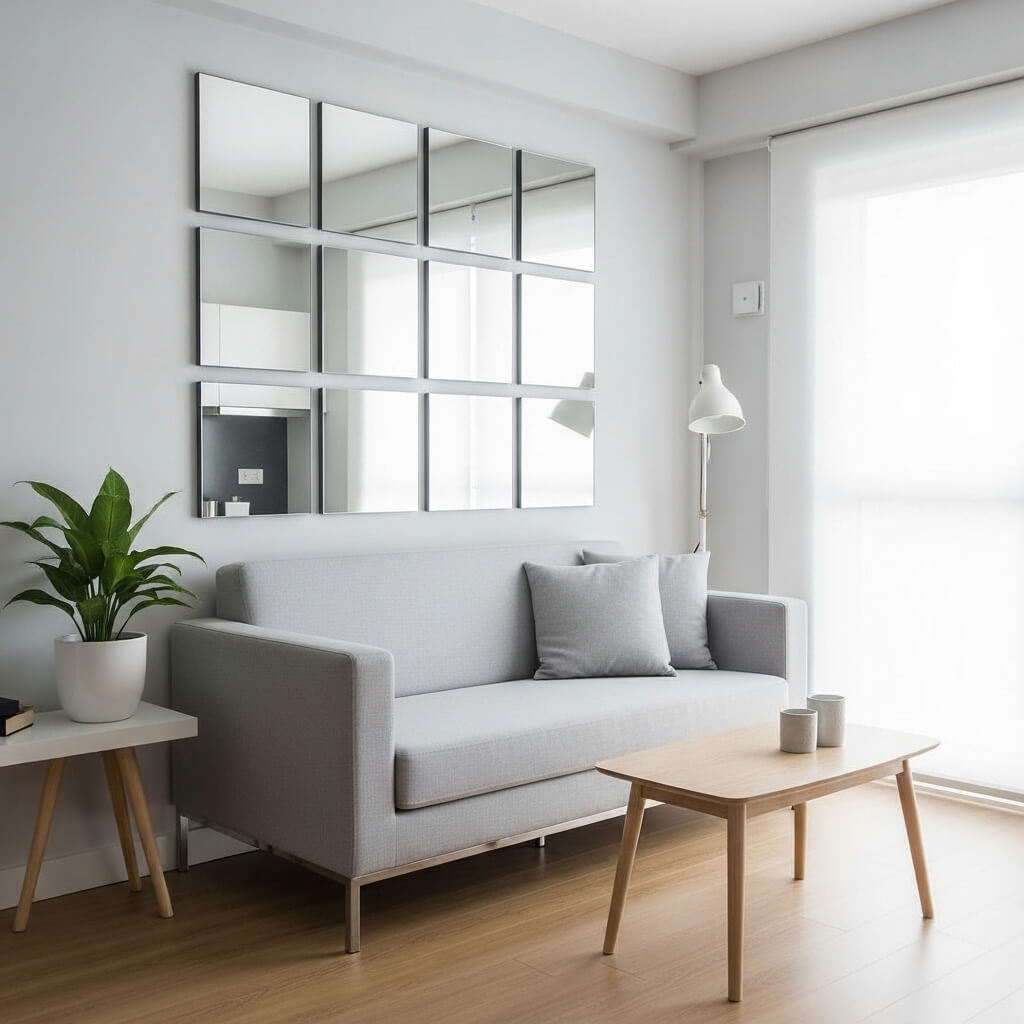
Small living room? A mirror grid wall behind your sofa will become your secret weapon for making the space feel literally twice as big. It’s not magic—it’s strategic light reflection and visual trickery, but the effect is pretty magical.
Instead of one large mirror (which can feel a bit “dance studio”), a grid of smaller mirrors creates interesting visual texture while still bouncing light around your room. The multiple reflections add depth without making your space feel like a funhouse.
I went with twelve square mirrors arranged in a 3×4 grid behind a sofa in my narrow city apartment, and the transformation was insane. Suddenly, my cramped living room felt open and airy. Guests always comment on how spacious it feels, and I just smile knowingly.
Creating Your Mirror Grid
Size and spacing matter here:
- Keep consistent spacing between mirrors (1-2 inches works well)
- Choose mirrors with interesting frames or go frameless for a sleek look
- Make sure the overall grid relates proportionally to your sofa width
The whole grid should be slightly narrower than your sofa—about 75-80% of the sofa width looks balanced. Too wide, and it looks disconnected; too narrow feels timid.
Installation tip: use a level and mark your layout carefully. With multiple mirrors, even slight misalignment becomes glaringly obvious. Start from the center and work outward to ensure symmetry. And invest in good quality mirror hanging hardware—you don’t want these babies crashing down.
Position your sofa strategically so the mirrors reflect something pleasant (a window, artwork, or your lovely decor) rather than your TV or a weird angle of your hallway. The reflection matters as much as the mirror itself.
Also Read: 10 Relaxing Firepit Ideas Backyard Dreamy Outdoor Retreats
Textured Wallpaper Feature Wall
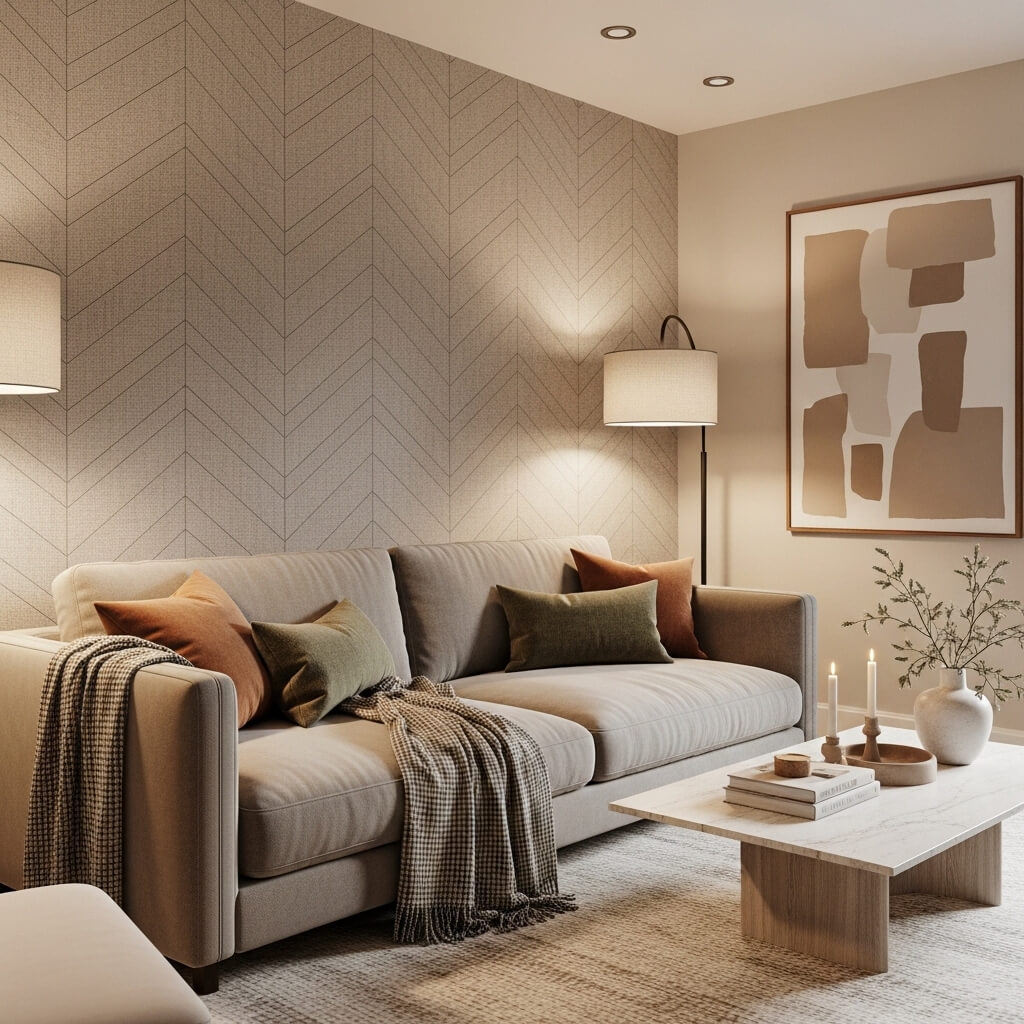
If you’re commitment-phobic about color but want personality, textured wallpaper gives you all the visual interest with neutral staying power. We’re not talking about your grandma’s floral wallpaper here (though if that’s your vibe, no judgment). Modern textured wallpaper is sophisticated, tactile, and adds serious depth to your space.
Grasscloth, linen textures, geometric embossing, faux brick or stone—the options are endless. I recently installed a subtle grasscloth wallpaper behind my sofa, and the texture catches light throughout the day in the most beautiful way. It’s like your wall is putting on a gentle, ever-changing show.
The neutral color palette of most textured wallpapers means they won’t compete with your furniture or decor. Instead, they provide a sophisticated backdrop that makes everything else in the room look more expensive. Perception is reality, friends.
Choosing and Installing Textured Wallpaper
What to consider:
- Texture scale: Large textures make statements; subtle textures add quiet sophistication
- Color: Neutrals are safer for resale, but don’t be afraid of muted colors that complement your palette
- Material: Natural materials like grasscloth are gorgeous but less forgiving during installation
Can you DIY wallpaper? Absolutely, though I’ll be honest—it requires patience and precision. Peel-and-stick options have made this dramatically easier (thank you, design gods), but traditional paste wallpaper gives you more high-end options.
Prep your wall properly—smooth, clean, and primed. Nothing shows through wallpaper quite like wall imperfections. If your walls look like a connect-the-dots puzzle of nail holes and dings, address that first.
Match your patterns at the seams, use a good smoothing tool to avoid bubbles, and trim carefully. Or hire a professional if patience isn’t your strong suit. A properly hung wallpaper job looks custom and expensive. A DIY disaster looks… well, like a disaster.
Boho Macrame Wall Hanging Setup
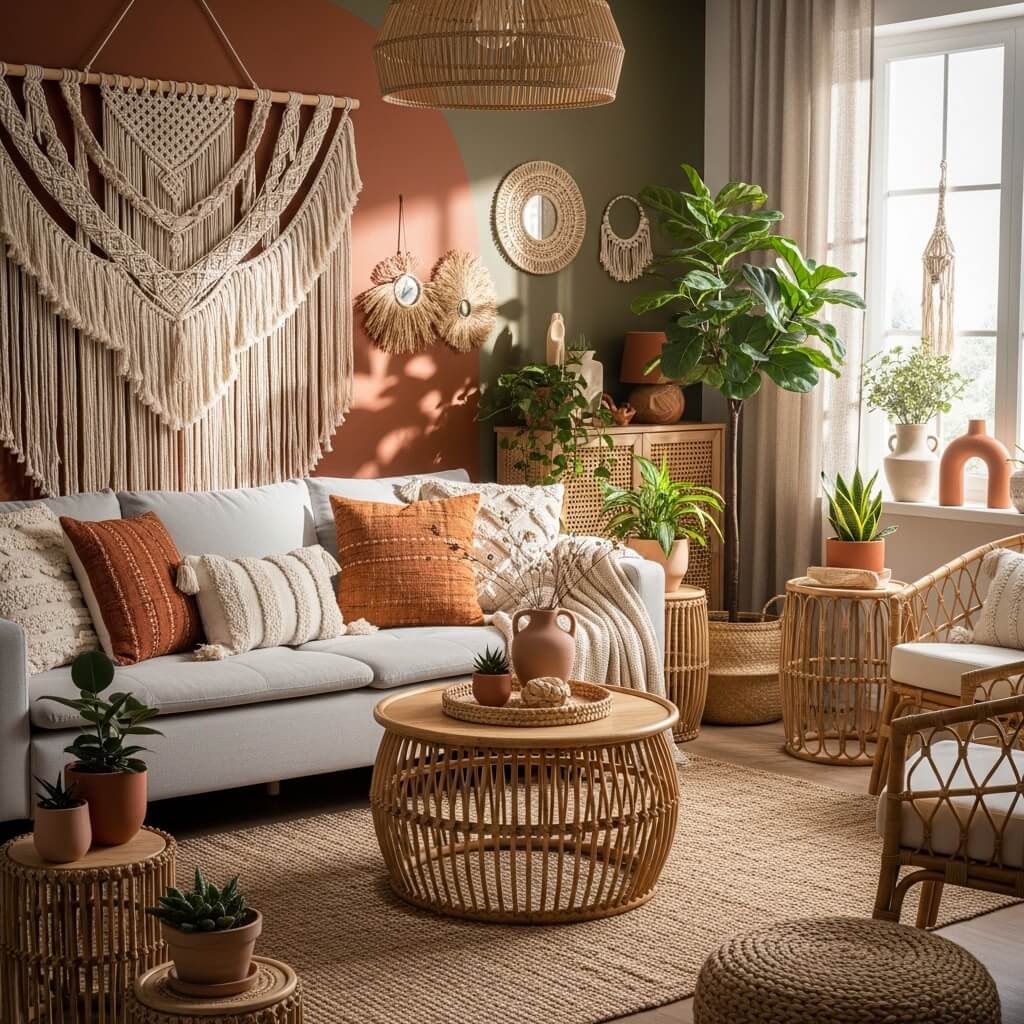
For all my boho-loving friends out there, a macrame wall hanging behind your sofa brings those effortlessly cool, eclectic vibes that make a space feel lived-in and loved. Plus, the texture! The organic, handmade quality of macrame adds softness to your space in a way that hard materials just can’t.
The beauty of macrame is its versatility in scale. You can go with one massive statement piece that spans most of your wall, or create a collection of smaller pieces at varying heights for a more collected, gallery-style look.
I’ve got a giant macrame piece above my reading nook sofa, paired with some trailing pothos plants, and it creates this cozy, bohemian corner that I basically live in now. The neutral tones of natural cotton macrame work with literally any color scheme, which is helpful when you change your throw pillow obsession every season like I do. 🙂
Styling Your Macrame Wall
Making macrame work in your space:
- Scale appropriately: Your piece should be about 2/3 the width of your sofa
- Layer textures: Combine your macrame with plants, wood elements, or woven baskets
- Mix materials: Don’t be afraid to pair macrame with other wall decor like small mirrors or shelves
If you’re crafty, making your own macrame is actually pretty therapeutic. There are endless YouTube tutorials, and you mainly need cotton cord and patience. If crafting isn’t your thing (totally valid), Etsy is overflowing with talented makers creating stunning pieces.
Hang it securely—these pieces can be heavier than they look, especially larger installations. Use appropriate wall anchors for your wall type, and consider the weight before you commit to placement.
The organic, flowing nature of macrame softens hard furniture lines and adds movement to your space. It’s like hanging a textile sculpture—functional art that makes your living room feel warm and inviting.
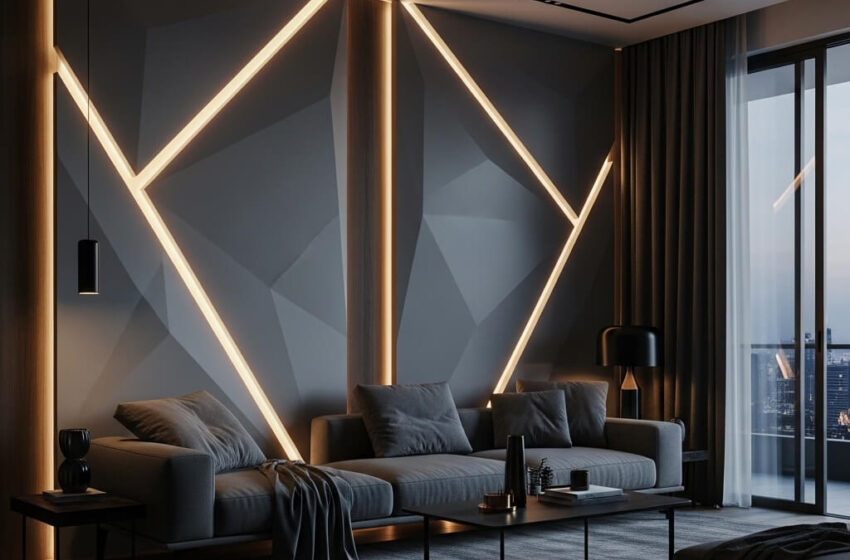
LED Backlit Panel Wall Design
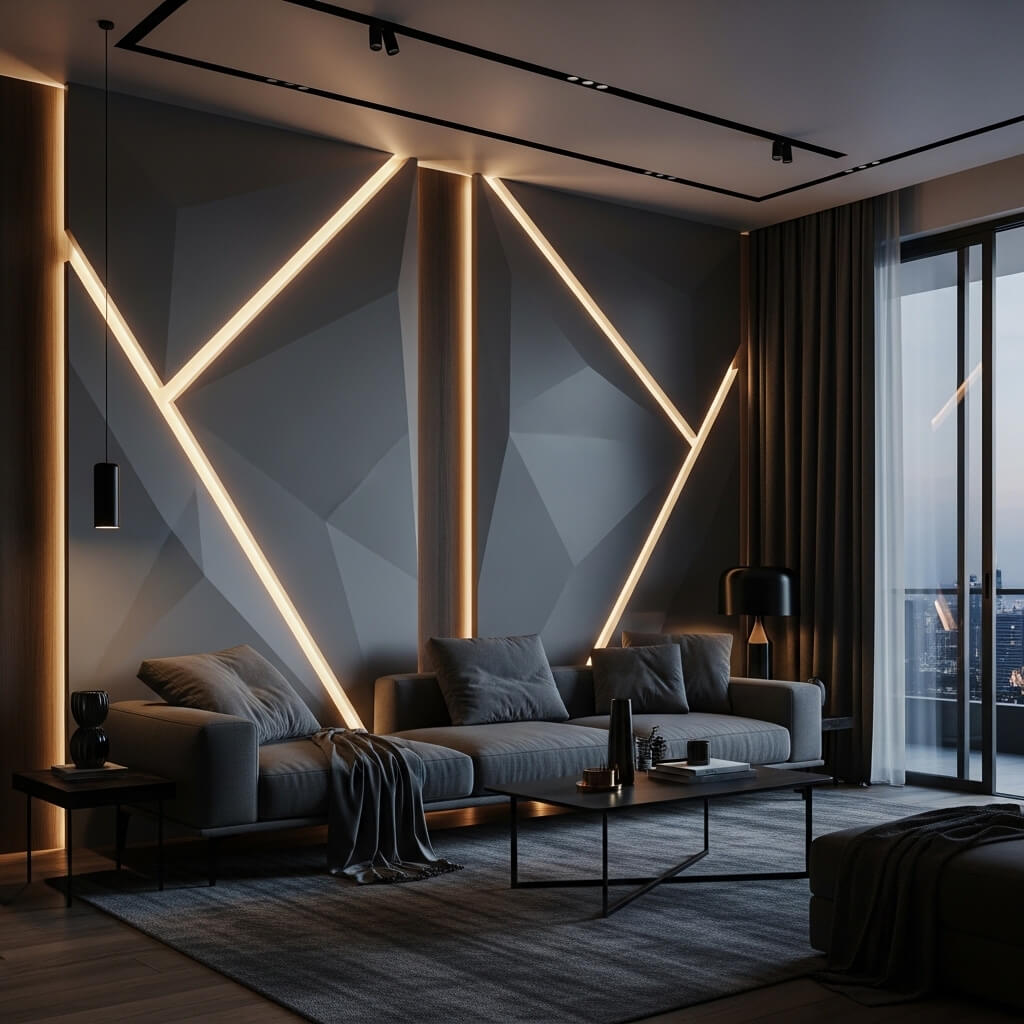
Ready to get a little high-tech? An LED backlit panel wall brings modern, ambient lighting that creates serious mood and atmosphere. This isn’t your standard overhead lighting situation—we’re talking about integrated, architectural lighting that transforms your wall into a glowing feature.
I installed LED strip lighting behind floating panels in my media room, and the customizable color options mean I can match the lighting to whatever vibe I’m after. Movie night? Deep blue. Hosting friends? Warm amber. Feeling fancy? Slowly cycling colors that make my living room look like a chill lounge.
The indirect lighting from backlit panels is easier on the eyes than harsh overhead lights, and it highlights the architectural detail of your wall design while providing functional ambient light. Form meets function—the holy grail of good design.
Creating Your Backlit Wall
What you’ll need:
- Lightweight panels (acrylic, wood slats, or even fabric stretched over frames)
- LED strip lights (choose quality—cheap LEDs have terrible color rendering)
- Mounting system that creates space between the wall and your panels
- Power source and potentially a dimmer or smart controller
The space between your panel and wall (typically 1-3 inches) is where the LED strips live. The light washes across the wall and creates that glowing halo effect around your panels. It’s architectural and atmospheric without being gimmicky.
Go with warm white LEDs for that cozy, inviting glow, or invest in color-changing smart LEDs if you like options. I prefer warm lighting in living spaces—it’s more flattering and relaxing than cool white, which can feel clinical.
Installation requires basic electrical knowledge and comfort with running wiring. If that sounds intimidating, hire an electrician for the electrical parts and handle the decorative installation yourself. Safety first, ambiance second.
Also Read: 10 Ultimate Backyard Ideas with Pool for Luxury Outdoor Bliss
Plant Wall Behind Sofa Aesthetic
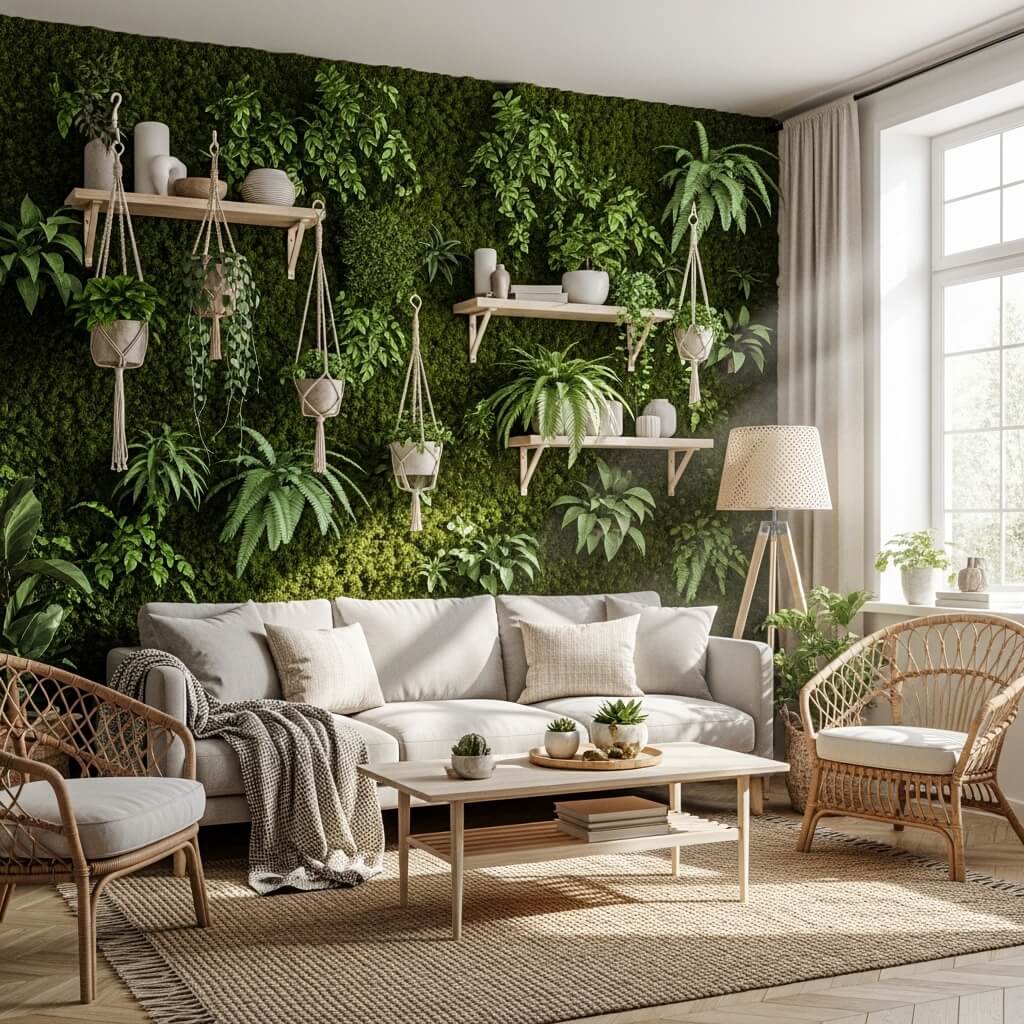
Last but definitely not least—the plant wall. If you’re a plant parent (or aspiring to be), why not turn that wall behind your sofa into a living, breathing piece of art? Nothing brings life and freshness to a space quite like actual living things.
A plant wall can take many forms. You could install a vertical garden system with built-in irrigation (fancy but high maintenance), create shelving specifically for plants at varying heights (more forgiving), or simply group lots of potted plants on a console table behind your sofa (the easy entry point).
I went the shelf route with a combination of hanging plants, trailing pothos, and some upright snake plants and fiddle leaf figs. The varying heights and textures create visual interest, and honestly, watering my plant wall has become this meditative Sunday morning routine I actually look forward to.
Making Your Plant Wall Thrive
Plant selection tips for success:
- Match plants to your light: Don’t fight reality—choose plants that will actually thrive in your lighting conditions
- Mix textures and sizes: Combine large statement plants with smaller, trailing varieties
- Consider maintenance: Be honest about your plant care commitment level
For low-light living rooms, pothos, snake plants, and ZZ plants are your friends. They’re virtually indestructible (I’ve tried) and still look gorgeous. Bright light? Fiddle leaf figs, rubber plants, and monsteras will thrive.
Practical considerations:
Protect your furniture from water damage with trays under pots. Group plants with similar watering needs together. Consider faux plants mixed in if you travel frequently or have a… let’s call it “developing” green thumb. Modern artificial plants look surprisingly realistic, and no one needs to know your secret.
The biophilic design trend (incorporating nature into indoor spaces) isn’t just aesthetically pleasing—it actually improves air quality and reduces stress. Your plant wall is literally making you healthier while looking fantastic. Win-win.
Bringing It All Together
So there you have it—ten seriously beautiful ways to transform that blank wall behind your sofa from awkward afterthought to stunning focal point. The cozy vibes you’ve been chasing? They’re totally achievable with any of these approaches.
The best part about these ideas is they’re not one-size-fits-all. Your style, budget, skill level, and space constraints will naturally guide you toward the right solution. Maybe you’re drawn to the architectural sophistication of wood slats, or perhaps the living texture of a plant wall speaks to your soul. Trust your gut.
My personal approach? I’ve combined elements from several of these ideas in different rooms. Gallery wall in the formal living room, plant situation in the sunroom, LED-backlit panels in the media space. Your home can be an evolving expression of your style—nothing says you can’t change things up when inspiration strikes.
Start with one room, one wall, one sofa. Take your time planning, measure everything twice, and don’t be afraid to experiment. The worst-case scenario is you try something, decide you don’t love it, and change it. That’s not failure—that’s the design process.
Your living room should make you happy every time you walk into it. That wall behind your sofa has been waiting patiently for its moment to shine. Now you’ve got the roadmap—go make it happen. And when guests start asking who designed your space, just smile mysteriously and enjoy the compliments. You’ve earned them.