10 Elegant Mediterranean Garden Design Ideas for Luxury Homes
- Garden Design
 Ben
Ben- 0
- 38 minutes read
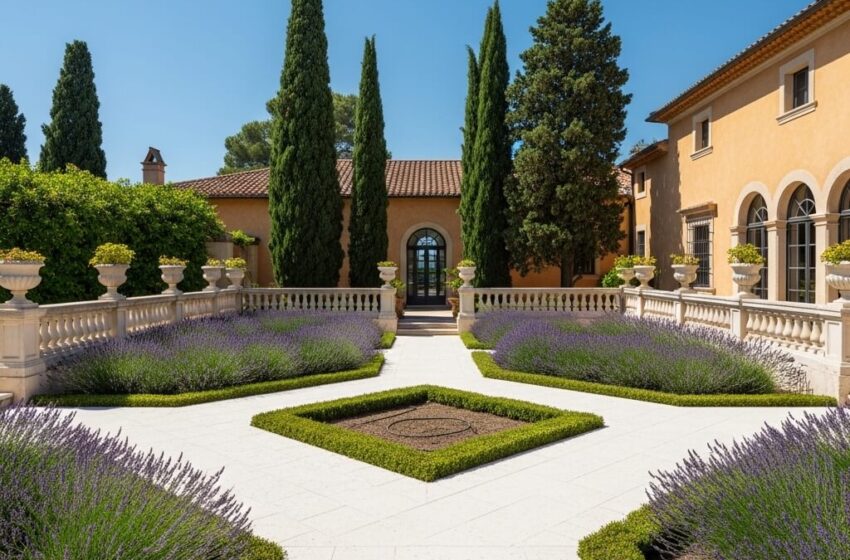
Let me paint you a picture. You’re sitting outside, warm sun on your face, surrounded by terracotta pots, the scent of lavender drifting through the air, a gentle fountain trickling in the background. Sounds like a dream vacation, right? Wrong — that’s your backyard. Or at least, that’s what it could be.
Mediterranean garden design has been stealing hearts for centuries, and honestly, it’s not hard to see why. These gardens manage to feel simultaneously grand and relaxed, structured and wild, luxurious and effortlessly casual. They’re the design equivalent of a perfectly tailored linen suit — impressive, but never stuffy.
I’ve been obsessed with Mediterranean landscaping for years now. After spending time researching, visiting stunning estates, and watching far too many garden renovation shows, I’ve put together ten of the most elegant, jaw-dropping Mediterranean garden ideas specifically suited for luxury homes. Whether you’re starting from scratch or looking to refresh your outdoor space, these ideas will give you serious inspiration.
Let’s get into it.
1. Terracotta Courtyard Escape Garden
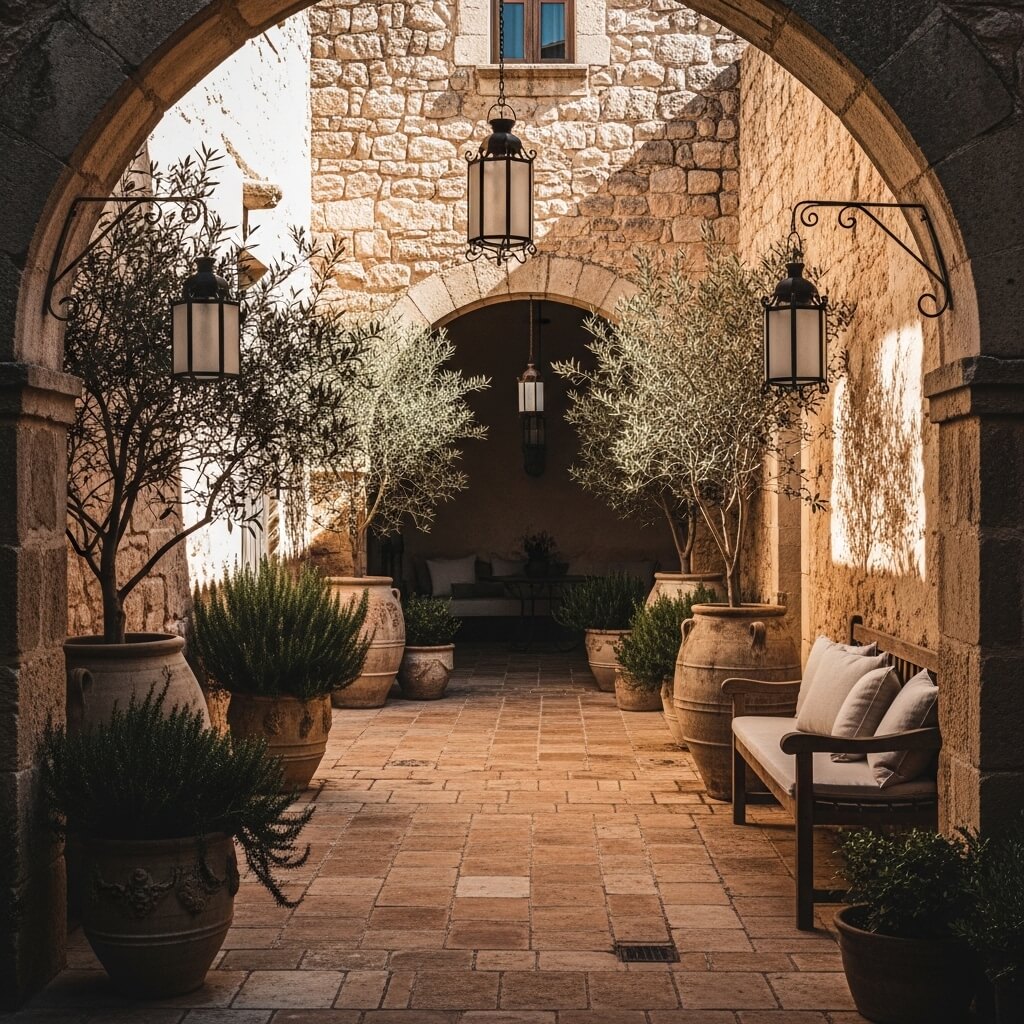
If there’s one material that screams “Mediterranean” louder than anything else, it’s terracotta. Warm, earthy, and incredibly timeless, terracotta sets the tone for a courtyard garden that feels like it was plucked straight from a Tuscan hillside.
Why Terracotta Works So Well
Terracotta isn’t just beautiful — it’s functional. Its natural clay composition allows it to regulate moisture, which is fantastic for Mediterranean plants that prefer a drier environment. When you combine terracotta tiles underfoot with oversized terracotta pots filled with olive trees, geraniums, and aromatic herbs, you create a layered, textured space that feels genuinely alive.
Think about organizing your courtyard around a central focal point — maybe a mosaic table, a stone bench, or even a small bubbling urn. Surround that centerpiece with:
- Large terracotta planters overflowing with trailing rosemary and bright geraniums
- Terracotta tile flooring in earthy, irregular patterns
- Warm-toned walls painted in ochre, rust, or sandy cream
- Low-growing herbs like thyme and oregano tucked between tile gaps
The key here is layering. Don’t just throw a few pots on a patio and call it a day. Build visual depth by mixing heights, textures, and colors within your terracotta palette.
Making It Feel Luxurious
For a luxury home specifically, you want to elevate the terracotta courtyard beyond just “nice pots in a corner.” Custom-crafted terracotta tiles with hand-painted accents, antique urns sourced from Italian artisans, or even a built-in terracotta planter wall can take this concept from Pinterest board to genuinely breathtaking.
I personally love the look of aged terracotta over brand new, shiny pieces. A little weathering adds character and authenticity. If your pots look like they’ve been sitting there for generations, you’ve done your job right.
2. Olive Tree Minimal Mediterranean Retreat
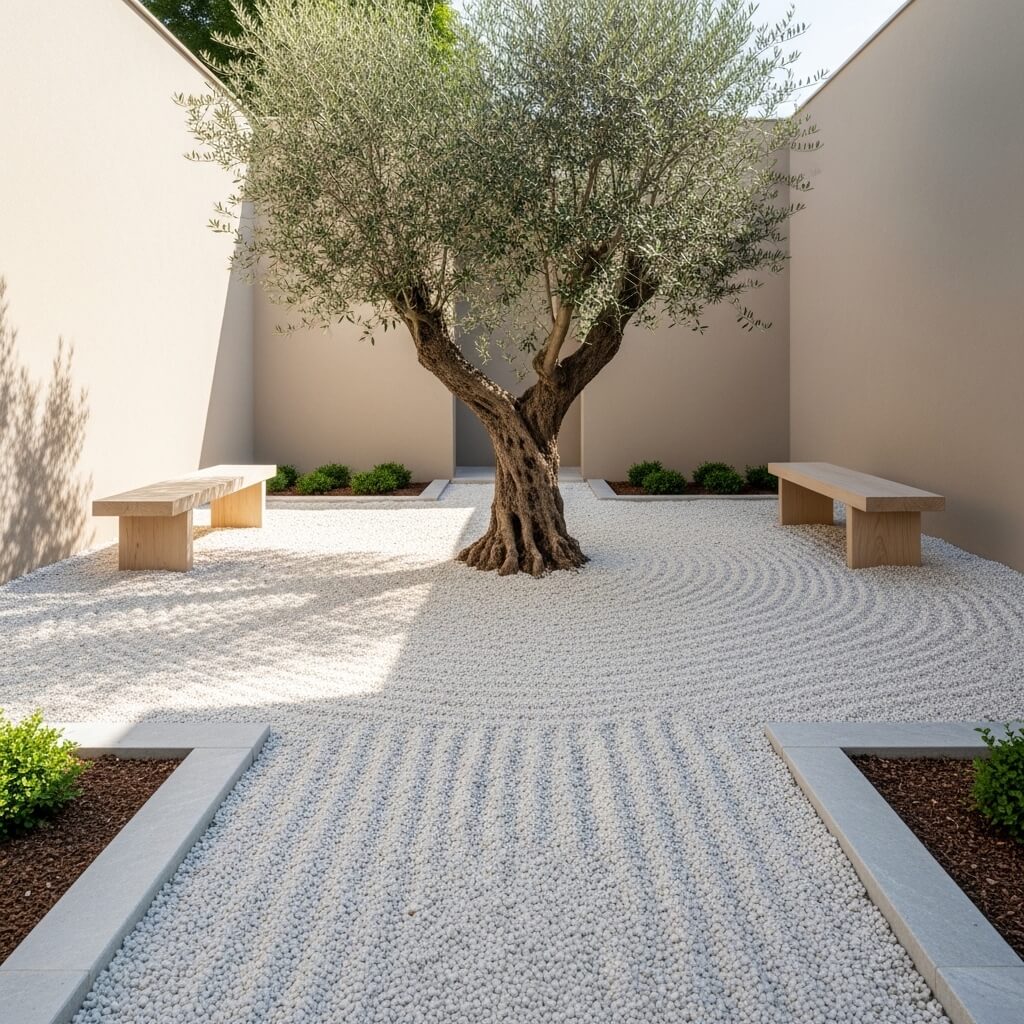
Okay, let’s talk about olive trees because I could genuinely talk about them all day. There’s something almost spiritual about a mature olive tree — gnarled trunk, silver-green leaves shimmering in the breeze, ancient and regal all at once. And for a minimalist Mediterranean garden, they are absolutely non-negotiable.
The Art of Minimalism, Mediterranean Style
Minimalism in garden design doesn’t mean bare or boring. It means intentional. Every element serves a purpose. Every plant earns its place. And in a Mediterranean minimalist garden, the olive tree is the undisputed star.
Here’s how to build around it:
- Plant one or three statement olive trees (odd numbers always look more natural)
- Keep ground cover simple — think white gravel, pale sand, or large-format limestone pavers
- Add low, clipped hedges of rosemary or lavender to create gentle structure
- Use stone or concrete benches with clean lines as seating
- Keep color to a minimum — greens, silvers, whites, and warm stone tones
The restraint is what makes this design so powerful. You’re not throwing everything at the wall and seeing what sticks. You’re making deliberate, confident choices.
Choosing the Right Olive Variety
FYI — not all olive trees work equally well in garden design. For purely ornamental purposes, Olea europaea is your go-to. It grows slowly, develops that gorgeous gnarled character over time, and tolerates drought beautifully. For a luxury setting, consider sourcing semi-mature or mature specimens from specialist nurseries. Yes, they cost more. But the impact they create is immediate and extraordinary.
3. White Stone Villa Garden Pathway
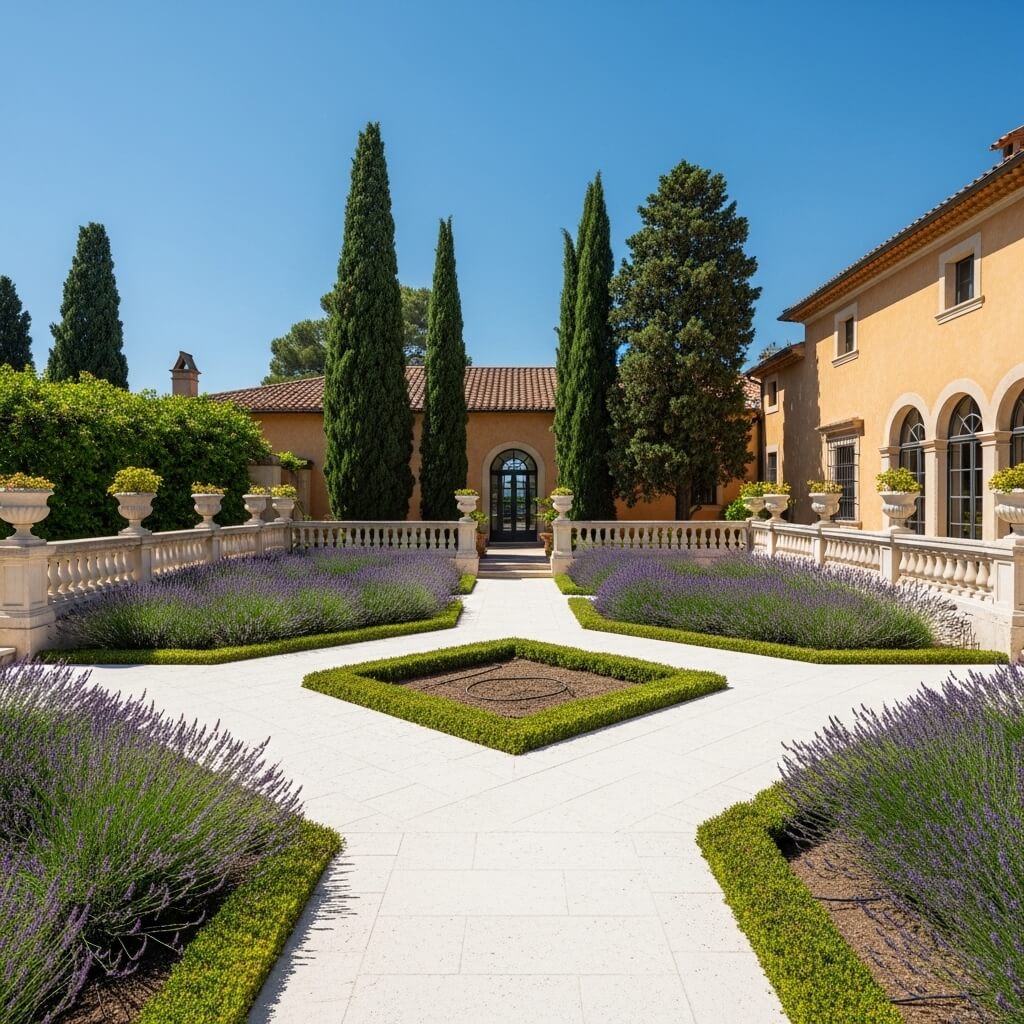
Have you ever walked down a garden path and felt like you were being guided somewhere magical? That’s exactly the feeling a well-designed white stone pathway creates. In Mediterranean garden design, pathways aren’t just functional — they’re theatrical.
Crafting the Perfect Path
White or pale limestone pathways flanked by aromatic plants create an experience, not just a route. The brightness of the stone against dark green foliage or purple lavender creates one of the most striking visual contrasts in garden design. It’s genuinely hard to get wrong.
Here’s what makes a white stone pathway work:
- Use irregular limestone flags or smooth cobblestones for an authentic Mediterranean feel
- Line both sides with tall, columnar cypress trees for dramatic vertical structure
- Plant lavender, white roses, or agapanthus along the edges for fragrance and color
- Add recessed path lighting along the base to create an ethereal nighttime glow
- Keep the path slightly curved rather than dead straight — it adds intrigue
Connecting Spaces Meaningfully
In a luxury home garden, pathways should connect meaningful spaces. Your white stone path might lead from the main terrace to a hidden garden room, or from the pool area to a shaded pergola. The journey itself becomes part of the experience. And when the path is beautiful enough, guests stop to appreciate it rather than just rush through it.
Also Read: 10 Luxury Zen Garden Design Ideas for Dreamy Calm Landscapes
4. Rustic Pergola with Climbing Bougainvillea
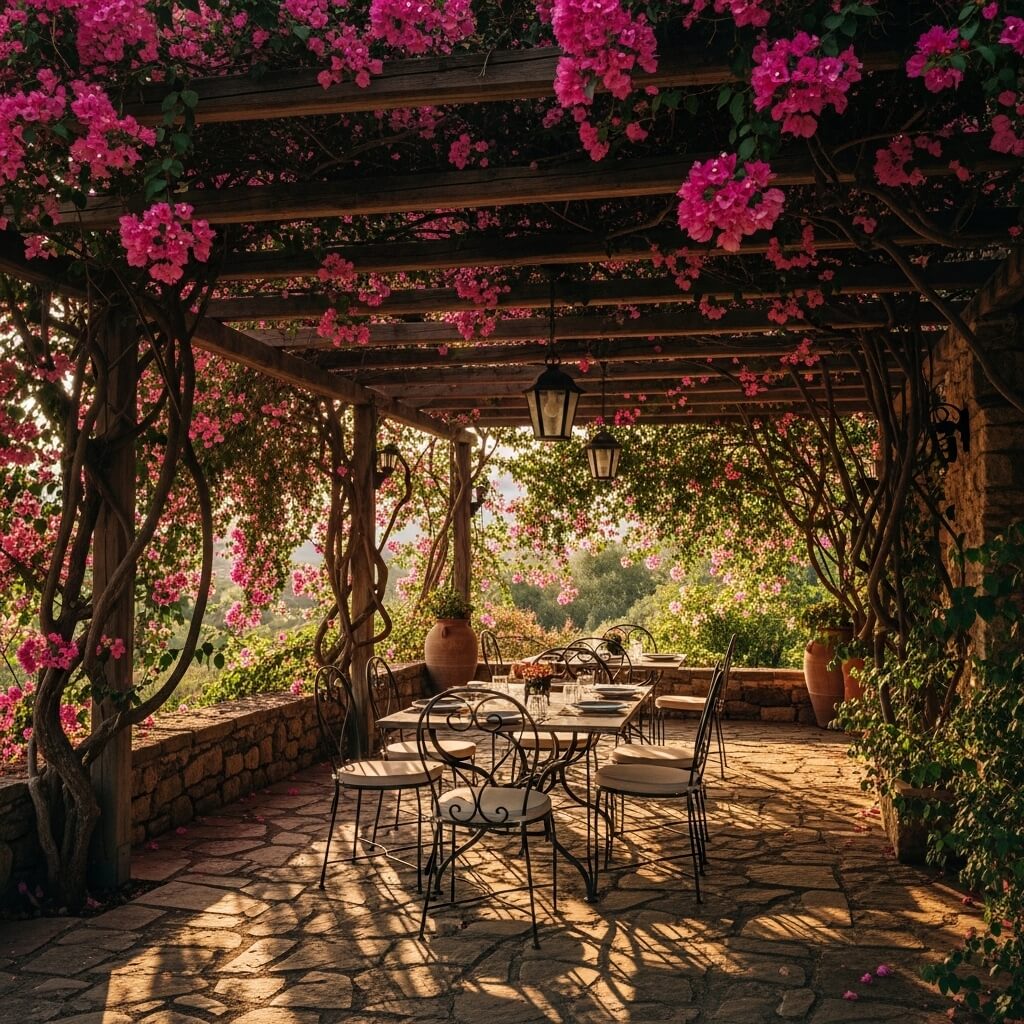
If Mediterranean garden design had a mascot, it would unquestionably be bougainvillea. Those explosively vibrant bracts — in shades of hot pink, deep magenta, coral, and white — draped over a rustic wooden or stone pergola? It’s an image that has defined the Mediterranean aesthetic for generations. And it still hasn’t gotten old. Not even close.
Building the Pergola Right
A pergola in a luxury Mediterranean garden isn’t just a structure — it’s an outdoor living room. Here’s what elevates it from a basic garden feature to something truly special:
- Use reclaimed timber, rough-hewn stone, or wrought iron for the structure — raw materials feel most authentic
- Choose bougainvillea varieties carefully. ‘Barbara Karst’ offers vivid crimson-pink, ‘White Ice’ gives a softer, romantic look, and ‘Rosenka’ delivers a beautiful peachy-golden tone
- Train the bougainvillea consistently over several seasons — patience pays off spectacularly
- Hang terracotta lanterns or wrought iron chandeliers inside the pergola for evening ambiance
- Furnish with weather-resistant linen cushions and a stone or wooden dining table
The Living Roof Effect
When bougainvillea fully covers a pergola, you get what I call the “living roof” effect — filtered light, dappled shade, and an explosion of color overhead. It’s dramatic without trying to be. It’s the kind of garden moment that makes people stop mid-conversation and just look up. IMO, nothing else in Mediterranean garden design matches this for sheer visual impact.
5. Mediterranean Water Fountain Courtyard Design
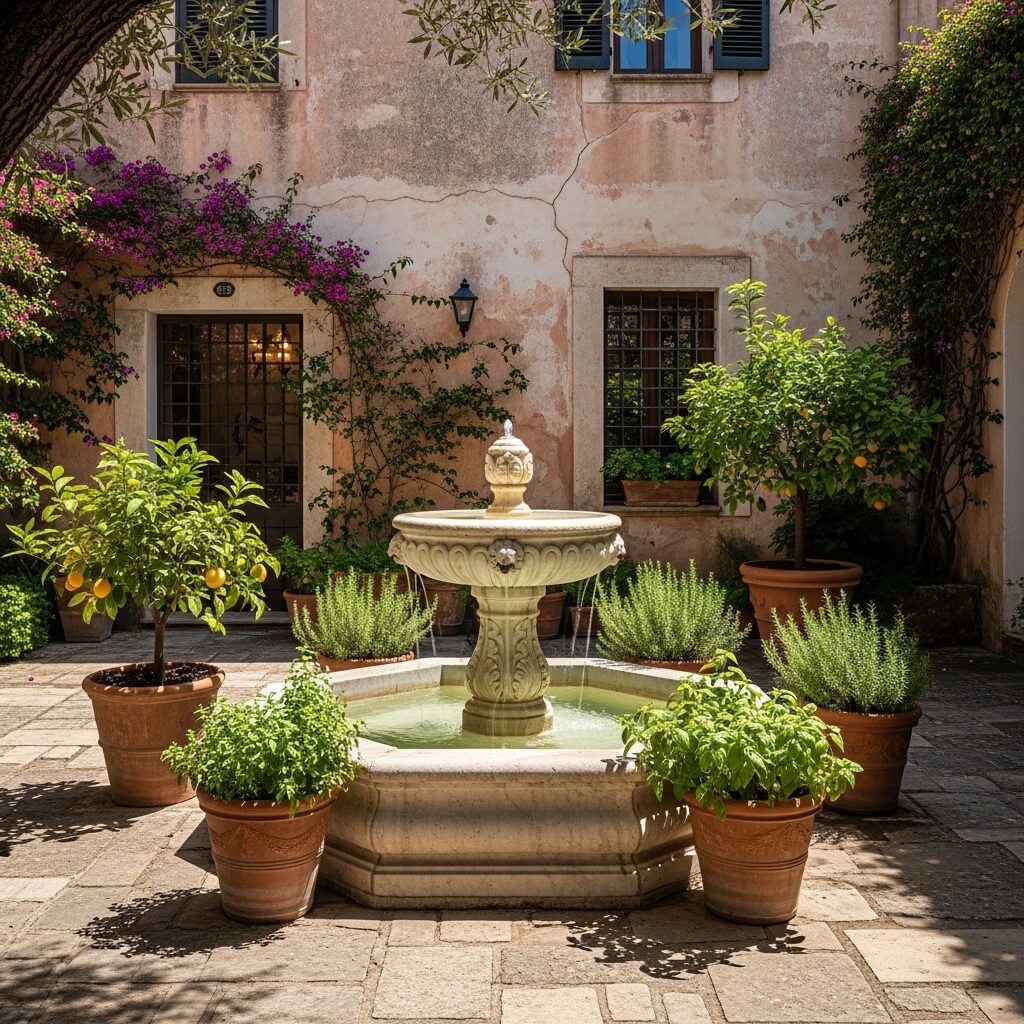
Water features in Mediterranean garden design carry centuries of cultural significance. From ancient Roman atria to Moorish palace gardens, the sound and sight of moving water has always been central to creating a sense of calm, luxury, and life in warm-climate gardens.
Choosing Your Fountain Style
Not all fountains suit every Mediterranean garden, so let’s break down the main styles:
- Wall-mounted lion head or mask fountains: Classic, space-efficient, and deeply authentic. Perfect for smaller courtyards.
- Central basin fountains: A basin with a central spout or tiered structure — formal, grand, and ideal for larger luxury gardens.
- Urn or jar fountains: A large terracotta or stone urn overflowing gently into a shallow basin. Rustic and incredibly beautiful.
- Reflecting pool with jet fountains: Modern-Mediterranean hybrid that works brilliantly with minimalist architecture.
Sound as a Design Element
Here’s something most people don’t think about enough — the sound of the fountain matters as much as the look. A loud, aggressive cascade feels jarring. A gentle trickle or soft sheet of water creates exactly the right Mediterranean ambiance — relaxing, sophisticated, present without being intrusive. When you’re installing a fountain, test the pump pressure before committing to the final setup. Get the sound right, and you’ve got something truly magical.
6. Sun-Kissed Gravel Garden with Lavender Borders
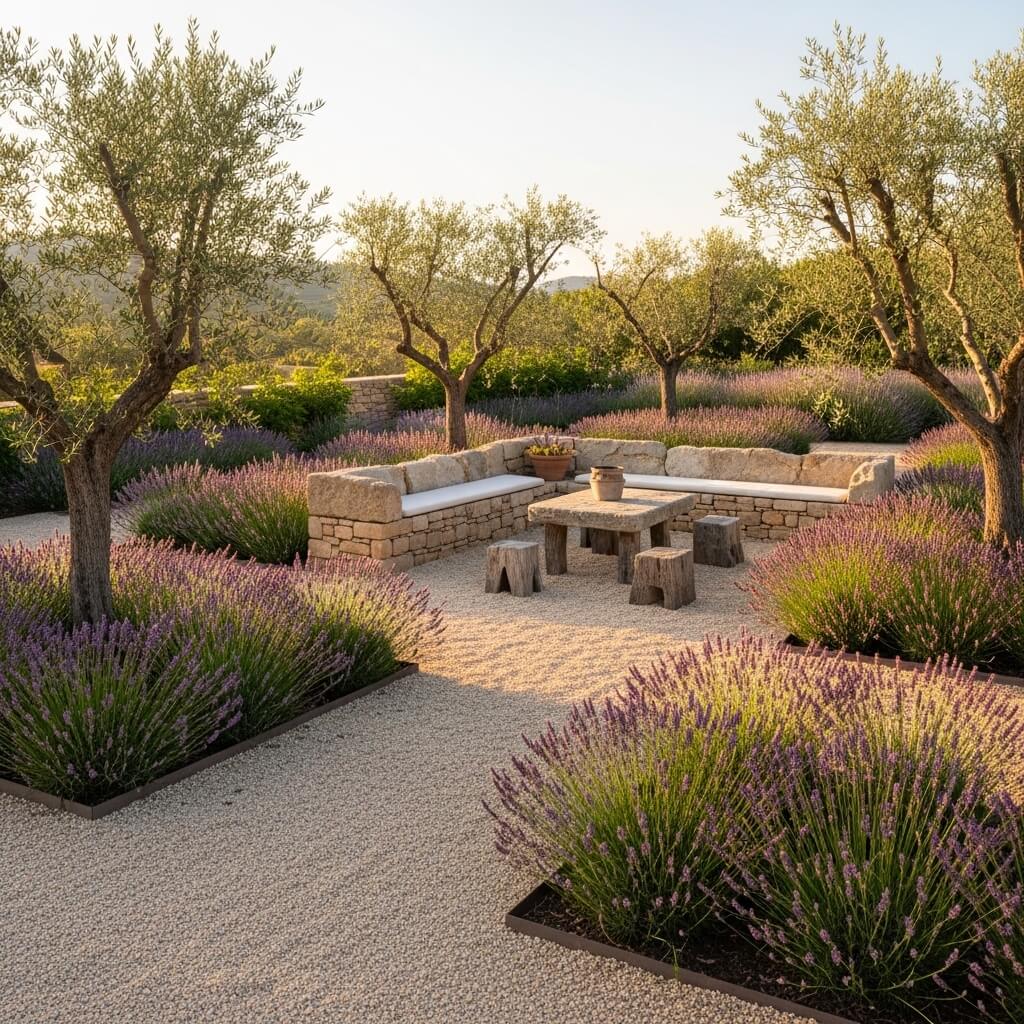
Gravel gardens and Mediterranean climates were basically made for each other. They’re low maintenance, drought-tolerant, and effortlessly stylish — three things every luxury homeowner quietly dreams about. And when you pair pale gravel with those iconic purple lavender borders? You’ve got something genuinely stunning on your hands.
Designing with Gravel and Lavender
The trick with a gravel garden is making it feel intentional rather than unfinished. Here’s how:
- Use pale limestone or white quartz gravel for brightness and contrast
- Plant lavender in generous, flowing sweeps rather than neat single rows — mass planting always looks more impactful
- Add statement plants like agave, yucca, or ornamental grasses to break up the lavender and add structural interest
- Include large stepping stones or pale stone pavers to create natural pathways through the garden
- Edge the gravel with low stone borders to prevent drift and add definition
The Low-Maintenance Luxury
Here’s a fun contradiction — a beautifully designed gravel and lavender garden actually requires very little upkeep. Once established, lavender is drought-tolerant, gravel suppresses weeds, and the whole garden essentially looks after itself through summer. Which means more time sitting in it with a cold drink. Sounds like a pretty solid trade-off to me 🙂
Also Read: 10 Beautiful Tropical Garden Design Ideas for Dream Spaces
7. Coastal Greek Island Inspired Garden Patio
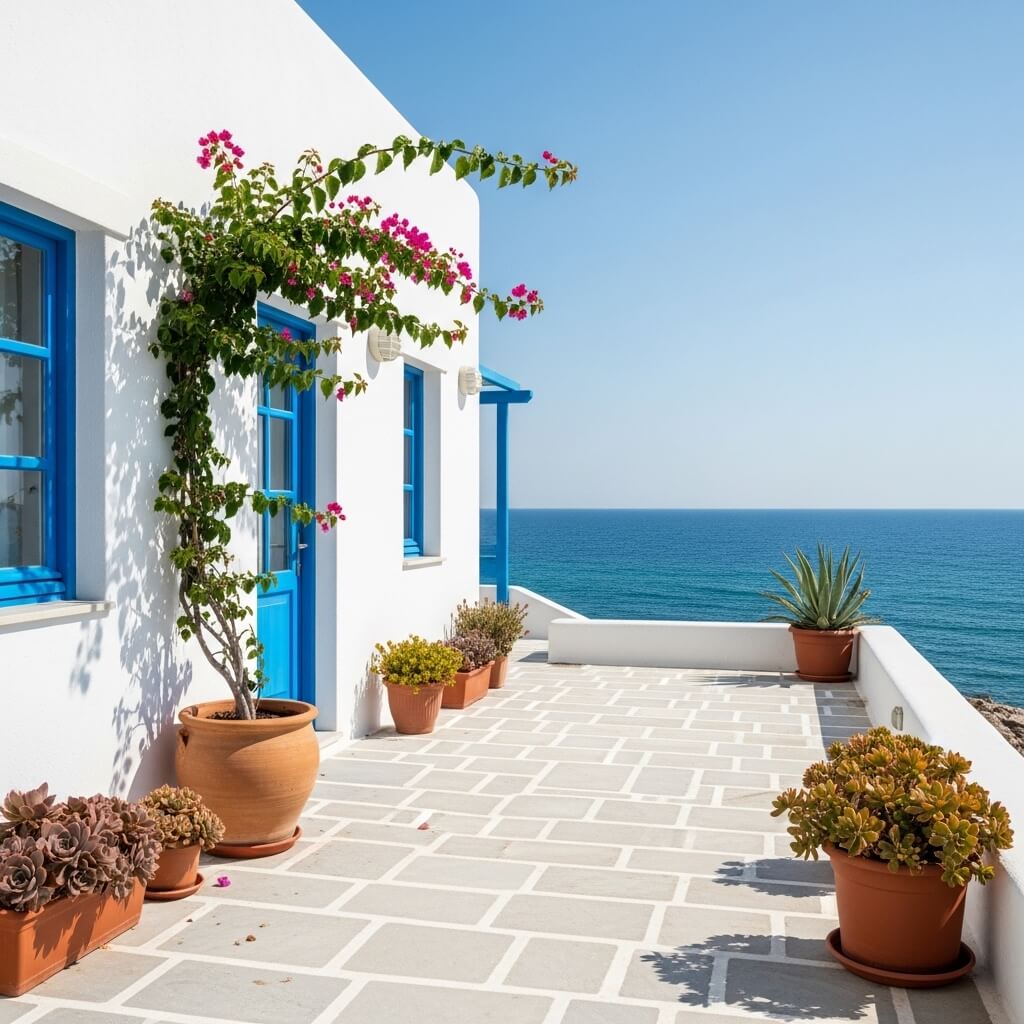
Close your eyes. White walls. Blue accents. The smell of sea salt and thyme. A patio draped in sunshine with a view of… okay, maybe not the Aegean Sea, but you get the idea. The Cycladic aesthetic — think Santorini, Mykonos, Paros — translates extraordinarily well into luxury garden design, particularly for homes near the coast or with open, light-filled settings.
Capturing the Greek Island Aesthetic
The visual language of Greek island gardens is bold and simple: white and blue, with natural textures.
Key elements to incorporate:
- Whitewashed walls — either existing boundary walls or purpose-built low structures
- Cobalt blue accents — painted pots, door frames, outdoor cushion covers, or decorative tiles
- Native Mediterranean planting — bougainvillea, agapanthus, oleander, and succulents
- Simple, uncluttered furniture in white or natural wood
- Handmade ceramic pots and decorative amphora-style urns
Bringing in the Light
One thing Greek island gardens do brilliantly is maximize light. White surfaces bounce sunlight around the space, making everything feel brighter, larger, and more open. For a luxury home, this creates a patio that feels like an extension of the interior rather than a separate outdoor space. The connection between inside and outside becomes seamless, which is always a hallmark of excellent design.
8. Arched Stone Walkway Mediterranean Landscape
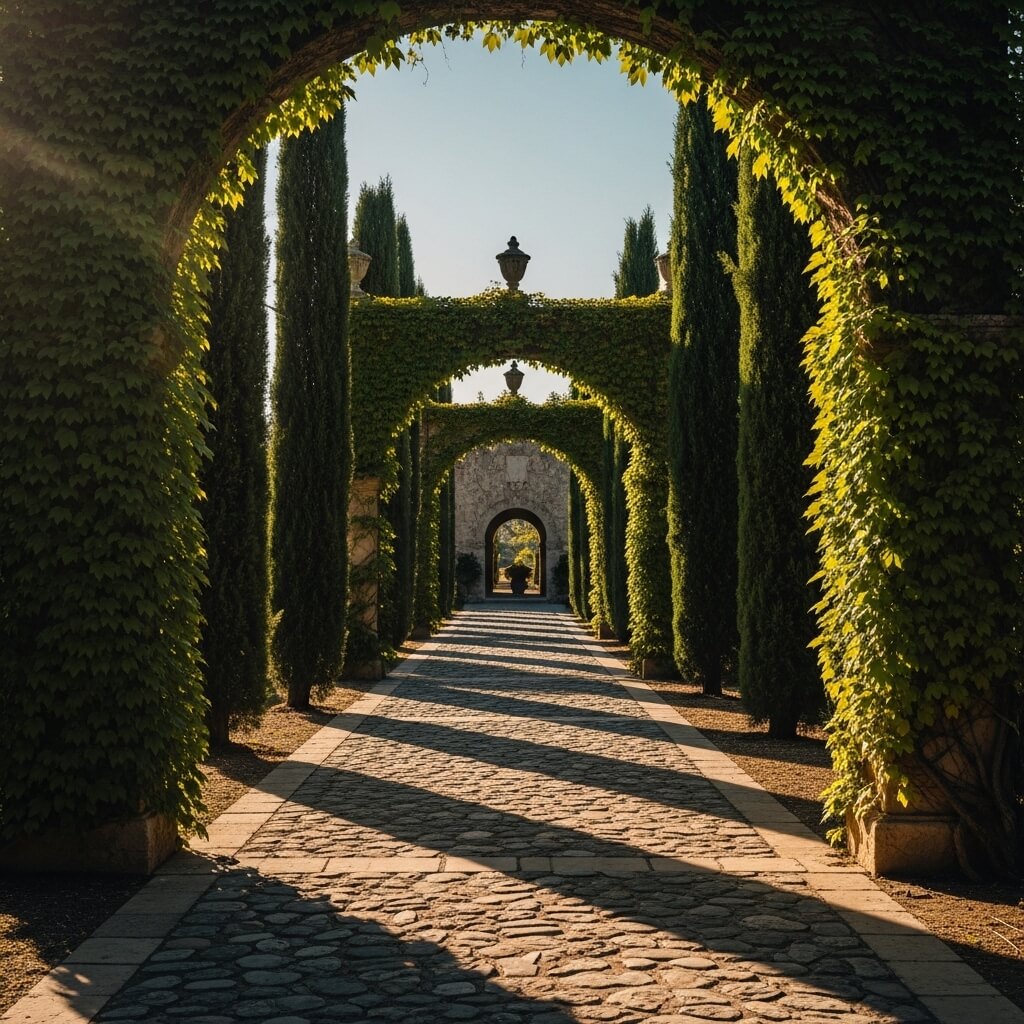
If a straight pathway is a sentence, an arched stone walkway is a poem. There’s something deeply romantic and architecturally satisfying about a series of stone arches framing a garden path. And in a Mediterranean garden context, it elevates the entire landscape to genuinely villa-level grandeur.
Architecture Meets Nature
The beauty of an arched stone walkway lies in its ability to frame views and guide attention. As you walk beneath each arch, your eye is drawn forward — to the garden beyond, to a focal point at the end of the path, to the sky above. It’s an inherently cinematic experience.
Here’s how to design one that truly impresses:
- Use natural stone — limestone, sandstone, or travertine — for authenticity and warmth
- Train climbing plants such as roses, wisteria, or jasmine over the arches for a romantic, textured look
- Space arches evenly to create rhythm and proportion
- Light the path with small recessed uplighters at the base of each arch for dramatic evening effect
- End the walkway with a definitive focal point — a fountain, a seating area, or a beautiful specimen plant
Scale and Proportion
This is where I want to gently warn you — scale matters enormously with arched walkways. Too small and they feel cramped and awkward. Too large and they overwhelm the garden. Work with a landscape architect or designer to get the proportions right for your specific space. It’s one of those features that, when done well, looks absolutely effortless. When done poorly, it’s painfully obvious. Get the numbers right first.
9. Dry Climate Xeriscape Mediterranean Garden
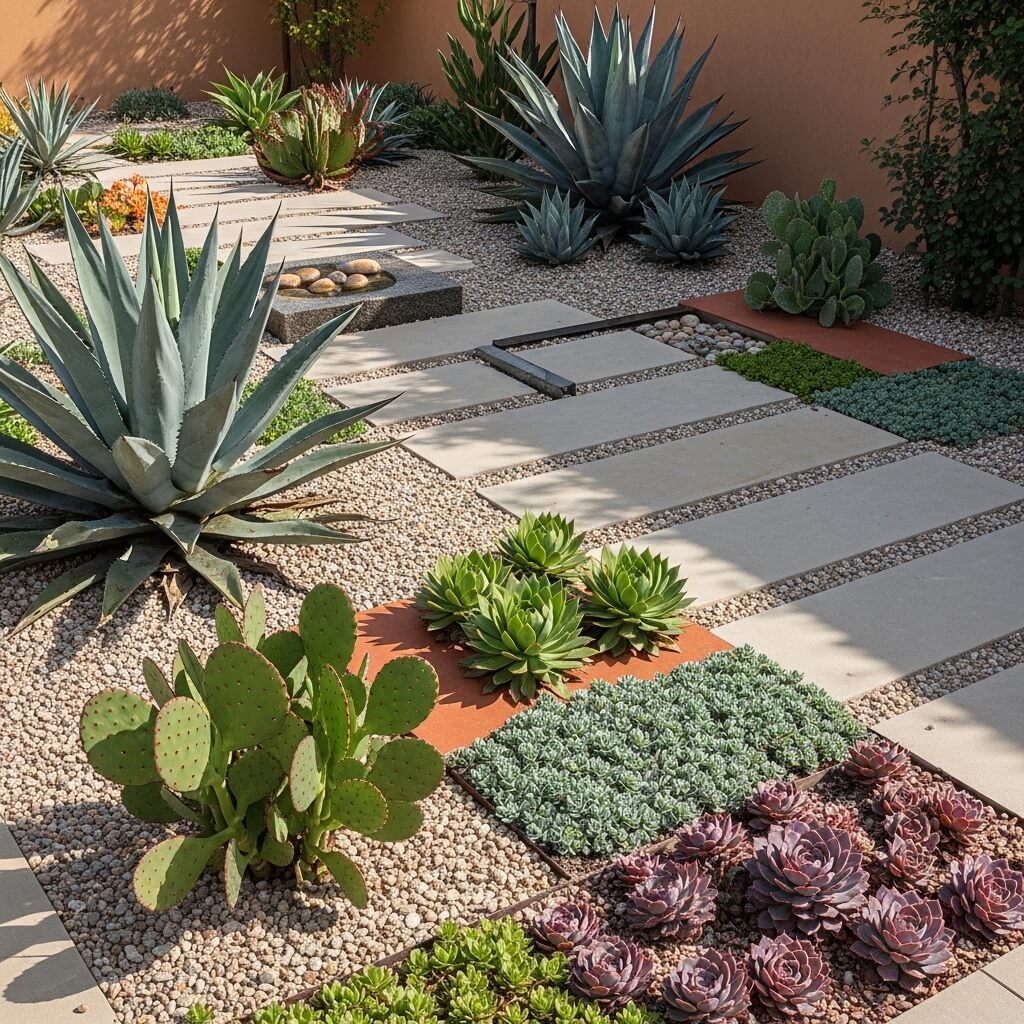
Here’s the thing about Mediterranean gardens that most people overlook — they were designed for hot, dry climates. The whole aesthetic evolved out of necessity, not just style. And that’s why a xeriscape Mediterranean garden is not only beautiful but genuinely intelligent design.
What is Xeriscape, Exactly?
Xeriscaping is landscaping specifically designed to reduce or eliminate the need for irrigation. It uses drought-tolerant plants, efficient soil preparation, and strategic design to create a garden that thrives with minimal water. In a Mediterranean garden context, this philosophy is baked right in.
Here’s a planting list that gives you maximum beauty with minimal water:
- Lavender — fragrant, hardy, and stunning in mass plantings
- Rosemary — structural, aromatic, and nearly indestructible
- Agave and succulents — dramatic sculptural interest with zero fuss
- Cistus (rock rose) — cheerful flowers and drought-tough constitution
- Festuca grasses — delicate, fine-textured, and naturally silvery-blue
- Salvia — incredible variety of colors, all drought-tolerant
- Olive and fig trees — the backbone of any Mediterranean xeriscape
Sustainable Luxury
What I genuinely love about a xeriscape Mediterranean garden is that it proves sustainability and luxury are not mutually exclusive. You can have a stunning, high-end outdoor space that also has a light environmental footprint. In fact, the water savings alone make it a seriously smart investment for luxury homeowners, particularly in warmer climates or areas with hosepipe restrictions.
Also Read: 10 Gorgeous Backyard Garden Design Ideas for Stylish Outdoors
10. Luxury Spanish Hacienda Outdoor Garden Space
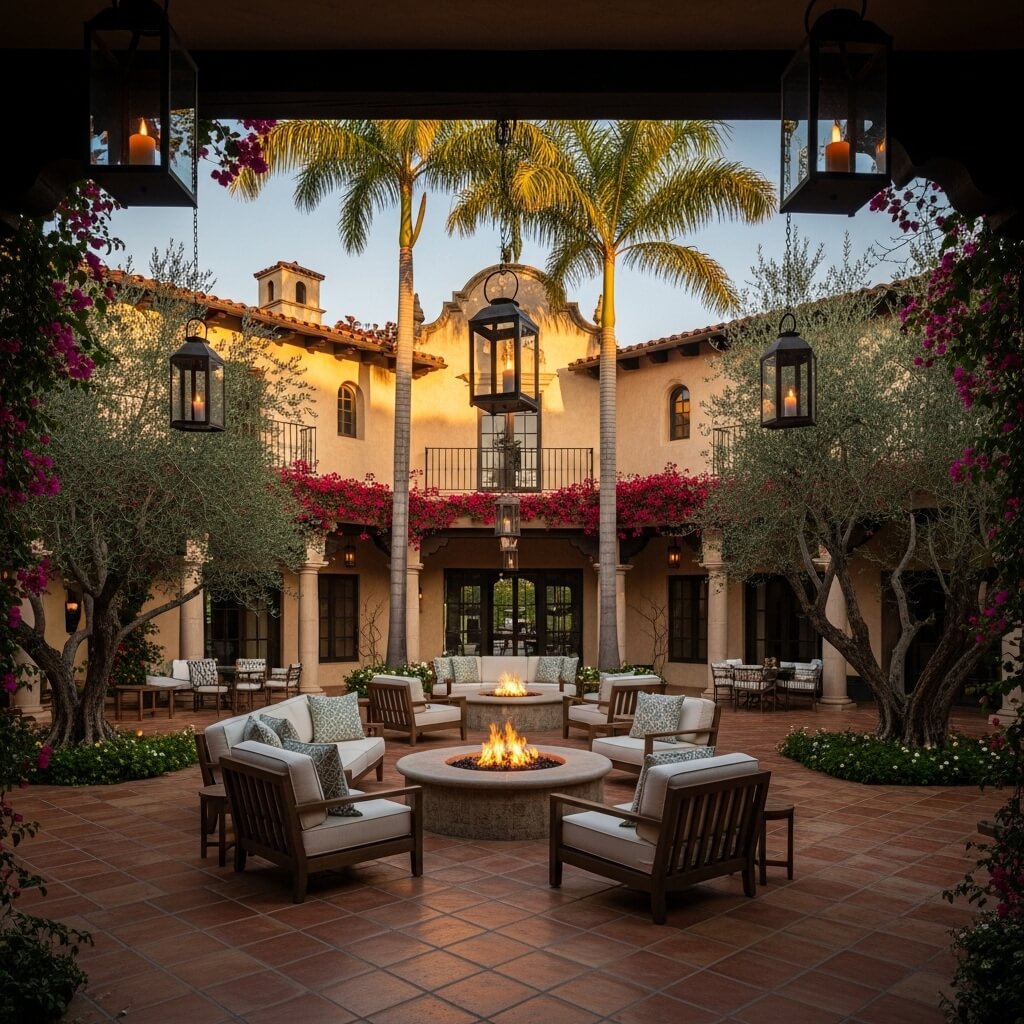
We’ve arrived at our final design idea, and honestly, I’ve saved one of my absolute favorites for last. The Spanish hacienda garden aesthetic is Mediterranean design turned up to its most opulent, most theatrical, most magnificent setting. Think Alhambra palace gardens. Think grand Andalusian estates. Think terracotta, azulejo tiles, orange trees, and the sound of water everywhere.
The Hacienda Design Framework
A luxury Spanish hacienda garden operates on several key principles:
Enclosure and intimacy: Hacienda gardens are typically enclosed by walls, creating private, sheltered spaces that feel separate from the world outside. High whitewashed walls with climbing plants define the space beautifully.
Water as architecture: In Spanish garden tradition, water isn’t just decorative — it’s structural. Formal rills (narrow water channels), tiled reflecting pools, and elaborate fountain systems are all central features.
Tile work as art: Hand-painted azulejo tiles — those vivid blue, yellow, and white Spanish ceramic tiles — feature on steps, walls, fountain surrounds, and tabletops. They add pattern, color, and cultural depth to the space.
Courtyard living: The central courtyard, or patio, is the heart of the hacienda garden. Shaded by pergolas or orange trees, furnished with comfortable outdoor seating, and cooled by a central fountain — it’s an outdoor room at its most refined.
Planting the Hacienda Garden
Spanish hacienda planting is lush but structured:
- Orange and lemon trees in formal rows or geometric patterns
- Bougainvillea cascading over walls and pergolas
- Wisteria trained across shaded walkways
- Boxwood and myrtle hedges clipped into formal shapes
- Roses — particularly the fragrant, old-fashioned varieties
- Jasmine trained against walls for evening fragrance
- Tall cypress trees as vertical punctuation marks
The Finishing Touches
In a luxury hacienda garden, the details make the difference. Antique stone fountains, handcrafted wrought iron lanterns, mosaic-topped outdoor tables, and custom azulejo tile panels — these are the elements that separate a beautiful garden from an extraordinary one. Don’t rush the finishing touches. They deserve as much thought and investment as the structural design itself.
Bringing It All Together
So there you have it — ten genuinely breathtaking Mediterranean garden design ideas for luxury homes, each with its own personality, character, and design philosophy. The beauty of Mediterranean design is that it’s not one single style — it’s a whole family of related aesthetics, from Greek island minimalism to Spanish hacienda grandeur, all unified by a love of warmth, natural materials, fragrant plants, and gracious outdoor living.
Here’s a quick recap of the key themes running through all ten ideas:
- Natural materials — terracotta, limestone, stone, timber — always over synthetic alternatives
- Drought-tolerant, fragrant plants — lavender, rosemary, olive, bougainvillea — as the backbone of planting
- Water features — whether a simple wall fountain or an elaborate rill system — as essential sensory elements
- Shade structures — pergolas, arched walkways, courtyards — creating liveable outdoor rooms
- Considered lighting — recessed path lights, lanterns, uplighters — extending the garden experience into evening
Whether you borrow from one of these ideas or blend elements from several, the core principle remains the same: a Mediterranean garden should feel like a place you genuinely want to be. Not just look at from a distance, but actually sit in, breathe in, and live in.
And if someone asks where you got your inspiration? Tell them you had a friend who knew a thing or two about gardens :/
Now stop reading and go outside — your dream garden isn’t going to design itself. ????