10 Beautiful Tropical Garden Design Ideas for Dream Spaces
- Garden Design
 Ben
Ben- 0
- 47 minutes read
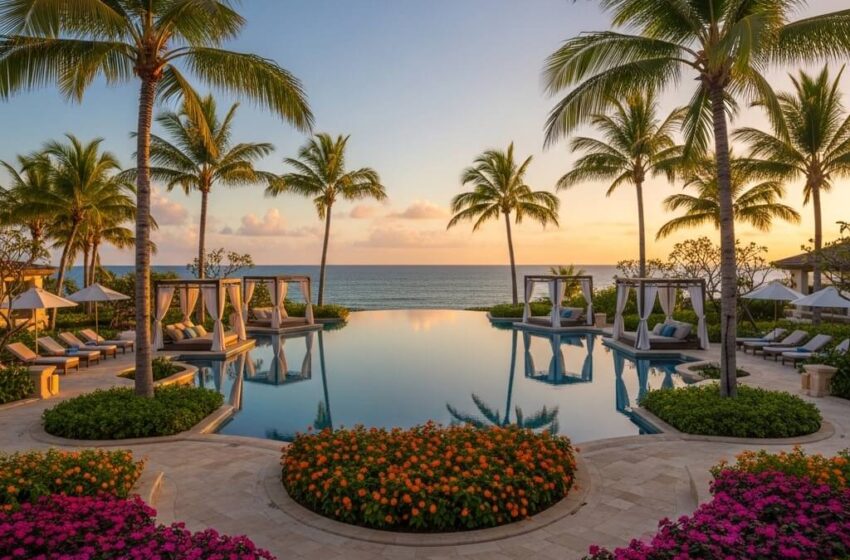
So you want your outdoor space to look like you’ve hired a team of botanists from Bali? Same. There’s something absolutely magnetic about tropical gardens—maybe it’s the way those massive elephant ear leaves catch the morning dew, or how a simple banana plant can make you feel like you’ve escaped to somewhere infinitely more interesting than your actual neighborhood.
I’ve spent the last few years transforming boring outdoor spaces into lush hideaways, and honestly? The tropical vibe works almost everywhere if you know what you’re doing. Whether you’ve got a sprawling backyard or a balcony the size of a yoga mat, I’m about to walk you through ten tropical garden designs that’ll make your neighbors wonder if you’ve secretly won the lottery and hired a landscape architect.
Let’s get into it.
Lush Tropical Jungle Backyard Retreat
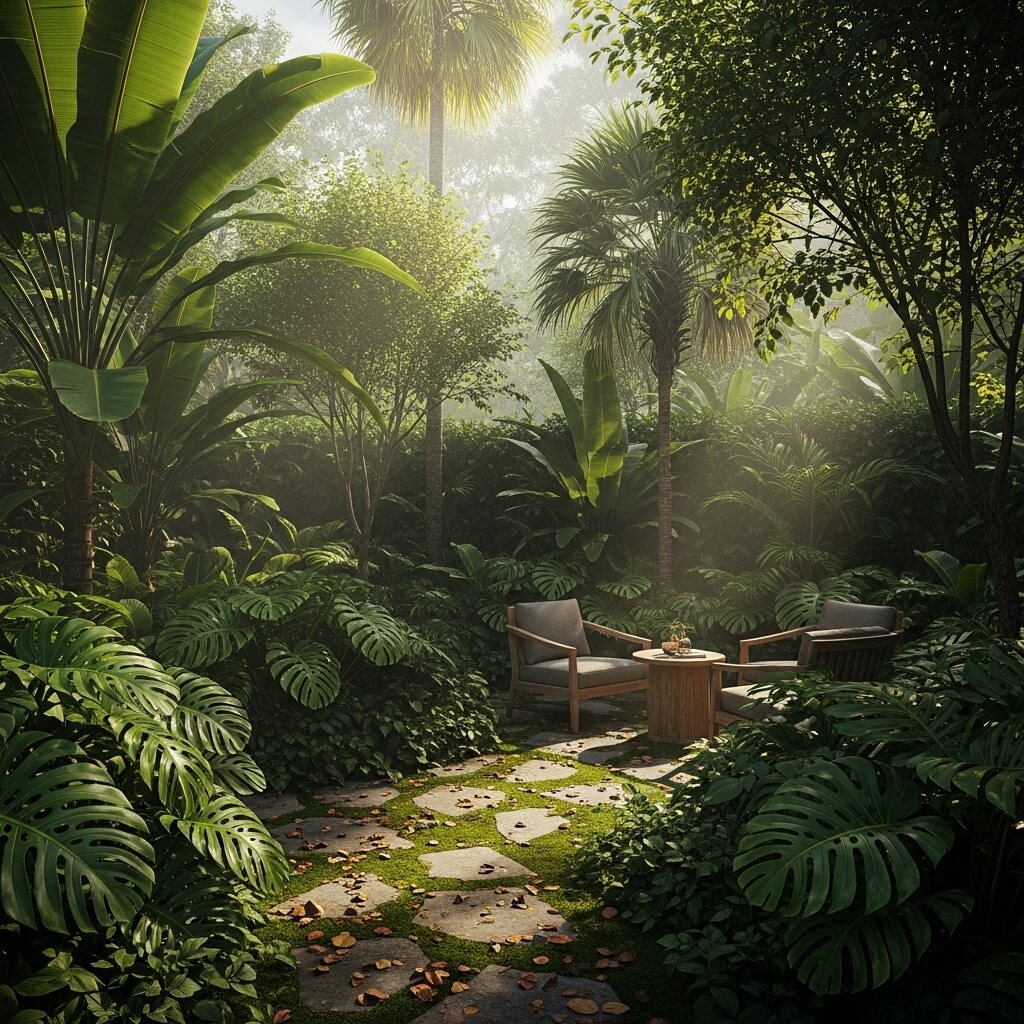
Remember that scene in every adventure movie where the protagonist hacks through dense jungle foliage? Yeah, you can create that (minus the machete part) right in your backyard.
I transformed my own backyard into this style last year, and let me tell you—it changed everything. The key here is layering, layering, and more layering. You want to create depth by mixing plants of different heights, textures, and shades of green. Start with some tall specimens like bird of paradise or banana plants at the back, then work your way forward with medium-height ferns, philodendrons, and gingers.
The magic happens when you pack them relatively close together. Nature doesn’t space things out with a ruler, and neither should you. I learned this the hard way after my first attempt looked more “botanical garden display” than “lost jungle temple.”
Plant Choices That Actually Work
Here’s what I recommend for that authentic jungle feel:
- Canopy layer: Banana plants, large palms, or tree ferns
- Mid-level drama: Bird of paradise, heliconias, cannas
- Ground cover heroes: Ferns (Boston, staghorn, maidenhair), caladiums, hostas
- The vine situation: Pothos, monstera (let them climb!), philodendron
One thing nobody tells you? Mulch matters. Dark mulch creates better contrast and makes those greens pop like crazy. Plus, it helps retain moisture, which your tropical babies will appreciate during those “forgot to water for three days” moments we all have.
The sound element elevates this design too. Add a small fountain or water feature tucked among the foliage, and suddenly you’ve got audio ambiance that drowns out your neighbor’s questionable music choices. You want people to close their eyes and hear jungle, not traffic.
Modern Minimal Tropical Garden Oasis
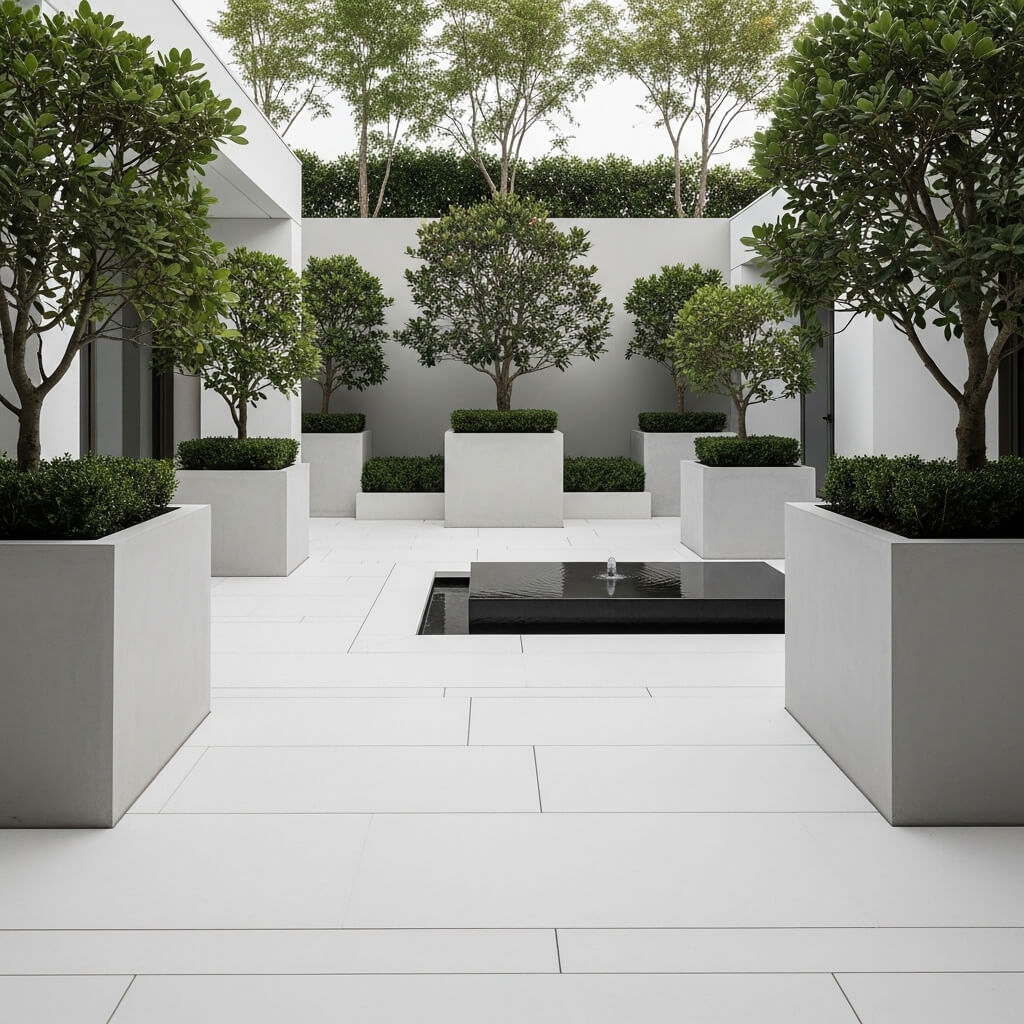
Plot twist: tropical doesn’t always mean “maximum foliage overload.”
This design flips the script by pairing clean, architectural lines with carefully selected tropical specimens. Think of it as the Marie Kondo approach to tropical gardening—every plant needs to spark joy AND earn its spot through sheer visual impact.
I actually prefer this style for front yards or smaller spaces where you want that tropical vibe without the “my garden ate my house” situation. You’ll use fewer plants, but each one becomes a statement piece. We’re talking about quality over quantity here, friends.
Making Minimalism Work with Tropicals
The secret sauce? Contrast and negative space. Pick plants with bold, architectural forms—I’m obsessed with yuccas, agaves, and single-stem palms for this look. Then give them room to breathe.
Your hardscaping does heavy lifting here too. Consider:
- Clean concrete pavers or large-format tiles
- Gravel or white pebble ground cover
- Simple water features (rectangular basins work beautifully)
- Modern planters in concrete, black, or white
Color palette matters more than you’d think. Stick with mostly green plants and maybe one or two with subtle color—a burgundy cordyline or silvery echeveria cluster. The restraint makes each element feel intentional rather than accidental.
Lighting transforms this style at night. Position uplights at the base of your specimen plants, and boom—instant resort vibes. I installed three simple LED spotlights for about fifty bucks, and my neighbors actually stopped to ask if I’d hired professionals. (I hadn’t, obviously, but I accepted the compliment anyway.)
Small Balcony Tropical Paradise Design
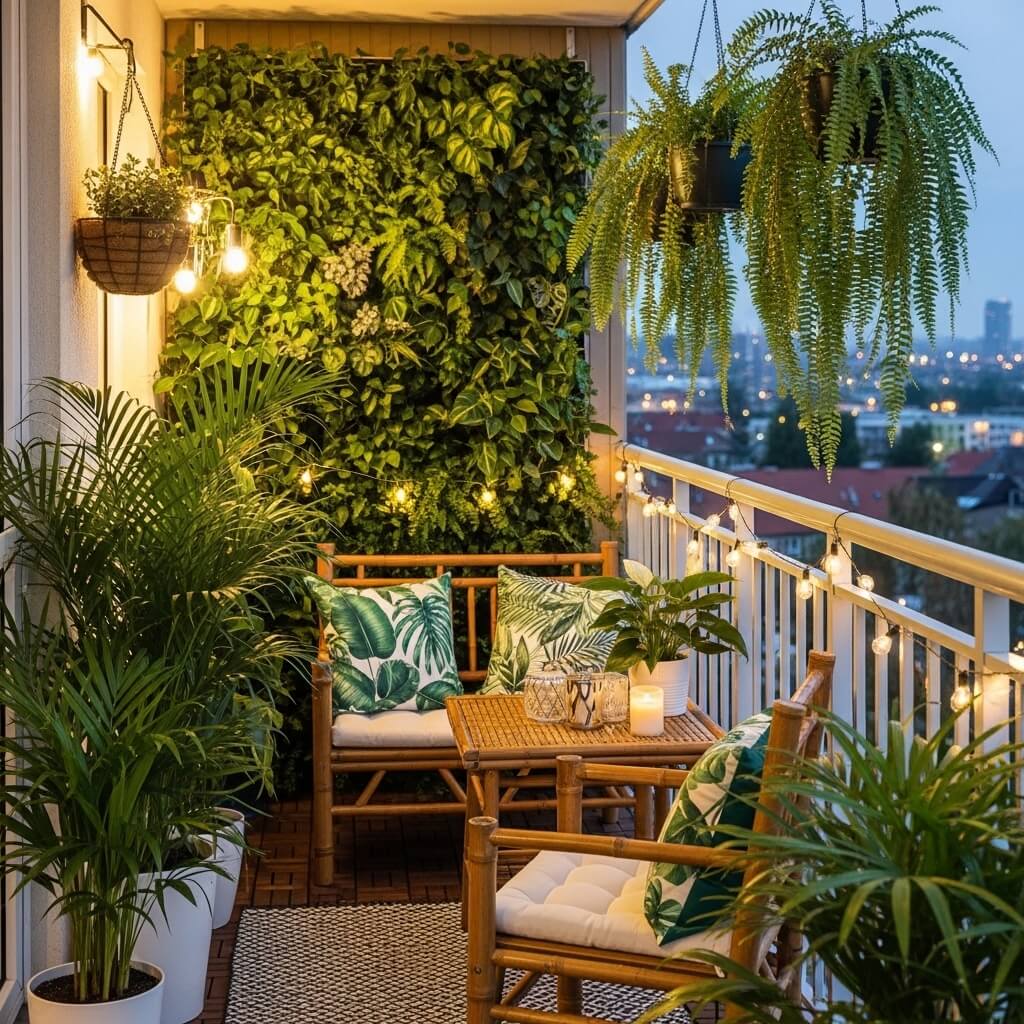
Got a balcony roughly the size of a surfboard? You can still make it tropical AF. 🙂
Small space gardening requires strategy, but honestly? Sometimes I find tiny spaces more satisfying because every single choice matters. You can’t hide mistakes behind “oh, I’ll just plant more stuff over there.” Nope. Everything counts.
I’ve designed balcony gardens in apartments where the outdoor space measured maybe 4×6 feet, and we still achieved that getaway feeling. The trick is vertical thinking and smart plant selection.
Maximizing Every Square Inch
Here’s your small balcony game plan:
Wall space = prime real estate
- Install trellis panels or wire grids
- Train climbing philodendrons or pothos upward
- Hang planters at different heights
- Use rail planters that hang over the edge
Corner stacking strategy
- Place your tallest plant (maybe a dwarf palm or large fern) in one corner
- Cluster smaller pots around it at varying heights
- Use plant stands to create levels
Furniture that multitasks
- Storage benches that double as seating
- Folding chairs you can tuck away
- Small side tables with built-in planters
FYI, container choice makes a massive difference in small spaces. I learned to avoid terracotta (too heavy, dries out fast) and cheap plastic (looks cheap, feels cheap). Instead, I hunt for lightweight resin planters that look like stone or ceramic. They photograph well, stay put during windy days, and don’t break your back when you need to rearrange.
Fragrance packs serious punch in small spaces too. Jasmine, gardenia, or scented geraniums release fragrance when you brush past them. Every time you step onto your balcony, you get that immediate sensory hit that says “tropical paradise,” even if your view is just the building next door.
Also Read: 10 Gorgeous Backyard Garden Design Ideas for Stylish Outdoors
Luxury Resort Style Tropical Landscape
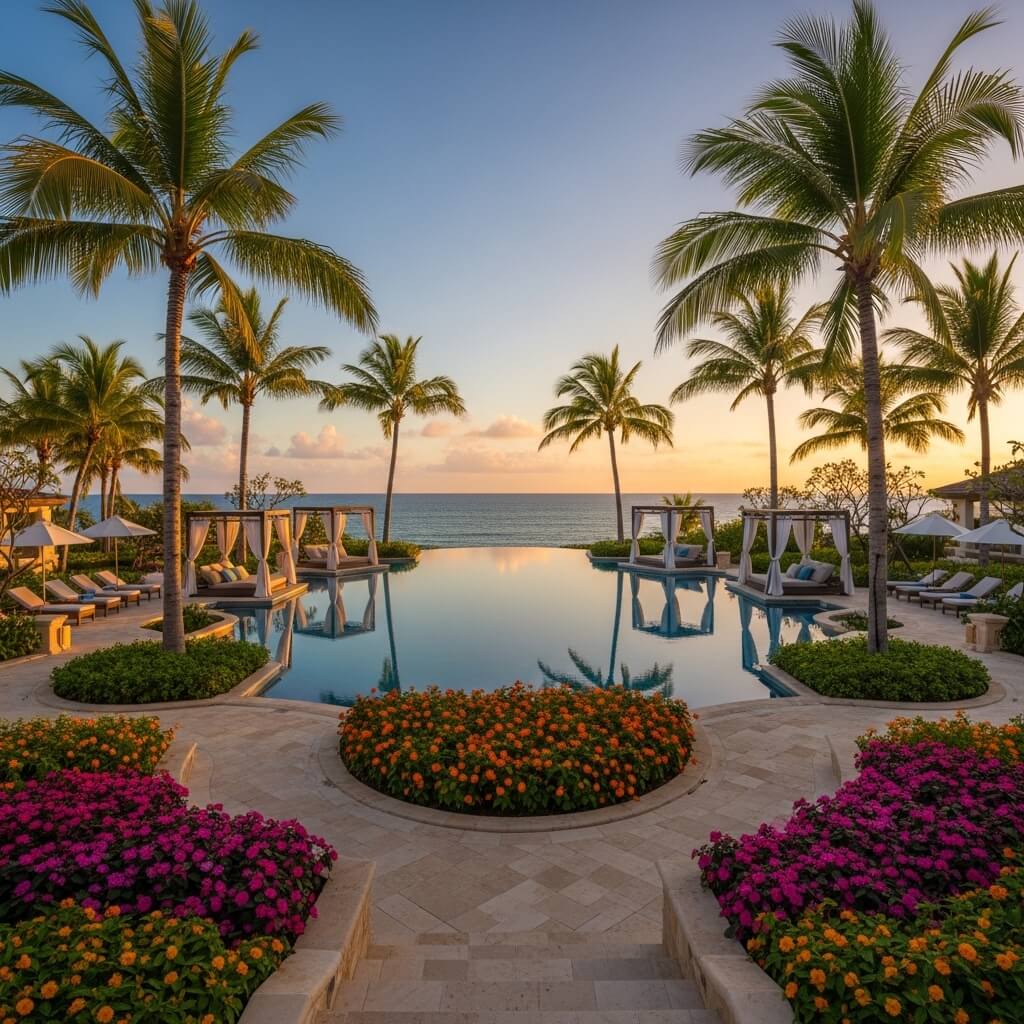
Ever wonder why resort gardens make you want to live there permanently? They nail a specific formula that you can absolutely replicate at home.
This design prioritizes comfort, visual flow, and that ineffable “vacation” feeling. You want spaces that invite you to linger—reading nooks, shaded lounging areas, maybe a spot for morning coffee that feels special enough to Instagram (but comfortable enough that you actually use it daily).
I studied resort landscapes obsessively before designing my client’s backyard in this style. The common threads? Generous pathways, strategic privacy screening, and plants that look lush without being fussy.
Essential Resort Garden Elements
The welcoming entry
- Frame your entrance with dramatic specimens (areca palms work perfectly)
- Add low-voltage pathway lighting
- Consider a simple water feature as a focal point
Defined zones for different vibes
- Lounging area with comfortable seating
- Dining space (even if it’s just a small bistro set)
- Private reading nook tucked away somewhere
Poolside plantings (if you’re lucky enough to have one)
- Palms for that immediate tropical signal
- Flowering tropicals for color (hibiscus, plumeria, ixora)
- Ornamental grasses for movement
The plant palette leans toward low-maintenance, high-impact choices. Resorts can’t babysit finicky plants, and neither can you. Stick with proven performers like crotons, ti plants, areca palms, and bromeliads.
One detail that separates amateur from professional? Repetition. Pick maybe 5-7 plant varieties and repeat them throughout the space. This creates visual harmony instead of the “botanical collection” chaos that happens when you buy one of everything at the nursery. (We’ve all been there. No judgment.)
Resort-style gardens also embrace imperfection. Not everything needs sharp edges and perfect mulch lines. Let some plants spill over paths. Allow moss to soften stone edges. The slightly wild-but-managed look feels way more vacation-authentic than rigid formality.
Poolside Tropical Garden Escape
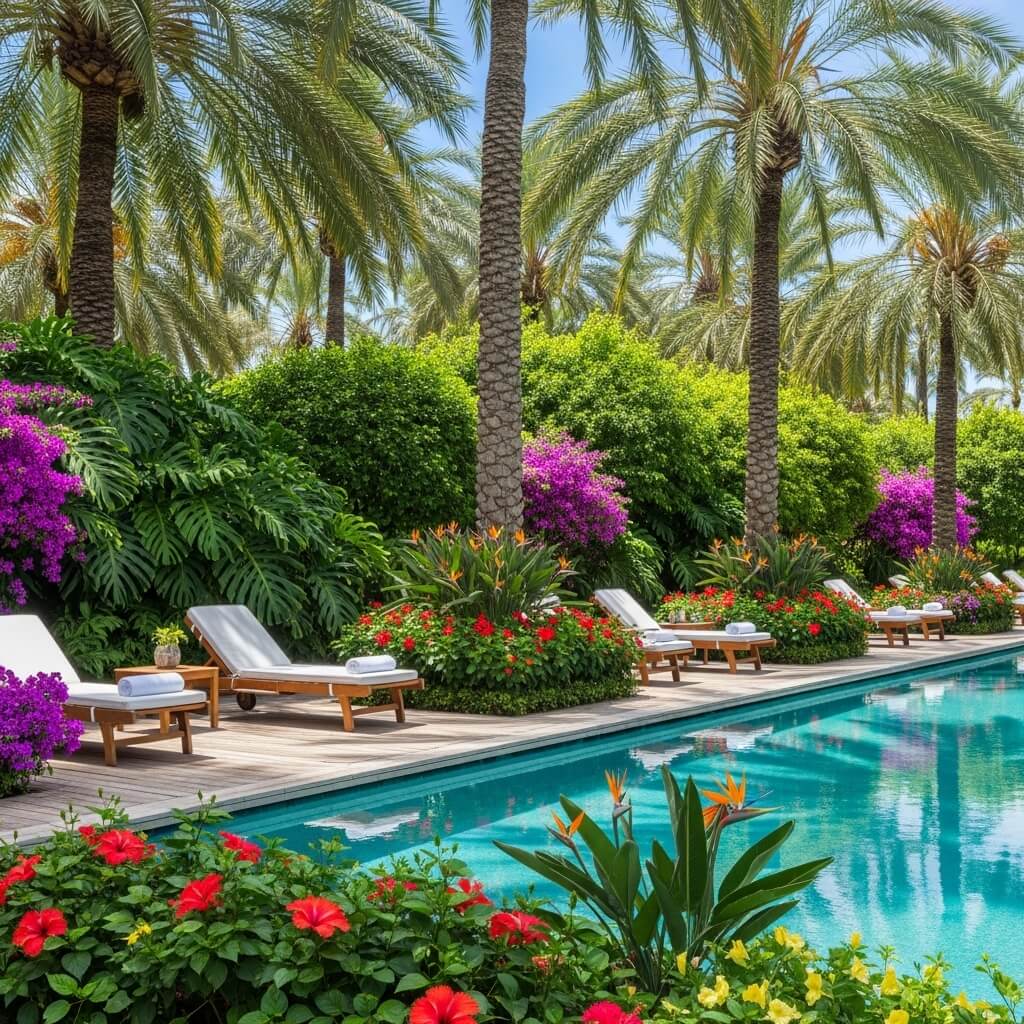
Your pool shouldn’t sit there like a blue rectangle surrounded by boring grass. That’s a missed opportunity of epic proportions.
Poolside plantings transform swimming pools from “suburban amenity” into “private lagoon situation,” and the right plants make all the difference. I’ve learned through trial and error (emphasis on error) which plants work beautifully near pools and which ones turn into maintenance nightmares.
What Works (And What Doesn’t)
Smart poolside plant choices:
- Palms: Majesty palm, areca palm, sago palm (technically not a palm but works great)
- Flowering tropicals: Plumeria, hibiscus, bird of paradise
- Grasses: Purple fountain grass, mondo grass, liriope
- Broadleaf beauties: Elephant ears, canna lilies, agapanthus
Plants to avoid (trust me on these):
- Anything messy that drops constantly (I’m looking at you, queen palm)
- Plants with aggressive root systems near pool infrastructure
- Thorny specimens near walking paths
- Trees that attract bees right where people walk barefoot
The layout strategy here focuses on framing and privacy. You want to create a sense of enclosure that feels cozy, not claustrophobic. I typically suggest taller plants in clusters at corners and along back fences, with lower plants filling in the perimeter.
Container gardens work brilliantly poolside because you can move them around when needed. Large planters with tropical specimens can define seating areas or screen pool equipment. Just make sure they’re heavy enough or anchored so they don’t become pool toys during windstorms. :/
Water features near pools might sound redundant, but they actually enhance the experience. A small fountain or waterfall adds white noise that makes the space feel more private and resort-like. Plus, the sound of moving water just hits differently when you’re trying to create that escape vibe.
Vertical Tropical Green Wall Garden
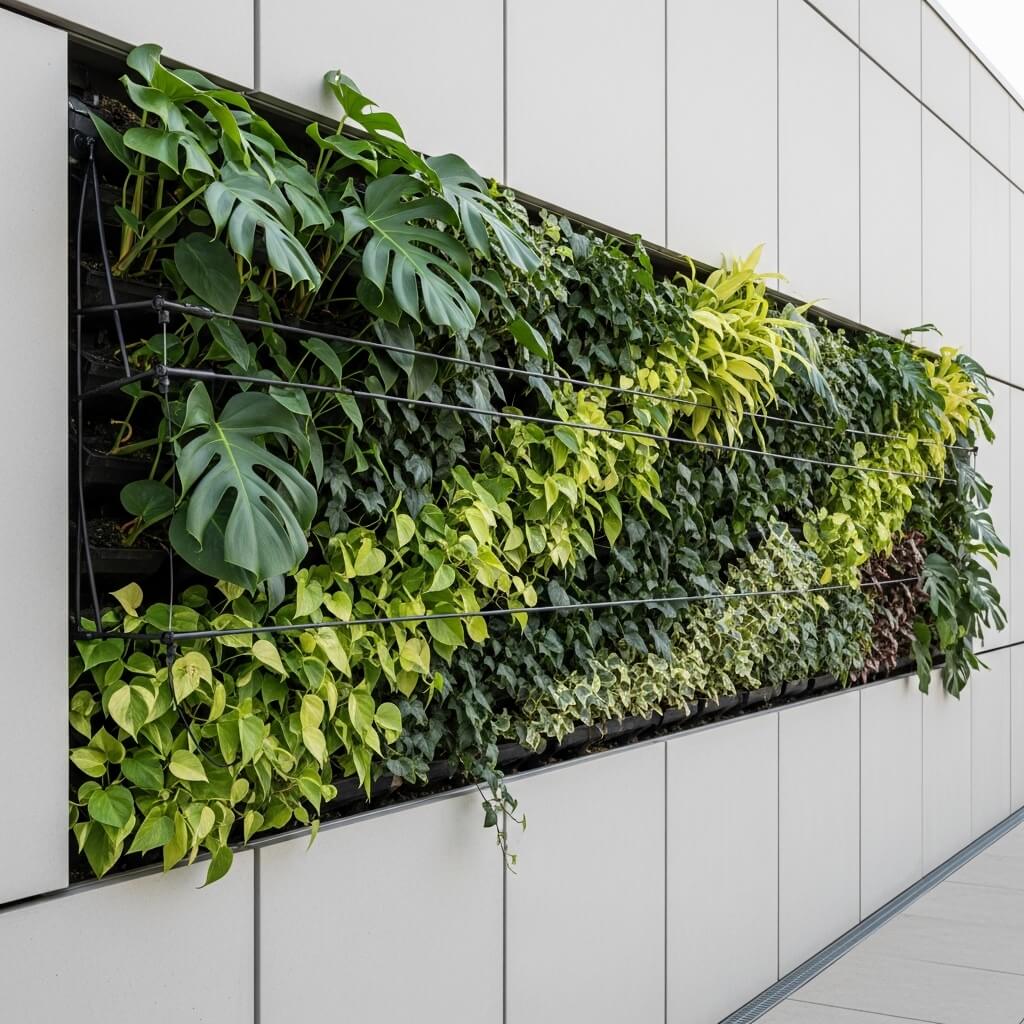
Okay, green walls look absolutely stunning, and they solve the eternal problem of “I want more plants but I’m out of ground space.”
I installed my first living wall three years ago, and people still ask about it constantly. Here’s the truth: they require more setup than regular gardens, but once established, they’re conversation pieces that earn their keep through sheer wow-factor.
Vertical gardens work magic in several scenarios:
- Tiny yards where ground space is precious
- Ugly walls that need covering (AC units, anyone?)
- Balconies and patios with vertical potential
- Privacy screening that looks better than a fence
Building Your Green Wall
You’ve got options for structure:
Pre-made modular systems
- Easiest installation
- Often include irrigation built in
- More expensive upfront
- Look professional immediately
DIY pallet or pocket systems
- Budget-friendly
- More customizable
- Require more hands-on setup
- Results vary based on your skill level
I went the modular route for my first attempt because I wanted to learn how these systems work before getting creative. Worth it. The built-in irrigation means I’m not hand-watering a wall every day like some kind of plant butler.
Tropical plants that thrive vertically:
- Pothos (basically indestructible)
- Philodendrons (heart-leaf varieties especially)
- Ferns (Boston, maidenhair, button)
- Peperomia (compact and colorful)
- Small bromeliads
- Prayer plants for color variation
Lighting matters more than you might think. If your wall doesn’t get great natural light, you’ll need to supplement with grow lights. I’ve seen spectacular indoor green walls lit entirely artificially, and honestly? They look incredible and eliminate the “which plants can survive in shade” headache.
Maintenance runs easier than traditional gardens in some ways—no weeding, no mulching, less pest pressure. But you do need to monitor the irrigation system and occasionally replace plants that don’t thrive. Think of it as curation rather than crisis management.
Also Read: 10 Incredible Modern Garden Design Ideas for Green Retreats
Exotic Jungle Pathway Garden Design
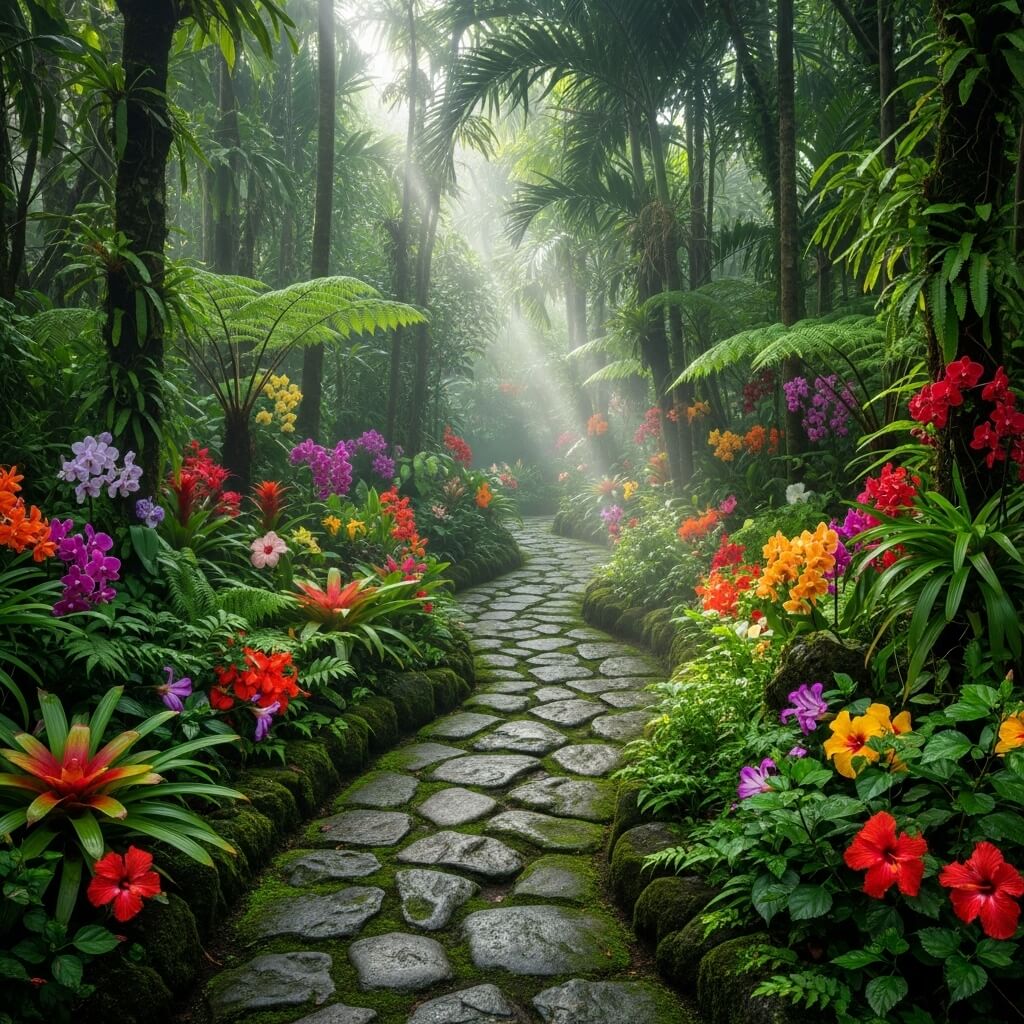
Something about walking through a lush, plant-lined path feels inherently magical. Maybe we’re all just channeling some evolutionary memory of exploring new territories? Whatever the reason, pathway gardens create journey and discovery in your own yard.
This design focuses on creating an experience through movement and revelation. You want the path to lead somewhere (even if it’s just a small seating area), and you want the journey to feel worth taking.
I designed a pathway garden for my parents that transformed their long, narrow side yard from “ignored corridor” into their favorite part of the property. The key was treating it like a story with a beginning, middle, and end.
Designing Your Jungle Path
Path materials that work:
- Decomposed granite (affordable, natural-looking, comfortable to walk on)
- Stepping stones with ground cover between
- Mulch (wood chips or shredded bark)
- Flagstone (pricier but gorgeous)
Width matters more than you’d think. Too narrow feels cramped and makes plants get beaten up by foot traffic. I suggest at least 3 feet wide for a main pathway, and make it curve if possible. Curves create mystery—you can’t see the whole path at once, which makes people want to explore.
Layered planting for pathway edges:
Front layer (what you’ll brush against):
- Soft ferns
- Mondo grass
- Low-growing bromeliads
Middle layer (eye-level interest):
- Crotons for color
- Ti plants
- Gingers when they’re in bloom
Back layer (creates the walls):
- Bamboo (clumping varieties only, unless you enjoy eternal regret)
- Large ferns
- Palms for canopy effect
Lighting transforms pathway gardens at night. Solar stake lights work fine, but low-voltage LED pathway lights look way more sophisticated. I installed lights on both sides every 6 feet, and now evening walks through the garden feel like an event.
Focal points give paths purpose. End your journey with something worth discovering—a small statue, a special plant specimen, a water feature, or a bench tucked into a clearing. This destination makes the pathway feel intentional rather than random.
Indoor-Outdoor Tropical Courtyard Garden
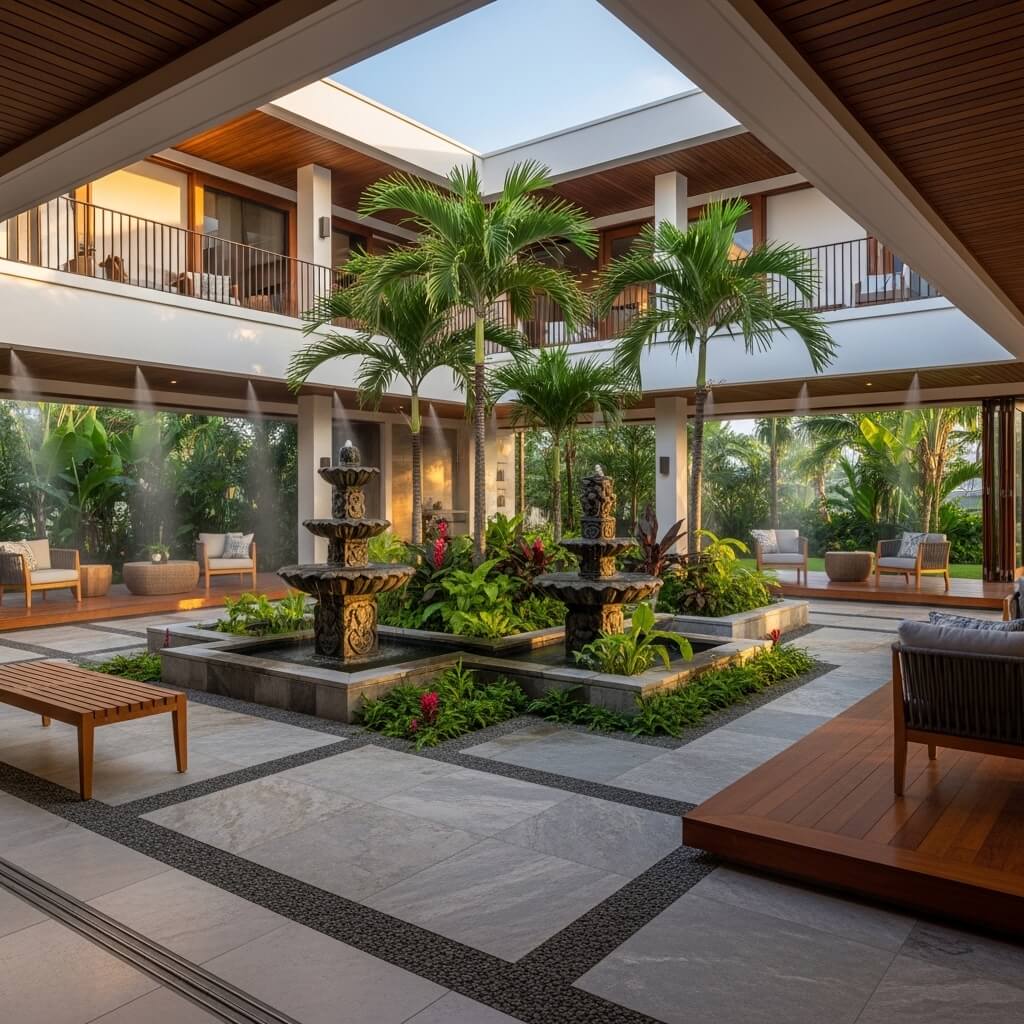
Courtyard gardens blur the line between inside and outside in the best possible way.
This design works phenomenally well if you have a central courtyard, but you can also create the effect with strategic plantings around patios or decks. The goal is seamless flow where your indoor and outdoor spaces feel connected rather than separate.
I visited a home in Southern California where they’d absolutely nailed this concept. Sliding glass doors opened completely, the same tile flowed from inside to outside, and tropical plants framed everything so perfectly you couldn’t tell where “house” ended and “garden” began. That’s the vibe we’re chasing.
Creating Indoor-Outdoor Flow
Continuity tricks that work:
- Repeat the same plants outside that you have in pots inside
- Use similar color palettes for indoor and outdoor furniture
- Continue flooring materials from inside to outside (or choose visually similar materials)
- Install large openings (sliding doors, French doors, fold-away walls)
Plant choices for the transition zone:
- Large potted specimens that can move (put them outside in summer, inside in winter)
- Hardy tropicals that tolerate some indoor time
- Matching species in ground outside and containers inside
The courtyard itself should feel like an outdoor room. Define the space with:
- Overhead structure (pergola, shade sail, or just tree canopy)
- Defined floor (pavers, decking, or decorative concrete)
- Walls or boundaries (actual walls, tall plants, or trellises)
- Furniture that encourages hanging out
Water features absolutely shine in courtyards because the enclosed space amplifies the sound. Even a small fountain creates that peaceful ambiance that makes you want to leave the sliding doors open 24/7 (or until mosquitos become a problem, anyway).
Courtyards also offer unique microclimates. They’re often protected from wind and harsh sun, which means you can sometimes grow slightly more tender plants than you could elsewhere in your yard. I’ve successfully kept plants alive in courtyards that would’ve given up on life in more exposed spots.
Zen Inspired Tropical Garden Space
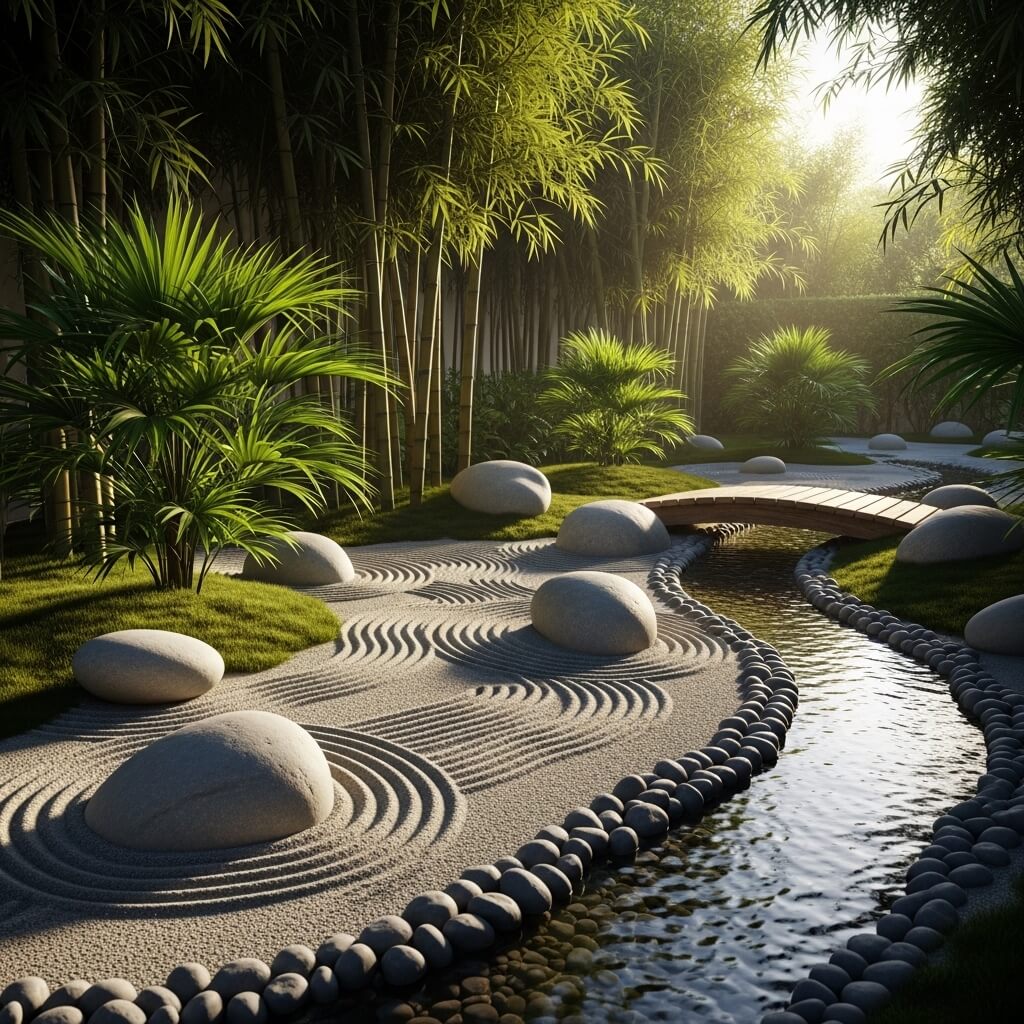
Who says tropical gardens can’t also be peaceful and minimalist? This design combines the lushness of tropical plants with the calm simplicity of Zen aesthetics.
I find this style incredibly appealing because it avoids the “visual chaos” that can happen with traditional tropical gardens. Instead of “all the plants, all the colors, everywhere,” you get intentional simplicity with carefully chosen tropical specimens.
The philosophy here borrows from Japanese gardens: every element should have purpose, negative space matters as much as filled space, and the overall feeling should be contemplative.
Elements of Zen Tropical Design
Hardscape choices:
- Gravel or raked sand areas (represents water)
- Simple stone pathways
- Boulder placement (odd numbers, natural positioning)
- Bamboo accents (fencing, water spouts, screens)
Plant selection leans toward:
- Bamboo (obviously, but choose clumping varieties)
- Palms with clean lines (sago palm, lady palm)
- Simple ferns (especially Japanese painted fern)
- Ornamental grasses (black mondo grass works beautifully)
- One or two flowering specimens for seasonal interest
Water features that fit the vibe:
- Tsukubai (stone water basins)
- Simple bamboo fountains
- Still reflection pools
- Minimalist modern fountains
Color restraint makes this work. IMO, you should stick mostly to greens with maybe one accent color that repeats throughout. I’ve seen stunning Zen tropical gardens using just green plants with black bamboo and dark stones—the monochromatic palette creates instant calm.
Maintenance here focuses on refinement. You’ll spend time on subtle pruning, keeping edges clean, and maintaining the gravel or sand areas. This isn’t a “plant it and forget it” garden, but the upkeep feels more like meditation than work if you approach it right.
Seating should be simple and intentional. A single bench positioned to view the garden, a meditation cushion on a stone platform, or a simple wooden chair. The point is contemplation, not entertaining crowds.
Also Read: 10 Dreamy Cottage Garden Design Ideas for Lush Green Spaces
Coastal Tropical Garden with Palm Layers
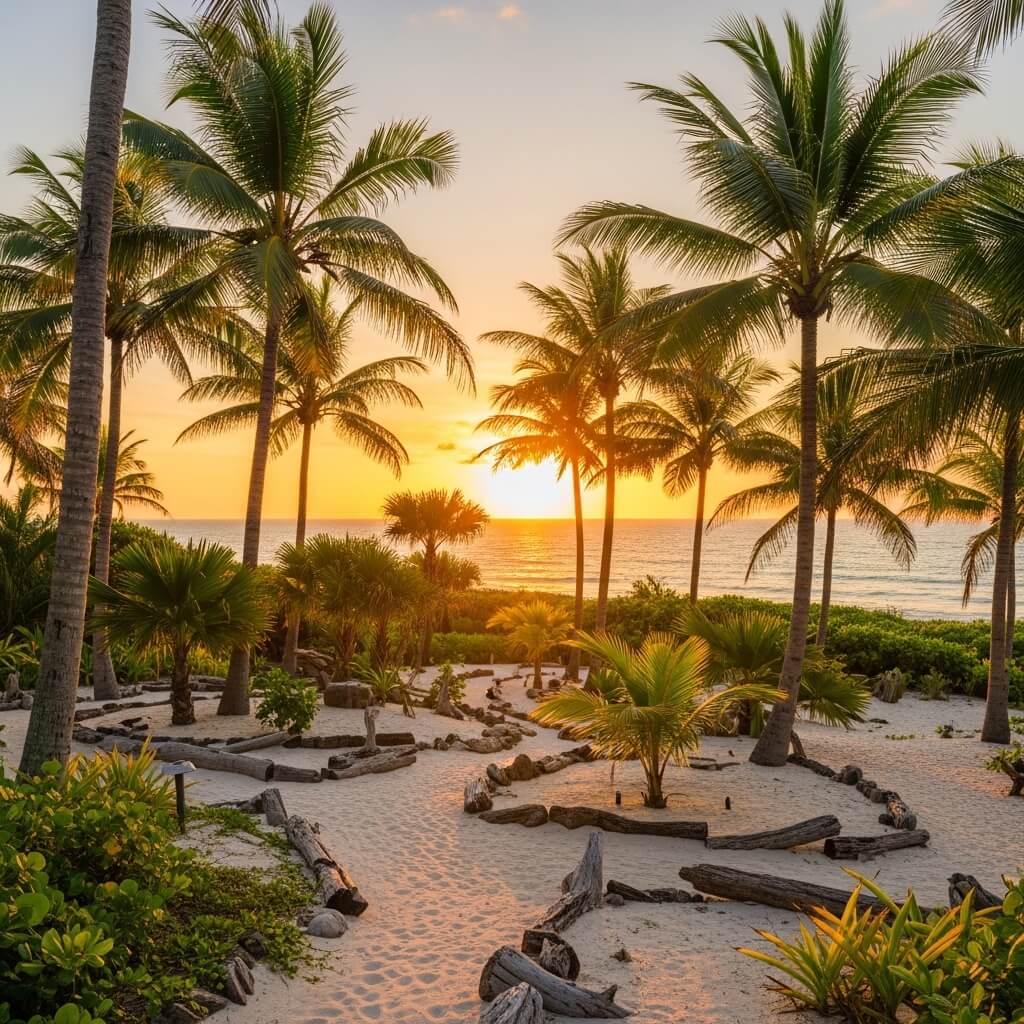
Coastal gardens face unique challenges—salt spray, wind, sandy soil, intense sun—but they also offer incredible opportunities for layered palm plantings that capture that classic tropical beach vibe.
I grew up near the coast, and honestly? Palms just look right when you can smell ocean air. This design leans into that association hard, creating depth through different palm varieties at various heights.
The layering strategy works like this:
Canopy layer (tallest palms in back):
- Coconut palms (if your climate supports them)
- Queen palms (tall, elegant, tropical-looking)
- Mexican fan palms (cold-hardy and wind-resistant)
Mid-level layer (medium-height palms):
- Pindo palm (feathery, blue-green, cold-hardy)
- Triangle palm (compact, attractive clustering habit)
- Mediterranean fan palm (bushy, full appearance)
Ground layer (low-growing palms and palm-like plants):
- Sago palm (not a true palm but perfect here)
- Saw palmetto (native, tough, coastal-appropriate)
- Cardboard palm (compact, easy care)
Making Coastal Palms Work
Salt tolerance matters if you’re actually near the ocean. Some palms laugh at salt spray, while others throw tantrums. Research your specific conditions before committing to expensive specimens.
Wind protection helps even wind-tolerant palms perform better. Creating layers naturally provides some wind buffering—the taller palms take the brunt, protecting smaller plants below. I’ve also seen coastal gardeners use native shrubs as windbreaks before adding more delicate tropicals.
Soil amendment usually becomes necessary in coastal areas. Pure sand doesn’t hold nutrients or moisture well. I always recommend:
- Adding compost regularly
- Using mulch to retain moisture
- Installing drip irrigation (salt air makes hand-watering annoying)
- Fertilizing more frequently than inland gardens
The color palette in coastal tropical gardens tends toward cooler tones—blue-green palms, silvery foliage, whites and pale pinks for flowers. These colors echo the beach environment and feel more cohesive than screaming hot pinks and reds (though those work too if that’s your vibe).
Hardscaping here should complement the setting. Weathered wood, natural stone, white or cream-colored pavers—materials that look like they belong near a beach. I always suggest avoiding anything too formal or fussy in coastal gardens. The environment itself is casual and natural, so your design should follow that lead.
Look, creating a tropical garden isn’t rocket science, but it does require some planning and intentionality. The beautiful thing? You can start small and build over time.
I started with maybe five plants in containers, convinced I’d kill them all within a month (plant impostor syndrome is real). Fast forward a few years, and I’m that person neighbors ask for plant advice. You don’t need a massive budget or professional training—just willingness to experiment and learn from the inevitable mistakes.
Every single one of these design styles works at different scales and budgets. Got a balcony and $200? Start with a few statement plants and build your small balcony paradise. Own a sprawling backyard with resources to invest? Go wild with that luxury resort style or lush jungle retreat.
The key is choosing a design that actually fits your lifestyle. Don’t create a high-maintenance Zen garden if you travel constantly and can’t commit to weekly refinement. Don’t pack your tiny balcony with 50 plants if you honestly just want a simple, peaceful spot for morning coffee.
Start where you are, use what you have, and add plants that make you genuinely happy. Tropical gardens should feel like escape, joy, and a little bit of everyday magic—not like another item on your overwhelming to-do list.
Now get out there and make something beautiful. Your dream tropical space is waiting. 🙂