
10 Luxury Zen Garden Design Ideas for Dreamy Calm Landscapes
- Garden Design
 Ben
Ben- 0
- 38 minutes read
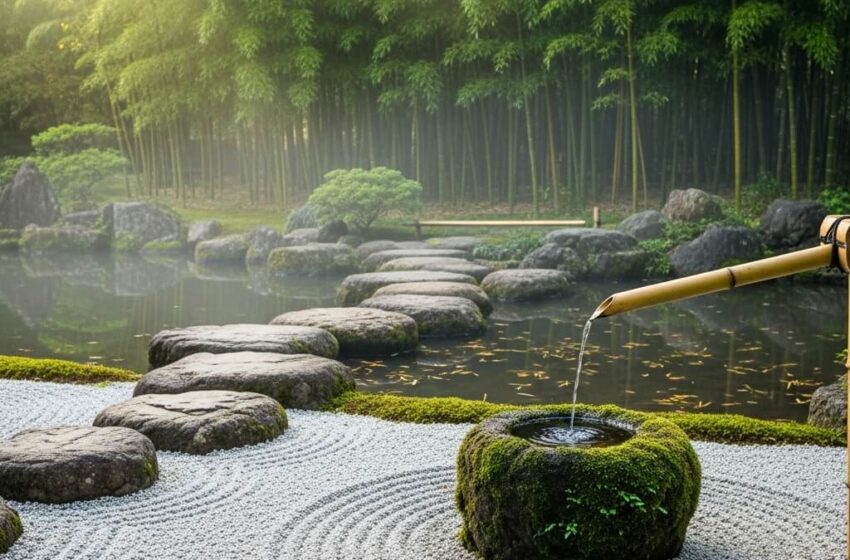
Listen, I totally get it. You walk through your backyard or stare at that sad little balcony, and you think, “There’s got to be something better than this.” Maybe you’ve been scrolling through Instagram, drooling over those impossibly peaceful Zen gardens that look like they belong in a luxury resort, not in someone’s actual home. Well, guess what? Those dreamy calm landscapes aren’t just for Buddhist monks or millionaires with too much time on their hands.
I’ve spent years obsessing over garden design (my partner thinks I’m slightly unhinged about it, honestly), and I’m here to tell you that creating your own luxury Zen garden is totally doable. Whether you’ve got a sprawling backyard or just a tiny corner that’s begging for attention, there’s a Zen garden design that’ll transform your space into the peaceful sanctuary you desperately need. So grab your favorite beverage, get comfy, and let’s talk about ten absolutely stunning Zen garden ideas that’ll make your neighbors seriously jealous.
Minimal Stone Zen Meditation Garden
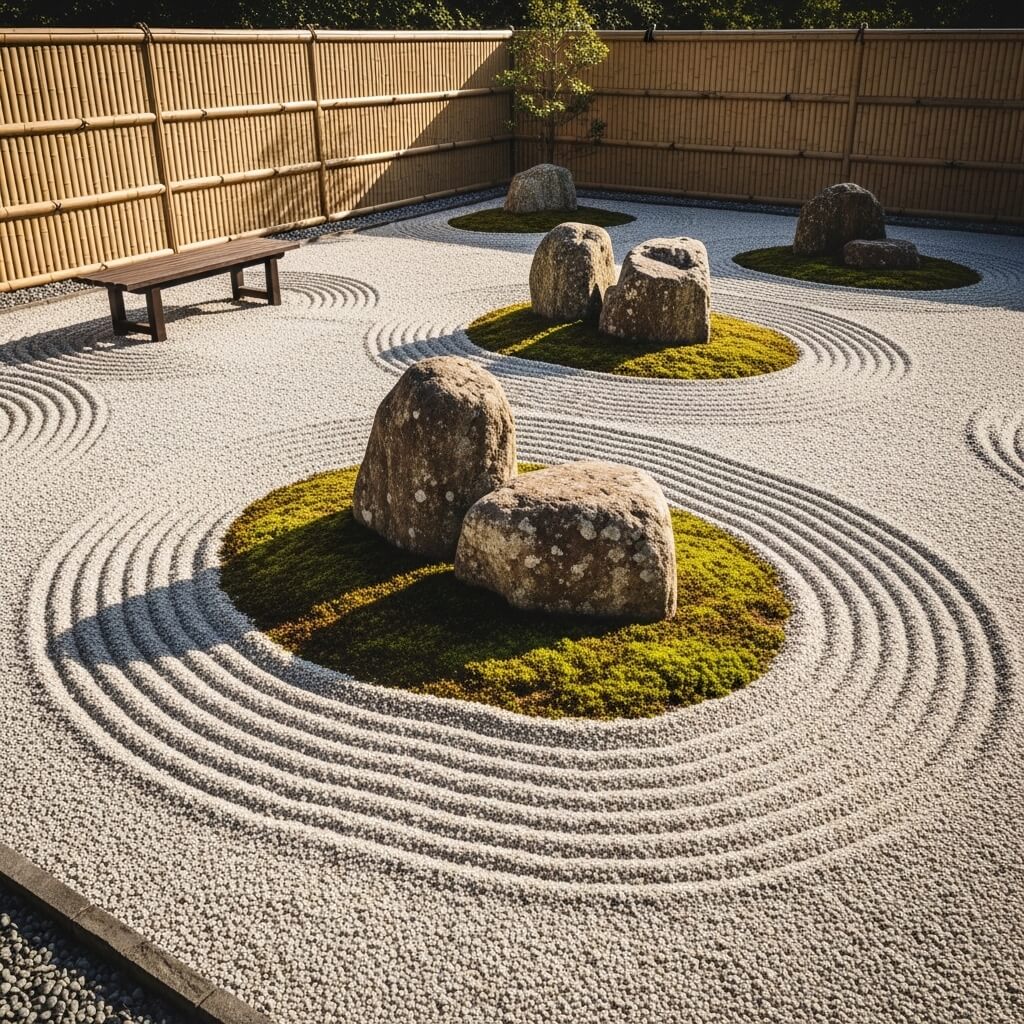
You know what I love about minimalism? It’s the art of making “less” look like “more expensive.” A minimal stone Zen meditation garden is basically the Marie Kondo of outdoor spaces—everything has its place, nothing’s excessive, and somehow it all just works.
Picture this: carefully selected stones of varying sizes arranged on a bed of fine gravel, maybe some perfectly raked patterns that look like water ripples, and absolutely nothing else cluttering the view. That’s it. That’s the magic. The beauty here lies in the intentional placement of each element, where every stone tells a story and creates a focal point for meditation.
Here’s what you’ll need to pull this off:
- Large anchor stones (3-5 statement pieces that ground the design)
- Fine white or gray gravel as your base layer
- A quality rake for creating those mesmerizing patterns
- Defined borders (stone edging or wood frames work great)
- Strategic negative space (yes, empty space is actually a feature)
The whole point is to create a space where your mind can actually chill out. When I built my first minimal stone garden, I made the rookie mistake of adding too many elements. FYI, more stones doesn’t equal more Zen—it just equals more clutter. Trust me on this one. Strip it back, keep it simple, and let each element breathe.
Japanese Bamboo Water Zen Retreat
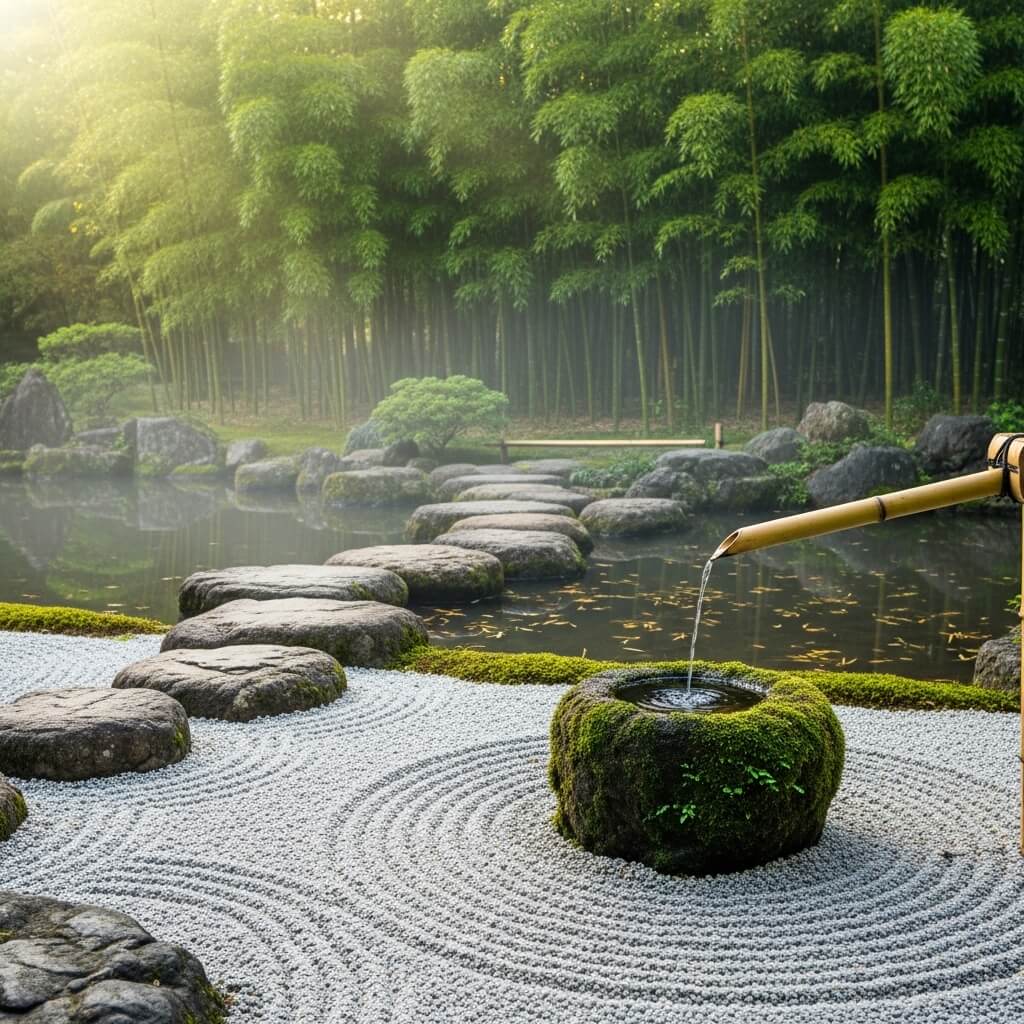
Now we’re talking about the crème de la crème of Zen gardens. A Japanese bamboo water retreat combines the soothing sounds of trickling water with the elegant movement of bamboo swaying in the breeze. Can it get any better than that? Spoiler alert: not really.
The traditional Japanese approach uses bamboo water fountains (called tsukubai or shishi-odoshi) that create this rhythmic clacking sound as they fill and empty. Pair that with tall bamboo screens or living bamboo plants, and you’ve got yourself a private escape that feels like you’ve been teleported straight to Kyoto.
Here’s what makes this design absolutely shine:
Water Features
The bamboo fountain is your star player here. You can go with a traditional deer scarer (shishi-odoshi) that rocks back and forth, or a simpler bamboo spout that pours into a stone basin. The sound of running water literally changes your brain chemistry—it reduces stress and promotes that alpha wave state where everything feels easier.
Bamboo Elements
Living bamboo plants create natural privacy screens and add that signature Japanese aesthetic. Just be careful which variety you choose because some bamboo species are basically the garden equivalent of that friend who doesn’t know when to leave—they’ll take over everything. Opt for clumping bamboo varieties instead of running types unless you want a bamboo invasion on your hands.
Supporting Cast
Add smooth river rocks around your water feature, maybe some Japanese maple trees for color contrast, and perhaps a stone lantern or two. Keep the color palette natural—think greens, grays, and earth tones. This isn’t the place for those neon pink garden gnomes your aunt keeps gifting you 🙂
Small Balcony Zen Garden Oasis
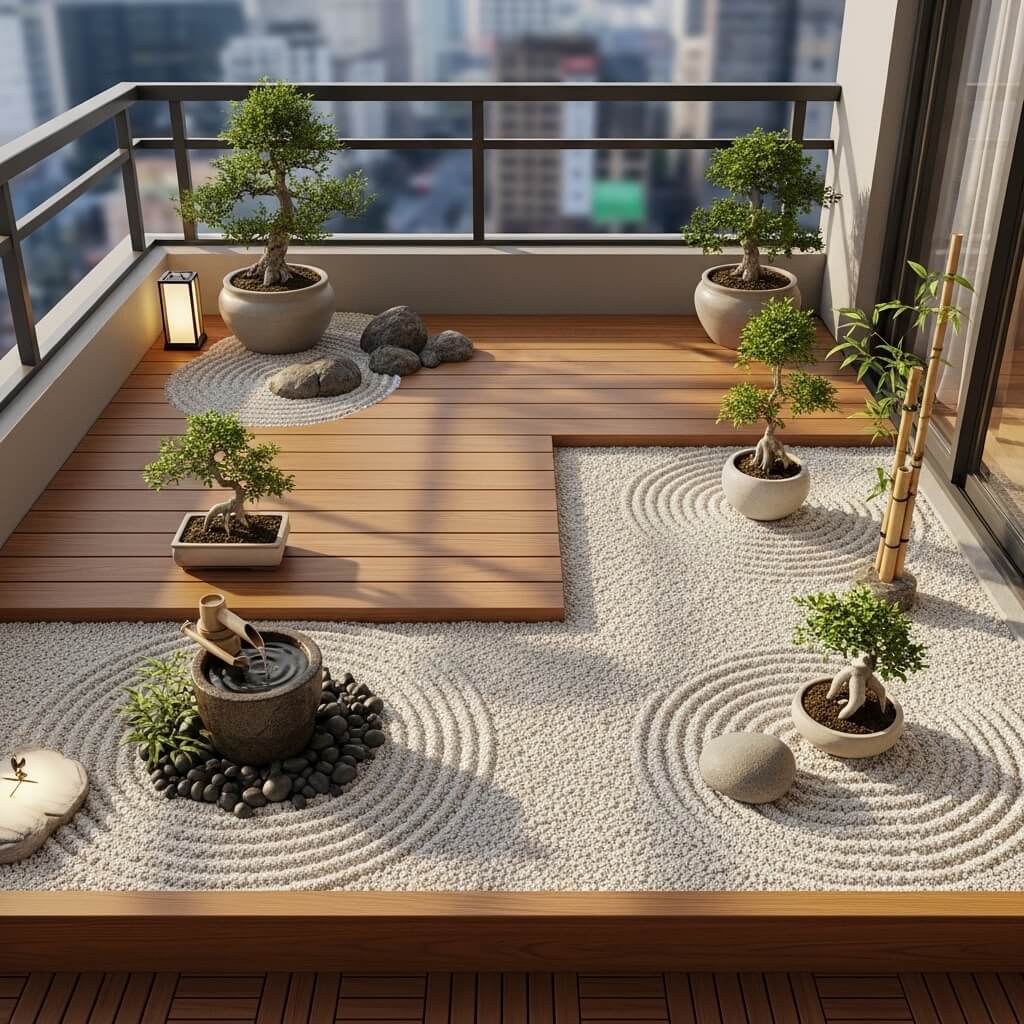
Apartment dweller? Tiny balcony that’s currently home to a sad folding chair and some dead plants? Yeah, I see you. The good news is you don’t need acres of land to create a Zen oasis. Sometimes the smallest spaces pack the biggest punch.
I transformed my 6×4 balcony into a Zen retreat last year, and now it’s literally my favorite spot in the entire apartment. The trick is vertical thinking and choosing elements that deliver maximum impact without hogging precious floor space.
Here’s your small balcony game plan:
- Wall-mounted bamboo panels or lattice for instant privacy and ambiance
- Compact water fountain (tabletop versions work perfectly)
- Tiered plant stands to create levels without eating up square footage
- Floor cushions or a small meditation bench for actual sitting and contemplating life
- Container plants like Japanese maples, dwarf bamboo, or ornamental grasses
Layer different textures to create depth. Use a large shallow container filled with sand and small rocks as a mini rock garden. Hang some simple paper lanterns or string lights for evening ambiance. The key is making every single inch count without making the space feel cramped.
Window boxes with trailing plants add greenery without sacrificing floor space. And honestly? Sometimes a small balcony Zen garden feels even more intimate and special than a huge backyard setup. It’s like having your own secret sanctuary that nobody else knows about.
Also Read: 10 Beautiful Tropical Garden Design Ideas for Dream Spaces
Modern Gravel Pattern Zen Space
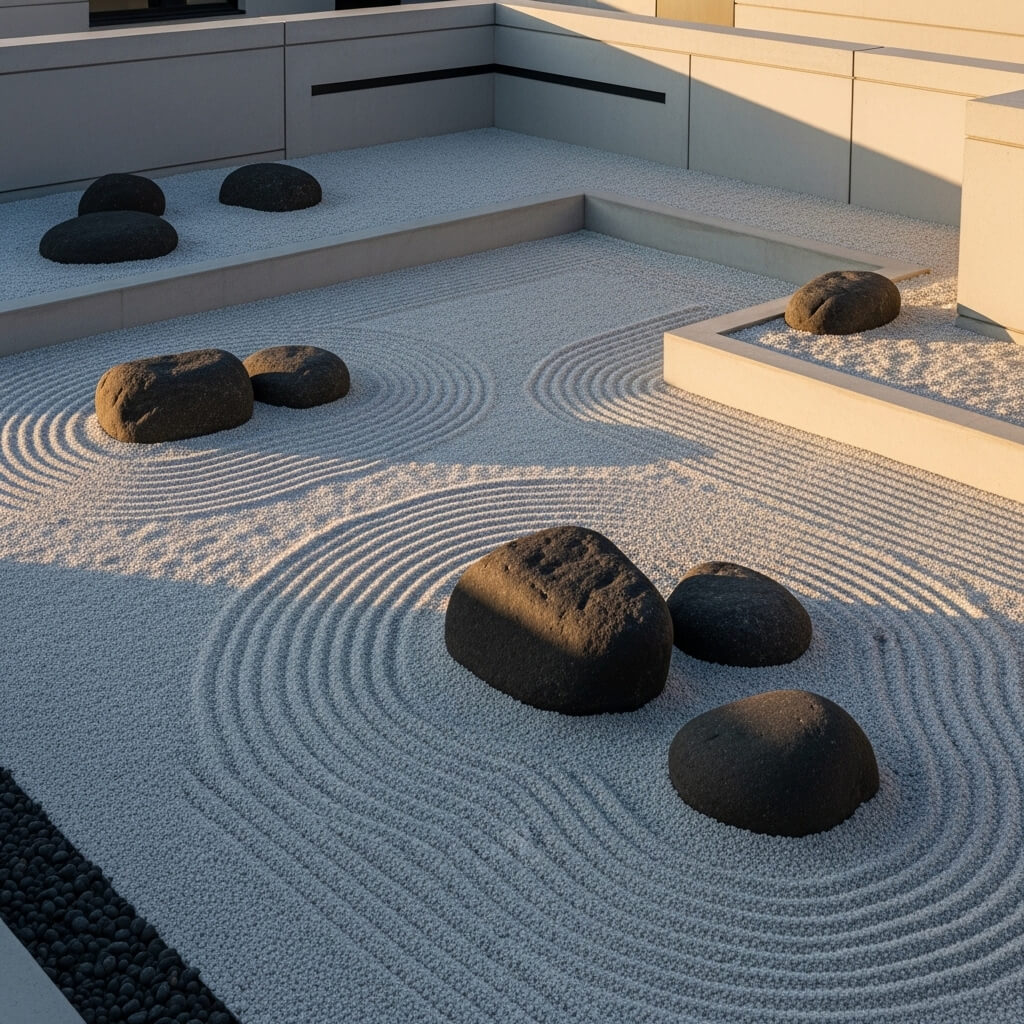
Alright, let’s talk about the Instagram-famous cousin of traditional Zen gardens—the modern gravel pattern space. This design takes the classic raked gravel concept and gives it a contemporary twist that works beautifully with modern architecture.
The traditional Japanese dry garden (karesansui) uses raked patterns to represent water and waves. The modern version amplifies this with bold geometric patterns, contrasting gravel colors, and seriously Instagrammable designs. Ever wondered why these patterns are so hypnotic? There’s actually science behind it—repetitive visual patterns help induce meditative states. Who knew being trendy could also be therapeutic?
Design Elements
Think clean lines, deliberate patterns, and a more minimalist color scheme than traditional designs. White or light gray gravel works as your canvas, with darker stones creating contrast and definition. You might incorporate linear raking patterns instead of circular ones, or even combine multiple gravel colors in distinct sections.
Modern Touches
Add contemporary elements like:
- Corten steel edging (that rusty-looking metal that’s actually super expensive)
- Sculptural modern planters with architectural plants
- LED lighting strips along borders
- Glass or acrylic panels as dividers
- Sleek metal sculptures as focal points
I love how this style bridges East and West design philosophies. It respects the meditative purpose of traditional Zen gardens while speaking to contemporary aesthetics. Plus, let’s be honest—it photographs amazingly well, which matters in 2024 whether we admit it or not.
Indoor Zen Sand Tray Garden Corner
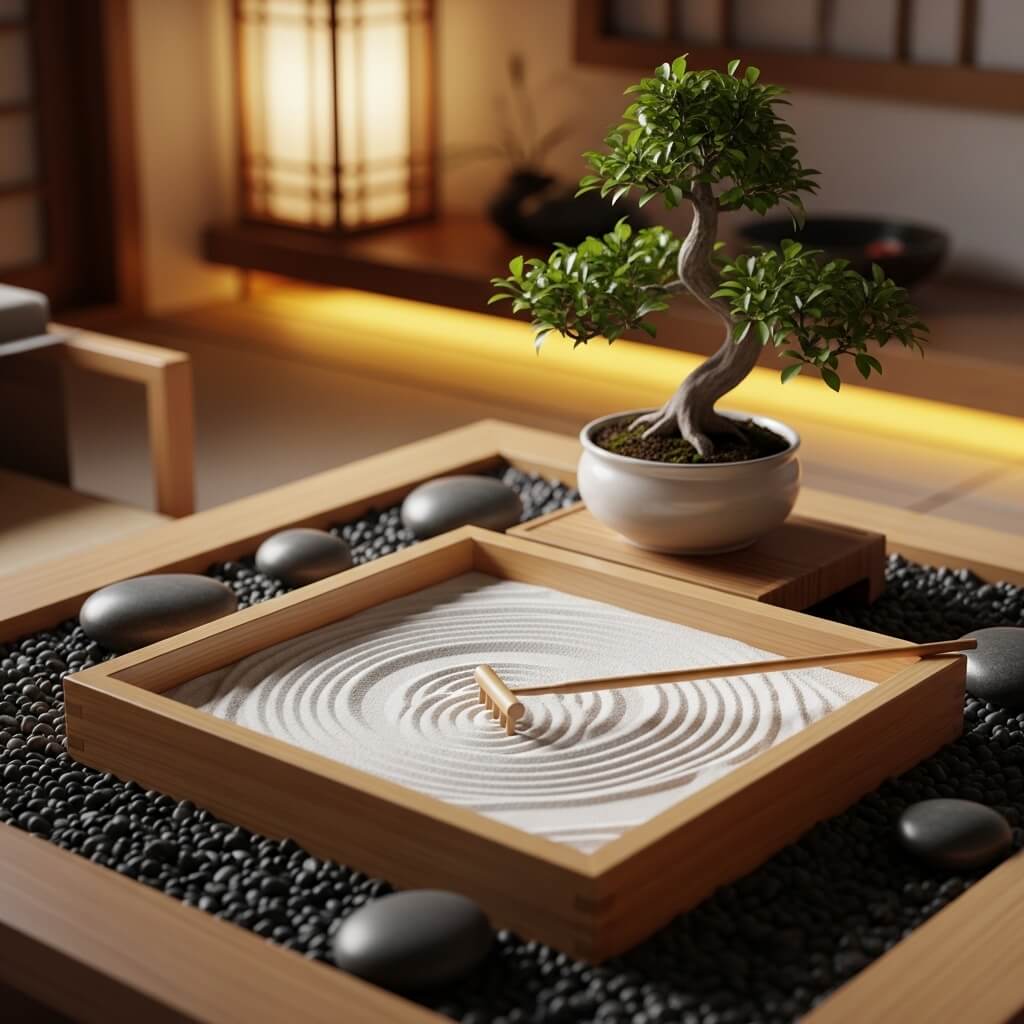
Not everyone has outdoor space, and you know what? That’s totally fine. An indoor Zen sand tray garden brings that meditative energy right into your living room, home office, or bedroom. Think of it as a 3D stress ball that’s actually beautiful to look at.
These miniature landscapes typically sit on a table or desk and give you something tactile and calming to engage with. I keep one in my home office, and on particularly stressful days, spending five minutes raking patterns into the sand genuinely helps me reset. IMO, it’s way more effective than doom-scrolling through Twitter when you need a mental break.
Setting Up Your Indoor Garden
You’ll need:
- A shallow wooden tray or box (12×16 inches is a good starter size)
- Fine sand (white, tan, or gray)
- Small decorative rocks or crystals
- Miniature rake (often sold as part of Zen garden kits)
- Optional: tiny figurines, mini plants, or symbolic elements
The beauty here is total customization. Some people go super minimal with just sand and a few rocks. Others create elaborate miniature landscapes with moss, succulents, and detailed rock arrangements. There’s no wrong approach—it’s whatever speaks to you.
The Meditative Practice
The real magic happens when you actually use it. Rake patterns, rearrange stones, create different designs. The repetitive motion combined with the visual transformation creates a mindfulness practice that doesn’t require any special training or commitment. It’s meditation for people who think they can’t meditate (guilty as charged).
Backyard Zen Garden with Koi Pond
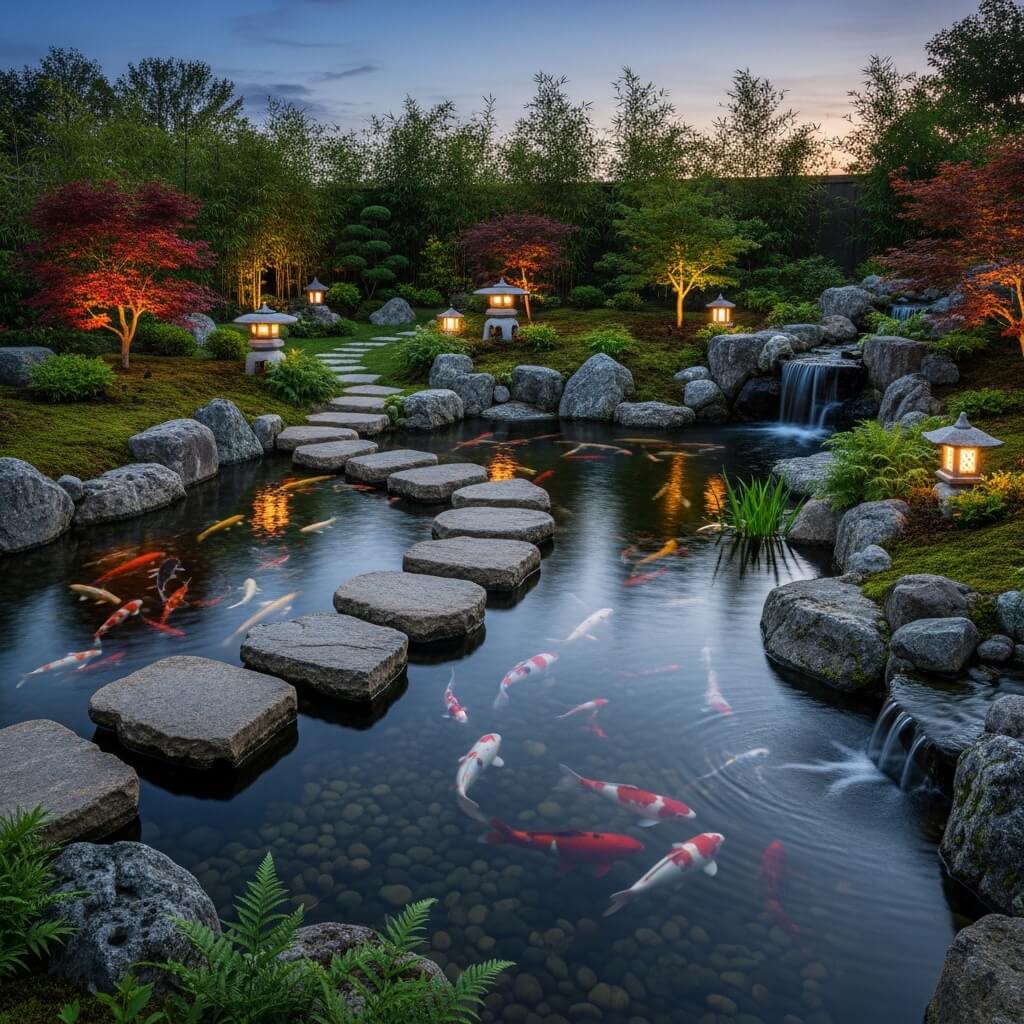
Now we’re getting into serious luxury territory. A backyard Zen garden featuring a koi pond is the ultimate outdoor sanctuary—but it’s also a legitimate commitment. These fish are basically aquatic puppies that require real care and attention.
That said, there’s something absolutely magical about watching koi glide through clear water while you sit in your garden sipping morning coffee. The combination of moving water, living creatures, and natural landscaping creates a dynamic ecosystem that changes throughout the day and seasons.
Koi Pond Essentials
Building a koi pond isn’t a weekend DIY project (unless you’re some kind of superhuman). You’ll need:
- Proper pond liner and filtration system
- Adequate depth (minimum 3 feet, ideally 4-6 feet for temperature regulation)
- Quality filtration and aeration equipment
- Plants for shade and water quality
- Actual koi fish (start with just a few—they grow!)
Surround your pond with natural stone, create different viewing angles with strategically placed seating areas, and incorporate plants at various heights. Japanese iris, water lilies, and lotus plants work beautifully and help maintain water quality.
Garden Integration
The pond shouldn’t exist in isolation—it’s the centerpiece of your entire garden design. Create gravel pathways leading to viewing areas, add a traditional bridge if space allows, incorporate stone lanterns and bamboo accents. Think of the pond as the heart with everything else radiating outward.
Fair warning: koi keeping can become borderline obsessive. You’ll find yourself learning their individual personalities, worrying about water temperature, and probably spending way more money than planned on fancy fish food. But when you’re sitting beside your pond watching your koi swim peaceful circles while bamboo rustles in the background? Worth every penny and hour of effort.
Also Read: 10 Gorgeous Backyard Garden Design Ideas for Stylish Outdoors
Courtyard Rock and Moss Zen Design
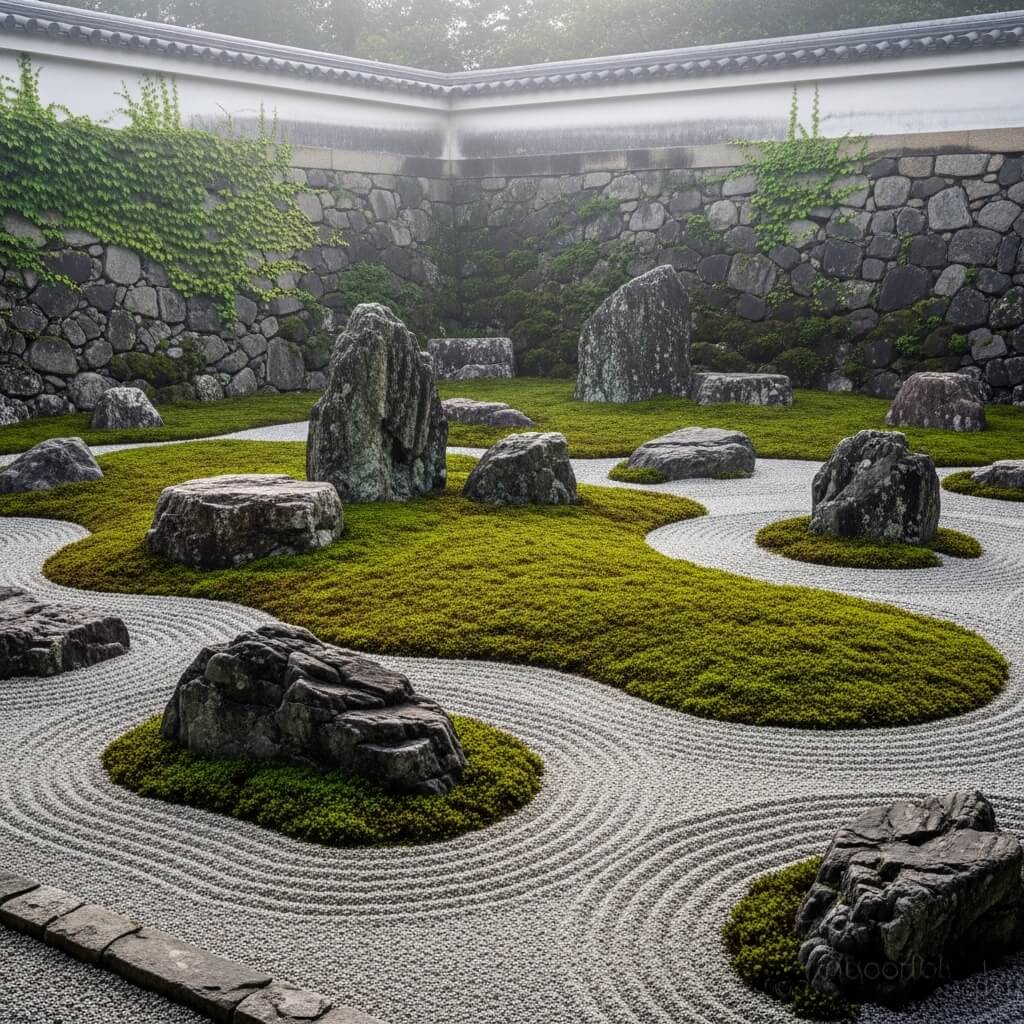
There’s something deeply satisfying about the combination of ancient-looking rocks and velvety moss. A courtyard rock and moss Zen garden feels like you’ve stumbled into a forgotten temple garden—mysterious, timeless, and profoundly peaceful.
This design works especially well in shaded or partially shaded courtyards where growing traditional lawns or flower gardens proves challenging. Moss actually thrives in conditions where other plants struggle, making it the perfect ground cover for problem areas.
Creating the Foundation
Select large weathered rocks as your anchor points—the more character and age they show, the better. Position them in odd-numbered groupings (3, 5, or 7) following traditional Japanese design principles. The rocks should look like they naturally belong there, not like you just dumped them randomly.
For the moss, you need:
- Acidic soil conditions (moss loves low pH)
- Shade or dappled sunlight
- Consistent moisture
- Patience (moss grows slowly but surely)
You can transplant moss from other areas of your property, purchase it from garden centers, or even make moss slurry to paint onto surfaces where you want it to grow. That last option sounds weird but actually works surprisingly well.
Layering Elements
Between the rocks and moss, add:
- Small ferns for textural contrast
- Stepping stones creating a subtle pathway
- Perhaps a stone basin or lantern
- Carefully placed driftwood pieces
The goal is creating layers of visual interest while maintaining that peaceful, uncomplicated aesthetic. Every element should feel intentional but not forced. This garden style ages beautifully—the longer it exists, the more established and natural it appears.
Desert Style Zen Garden Landscape
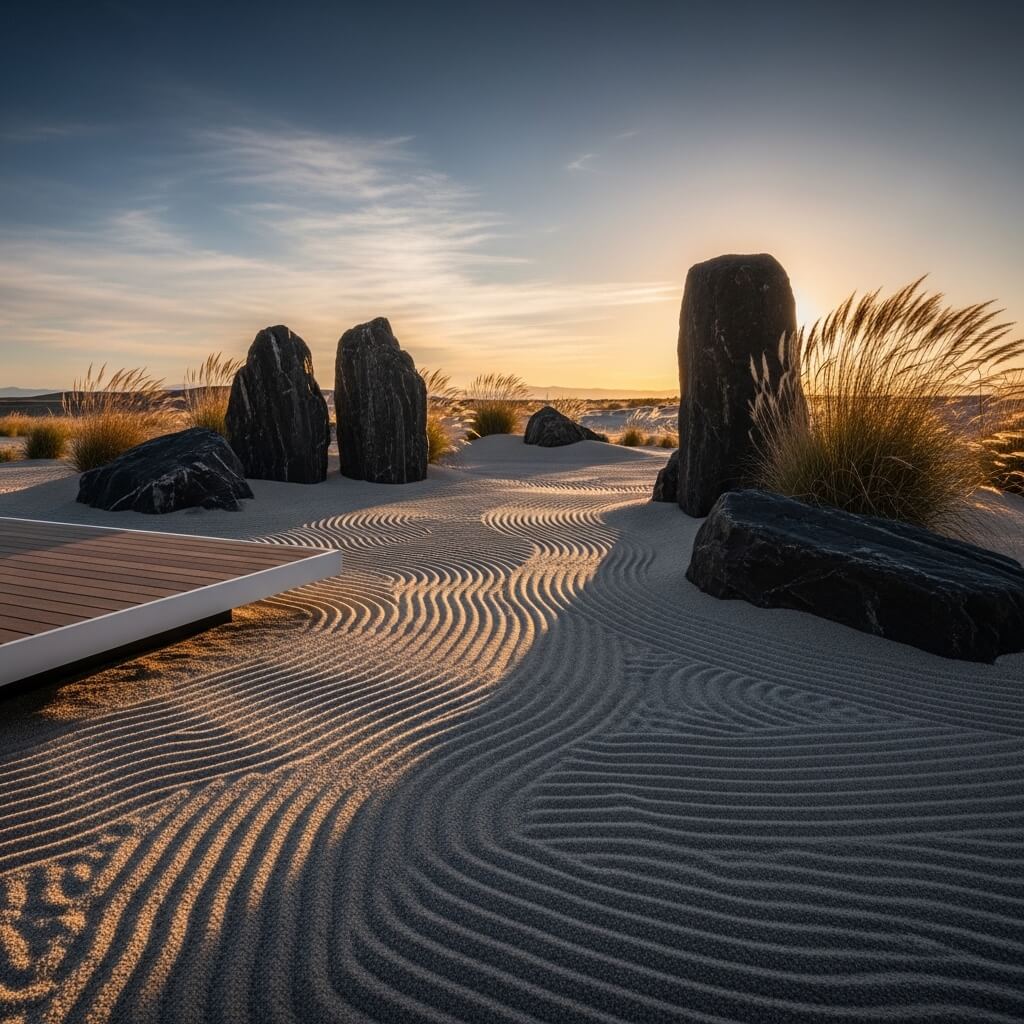
Who says Zen gardens need to be lush and green? A desert-style Zen garden embraces minimalism through necessity, using drought-tolerant plants and materials that thrive in arid conditions. Perfect for xeriscaping or anyone living where water conservation matters (so, basically everywhere these days).
I actually prefer desert Zen gardens for their low-maintenance reality. You get all the meditative benefits without the constant watering, weeding, and fussing that traditional gardens demand. Plus, there’s something powerful about the stark beauty of desert landscapes.
Desert Garden Elements
Build your design around:
- Succulents and cacti (agave, barrel cactus, prickly pear)
- Ornamental grasses that need minimal water
- Large rocks and boulders in warm earth tones
- Decomposed granite or crushed rock instead of traditional gravel
- Desert-appropriate accent plants like yucca or sage
The color palette shifts from the typical greens and grays to warmer tones—rust, terra cotta, sand, warm grays, and touches of silver from desert plants. It’s a completely different aesthetic that still delivers that contemplative atmosphere.
Embracing Negative Space
Desert Zen gardens really emphasize empty space. Don’t be tempted to fill every gap—let the openness breathe. Space between elements becomes just as important as the elements themselves. This actually aligns perfectly with traditional Zen philosophy; you’re just expressing it through a different cultural lens.
Add a few carefully chosen decorative elements like weathered wood sculptures, metal art pieces that develop natural patina, or smooth river stones in contrasting colors. Keep it sparse, keep it intentional, and let the austere beauty speak for itself.
Zen Garden Pathway with Lantern Lights
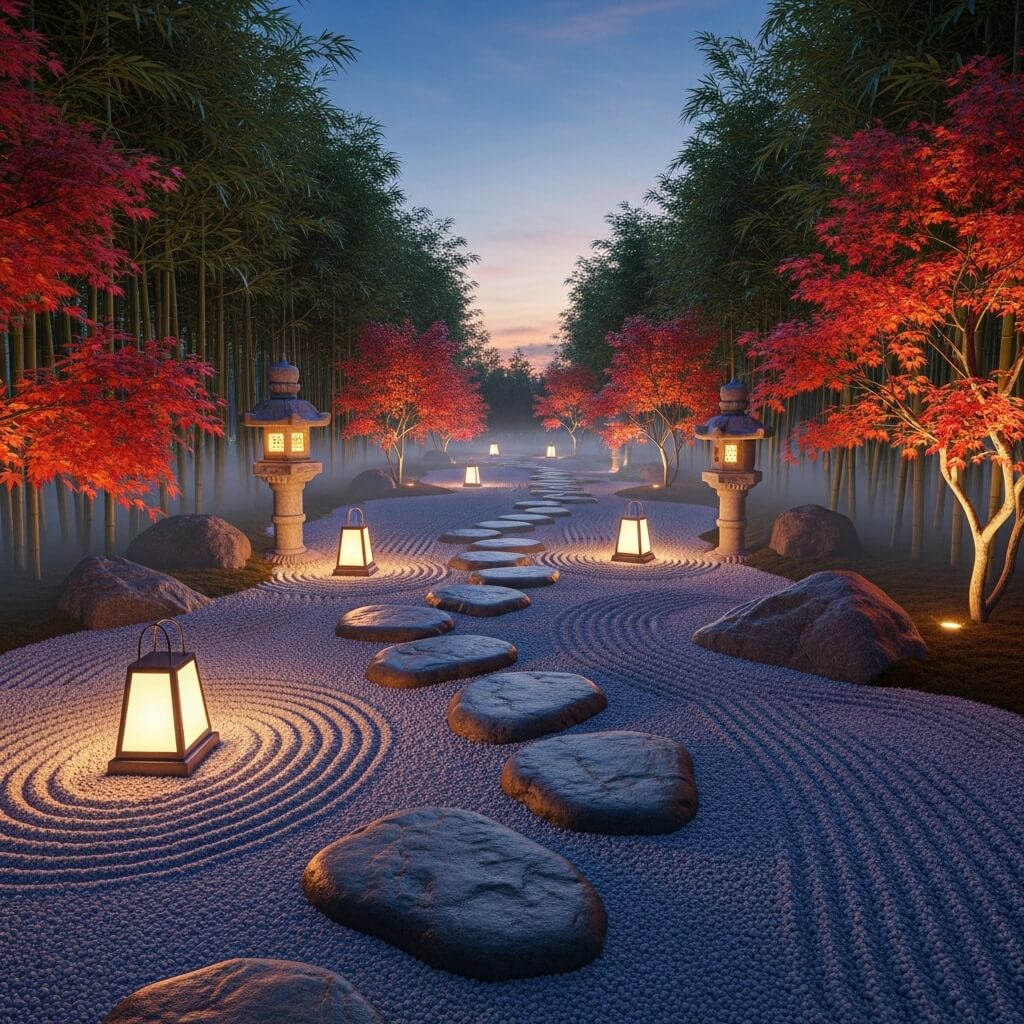
There’s something almost magical about walking a gently lit garden path as evening settles in. A Zen garden pathway with lantern lights transforms your space into an enchanting nighttime retreat—functional and beautiful in equal measure.
The pathway serves dual purposes: it provides practical navigation through your garden while also creating a meditative walking experience. In Japanese tradition, walking meditation is a legitimate practice, and a thoughtfully designed pathway facilitates that mindful movement.
Pathway Materials
Choose materials that feel good underfoot and complement your overall design:
- Stepping stones set in gravel or moss
- Crushed granite or fine gravel for a softer walking surface
- Wood planks or boardwalks through planted areas
- Natural stone slabs with irregular edges
- Combination pathways mixing different materials
The pathway shouldn’t be straight—curves and gentle turns create visual interest and slow down the walking pace, encouraging mindfulness. Position stepping stones so your natural gait flows comfortably without rushing.
Lantern Lighting
Traditional stone lanterns (tōrō) are gorgeous but can be pricey. Fortunately, you’ve got options:
- Authentic stone lanterns (investment pieces)
- Resin replicas (budget-friendly alternatives)
- Modern LED lanterns in Asian-inspired designs
- Solar-powered pathway lights with Japanese aesthetic
- Simple paper lanterns strung along the route
Warm-toned lighting works best—avoid harsh white LEDs that destroy the ambiance. You want soft, gentle illumination that guides without overwhelming. The shadows are just as important as the lit areas, creating depth and mystery.
Position lights to highlight key features along your path—a beautiful rock formation, interesting tree trunk, water feature, or seating area. The journey should reveal different vistas and focal points, making each walk a discovery experience even when you know the route by heart.
Also Read: 10 Incredible Modern Garden Design Ideas for Green Retreats
Tiny Patio Zen Garden with Bonsai Trees
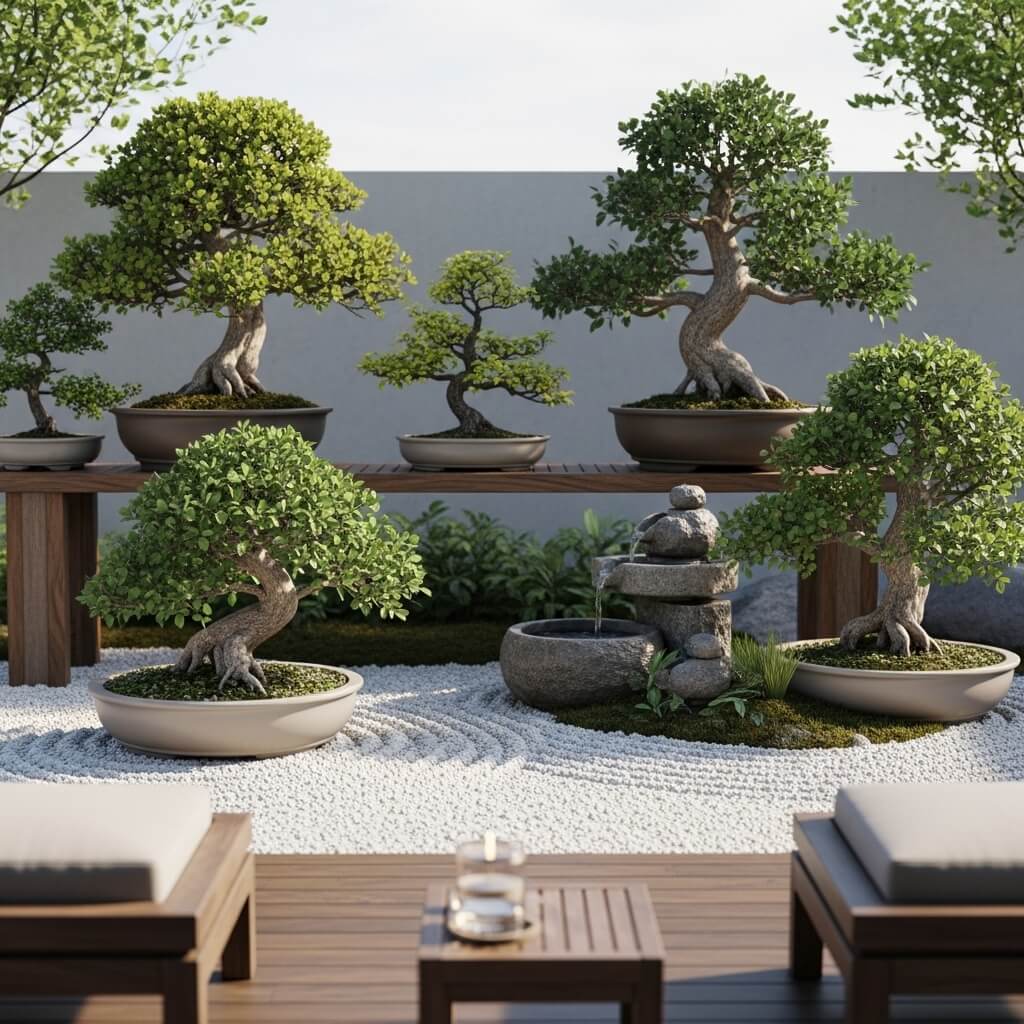
Last but definitely not least, let’s talk about maximizing those tiny patio spaces with the ultimate symbol of patience and artistry—bonsai trees. A tiny patio Zen garden centered around bonsai creates a living art gallery that evolves with the seasons.
Bonsai trees represent the perfect intersection of nature and human cultivation. They’re literally decades of effort condensed into a miniature form. Yeah, they’re high maintenance, but they’re also incredibly rewarding for anyone willing to invest the time.
Bonsai Selection
Choose varieties that work with your climate and light conditions:
- Juniper (forgiving for beginners, outdoor hardy)
- Japanese maple (stunning color, moderate care)
- Ficus (good for indoors or warm climates)
- Pine varieties (classic look, requires experience)
- Flowering trees like azalea or cherry (spectacular seasonal displays)
Start with one or two trees rather than a whole collection. Bonsai demand attention—watering, pruning, wiring, repotting. Better to care for a few properly than neglect many.
Patio Design Integration
Create display areas at varying heights using:
- Traditional bonsai display tables
- Repurposed wooden crates or benches
- Stacked stone platforms
- Wall-mounted shelves for smaller specimens
Surround your bonsai with complementary elements: fine gravel ground cover, accent rocks, maybe a small water feature or stone lantern. Keep the backdrop simple so your trees remain the focal point. A plain wall, bamboo screen, or fabric panel works beautifully.
The Living Practice
Here’s the thing about bonsai—they’re not just decoration. Caring for them becomes a meditative practice itself. Trimming, wiring, studying growth patterns, adjusting seasonal care—it’s all part of the Zen experience. You’re not just creating a garden; you’re participating in an ancient art form that teaches patience, observation, and acceptance.
I won’t lie and say bonsai are easy. They’re absolutely not. But for people who appreciate the journey as much as the destination, they’re incredibly fulfilling. Your tiny patio garden becomes a living testament to dedication and mindful cultivation :/
Bringing It All Together
So there you have it—ten completely different approaches to creating your own luxury Zen garden, from sprawling koi ponds to tabletop sand trays. The beauty of Zen garden design is that there’s genuinely no single “right” way to do it. Whether you’ve got a massive backyard or a modest balcony, unlimited budget or creative constraints, there’s a design that’ll work for your space and lifestyle.
The common thread running through all these designs? Intentionality. Every element serves a purpose, whether practical or contemplative. Nothing’s random, nothing’s excessive, and everything contributes to that sense of peaceful calm we’re all desperately seeking.
My honest advice? Start small. Don’t try to build the perfect Zen garden all at once. Choose one design that speaks to you, start with the basics, and let it evolve naturally. Gardens are living, changing spaces—they’re never truly “finished,” and that’s actually the point. The process of creating and maintaining your Zen garden is where the real meditation happens.
You don’t need to be a Buddhist monk, a master gardener, or ridiculously wealthy to create a space that brings genuine peace and beauty into your life. You just need a vision, some basic materials, and the willingness to slow down long enough to actually appreciate what you’re creating.
Now stop reading and go start planning your own dreamy calm landscape. Your future zen self will thank you for it.