10 Incredible Modern Garden Design Ideas for Green Retreats
- Garden Design
 Ben
Ben- 0
- 37 minutes read
You know that feeling when you step outside and your backyard looks about as inspiring as a parking lot? Yeah, I’ve been there. Your outdoor space should make you want to grab your morning coffee and actually linger, not rush back inside. That’s where modern garden design swoops in to save the day—transforming boring yards into gorgeous green retreats that’ll make your neighbors seriously jealous.
I’ve spent the last few years obsessing over garden transformations (some might call it an unhealthy addiction to landscape design videos, but who’s counting?), and I’ve rounded up ten stunning modern garden design ideas that actually work. These aren’t your grandma’s rose gardens—we’re talking sleek, contemporary spaces that blend functionality with jaw-dropping aesthetics. Ready to turn your outdoor area into the retreat you’ve always dreamed of? Let’s get into it.
Minimal Concrete Courtyard Garden
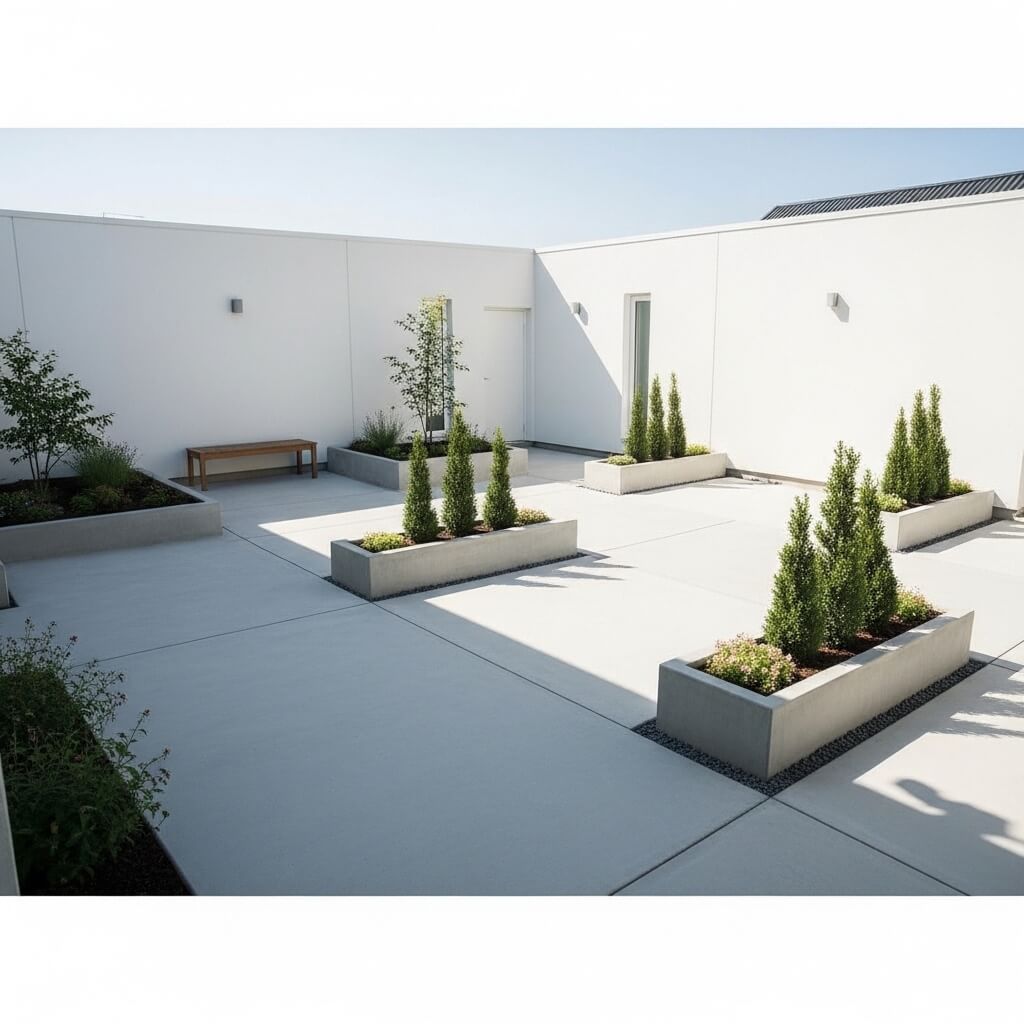
Here’s the thing about minimalism—it’s way harder than it looks. Anyone can throw a bunch of stuff together, but creating a space that says “less is more” while still feeling warm and inviting? That takes skill.
I’m absolutely obsessed with minimal concrete courtyard gardens because they prove you don’t need a massive space or endless plants to create impact. The clean lines of poured concrete paired with strategically placed greenery creates this beautiful contrast that feels both modern and surprisingly zen. Think smooth concrete pavers interrupted by geometric planting beds filled with architectural plants like ornamental grasses or sculptural succulents.
What makes this design work so well? The concrete acts as a neutral canvas that lets your plants become living art pieces. I love using concrete in different finishes too—polished concrete near seating areas, brushed concrete for pathways, and maybe some exposed aggregate to add texture without breaking the minimalist vibe.
Key Elements for Your Minimal Concrete Courtyard
When you’re planning this style, focus on these essentials:
- Large format concrete pavers or poured slabs for that seamless, contemporary look
- Strategic plant placement rather than overwhelming greenery—less really is more here
- Integrated seating like concrete benches that flow naturally from the hardscaping
- Subtle lighting (think recessed LED strips along edges or up-lighting for plants)
- One standout feature like a single specimen tree or a sleek water feature
The beauty of this design lies in its maintenance factor. Concrete doesn’t need weeding, and with fewer plants, you’ll spend less time gardening and more time actually enjoying your space. IMO, that’s a win-win. 🙂
Vertical Green Wall Balcony Garden
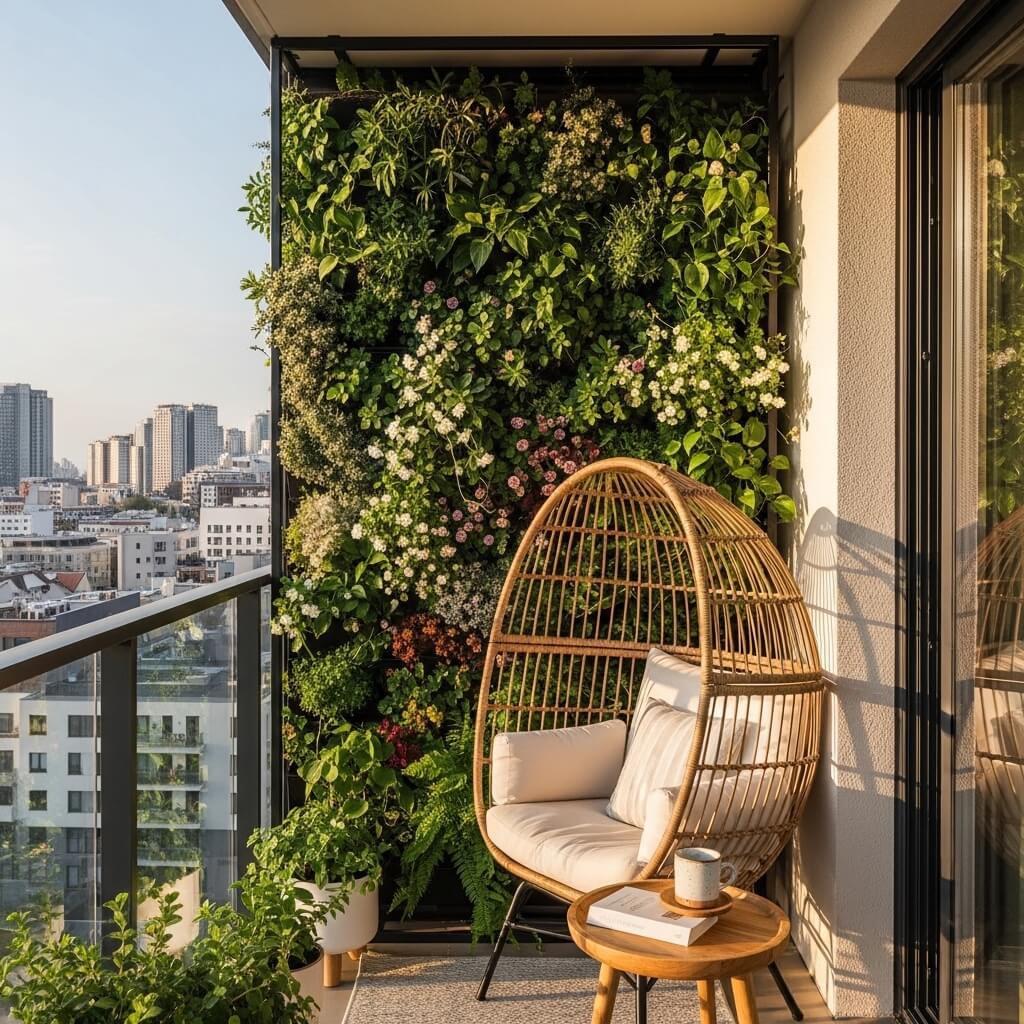
Got a tiny balcony that’s currently serving as your bike graveyard? Time to reclaim that space and go vertical, my friend.
Vertical green walls completely changed my perspective on small-space gardening. I used to think you needed acres of land to create a proper garden, but vertical gardens proved me dead wrong. These living walls transform blank vertical surfaces into lush, breathing installations that pack serious visual punch.
The practical benefits blow my mind every time. Vertical gardens improve air quality, provide natural insulation, reduce noise pollution, and create privacy—all while looking absolutely stunning. You’ll essentially build a wall of plants using modular systems, felt pockets, or even repurposed pallets if you’re feeling crafty.
Making Your Vertical Garden Thrive
Here’s what I’ve learned from both successes and spectacular failures (RIP to my first attempt that turned brown in two weeks):
- Choose the right irrigation system—drip irrigation or self-watering panels save you from constant hand-watering
- Select plants suited to your light conditions—ferns and pothos for shade, succulents and herbs for sun
- Start small and expand rather than covering an entire wall immediately
- Consider weight—especially important for balconies with load restrictions
- Mix textures and colors for visual interest throughout the seasons
I’ve found that combining edible plants like strawberries and herbs with ornamentals creates a vertical garden that’s both beautiful and functional. Nothing beats snipping fresh basil from your living wall while you’re grilling on a summer evening.
Scandinavian Style Outdoor Garden Space
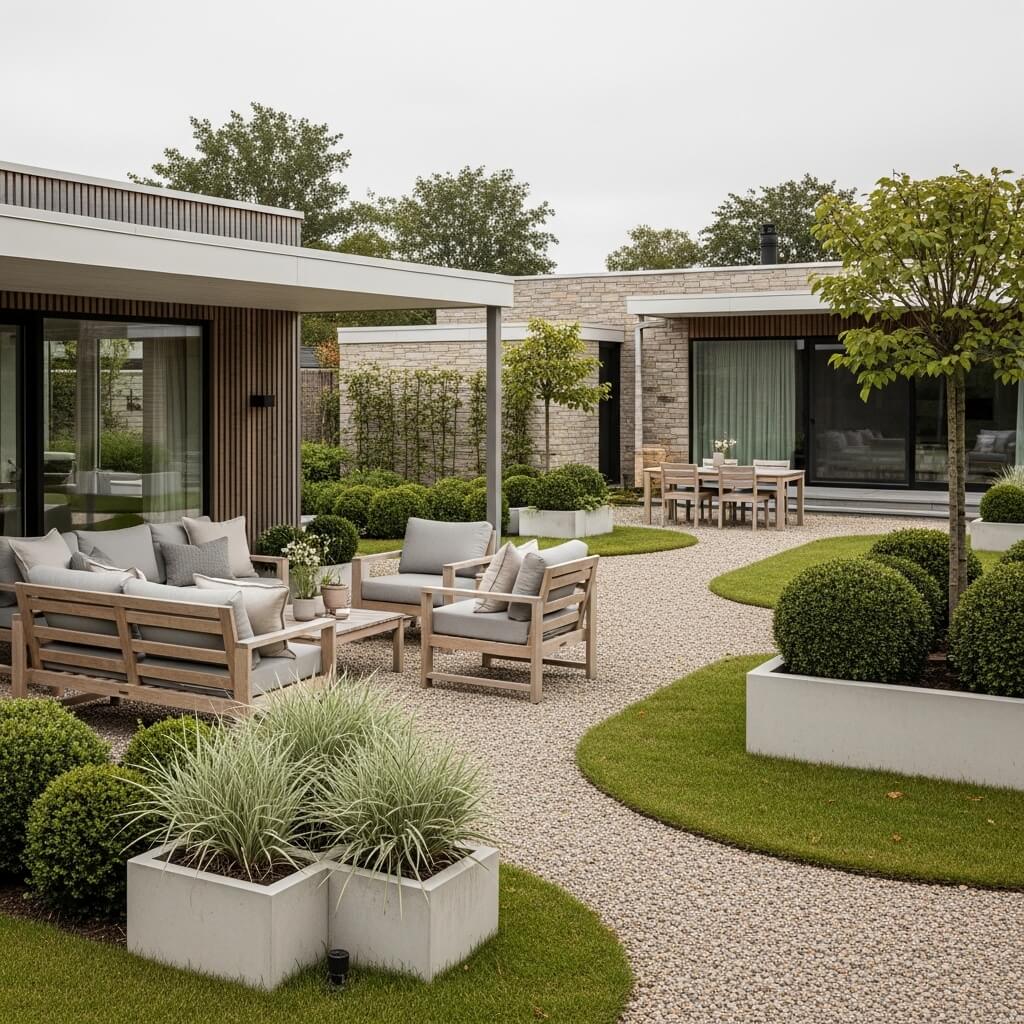
Scandinavian design nails the balance between cozy and minimal in a way that makes everything else look try-hard. When you apply those same principles outdoors, you get spaces that feel effortlessly stylish and incredibly livable.
The Scandinavian approach to garden design focuses on natural materials, neutral color palettes, and functional simplicity. We’re talking light-colored wood decking, white or gray furnishings, and plants that lean toward the understated rather than tropical explosion. The result? Outdoor spaces that feel like natural extensions of modern interiors.
I love how this style embraces the concept of “hygge” outdoors—creating that warm, cozy feeling even in open-air spaces. You’ll achieve this through layers of soft textiles (think outdoor cushions and throw blankets), warm lighting, and intimate seating arrangements that encourage connection.
Creating Your Scandi Garden Sanctuary
The Scandinavian outdoor aesthetic comes together through these core elements:
- Light wood tones—birch, ash, or light oak for decking and furniture
- Monochromatic planting schemes—whites, greens, and soft lavenders
- Clean-lined furniture in weather-resistant materials
- Cozy textiles that add warmth without clutter
- Fire elements like outdoor candles or a simple fire bowl
- Natural stone or gravel for pathways and borders
The genius of Scandinavian garden design is that it works beautifully in small spaces. You don’t need a sprawling lawn to capture that Nordic vibe—even a compact patio can embody these principles and feel like a peaceful retreat.
Also Read: 10 Dreamy Cottage Garden Design Ideas for Lush Green Spaces
Luxury Modern Poolside Garden Design
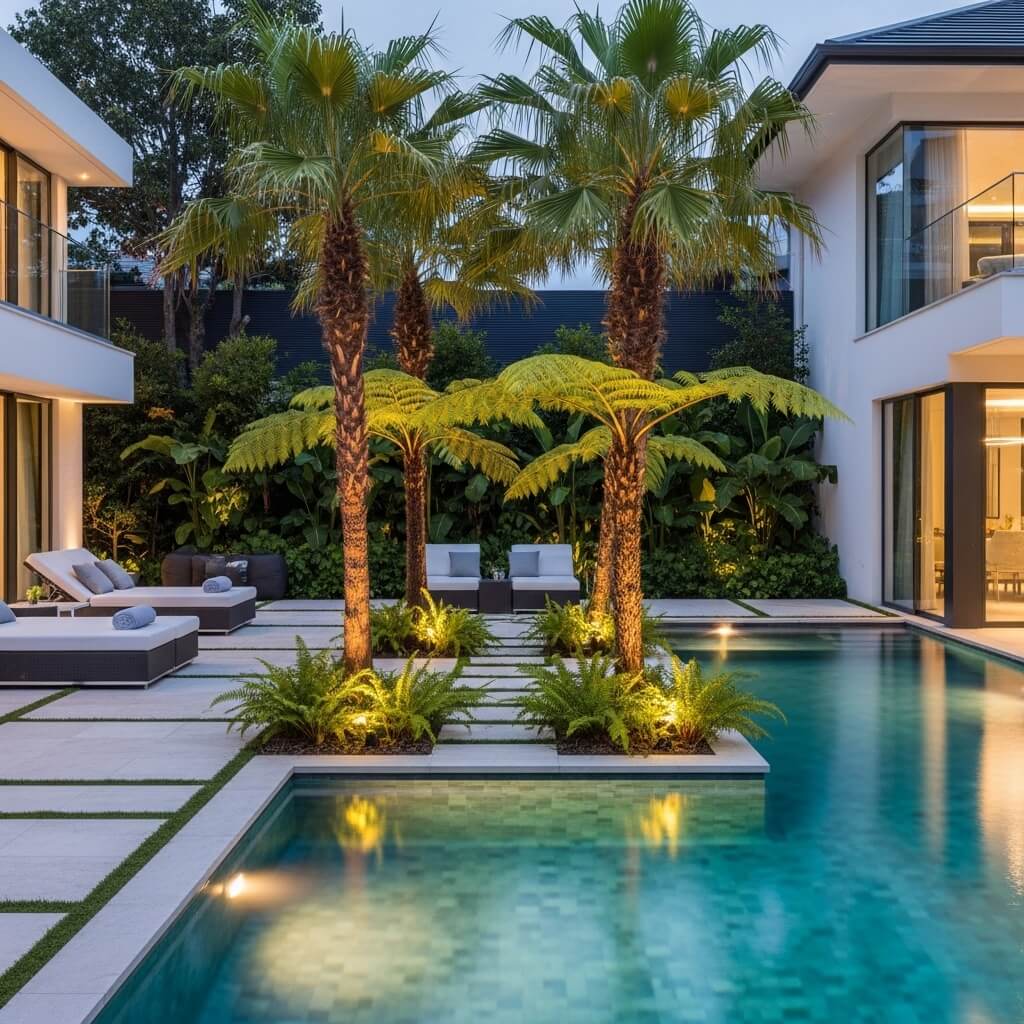
Let’s be real—poolside gardens separate the amateurs from the design pros. Anyone can plunk some loungers around a pool and call it a day, but creating a cohesive poolside landscape that feels resort-worthy? That’s next-level stuff.
Modern luxury poolside gardens blend hardscaping, lush planting, and high-end amenities into spaces that make you feel like you’re perpetually on vacation. I’m talking about the kind of setup where you actually want to Instagram every angle (and you absolutely should, because why not?).
The key to nailing this look involves treating the pool as the centerpiece while everything else supports and enhances it. You’ll want clean architectural plants that won’t drop excessive leaves into the water, sophisticated paving materials that don’t get scorching hot underfoot, and carefully zoned areas for lounging, dining, and shade.
Luxury Poolside Design Must-Haves
When I dream about my ideal poolside garden (which, FYI, is more often than I’d like to admit), these elements always make the cut:
- Premium decking materials—think composite decking, large-format porcelain pavers, or smooth concrete
- Strategic palm trees or architectural plants for that resort vibe
- Built-in seating or sunken conversation pits
- Outdoor kitchen or bar area for seamless entertaining
- Layered lighting—underwater pool lights, landscape uplighting, and ambient string lights
- Privacy screening through modern fencing, hedges, or pergolas with climbing plants
- Water features that complement (not compete with) the pool
I’ve noticed that the most successful luxury poolside gardens create distinct zones. You’ll have your sun-worship zone with loungers, a shaded retreat for escaping the heat, and a social area for evening gatherings. This zoning makes the space infinitely more functional and sophisticated.
Small Urban Modern Backyard Oasis
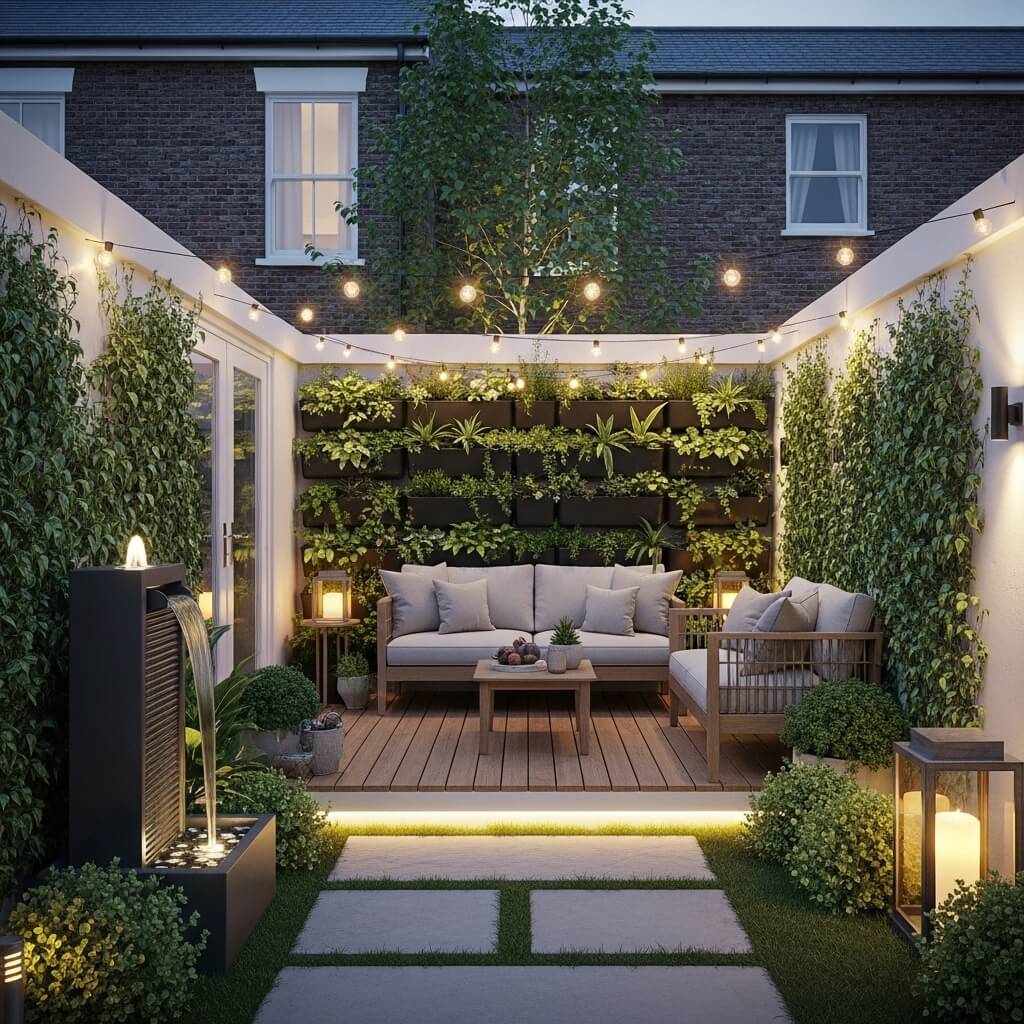
Living in a city often means dealing with a backyard the size of a postage stamp. But here’s what I’ve learned—small spaces force creativity, and creative solutions often lead to the most interesting designs.
Small urban backyards demand smart space planning and multi-functional elements. Every square foot needs to earn its keep. That random corner? Perfect for a vertical herb garden. That narrow side strip? Hello, sleek water feature that drowns out city noise. Urban gardens prove that you absolutely don’t need sprawling acreage to create an oasis.
The modern approach to small urban gardens emphasizes clean lines, limited color palettes, and clever built-ins that maximize usability. I’m obsessed with how modern design principles actually favor small spaces—the minimalist aesthetic prevents tiny gardens from feeling cluttered or chaotic.
Maximizing Your Small Urban Space
Transform your compact backyard with these strategies:
- Built-in bench seating with hidden storage underneath
- Vertical elements like trellises, green walls, or tall narrow trees that draw the eye up
- Mirrors strategically placed to create the illusion of more space (yes, really!)
- Multi-level design using raised planters or split-level decking
- Foldable or stackable furniture that you can tuck away when hosting larger groups
- One bold focal point rather than competing elements
- Container gardens that you can rearrange seasonally
I’ve found that limiting your plant palette to maybe three or four types creates cohesion in small spaces. When you’ve got fifteen different plant varieties competing for attention in a tiny area, it reads as messy rather than lush. Pick a few favorites and repeat them throughout the space for a polished, intentional look.
Zen Inspired Rock and Water Garden
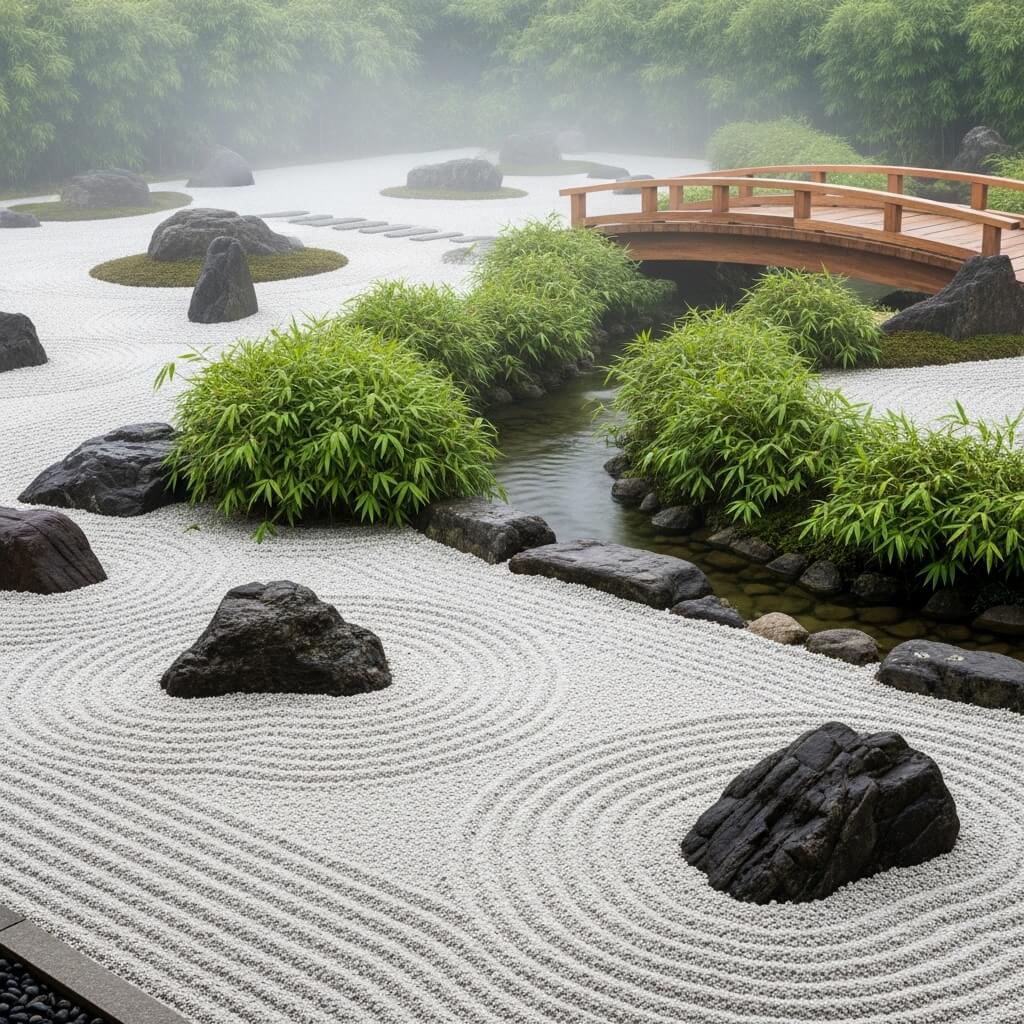
Ever wondered why Japanese gardens feel so impossibly peaceful? There’s actual design philosophy behind that tranquility, and you can absolutely borrow those principles for your own space.
Zen-inspired gardens use rocks, water, and carefully selected plants to create contemplative spaces that encourage mindfulness. These gardens aren’t about abundance—they’re about intention. Every rock placement, every ripple in the water, every pruned branch serves a purpose.
I’ll be honest, I was skeptical about rock gardens at first (rocks? In a garden? Riveting stuff :/). But then I experienced a really well-designed one and completely got it. The sound of water trickling over stones, the textural contrast between smooth pebbles and rough boulders, the simplicity that somehow reads as profound rather than boring—it all clicked.
Elements of Your Zen Garden Retreat
Creating a Zen-inspired space requires these thoughtful components:
- Water features—bamboo fountains, koi ponds, or simple stone basins with trickling water
- Carefully selected rocks and boulders—placement matters more than quantity
- Raked gravel or sand representing water and encouraging the meditative act of raking
- Minimalist planting—Japanese maples, bamboo, moss, and sculptural evergreens
- Stone pathways that meander rather than march straight
- Simple seating like a wooden bench or flat meditation stone
- Negative space that gives the eye (and mind) room to rest
The magic of Zen gardens lies in their restraint. You’re not trying to fill every inch with something—the empty spaces matter just as much as the filled ones. This design philosophy creates gardens that actually reduce stress rather than adding to your weekend to-do list.
Also Read: 10 Relaxing Garden Landscape Design Ideas for Cozy Outdoors
Geometric Landscape Garden Layout
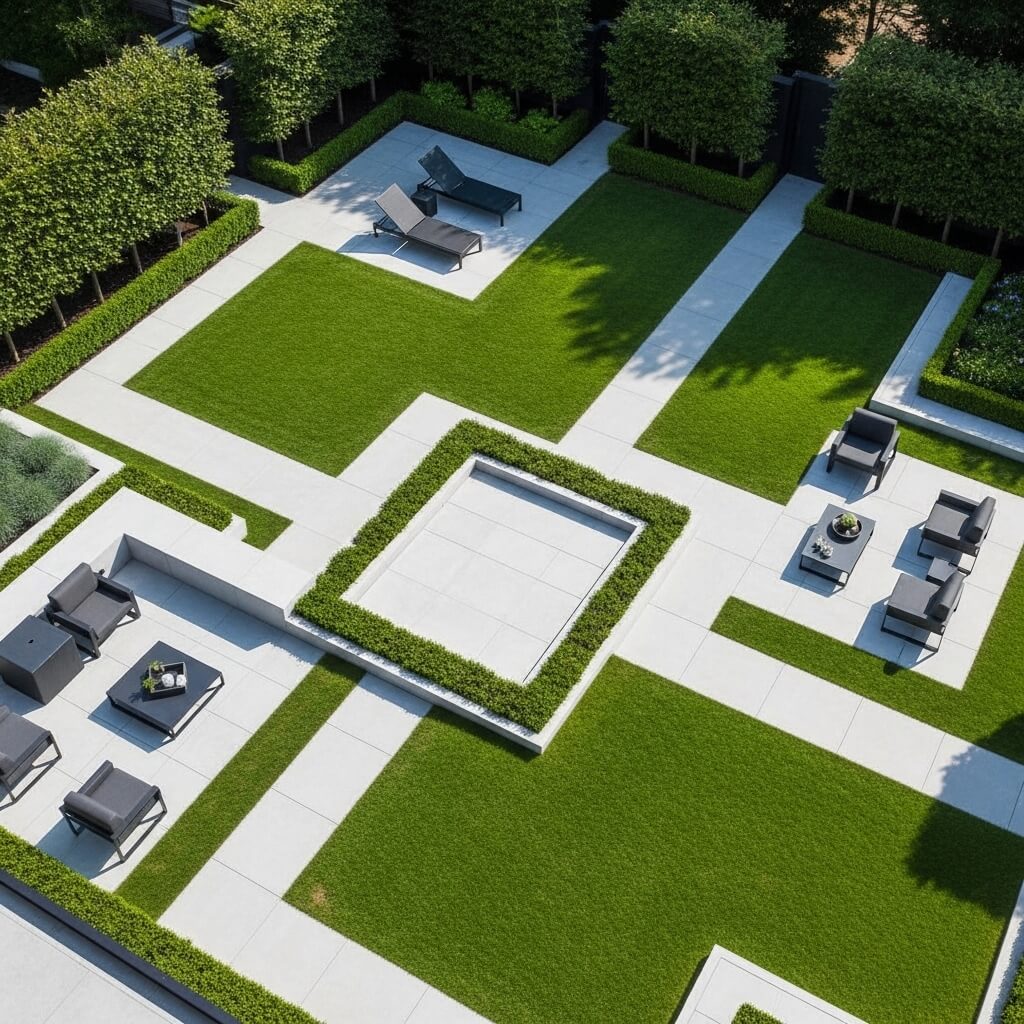
If you’re the type of person who gets weirdly satisfied by perfectly straight lines and symmetrical patterns, geometric garden design will speak to your soul.
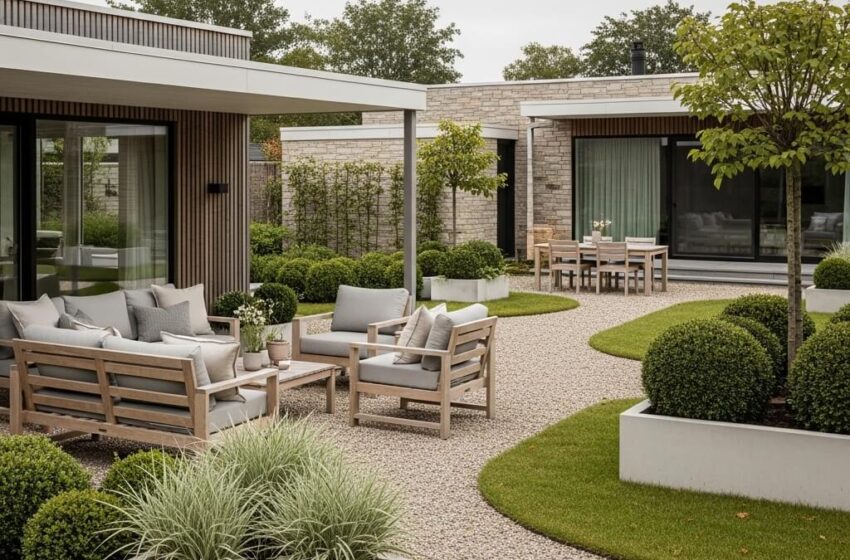
Geometric landscapes use bold shapes, crisp edges, and mathematical precision to create gardens that feel intentional and contemporary. We’re talking circular lawns surrounded by straight-edged planting beds, triangular raised planters, rectangular water features, and pathways that intersect at deliberate angles.
What I love about geometric garden design is how it imposes order on the inherent wildness of nature. You get all the beauty and life of plants, but within a framework that feels controlled and modern. It’s particularly stunning when viewed from above—second-story windows or balconies reveal the full geometric impact.
Designing Your Geometric Garden
Pull off this architectural approach with these key strategies:
- Repetition of shapes—if you use circles, use them throughout rather than mixing every geometric shape possible
- Symmetry and balance—even if it’s not perfectly symmetrical, the visual weight should feel balanced
- Crisp edging—metal or concrete edging keeps those clean lines sharp
- Hardscaping as framework—use paving, decking, or gravel to define your geometric shapes
- Structured plants—boxwood spheres, clipped hedges, and architectural plants reinforce the geometry
- Contrasting materials that highlight the boundaries between shapes
I’ve seen geometric gardens that use nothing more than grass, gravel, and a single type of hedge to create stunning impact. The design itself becomes the star, proving you don’t need a massive plant collection to create a memorable garden.
Modern Desert Style Low Maintenance Garden
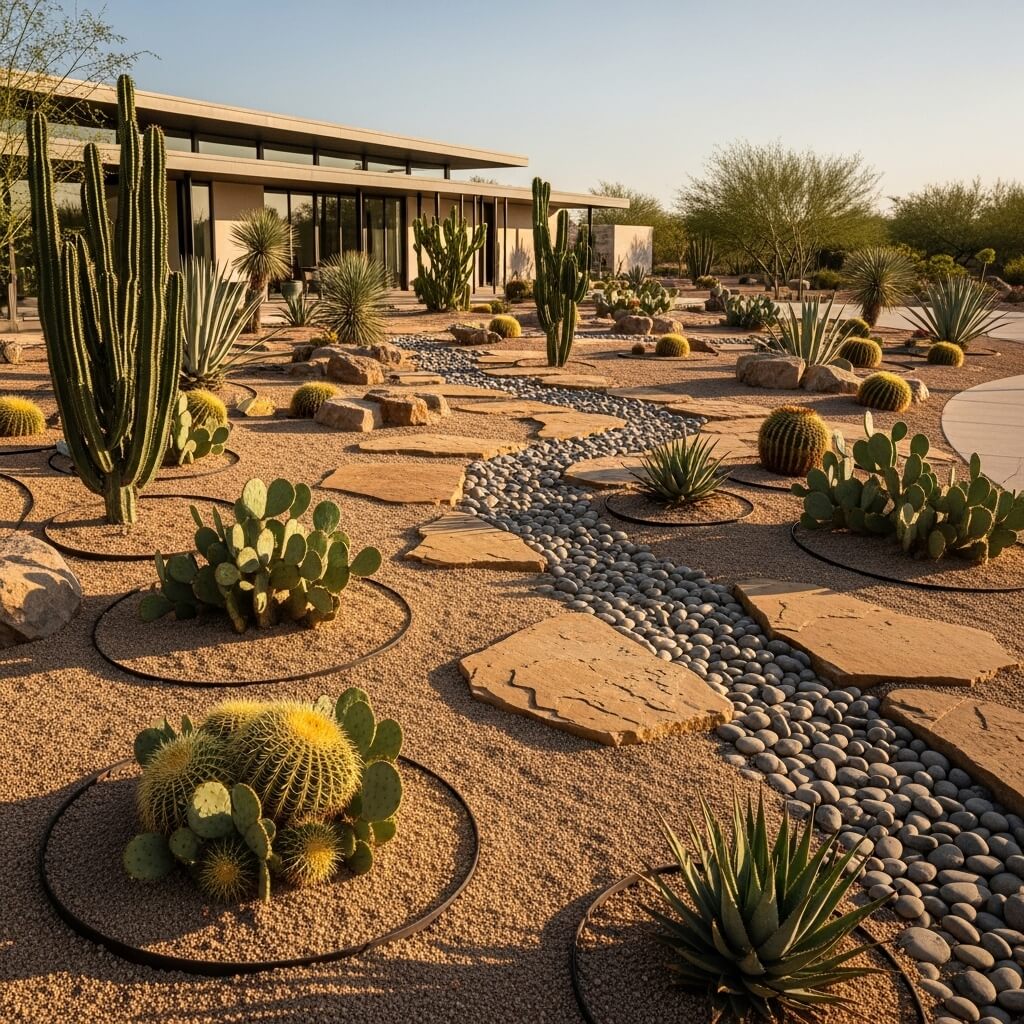
Can we talk about how perfect desert landscaping is for our busy, water-conscious modern lives? Because honestly, this style nails it.
Desert gardens embrace drought-tolerant plants, natural stone, and minimal irrigation to create landscapes that look intentionally designed rather than accidentally neglected. Think sculptural cacti, flowing ornamental grasses, colorful succulents, and maybe some striking desert blooms like agave or yucca.
I converted part of my garden to a desert-style section three years ago, and I’ve never looked back. The maintenance requirements dropped to almost nothing, my water bill thanked me, and the space actually looks better year-round than my high-maintenance beds ever did. The modern desert aesthetic proves that sustainable and stunning aren’t mutually exclusive.
Creating Your Desert Garden Paradise
Nail the modern desert look with these essential elements:
- Drought-tolerant plant palette—succulents, cacti, agaves, native grasses, and desert wildflowers
- Decomposed granite or gravel as your primary ground cover
- Large decorative boulders as focal points and natural sculptures
- Minimal irrigation—drip systems on timers rather than sprinklers
- Warm color palette—terracotta containers, rust-colored steel planters, warm stone
- Strategic shade structures like modern pergolas or shade sails
- Container groupings for easy rearranging and visual impact
The beauty of desert-style gardens is that they actually improve with age. Those succulents and cacti develop character and impressive size over time, while your maintenance requirements stay refreshingly low. Plus, during drought conditions while everyone else’s lawn turns brown, your desert garden keeps looking intentional and gorgeous.
Cozy Modern Firepit Garden Seating Area
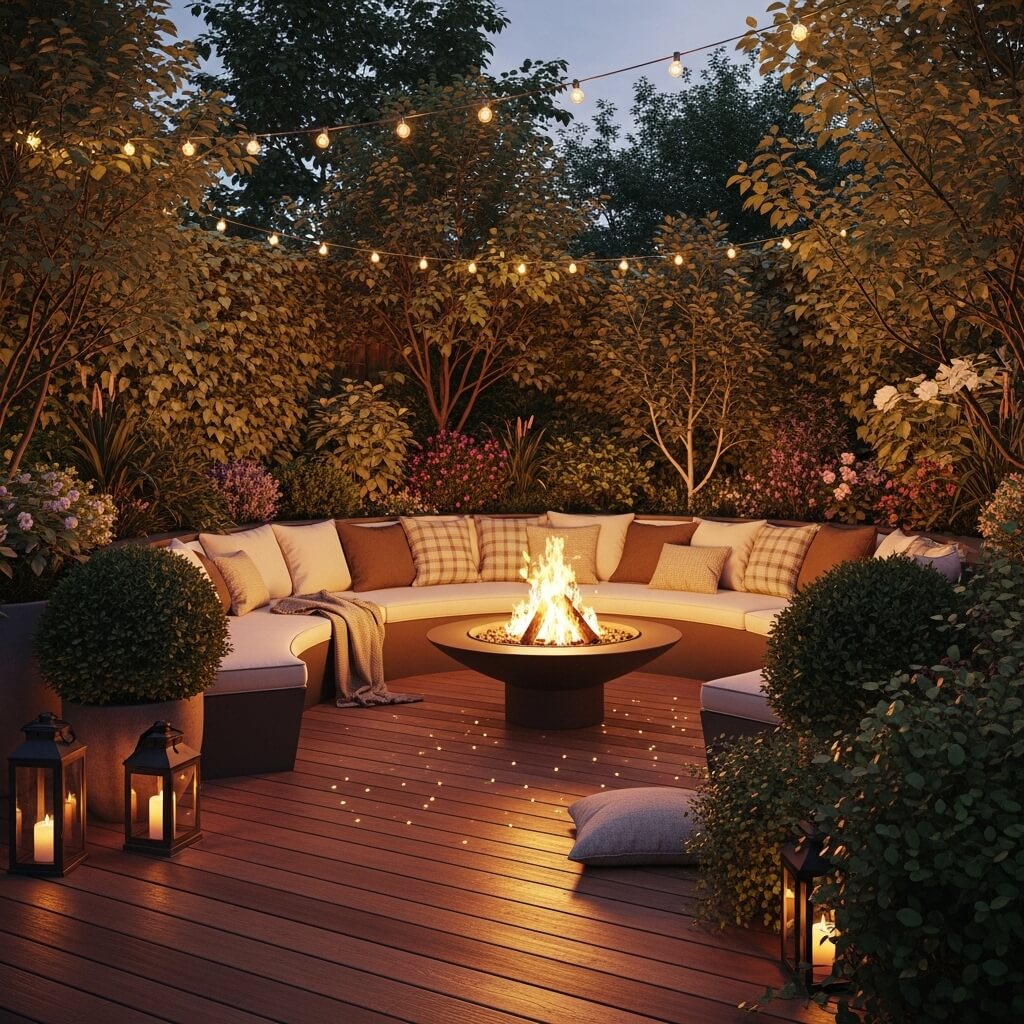
Nothing—and I mean nothing—extends your outdoor season quite like a firepit. Why should summer have all the fun?
Modern firepit gardens create year-round gathering spaces that become the heart of your outdoor area. These aren’t those questionable portable firepits that look like you dragged them from a campsite. We’re talking about sleek, integrated fire features surrounded by comfortable seating that makes you want to linger long after the sun sets.
I’ve hosted countless evenings around my firepit, and it never fails to elevate the gathering. There’s something primal and magical about fire that turns casual hangouts into memorable experiences. Add the right seating, lighting, and ambiance, and you’ve created the kind of space people will actually want to spend time in.
Designing Your Firepit Gathering Space
Create the ultimate cozy outdoor retreat with these components:
- The fire feature itself—built-in fire pit, modern fire table, or linear gas fire feature
- Comfortable, weather-resistant seating arranged to encourage conversation
- Intimate scale—firepit areas work best when they feel enclosed and cozy
- Soft layers—outdoor cushions, throw pillows, and blankets for chilly evenings
- Ambient lighting—string lights, lanterns, or low-voltage landscape lights
- Heat-resistant materials for surfaces near the fire
- Storage solutions for firewood, cushions, or fire accessories
- Nearby beverage station because no one wants to trek inside mid-conversation
The seating arrangement makes or breaks firepit spaces. I prefer curved or circular layouts that create intimacy and ensure everyone can see each other. Built-in bench seating works beautifully, but you can also achieve this with modular outdoor furniture arranged thoughtfully.
Also Read: 10 Peaceful Japanese Garden Design Ideas for Outdoor Bliss
Floating Deck Garden with Green Borders
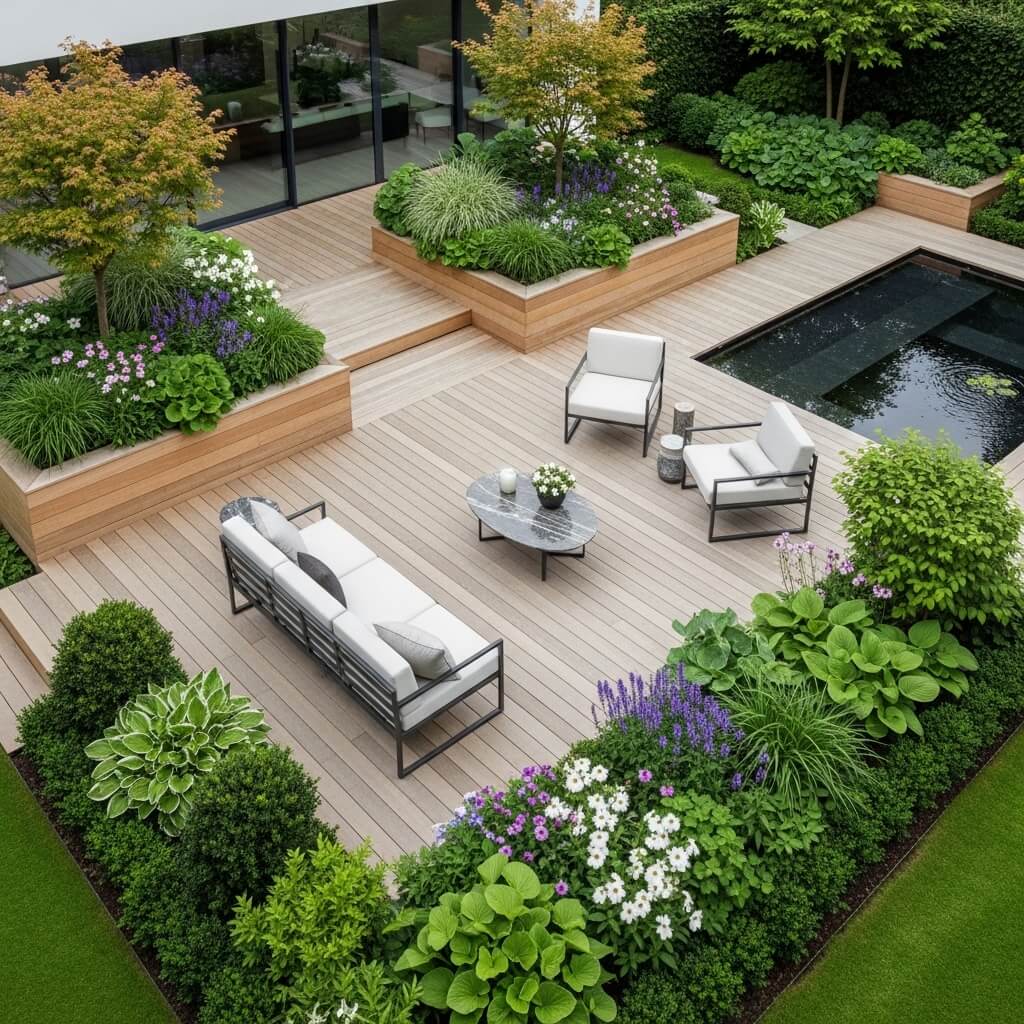
Floating decks might be my favorite modern garden hack for dealing with tricky yards. They create level, usable spaces without the massive excavation and expense of traditional decks or patios.
Floating decks sit directly on the ground (on properly prepared foundations, of course) rather than being attached to your house or mounted on tall posts. When you surround them with lush green borders, you get this amazing effect where the deck appears to float within the garden like a wooden island.
This design works brilliantly on sloped yards, areas with poor drainage, or spaces where you want to create distinct outdoor rooms. I love how floating decks can be modular—you can create one large platform or several smaller deck “pods” at different levels, each surrounded by planting beds.
Building Your Floating Deck Garden
Make this design work with these important elements:
- Proper foundation—concrete deck blocks, gravel base, or ground-level supports
- Quality decking material—composite decking or properly sealed hardwood
- Generous green borders—at least 2-3 feet of planted area surrounding the deck
- Varied plant heights in borders for depth and visual interest
- Integration elements like built-in planters or cutouts for trees
- Level changes if space allows—multiple floating decks at different heights
- Lighting—LED strip lights under deck edges create that floating effect at night
- Furniture that complements rather than overwhelms the deck size
The planting borders make all the difference in selling the “floating” effect. I like using a mix of ornamental grasses, low groundcovers, and taller accent plants to create layers that partially obscure the deck edges. This integration makes the deck feel like it belongs in the garden rather than being plopped on top of it.
Wrapping This Up
Look, transforming your outdoor space doesn’t require a landscape architecture degree or a lottery win (though neither would hurt). These ten modern garden design ideas prove that with thoughtful planning and smart choices, you can create a legitimate retreat right in your own backyard.
Whether you’re drawn to the stark simplicity of minimal concrete courtyards, the lush abundance of vertical gardens, or the year-round appeal of cozy firepit areas, there’s a modern garden style that’ll match your lifestyle and space. The key is choosing designs that resonate with how you actually want to use your outdoor area.
I’ve learned that the best gardens grow from honest assessments of your needs, your climate, and your willingness to maintain things. A low-maintenance desert garden you’ll actually enjoy beats an elaborate traditional garden you’ll resent weeding every single time. Be realistic, be intentional, and most importantly, create spaces that make you want to be outside.
Your green retreat is waiting—you’ve just got to design it, build it, and then actually use it. Now get out there and make your neighbors wonder why their yard suddenly looks so boring. 🙂