10 Dreamy Cottage Garden Design Ideas for Lush Green Spaces
- Garden Design
 Ben
Ben- 0
- 37 minutes read
You know that feeling when you stumble upon a garden that looks like it jumped straight out of a fairy tale? The kind where flowers tumble over each other in a riot of color, where every pathway invites exploration, and where you can almost hear birds chirping in slow motion? That’s the magic of a cottage garden, and honestly, I’m obsessed.
I fell down the cottage garden rabbit hole about three years ago when my neighbor transformed her boring rectangular lawn into this enchanting wilderness. I’d catch myself staring over the fence like a total creep, wondering how she made everything look so effortlessly beautiful. Turns out, cottage gardens have this gorgeous “organized chaos” thing going on that requires way more planning than you’d think. But trust me—the payoff is absolutely worth it.
Let me walk you through ten cottage garden designs that’ll transform your outdoor space from “meh” to “magazine-worthy.” And no, you don’t need a sprawling estate to pull these off. Some of these ideas work brilliantly in tiny spaces, which is perfect because my own yard is about the size of a postage stamp.
Wildflower Cottage Bloom Garden
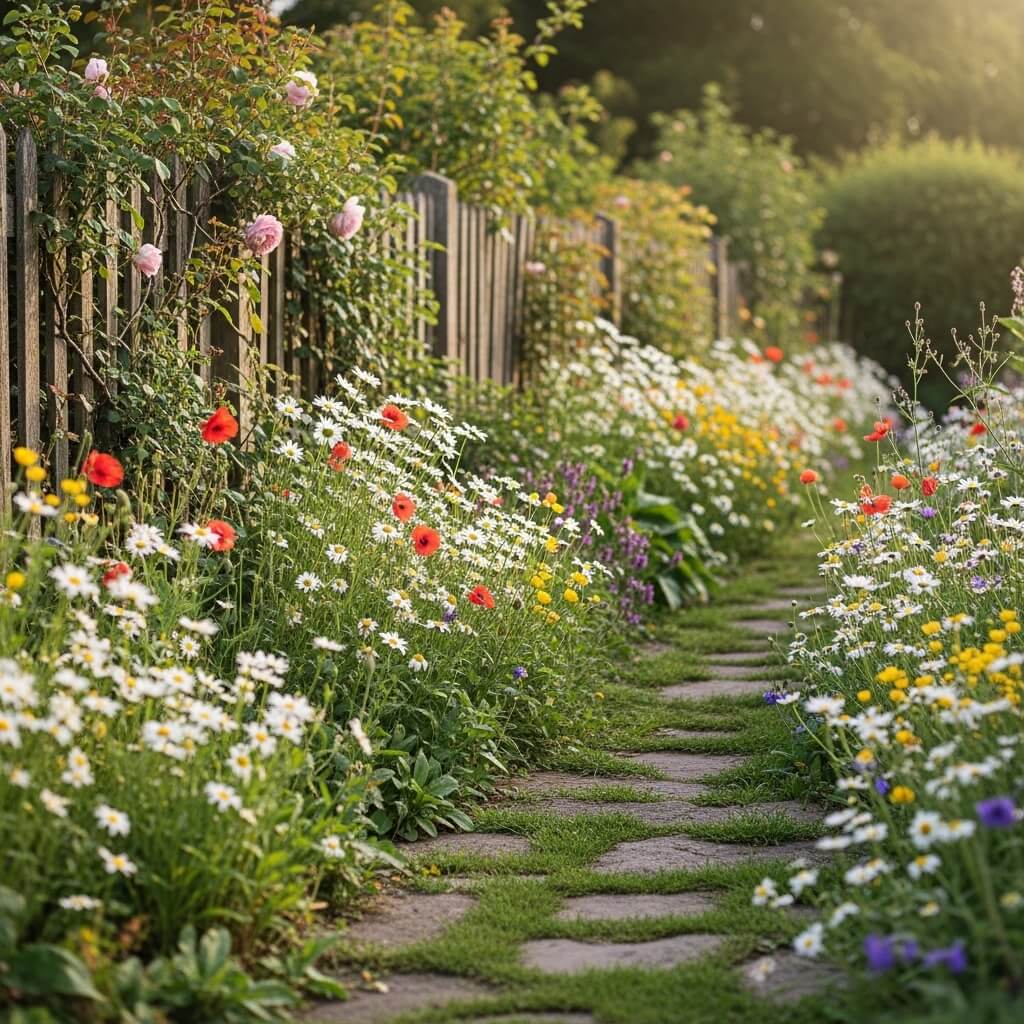
Ever wondered why wildflower gardens look so darn charming? It’s because they break all the “proper” gardening rules and somehow end up looking better for it.
I planted my first wildflower section two summers ago, and I’ll be honest—I totally underestimated how wild it would actually get. Wildflower gardens embrace natural disorder, featuring a mix of native blooms that attract pollinators like nobody’s business. We’re talking poppies, cornflowers, black-eyed Susans, and whatever else decides to join the party.
The beauty here is the effortless vibe. You scatter seeds in early spring, give them some water, and then basically let nature do its thing. Sure, you’ll need to do some light maintenance—pulling out actual weeds that try to crash the scene—but compared to formal gardens? This is gardening on easy mode.
Making Your Wildflower Garden Pop
Here’s what works:
- Choose native wildflowers for your region (they’ll thrive with minimal fussing)
- Mix heights and colors to create natural-looking layers
- Prepare the soil by removing grass and loosening the top layer
- Scatter seeds generously in late fall or early spring
- Add some gravel paths to create accessible walking areas without ruining the wild aesthetic
The trick is making it look intentional rather than neglected. Frame your wildflower area with clear borders—maybe some weathered wood or natural stone. This tells everyone “yes, I meant to do this” rather than “I forgot to mow for six months.”
English Countryside Pathway Garden
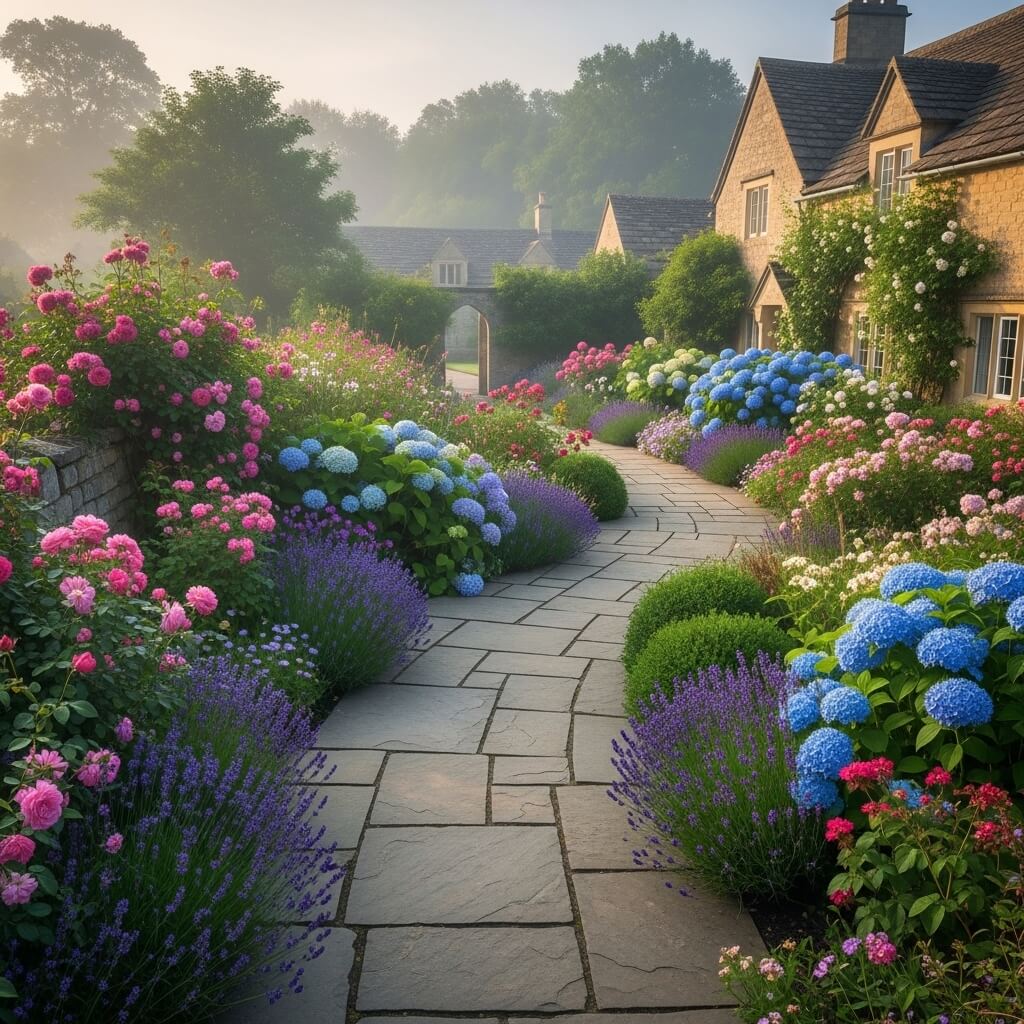
Picture this: a meandering gravel path lined with overflowing perennials, leading somewhere mysterious and wonderful. That’s the English countryside pathway garden, and it’s basically garden therapy in physical form.
I visited the Cotswolds last year (humble brag, sorry), and every single cottage had some version of this design. The pathway becomes the garden’s spine, giving structure while everything else goes beautifully bonkers around it. You get the formality of a defined walkway plus the romance of flowers spilling across the edges.
The genius of this design is how it guides visitors through your space. You’re not just looking at a garden—you’re experiencing it. Every turn reveals something new, whether that’s a hidden bench, a birdbath, or just another spectacular view.
Creating Your Perfect Pathway
Choose your path material carefully:
- Gravel: Crunches satisfyingly underfoot, excellent drainage, cottage-perfect aesthetic
- Flagstone: More formal, works for high-traffic areas, lasts forever
- Brick: Classic cottage look, can create herringbone or basket-weave patterns
- Decomposed granite: Modern yet natural, compacts nicely over time
Line your pathway with classic cottage plants like catmint, lady’s mantle, lavender, and geraniums. These soften the edges and create that “barely contained” look that’s so quintessentially cottage. Plant them close enough that they’ll eventually kiss across the path—just leave enough room for comfortable walking (learned that one the hard way when my jeans got soaked every morning from dew-covered plants).
Rustic Rose-Filled Backyard Retreat
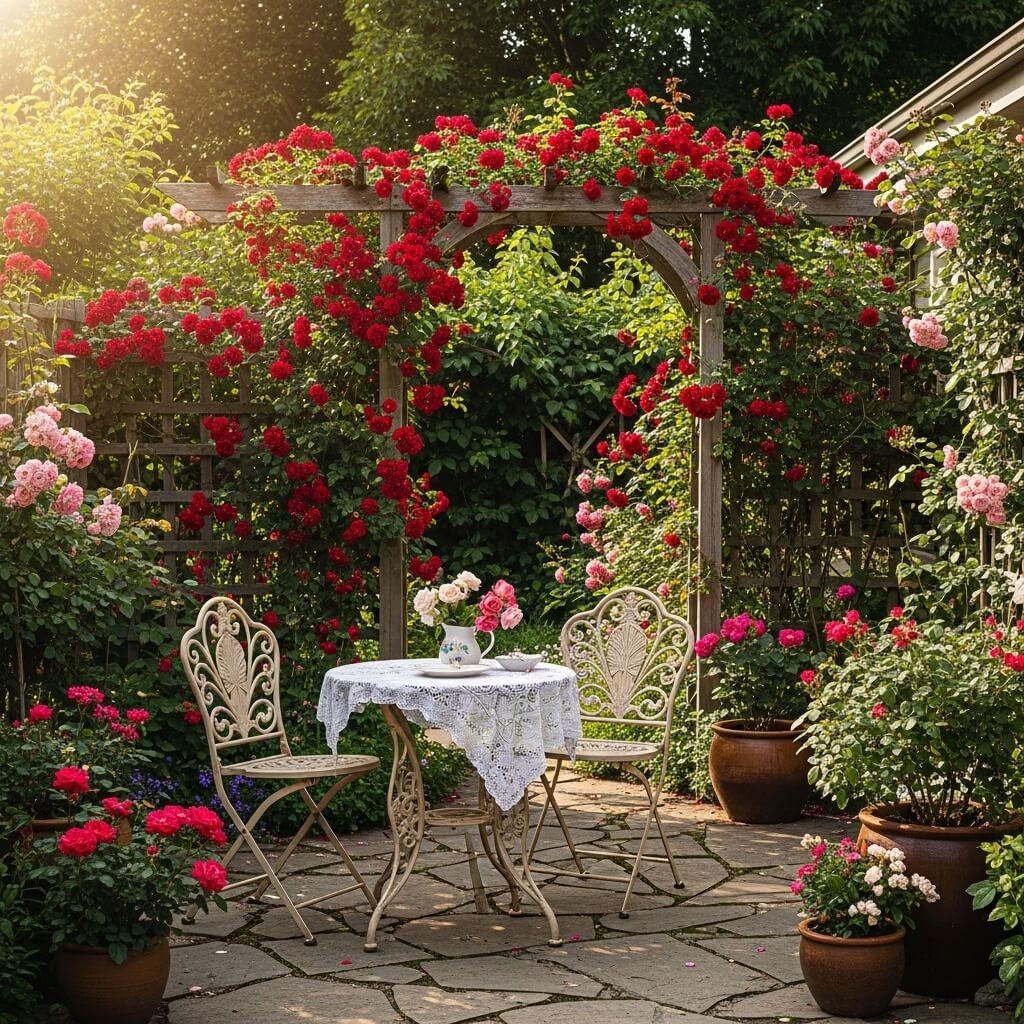
Roses and cottage gardens go together like tea and scones—you really can’t have one without the other, IMO.
Old-fashioned roses bring this incredible romance to cottage gardens that modern hybrid teas just can’t match. I’m talking about those gloriously scented varieties like ‘Gertrude Jekyll’, ‘Abraham Darby’, or ‘The Generous Gardener’. They bloom in these soft, blowsy shapes that look absolutely perfect tucked among other cottage favorites.
Here’s the thing about roses that nobody tells beginners: they’re way less fussy than their reputation suggests. Sure, some varieties demand constant attention, but cottage-style shrub roses are pretty forgiving. They handle imperfect conditions, don’t need deadheading to rebloom, and many are disease-resistant.
Building Your Rose Retreat
Think beyond just planting roses in rows (yawn):
- Mix rose colors but stick to a palette—maybe peachy pinks, whites, and soft yellows
- Combine with companion plants like alliums, salvia, and foxgloves
- Add vertical elements such as arbors, obelisks, or tripods for climbing varieties
- Include seating because you’ll want to actually spend time surrounded by these beauties
- Plant in groups of three or five for greater visual impact
I placed a weathered wooden bench at the back of my rose section, and it’s become my favorite morning coffee spot. There’s something about being surrounded by fragrant blooms that makes even Monday mornings tolerable. 🙂
Also Read: 10 Relaxing Garden Landscape Design Ideas for Cozy Outdoors
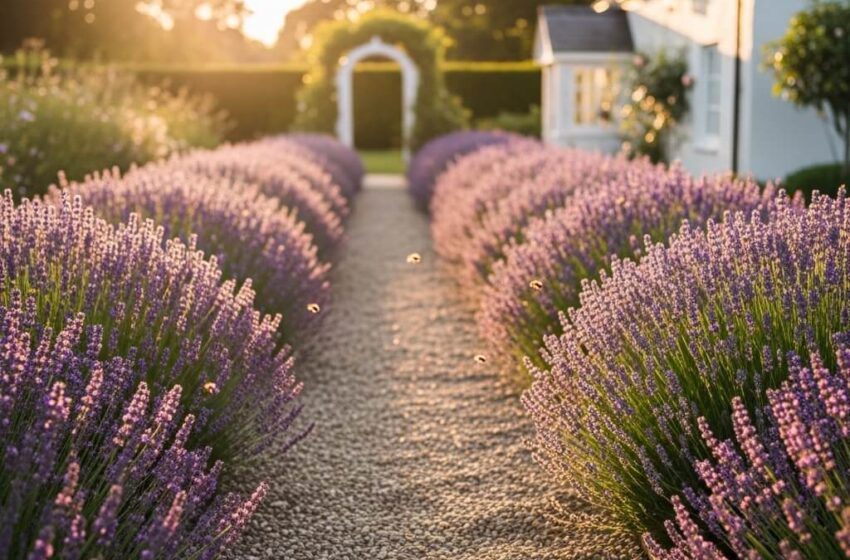
Lavender Border Cottage Escape
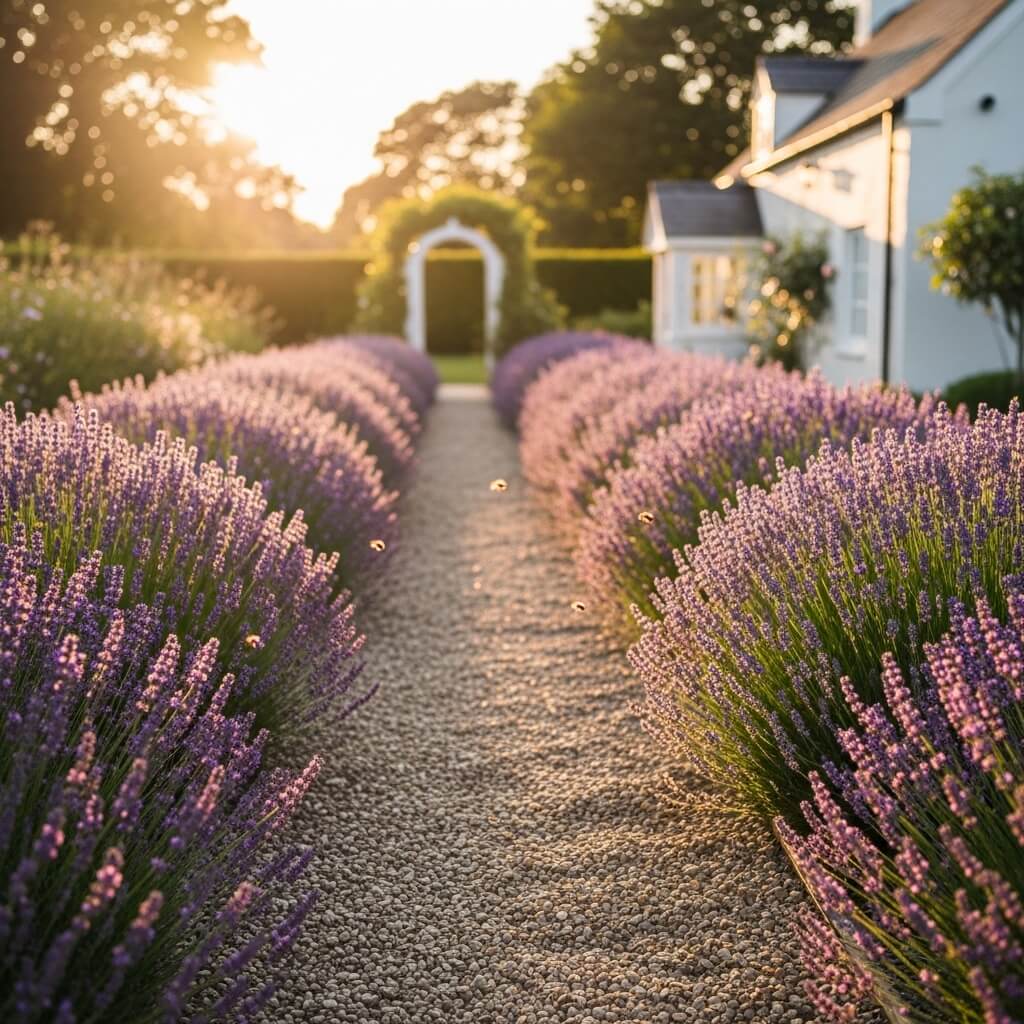
Can we talk about lavender for a second? This plant is basically perfect, and I’ll fight anyone who disagrees.
Lavender borders create these stunning structural elements while delivering fragrance, pollinator support, and that unmistakable cottage garden vibe. I planted a lavender hedge along my front path three years ago, and watching it mature has been ridiculously satisfying. It’s gotten fuller, woodier, and more gorgeous every season.
The beauty of lavender borders is their versatility. Use them to edge pathways, define garden rooms, or create low hedges that divide different sections of your yard. When everything’s in bloom—that purple haze against green foliage—it’s absolutely breathtaking.
Lavender Border Success Tips
Here’s what I’ve learned through trial and error:
- Drainage is everything: Lavender absolutely hates wet feet, so amend heavy soil with gravel or sand
- Choose the right variety: English lavender (Lavandula angustifolia) works in cooler climates; French lavender suits warmer areas
- Space properly: Give them 12-18 inches between plants (they’ll fill in faster than you expect)
- Prune annually: Cut back by about one-third after flowering to keep plants compact and vigorous
- Skip the fertilizer: Seriously, lavender prefers lean soil and actually smells better when slightly stressed
Combine your lavender borders with complementary cottage plants like roses, catmint, Russian sage, or ornamental grasses. The texture contrast is chef’s kiss.
Overgrown Romantic Green Cottage Yard
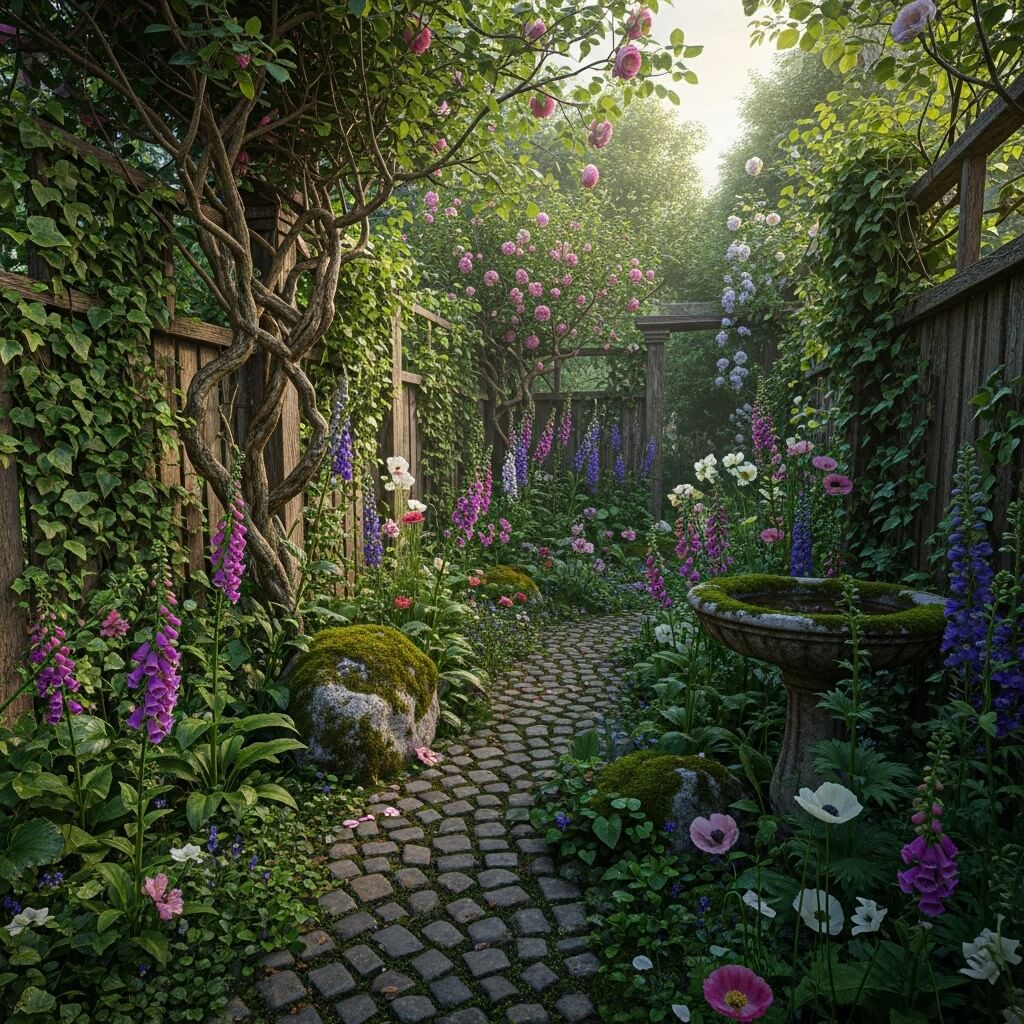
This design is for everyone who’s ever been accused of having a “messy” garden. You’re not messy—you’re cultivating romance, okay?
The overgrown cottage garden celebrates abundance over restraint. Plants weave through each other, self-seeders pop up in unexpected places, and everything reaches, climbs, and sprawls with joyful abandon. This is cottagecore at its absolute peak.
I let one corner of my yard embrace this aesthetic, and wow, did I get some judgmental looks from neighbors at first. But then the comments shifted from “when are you going to clean that up?” to “how did you make it look so lush?” Victory feels sweet, friends.
Achieving Beautiful Overgrown
There’s a fine line between “romantic overgrown” and “abandoned lot”:
- Start with good bones: Plant substantial shrubs like hydrangeas, philadelphus, or weigela as anchors
- Layer generously: Combine tall perennials (delphiniums, hollyhocks) with medium (peonies, geraniums) and low (alchemilla, violas)
- Encourage self-seeding: Let foxgloves, sweet alyssum, and forget-me-nots scatter themselves around
- Add climbers everywhere: Clematis, honeysuckle, and climbing roses soften hard edges
- Maintain strategic control: Pull genuinely invasive weeds but let the good stuff intermingle
The magic happens when you blur the boundaries between different plants. Instead of neat clumps of individual species, you want a tapestry where everything flows together. Think Monet’s garden rather than a municipal park.
Vintage Stone Path Flower Garden
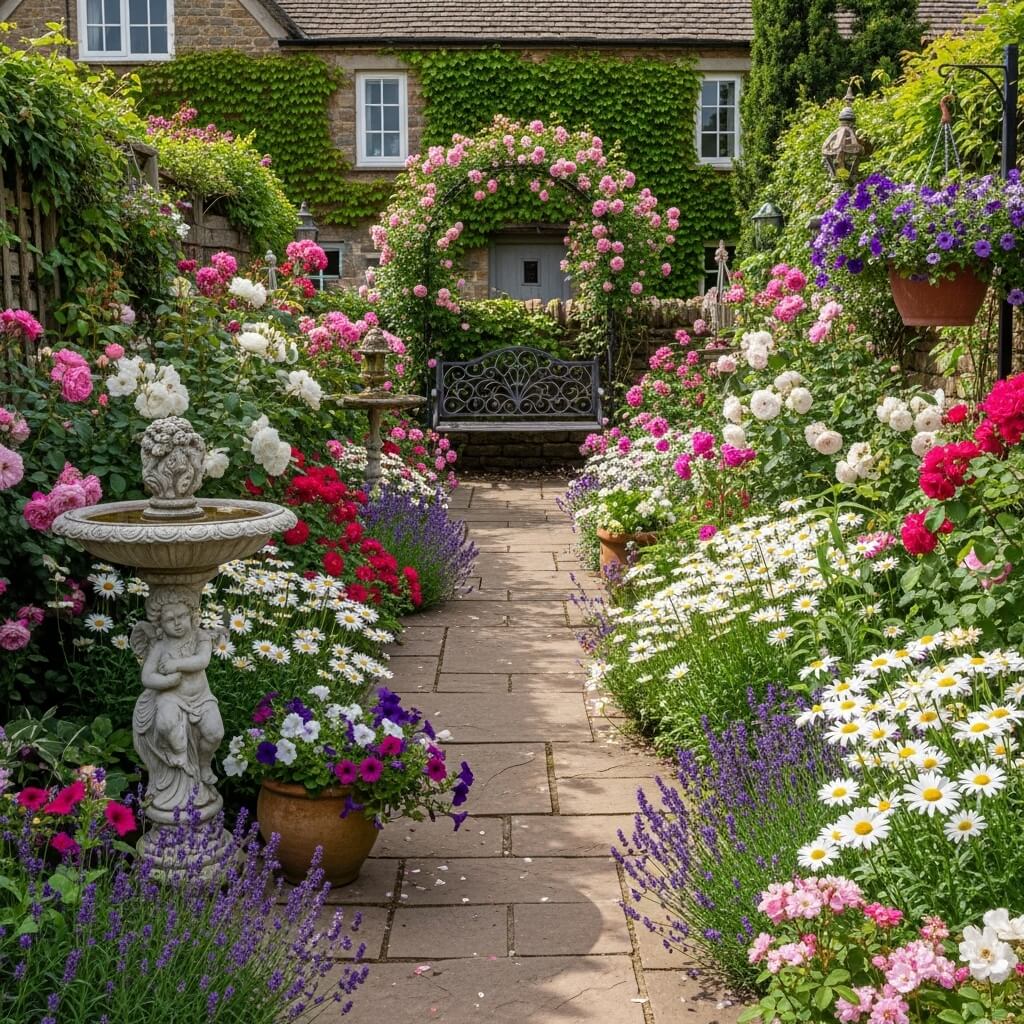
Nothing says “cottage garden” quite like weathered stone pavers surrounded by bursting blooms.
I salvaged some old flagstones from a demolished patio (thank you, Craigslist free section), and they’ve become my favorite garden feature. Vintage stone paths bring instant character and history to your space. The uneven surfaces, the moss growing in cracks, the worn edges—all of it adds authenticity that new pavers just can’t match.
The contrast between hard stone and soft flowers creates this perfect visual tension. Your eye follows the path’s structure while your attention keeps getting pulled to the gorgeous plants threatening to obscure it entirely.
Laying Your Stone Path
FYI, this project is totally doable for beginners:
- Source vintage stones from salvage yards, estate sales, or online marketplaces
- Plan your route using a garden hose to visualize the path before committing
- Excavate 4-6 inches and add a base of sand or gravel for stability
- Lay stones irregularly: Avoid perfectly straight lines—cottage gardens love organic shapes
- Fill gaps with creeping thyme, sedum, or Irish moss for living joints
- Flank with abundant plantings: Crambe, hardy geraniums, and euphorbias work beautifully
The worn, aged look of vintage stone immediately makes your garden feel established and timeless. If you can’t find genuine old stone, you can age new pavers by painting them with diluted yogurt to encourage moss and lichen growth. Sounds weird, works great.
Also Read: 10 Peaceful Japanese Garden Design Ideas for Outdoor Bliss
Cozy Small Space Cottage Garden Corner
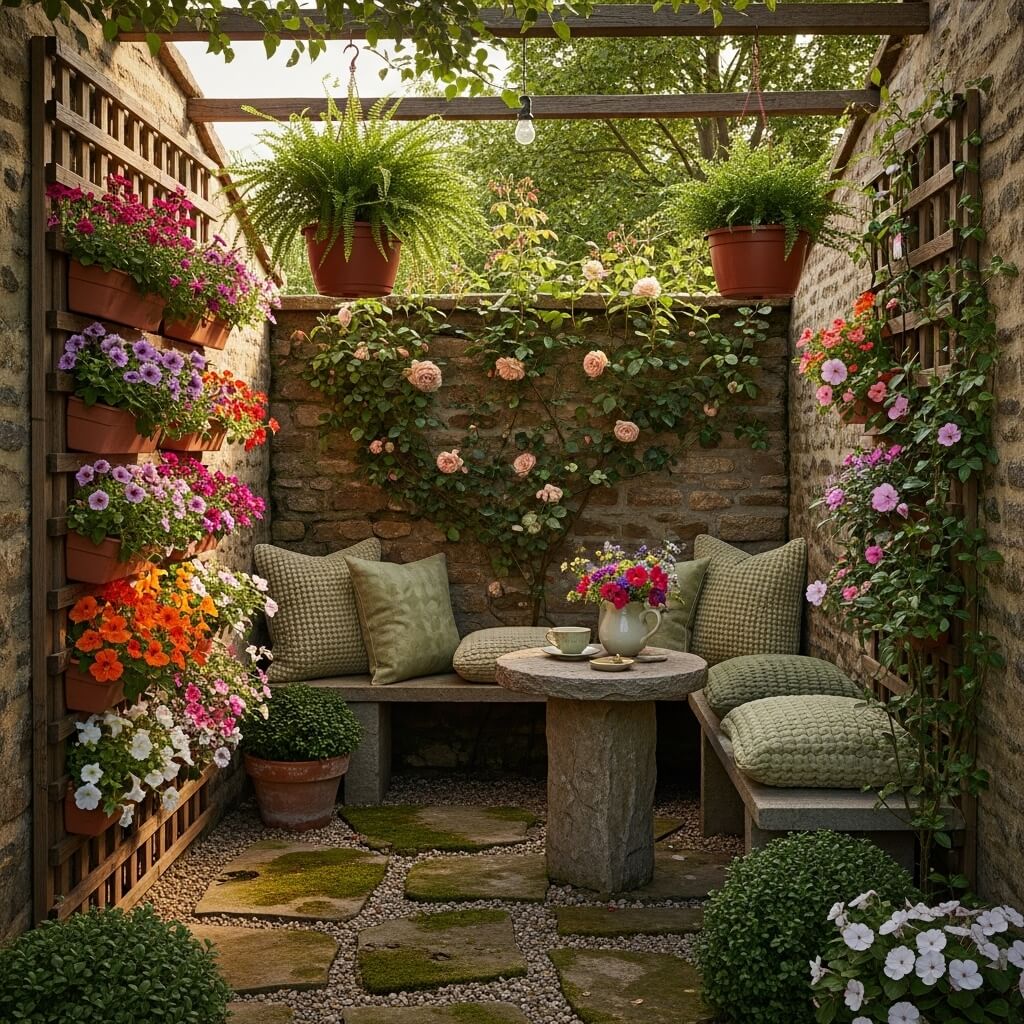
Small yard? Join the club. Most of us aren’t working with acres of rolling lawn, and that’s totally fine.
Cottage gardens actually thrive in small spaces because the style depends on cozy intimacy rather than grand vistas. I’ve seen gorgeous cottage corners created in areas barely six feet square. The trick is choosing the right plants and using every vertical inch.
My own cottage corner measures maybe 8×10 feet, but I’ve crammed in climbing roses, foxgloves, lavender, catmint, and about a dozen other plants. It looks absolutely stuffed (in the best way), and people always assume my yard is way bigger than it actually is based on photos.
Maximizing Your Small Cottage Space
Work smarter, not bigger:
- Go vertical: Use trellises, wall-mounted planters, and climbing plants to utilize upward space
- Choose compact varieties: Dwarf roses, smaller hydrangeas, and petite perennials deliver cottage charm without overwhelming
- Create depth with layers: Even in tight quarters, arrange plants from short to tall
- Add a focal point: A small birdbath, vintage chair, or decorative urn draws the eye and anchors your design
- Use mirrors strategically: Place a weathered mirror on a fence to create the illusion of more space (yes, really)
The beauty of small cottage gardens is their jewel-box quality. Every plant matters, every detail gets noticed, and the whole thing feels like a precious secret space. Quality absolutely trumps quantity here.
Climbing Roses Fence Garden Design
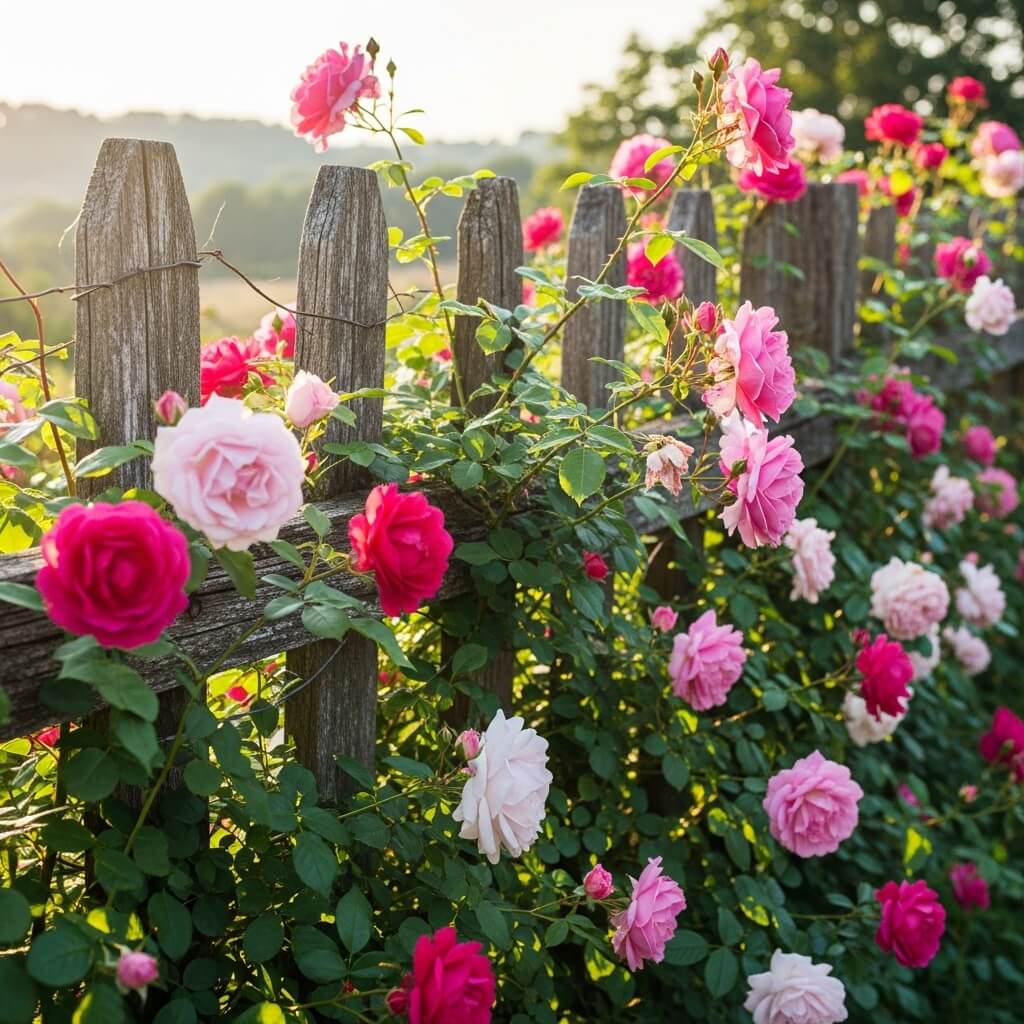
Want to know the fastest way to transform a boring fence? Cover it in climbing roses. You’re welcome.
I inherited a seriously ugly chain-link fence when I moved into my place. Instead of replacing it (expensive) or staring at it miserably (depressing), I planted climbing roses every six feet along its length. Two years later? You can barely see the fence, and my yard looks like it belongs to someone who actually knows what they’re doing. :/
Climbing roses on fences create living walls of color and fragrance. They provide privacy, mask eyesores, and attract pollinators while looking absolutely spectacular from late spring through fall.
Setting Up Your Rose Fence
Here’s the game plan:
- Choose vigorous climbers: ‘New Dawn’, ‘Zéphirine Drouhin’ (thornless!), or ‘William Baffin’ are champions
- Prepare planting holes at least 18 inches wide and deep, enriched with compost
- Plant 6-8 feet apart: They’ll fill in faster than you expect
- Provide initial support: Tie young canes loosely to the fence to train growth direction
- Train horizontally: Horizontal canes produce more blooms than vertical ones (counterintuitive but true)
Mix your climbing roses with clematis for extended bloom time. The classic combination is early-flowering clematis with later roses, or vice versa. They share root space happily and look gorgeous intertwined. Add some honeysuckle if you want your fence to smell like heaven.
Secret Cottage Garden Hideaway
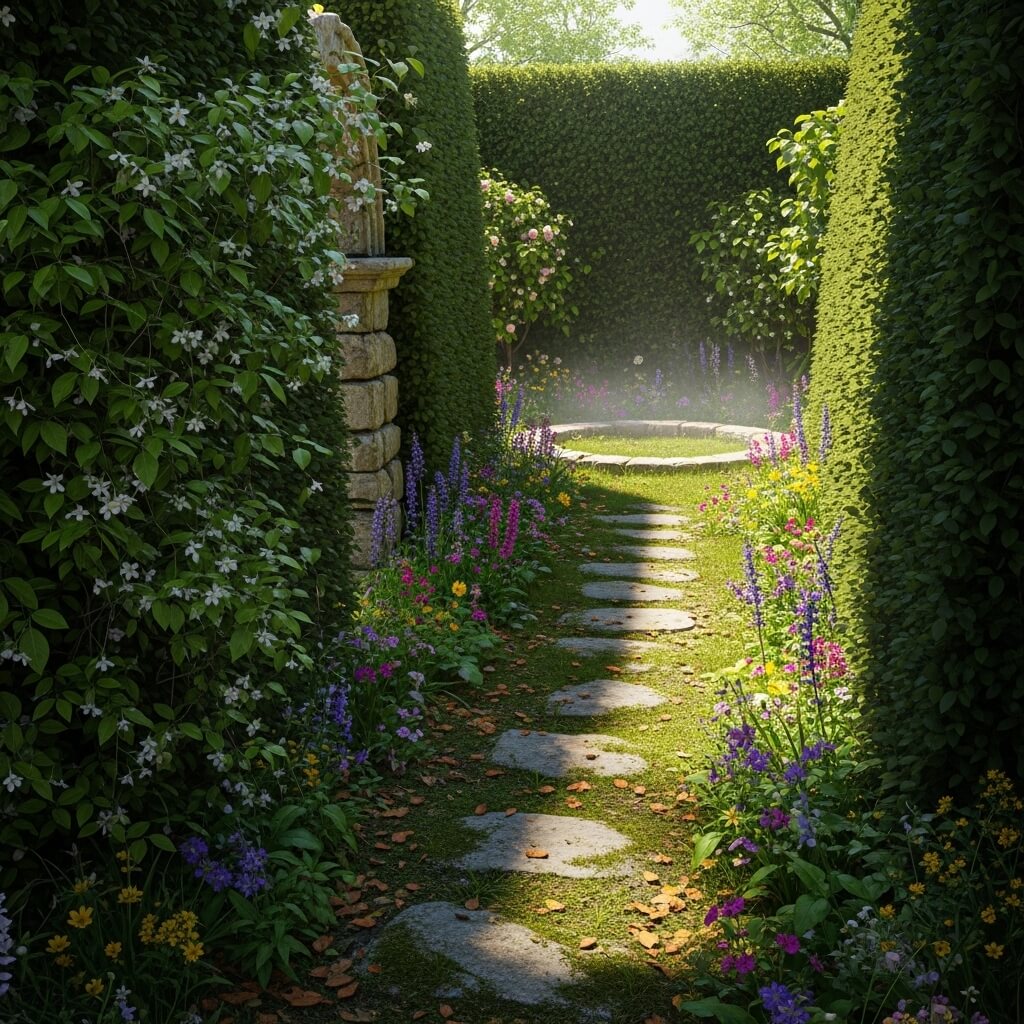
Every great cottage garden needs a sense of mystery—somewhere that feels hidden, private, and special.
I created my “secret” area behind a tall lilac hedge. It’s just a small clearing with a bench and some shade-loving plants, but the sense of enclosure makes it feel like a different world. Secret garden spaces transform regular yards into places of adventure and discovery.
The concept is simple: create a garden room that you can’t see from other areas. Use hedges, trellises, or tall perennials to screen it from view, then add a reason to visit—seating, a water feature, or simply your most treasured plants.
Designing Your Secret Hideaway
Make your hidden garden truly special:
- Create clear entry and exit points: An arbor, gap in hedging, or narrow pathway builds anticipation
- Add enclosure: Use tall shrubs (yew, boxwood), bamboo screens, or climbing plant-covered trellises
- Include comfortable seating: This needs to be a destination, not just a pretty view
- Choose special plants: Fragrant varieties, rare treasures, or personal favorites make it feel curated
- Add sound: A small fountain, wind chimes, or rustling grasses create ambiance
The psychology of secret gardens is fascinating. Even a tiny space feels significant when it’s partially hidden from view. Our brains register “hidden” as “valuable”, making these spaces feel more special than their size alone would suggest.
Also Read: 10 Fresh Roof Garden Design Ideas for Peaceful Escapes
White Bloom Minimal Cottage Garden
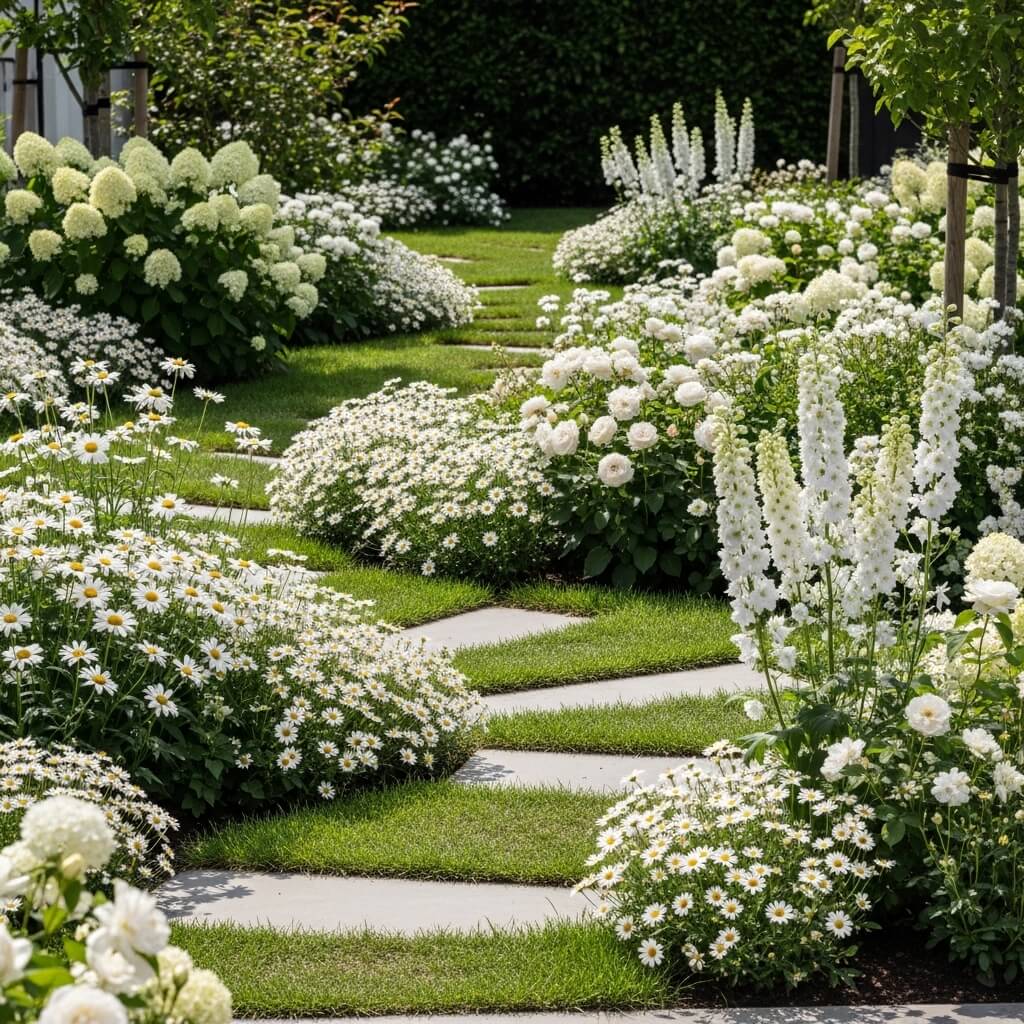
Who says cottage gardens have to be riotous color explosions? Sometimes elegance lies in restraint.
White-focused cottage gardens bring a sophisticated calm while maintaining that romantic, abundant cottage style. I’ll admit, I was skeptical at first—white seemed too formal, too planned. But then I visited a moon garden designed around white bloomers, and I completely converted.
The trick is working with texture and form rather than relying on color variety. Different whites (cream, pure white, greenish-white) create subtle contrasts, while varied plant shapes and sizes provide visual interest.
Building Your White Cottage Garden
Go monochromatic without going boring:
- Choose diverse white bloomers: Roses (‘Iceberg’, ‘Winchester Cathedral’), delphiniums, phlox, white foxgloves, cosmos, and cleome
- Add white-variegated foliage: Hostas, lamium, and white-edged shrubs extend the theme beyond bloom times
- Include silver and gray plants: Artemisia, lamb’s ears, and dusty miller complement whites beautifully
- Layer different flower shapes: Spiky (delphiniums), round (hydrangeas), daisy-like (Shasta daisies), and trumpet-shaped (lilies)
- Consider evening viewing: White gardens absolutely glow at dusk and under moonlight
White gardens photograph beautifully, which is either a bonus or a curse depending on how much time you spend trying to get the perfect Instagram shot (guilty). They also create a sense of spaciousness because white reflects light and doesn’t visually compete for attention the way multiple colors do.
Bringing It All Together
Here’s the beautiful truth about cottage gardens: there’s no wrong way to do them.
Unlike formal gardens that demand precision and perfection, cottage gardens celebrate personality, abundance, and yes—even happy accidents. That self-seeded foxglove growing in the “wrong” spot? Leave it. That rose that’s flopping over your path? Probably looks better that way.
I’ve made approximately a million mistakes in my own cottage garden journey. I’ve planted things too close together, chosen plants completely wrong for my conditions, and definitely killed some expensive specimens through sheer ignorance. But you know what? The garden still looks gorgeous because cottage style forgives imperfection in ways formal designs never could.
Quick Recap of Essential Elements
No matter which design direction you choose:
- Plant generously: Cottage gardens should feel abundant, not sparse
- Mix it up: Combine annuals, perennials, shrubs, and climbers for year-round interest
- Choose fragrance: Scent elevates cottage gardens from pretty to memorable
- Add vintage touches: Old terracotta pots, weathered furniture, and salvaged elements enhance authenticity
- Encourage wildlife: Birds, bees, and butterflies are essential cottage garden guests
- Relax your standards: A few weeds won’t kill anyone, and perfection is overrated
The magic of cottage gardens happens at the intersection of planning and spontaneity. You create the framework—the paths, the bones, the structure—then let plants do their glorious thing within those boundaries.
Your Turn
So which design speaks to you? Are you dreaming of lavender-lined paths, secret hideaways, or rose-covered fences? Maybe you’re feeling brave enough to embrace that beautiful overgrown aesthetic (do it, do it).
Start small if you’re feeling overwhelmed. Pick one corner, one pathway, one fence. Cottage gardens actually look better when they develop organically rather than appearing fully formed overnight. Each season, you’ll add more plants, refine your combinations, and discover what works in your specific conditions.
The best part about cottage gardening? You’re joining this incredible tradition that stretches back centuries. Those English cottage gardens we all swoon over didn’t start as design statements—they started as practical spaces where people grew flowers among their vegetables. The beauty was a happy byproduct of abundance and necessity. We’re lucky enough to create that beauty intentionally, for pure joy.
Now if you’ll excuse me, I have some deadheading to do and approximately seventeen new plants I somehow “need” to squeeze into my already stuffed garden. The cottage garden struggle is real, friends, but it’s the best kind of problem to have.
Happy planting! 🙂