10 Gorgeous Backyard Garden Design Ideas for Stylish Outdoors
- Garden Design
 Ben
Ben- 0
- 40 minutes read
You know that feeling when you step outside and your backyard looks… meh? Yeah, I’ve been there. Your outdoor space has so much potential, but right now it’s just sitting there doing absolutely nothing for your soul (or your Instagram feed, let’s be honest). The good news? You don’t need a celebrity budget or a landscape architecture degree to transform your backyard into something that makes your neighbors jealous.
I’ve spent years experimenting with different garden designs, made plenty of mistakes (RIP to that expensive fountain I thought would look “elegant”), and finally figured out what actually works. Whether you’re working with a postage stamp-sized yard or a sprawling lawn, these ten backyard garden design ideas will help you create an outdoor space that feels like a personal retreat. Let’s get into it.
Minimalist Zen Backyard Retreat
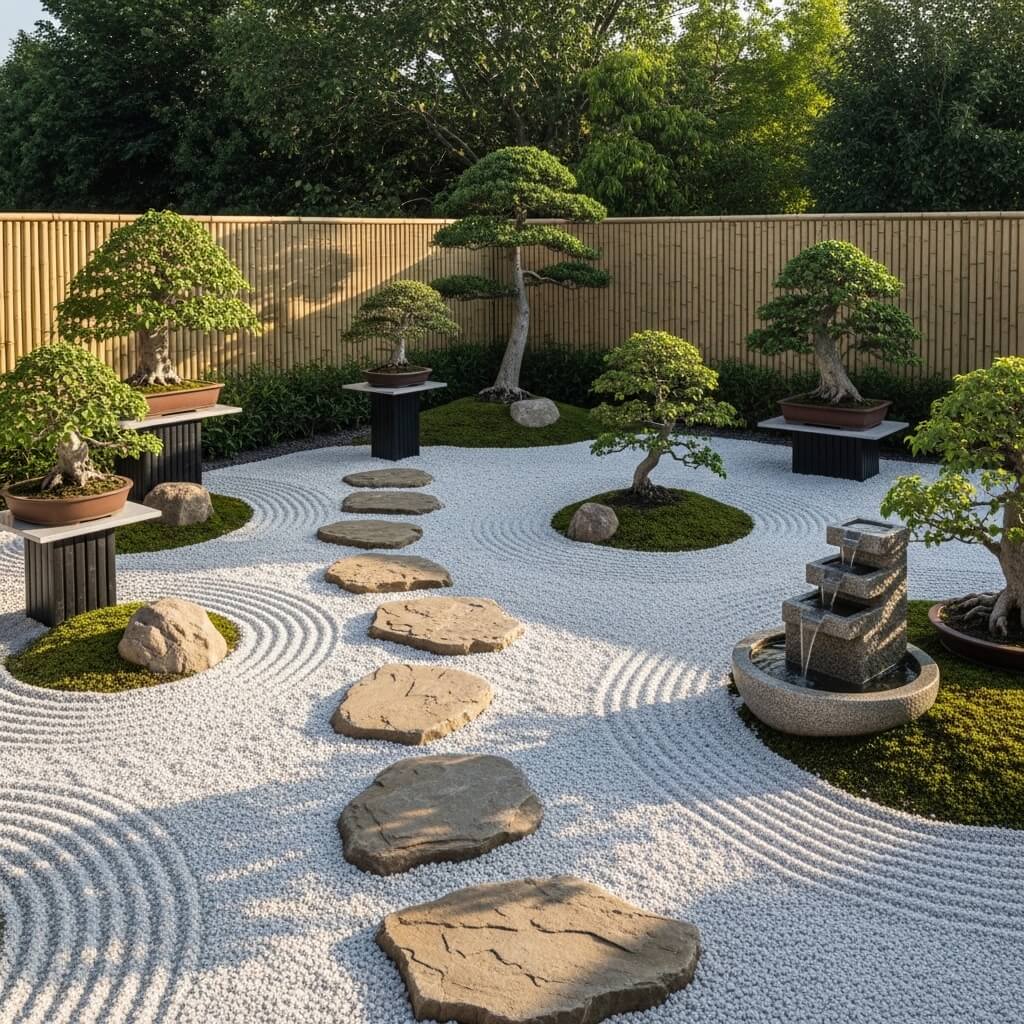
Ever walked into a space and immediately felt your shoulders drop? That’s the magic of minimalist Zen design. This style strips everything down to the essentials, creating a backyard that practically whispers “relax” the moment you step outside.
The foundation of a Zen backyard focuses on simplicity and natural elements. Think clean lines, neutral color palettes, and carefully chosen features that serve a purpose. You’re not cramming every available inch with stuff—you’re creating intentional breathing room.
Here’s what makes this style work:
- Gravel or sand beds raked into meditative patterns
- Large smooth stones positioned as focal points
- Bamboo features for natural screening or water elements
- Simple wooden benches without ornate details
- Limited plant variety focusing on greens and subtle textures
I converted one section of my yard into a mini Zen retreat last year, and honestly? It’s become my favorite spot to drink morning coffee. The key is resisting the urge to add more. When you think you’re done, you probably are. That empty space isn’t wasted—it’s doing the heavy lifting by giving your mind room to breathe.
Creating Flow in Your Zen Space
Water features work beautifully in Zen gardens, but skip the flashy multi-tier fountains. A simple stone basin with a bamboo spout or a shallow reflecting pool does the job without looking like a Vegas hotel lobby. The sound should be subtle, almost background noise.
For plantings, stick with bamboo, Japanese maple, moss, and maybe some ornamental grasses. You want texture and movement, not a riot of colors competing for attention. The color palette should lean heavily toward greens, grays, and natural wood tones.
Cozy Boho Backyard Lounge Space
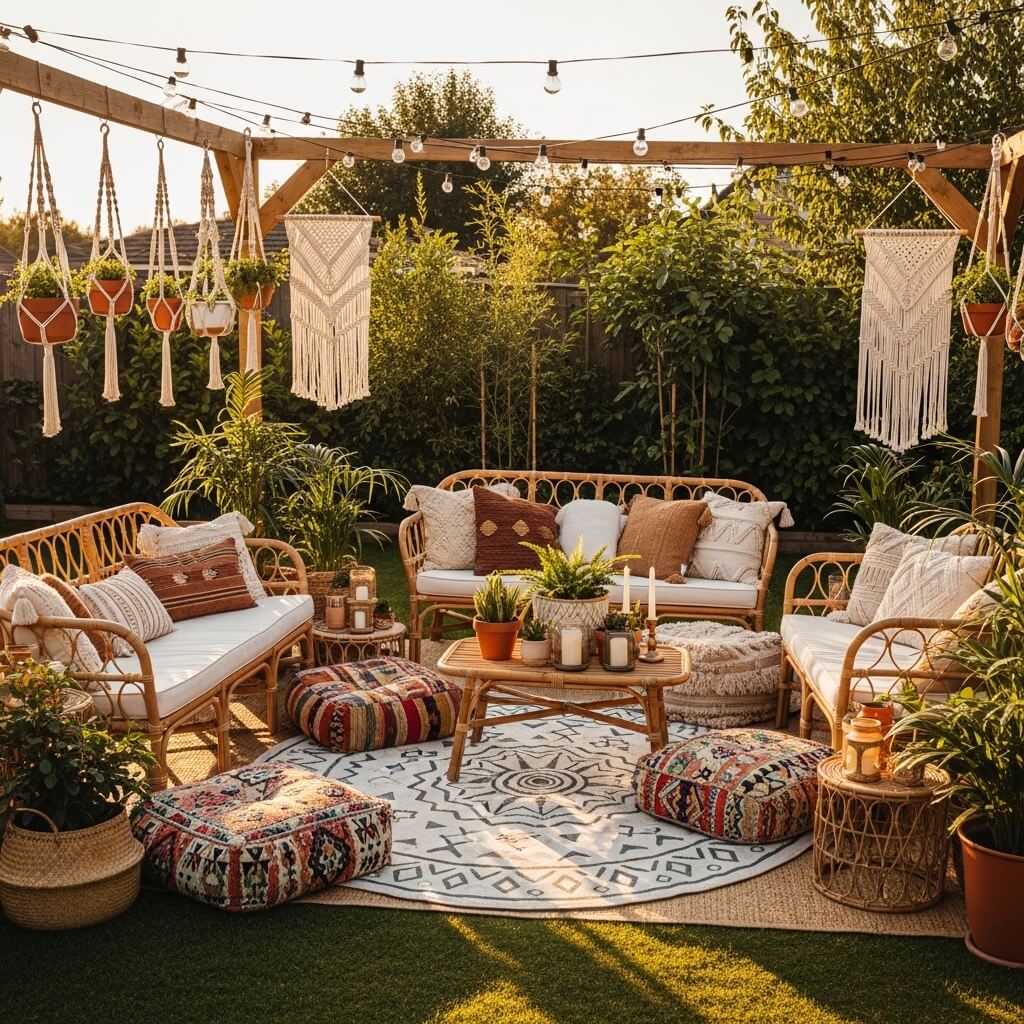
Now we’re talking my language. If Zen gardens are about restraint, boho gardens throw restraint out the window and invite it back for tea served in mismatched vintage cups. This style celebrates color, texture, pattern, and that collected-over-time vibe that feels effortlessly cool.
The boho backyard thrives on layering. You’ll mix patterns, stack textiles, hang things from trees, and basically create an outdoor living room that looks like it belongs in a lifestyle blogger’s fever dream (in the best way possible).
Essential elements for nailing the boho look:
- Macramé everything: plant hangers, wall hangings, swing chairs
- Layered outdoor rugs in vibrant patterns
- Floor cushions and poufs for casual seating
- String lights or lanterns for that golden-hour glow
- Mixed metal accents (brass, copper, wrought iron)
- Potted plants in terracotta at varying heights
FYI, the secret to boho style is making it look accidentally perfect. Everything should seem like you collected it over years from travels and flea markets, even if you bought half of it online last Tuesday. No judgment here 🙂
Boho Color Schemes That Work
Contrary to what you might think, boho doesn’t mean “every color everywhere.” The best boho gardens stick to a cohesive palette—maybe jewel tones (emerald, ruby, sapphire) or earthy desert colors (terracotta, cream, rust, sage). You can absolutely mix patterns, but keeping them within the same color family prevents the space from looking chaotic.
I learned this the hard way after my first attempt looked like a fabric store exploded in my backyard. Trust me, editing is your friend.
Modern Small Backyard Garden Layout
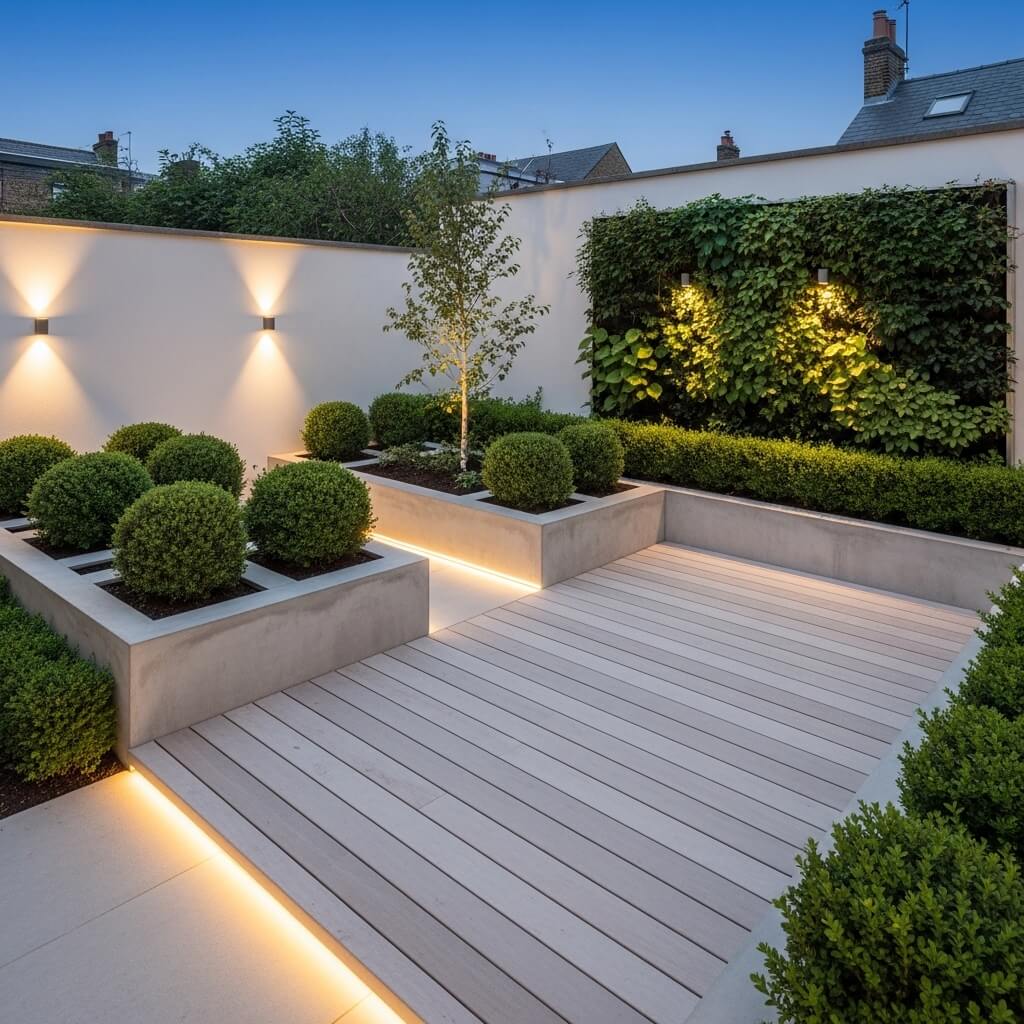
Small backyard? Join the club. Most of us aren’t working with acres of land, and honestly, that’s perfectly fine. Modern design actually thrives in compact spaces because it emphasizes clean lines, multi-functional features, and smart use of every square foot.
The modern approach to small gardens focuses on creating zones without walls. You’re essentially dividing your space into different functional areas using levels, materials, or subtle transitions rather than fences or hedges that eat up precious real estate.
Key features of modern small garden design:
- Built-in seating with hidden storage underneath
- Vertical elements that draw the eye upward
- Geometric shapes in hardscaping and planters
- Monochromatic or limited color palettes
- Low-maintenance plants with architectural interest
- One statement piece rather than multiple small decorations
The magic happens when you blur the lines between indoors and outdoors. Large pavers that match your interior flooring, outdoor furniture that echoes your indoor style, and consistent color schemes all make your small space feel like an extension of your home rather than a separate, cramped area.
Maximizing Space With Smart Design
Ever noticed how mirrors make rooms feel bigger? The same principle works outdoors with reflective surfaces and strategic plant placement. Position tall, narrow plants along boundaries to create height without depth. Use light-colored paving to make the area feel more open.
One trick I absolutely love: create different “rooms” using outdoor rugs or distinct flooring materials. A small wooden deck for dining, a gravel area for a fire pit, and a patch of artificial grass for lounging can all exist in 400 square feet if you plan it right.
Also Read: 10 Incredible Modern Garden Design Ideas for Green Retreats
Luxury Outdoor Firepit Garden Design
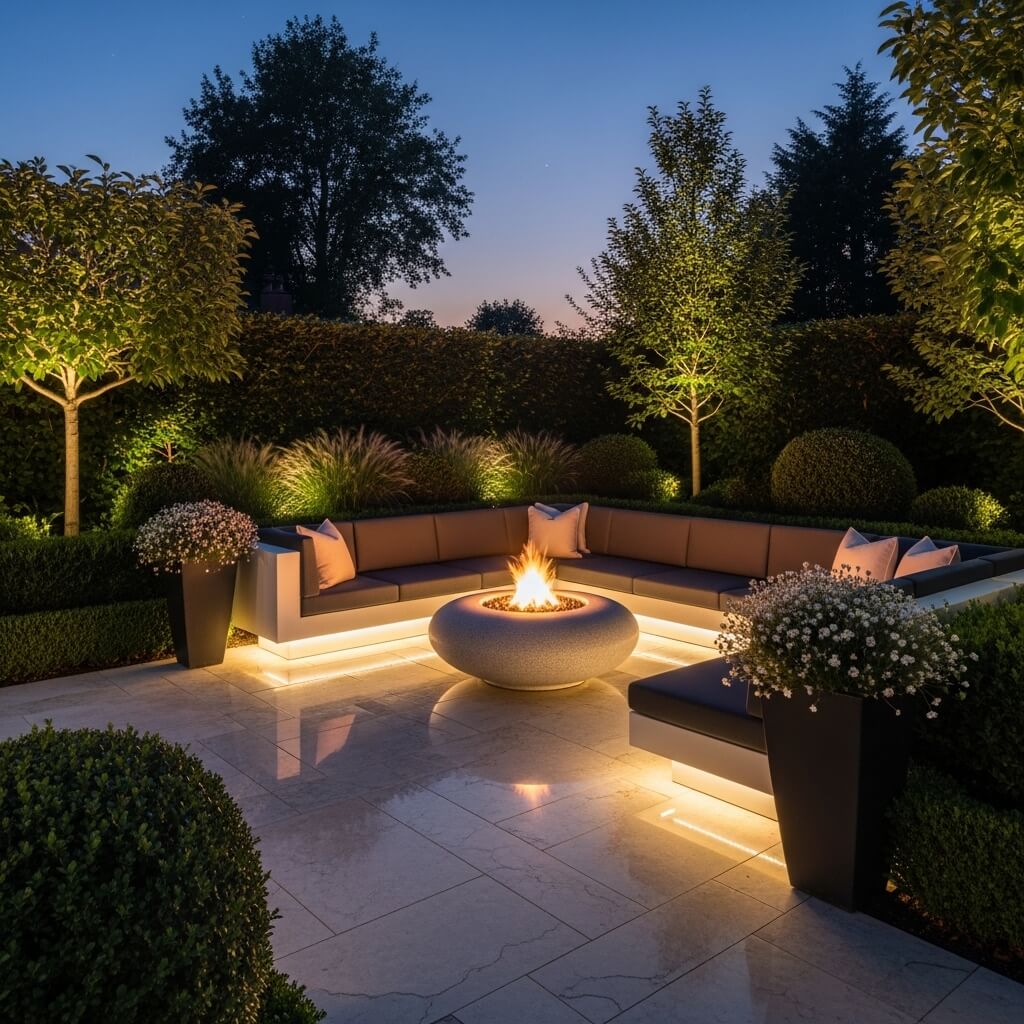
Nothing—and I mean nothing—elevates a backyard quite like a well-designed fire feature. There’s something primal about gathering around flames that makes every conversation feel more important and every s’more taste better.
When I’m talking luxury firepit design, I’m not referring to that portable metal bowl from the hardware store (though those have their place). I mean built-in fire features that become the architectural anchor of your entire outdoor space.
What separates luxury from basic:
- Custom stone or concrete surrounds built to complement your home’s architecture
- Integrated seating at the perfect distance from the flames
- High-quality fire glass or decorative stone instead of logs
- Gas lines for easy operation (no more hauling wood)
- Built-in wood storage that doubles as design element
- Surrounding landscape lighting for ambiance
The firepit becomes your backyard’s living room. Everything else radiates from this central gathering spot. I’ve seen people position their firepits in the middle of their yard, along one edge, or even sunken into a patio with surrounding seating walls. The location matters less than the execution.
Fire Feature Options Beyond the Standard Pit
Rectangular fire tables create a modern, sophisticated look and double as surfaces for drinks and plates. Fire bowls offer a sculptural element that works beautifully in contemporary settings. For something really special, a linear fire feature can run along a wall or between seating areas, creating drama without demanding attention.
Just remember: luxury doesn’t mean complicated. The most stunning fire features I’ve seen keep things relatively simple but focus on quality materials and flawless construction. Cheap materials will always look cheap, no matter how elaborate the design.
Vertical Garden Wall Backyard Idea
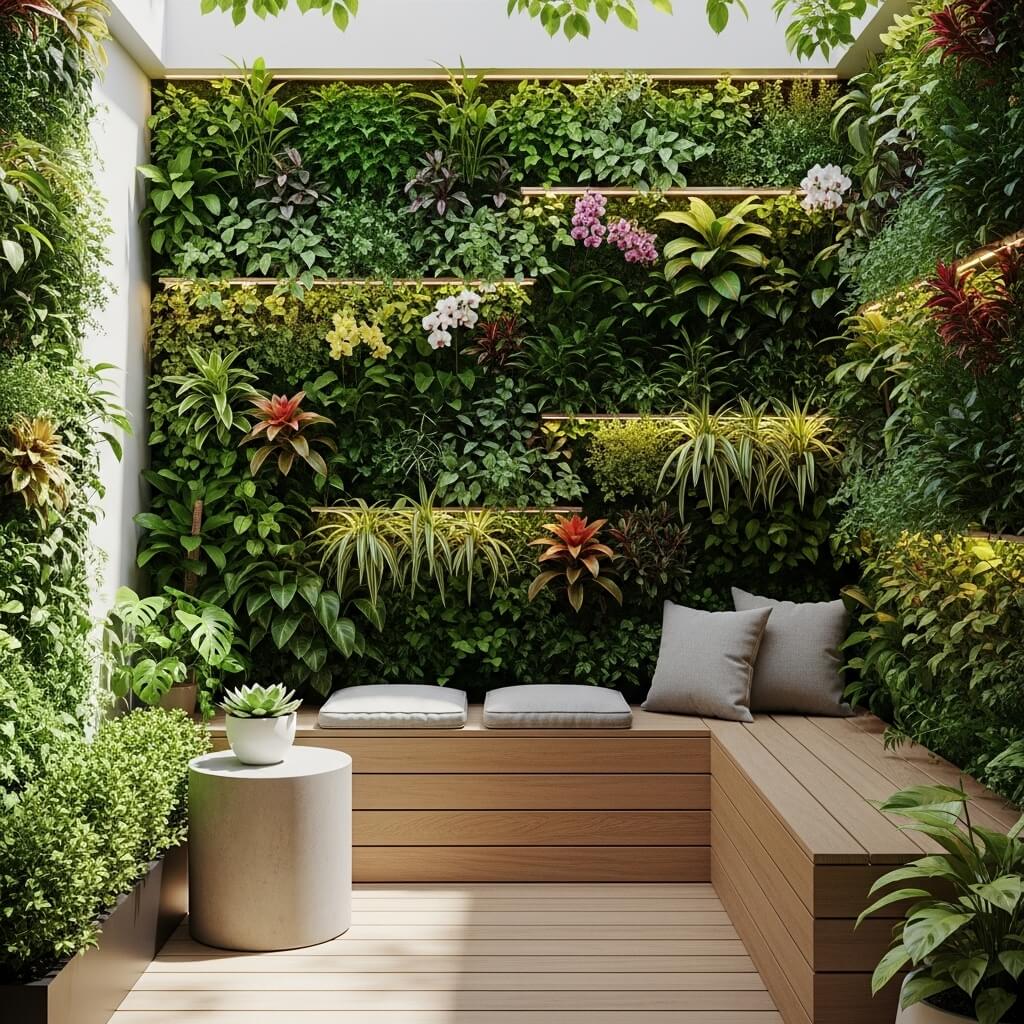
Okay, confession time: I was skeptical about vertical gardens. They seemed trendy and high-maintenance. Then I actually installed one, and now I’m a complete convert. Vertical gardens solve so many problems while looking absolutely incredible.
Running out of ground space? Go up. Want to hide an ugly fence or wall? Cover it with plants. Need privacy screening that doesn’t feel like a barrier? Vertical garden. This design approach works brilliantly in small yards, urban spaces, or anywhere you want maximum greenery with minimum square footage.
Options for vertical gardening:
- Modular pocket planters that mount to walls
- Pallet gardens (budget-friendly and customizable)
- Trellis systems with climbing plants
- Living wall panels with built-in irrigation
- Stacked planter towers for herbs and vegetables
- Hanging gutter gardens for shallow-rooted plants
The practical benefits go beyond aesthetics. Vertical gardens improve air quality, reduce ambient temperature around your home, provide insulation, and can even grow a surprising amount of produce. I grew enough herbs last summer on one 4×6 wall to basically never buy fresh herbs again.
Making Vertical Gardens Actually Work
Here’s what nobody tells you: irrigation is everything. Hand-watering a vertical garden gets old fast, especially for anything mounted above shoulder height. Drip irrigation systems designed for vertical installations aren’t expensive and will save you from abandoning the whole project by August.
Plant selection matters too. Start with varieties that don’t need deep soil—succulents, herbs, lettuce, and shallow-rooted flowers. As you gain confidence, you can experiment with heavier plants. And please learn from my mistake: don’t install a living wall directly above your favorite outdoor furniture unless you enjoy surprise showers when watering :/
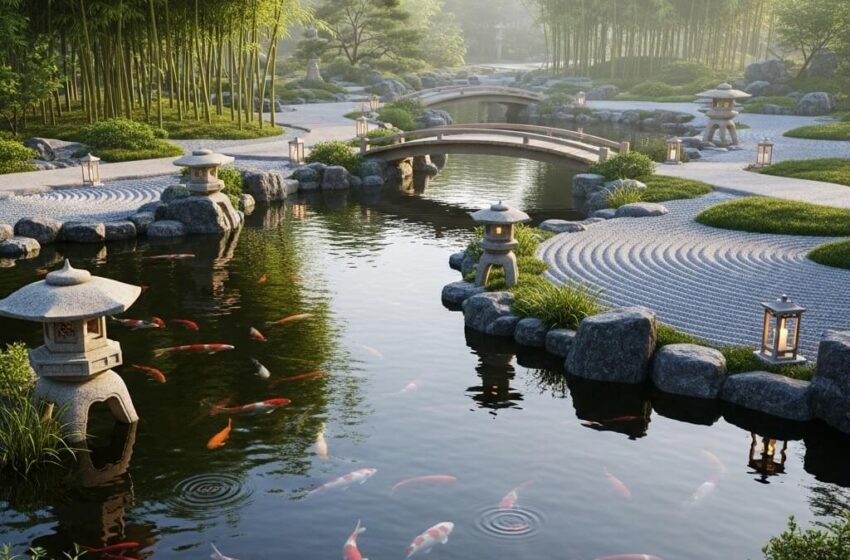
Japanese Inspired Backyard Garden Style
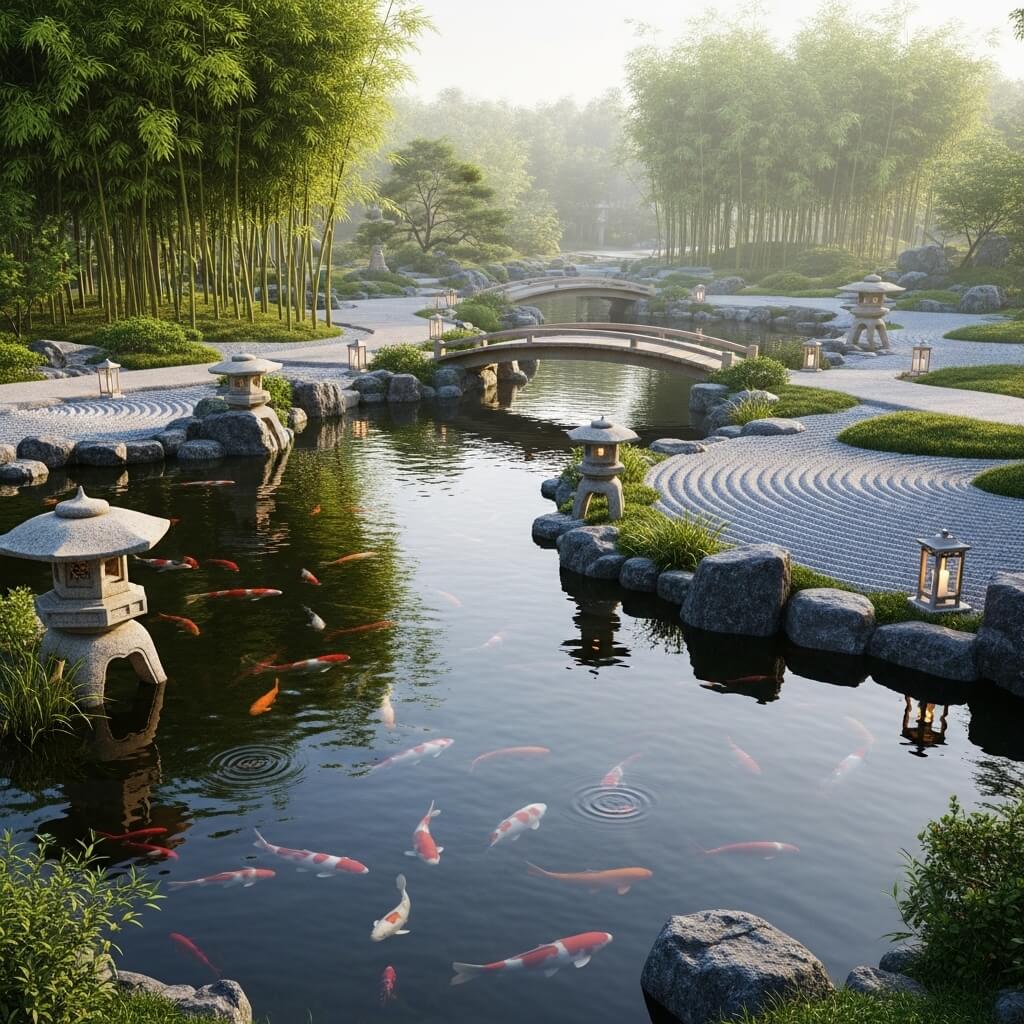
Japanese gardens operate on a completely different philosophy than Western landscaping, and that’s exactly why they feel so special. Where Western gardens often showcase abundance and variety, Japanese garden design emphasizes harmony, balance, and representing nature in miniature.
This style creates contemplative spaces that engage all your senses. You’re not just looking at pretty plants—you’re experiencing carefully orchestrated views, sounds, textures, and even the play of light through specific plantings.
Core elements of Japanese garden style:
- Carefully pruned trees and shrubs (think cloud pruning and bonsai principles)
- Stepping stone paths that control the pace and viewing angles
- Water elements (even symbolic ones using gravel to represent water)
- Stone lanterns for lighting and focal points
- Moss gardens in shaded areas
- Bridges (even small ones over dry creek beds)
- Tea house or viewing pavilion for contemplation
What I love most about Japanese garden design is the intentionality. Every rock, every plant, every view gets positioned with purpose. You’re creating a living artwork that evolves with the seasons.
Adapting Japanese Principles for Western Yards
You don’t need to replicate a Kyoto temple garden to incorporate Japanese design principles. Start with the concept of “borrowed scenery”—frame attractive views and screen ugly ones. Use pruning to enhance natural plant shapes rather than forcing artificial forms.
Asymmetry is your friend here. Japanese design favors odd numbers and avoids perfectly centered or symmetrical arrangements. That beautiful maple tree shouldn’t sit dead center—position it off to one side and balance it with rock groupings or lower plantings on the other side.
The best Japanese-inspired gardens I’ve seen in Western settings pick a few key elements rather than trying to include everything. Maybe a stone lantern, a Japanese maple, some carefully raked gravel, and a bamboo water feature. That’s enough to establish the aesthetic without looking like a theme park.
Also Read: 10 Dreamy Cottage Garden Design Ideas for Lush Green Spaces
Budget DIY Backyard Transformation Idea
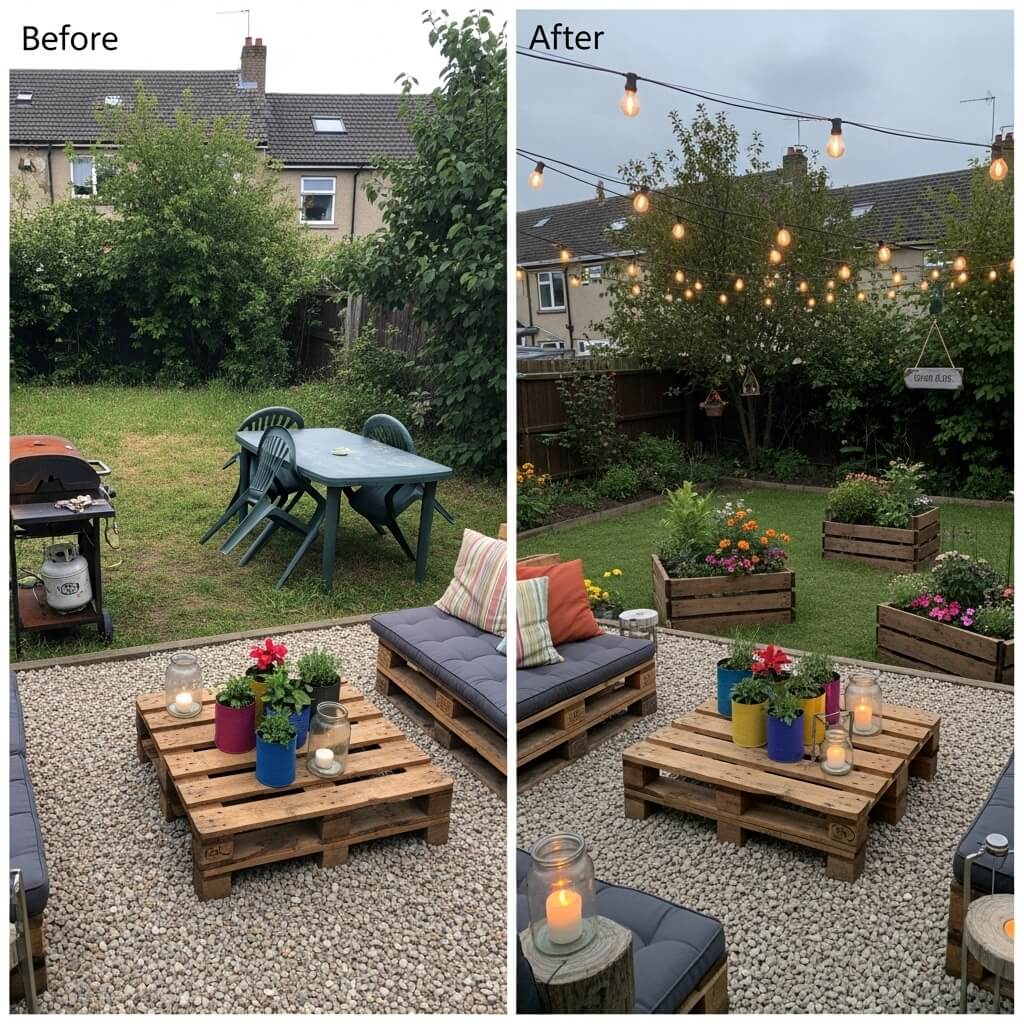
Let’s talk money. You’ve scrolled through approximately eight thousand gorgeous backyard photos on Pinterest, and your motivation is high. Then you get contractor estimates, and suddenly you’re pricing cardboard furniture and plastic plants. I get it.
Here’s the truth: you can create an amazing backyard on a tight budget. It requires more sweat equity than cash, some creativity, and knowing where to save versus where to invest. I’ve transformed sections of my yard for under $500 that look like I spent five times that.
Budget-friendly strategies that actually work:
- Pallet furniture (free materials, personalized design)
- Painted concrete blocks as planters or seating bases
- Gravel instead of pavers for patios and paths
- Seeds instead of established plants (patience required)
- DIY string light poles using pipes or posts
- Thrifted or repurposed containers for plants
- Mulch for instant polish (surprisingly transformative)
The biggest budget-saver? Do your own labor. Paying for installation often costs more than the actual materials. IMO, if you can follow a YouTube tutorial, you can handle most basic landscaping projects. I learned to lay pavers, build raised beds, and install irrigation all from online videos.
Where to Splurge vs. Save
Don’t cheap out on soil and plants. Discount plants from big box stores often struggle, and poor soil dooms even expensive plants. Invest in quality here and save elsewhere.
Do save on hardscaping by choosing less expensive materials. Pea gravel looks great and costs a fraction of natural stone pavers. Concrete pavers work just as well as fancy ones. Pressure-treated lumber does the same job as cedar for raised beds (it just doesn’t smell as nice).
Lighting creates massive impact for minimal cost. String lights, solar path lights, or even LED strips completely transform a space after dark. I spent $60 on string lights and they’ve done more for my backyard’s ambiance than probably anything else.
Tropical Green Backyard Paradise Design
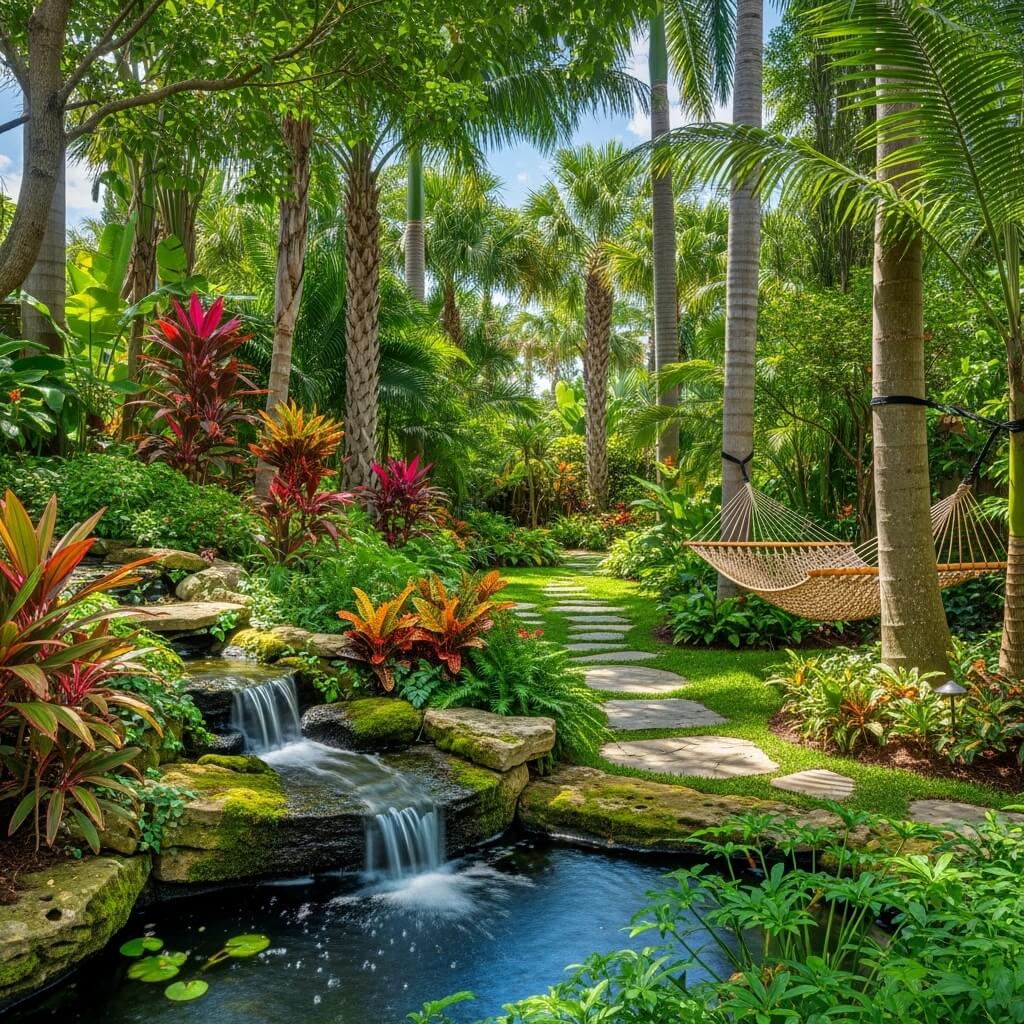
Want to feel like you’re on vacation without leaving home? Tropical garden design creates lush, immersive environments that make you forget you’re in suburban wherever. This style embraces abundance, bold foliage, and that slightly overgrown jungle vibe.
The beautiful thing about tropical garden design is that it works in more climates than you’d think. Sure, actual tropical plants need warm weather, but you can fake the look with hardy alternatives and bring tender tropicals indoors during cold months.
Creating tropical atmosphere:
- Large-leaf plants (elephant ears, cannas, bananas)
- Layered plantings at different heights
- Bold, saturated colors (hot pink, orange, purple)
- Water features for humidity and sound
- Thatched or bamboo structures for shade
- Natural materials (teak, wicker, stone)
- Dense plantings with minimal visible soil
Tropical gardens engage you physically. You should feel slightly enclosed, like the plants are welcoming you into a secret space. Paths wind rather than running straight. You discover areas gradually rather than seeing everything at once.
Tropical Plants for Non-Tropical Climates
If you live somewhere with actual winter, don’t despair. Hardy banana plants (Musa basjoo) survive freezing temperatures. Cannas, elephant ears, and hardy hibiscus die back but return each spring. Combine these with cold-hardy palms and bamboo, and you’ve got a solid foundation.
For summer, add tender tropicals in containers—plumeria, tropical hibiscus, bougainvillea, bromeliads. These create the real jungle feeling during warm months, then you move them to a sunroom or garage before frost. Yes, it’s extra work, but that first morning you step into your personal paradise with coffee in hand makes it worth every minute of hauling pots around.
Family-Friendly Functional Backyard Space
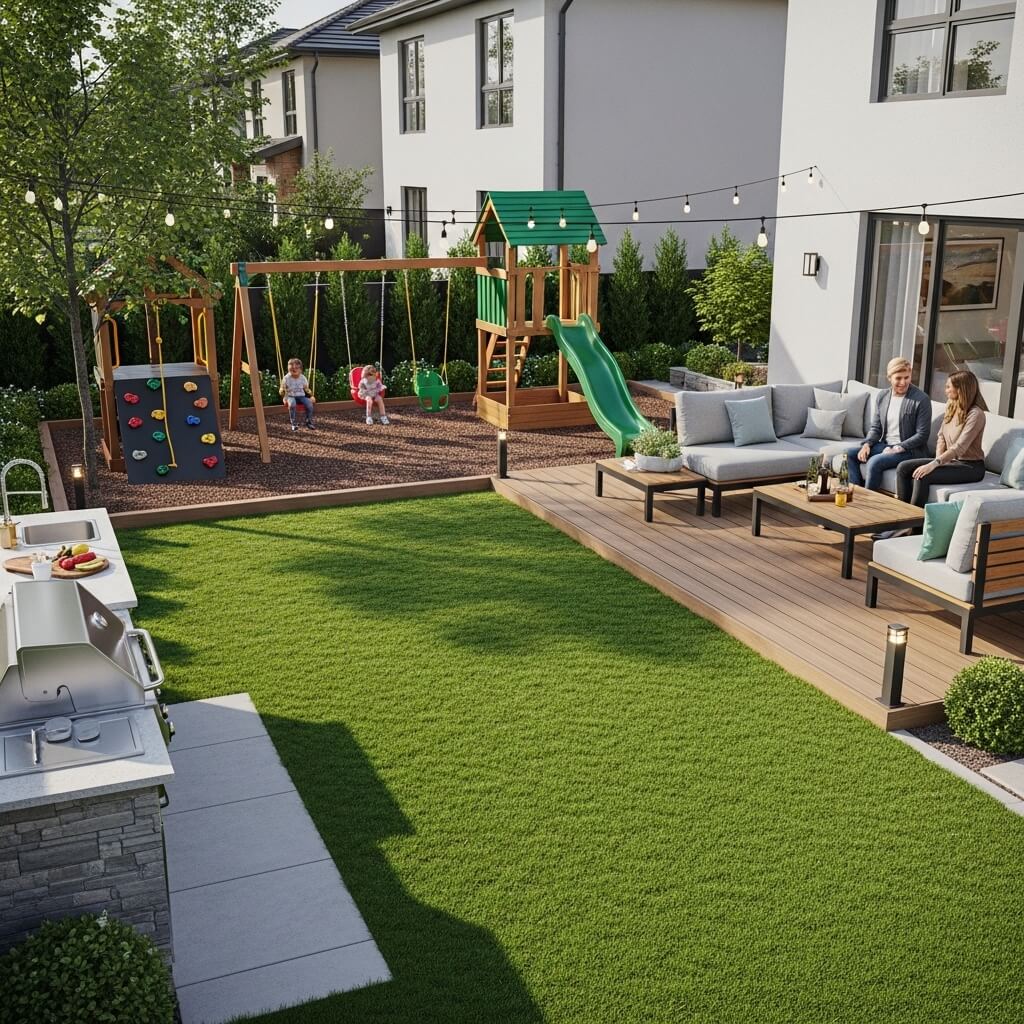
Kids, dogs, outdoor entertaining, vegetable gardens, and maybe some actual aesthetics thrown in there somewhere—family backyards need to work hard. You’re balancing multiple (sometimes competing) needs while trying to create something that doesn’t look like a playground exploded in your yard.
Functional family design prioritizes durability, safety, and flexibility while still looking good. You need surfaces that handle traffic, plants that survive soccer balls, and zones for different activities that can evolve as your family does.
Essential elements for family backyards:
- Durable ground covers (artificial turf, clover lawns, or hardy grass varieties)
- Defined play zones away from delicate plantings
- Raised garden beds kids can help with (and can’t easily destroy)
- Shaded areas for summer play and relaxation
- Outdoor storage that’s attractive and accessible
- Flexible seating that accommodates crowds or intimate gatherings
- Low-maintenance plantings (because you’ve got enough to do)
The secret is creating separate zones without hard barriers. Use different ground materials, level changes, or plantings to define spaces. The sandbox area, dining zone, and garden beds all coexist peacefully when properly zoned.
Making It Work for All Ages
Here’s something I learned from parents with better planning skills than I initially had: design for adaptability. That sandbox becomes a raised bed when kids age out of it. The play structure area transitions to a firepit hangout for teenagers. Built-in seating serves toddlers and teenagers equally well.
Safety matters, obviously, but don’t sacrifice aesthetics entirely. Soft surfaces around play areas don’t have to be that awful rubber mulch—there are attractive options. Fencing can be beautiful while still keeping toddlers contained and dogs from escaping.
I’ve seen family backyards that genuinely impress me aesthetically while still functioning perfectly for chaos-creating small humans. It’s possible, I promise. The key is accepting that perfection isn’t the goal—usable beauty is.
Also Read: 10 Relaxing Garden Landscape Design Ideas for Cozy Outdoors
Rustic Cottage Style Backyard Garden
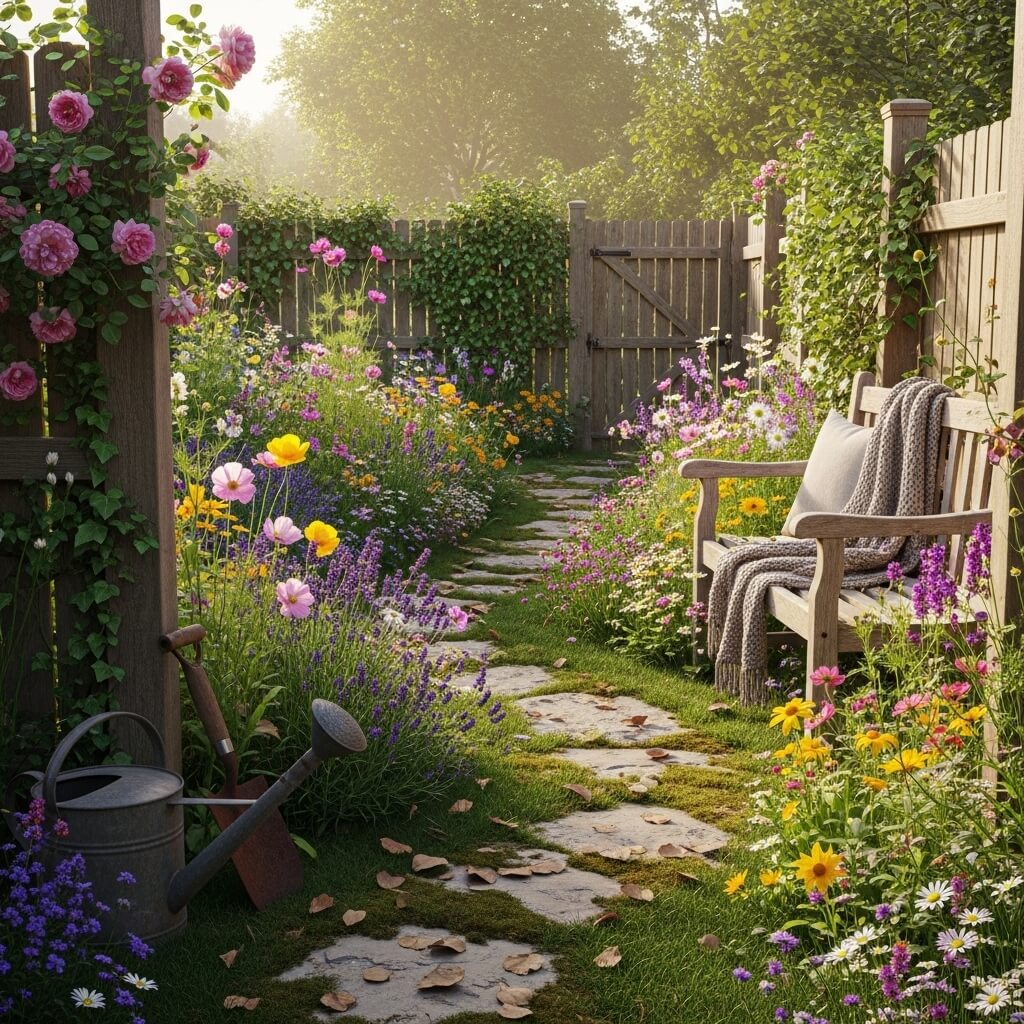
There’s something deeply appealing about cottage gardens. Maybe it’s the abundance of flowers, the slightly chaotic-but-charming plant combinations, or the way they feel like they’ve existed forever even when newly planted. Cottage garden style embraces romance, informal design, and that “I just threw some seeds around and magic happened” aesthetic (that actually requires quite a bit of planning).
This style rejects formal structure in favor of overflowing beds, climbing roses, self-seeding flowers, and winding paths. You’re creating an English countryside feeling regardless of where you actually live.
Cottage garden characteristics:
- Mixed flower borders with perennials, annuals, and bulbs
- Climbing plants on arbors, fences, and walls
- Weathered or reclaimed materials for hardscaping
- Vintage or antique garden accessories
- Herbs mixed with ornamentals
- Pastel and white color schemes (though bold colors work too)
- Overflowing planters and window boxes
The genius of cottage gardens is their forgiving nature. Plants grow into each other, self-seed in unexpected places, and create happy accidents. That slightly messy abundance is the entire point.
Creating Structure in Informal Design
Here’s the paradox: the best cottage gardens have underlying structure even though they look wonderfully chaotic. Permanent elements like paths, fences, arbors, and larger shrubs create the bones, while flowers provide the abundance.
Start with a simple path—gravel, stepping stones, or brick. Add a focal point (a bench, birdbath, or small sculpture). Choose a few larger plants as anchors (roses, shrubs, or small trees). Then fill in with layers of flowering plants in varying heights. Let them grow together, overlap, and generally do their thing.
I planted my cottage garden three years ago, and it’s just now hitting that perfect stage where everything weaves together. The first year looked sparse and I panicked. The second year looked better but still obviously new. Year three? Magic. Patience rewards you massively with this style.
Bringing It All Together
Look, transforming your backyard isn’t about copying someone else’s design perfectly or spending your life savings at the garden center. It’s about creating an outdoor space that makes you actually want to be outside, that reflects your personality, and that works for your real life (not some imagined perfect version where you have unlimited time and money).
Maybe you’re drawn to the calm simplicity of Zen design, or maybe you want a tropical jungle so lush you expect parrots to show up. Perhaps you need something tough enough to handle three kids and a dog, or you’re working with a space so small you can see all the edges at once. The right design for you is the one that makes you happy when you’re in it.
Start small if you need to. Pick one area, one style, one project. Transform your patio into a boho lounge space before tackling the whole yard. Install a fire pit before committing to an entire luxury outdoor room. Build one vertical garden wall and see how you like it. Gardens evolve—they’re never truly “finished”—so give yourself permission to experiment and adjust as you go.
The backyard you’re dreaming about is absolutely achievable. It might take longer than you’d like, cost a bit more than you budgeted, or require learning some new skills along the way. But eventually, you’ll step outside into a space that feels like yours, that serves your needs, and that maybe—just maybe—makes the neighbors peek over the fence wondering how you pulled it off. And honestly? That feeling is worth every bit of effort you’ll put in.
Now get out there and make something beautiful 🙂