10 Inspiring Room Divider Ideas for Dream Home Setup
- Bedroom Design
 Ben
Ben- 0
- 33 minutes read
So you’ve got a space that just doesn’t feel right. Maybe your studio apartment looks like one giant room with zero definition, or perhaps your open-plan living area needs something to break up all that emptiness. I get it—I’ve been there, staring at my space thinking, “How do I make this work without building actual walls?” Enter room dividers, the unsung heroes of interior design that can transform your home without needing a construction crew or selling a kidney to afford renovations.
Here’s the thing: room dividers aren’t just practical. They’re mood-setters, privacy-creators, and sometimes even conversation starters. I’ve experimented with more dividers than I’d like to admit (my partner still jokes about my “phase”), and I’ve learned what works, what doesn’t, and what looks amazing in pictures but is a nightmare in real life. Let me walk you through ten room divider ideas that’ll actually transform your space into the dream home setup you’ve been scrolling through Pinterest boards to find.
Wooden Slat Sliding Room Divider
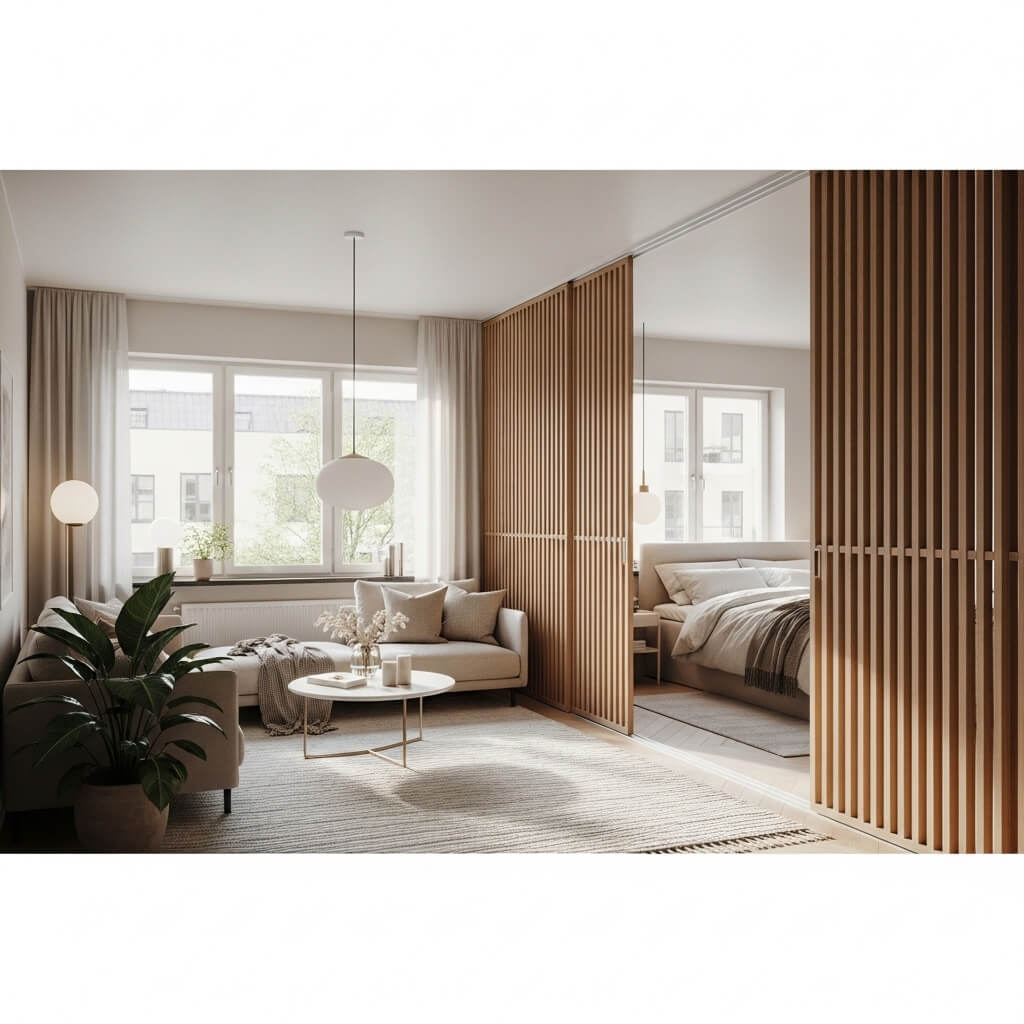
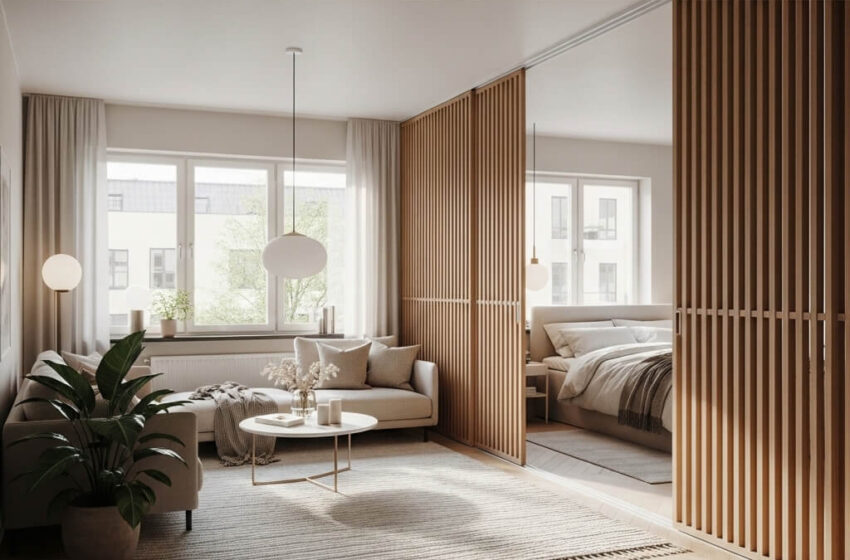
Let’s kick things off with something sleek and modern that doesn’t scream “I bought this at a garage sale.” Wooden slat sliding dividers are basically the cool kids of the divider world. They glide along a track system, they look sophisticated, and they give you that perfect balance between separation and openness.
I installed one between my living room and home office last year, and honestly? Game-changer. The vertical slats let light filter through while still creating distinct zones. When I’m working, I slide it closed and suddenly my brain registers “office mode.” When I’m done, I slide it open and—boom—spacious living area again.
Why They Work
The beauty of wooden slat dividers is in their versatility. You can find them in different wood finishes—walnut, oak, pine, you name it. They complement practically any design style, from Scandi-minimal to mid-century modern. Plus, the sliding mechanism means you’re not dealing with awkward folding or panels that take up floor space when “open.”
Here’s what makes them particularly brilliant:
- Light permeability: Unlike solid walls, slats allow natural light to flow through
- Adjustable privacy: Slide them however far you need
- Space-saving design: No swing radius to worry about
- Sound dampening: They actually help reduce noise between spaces (not completely, but noticeably)
Fair warning though—installation can be a bit fussy. You’ll need to mount that ceiling track properly, and if you’re renting, you might need to sweet-talk your landlord. But once it’s up? Absolutely worth it.
Hanging Macrame Curtain Divider
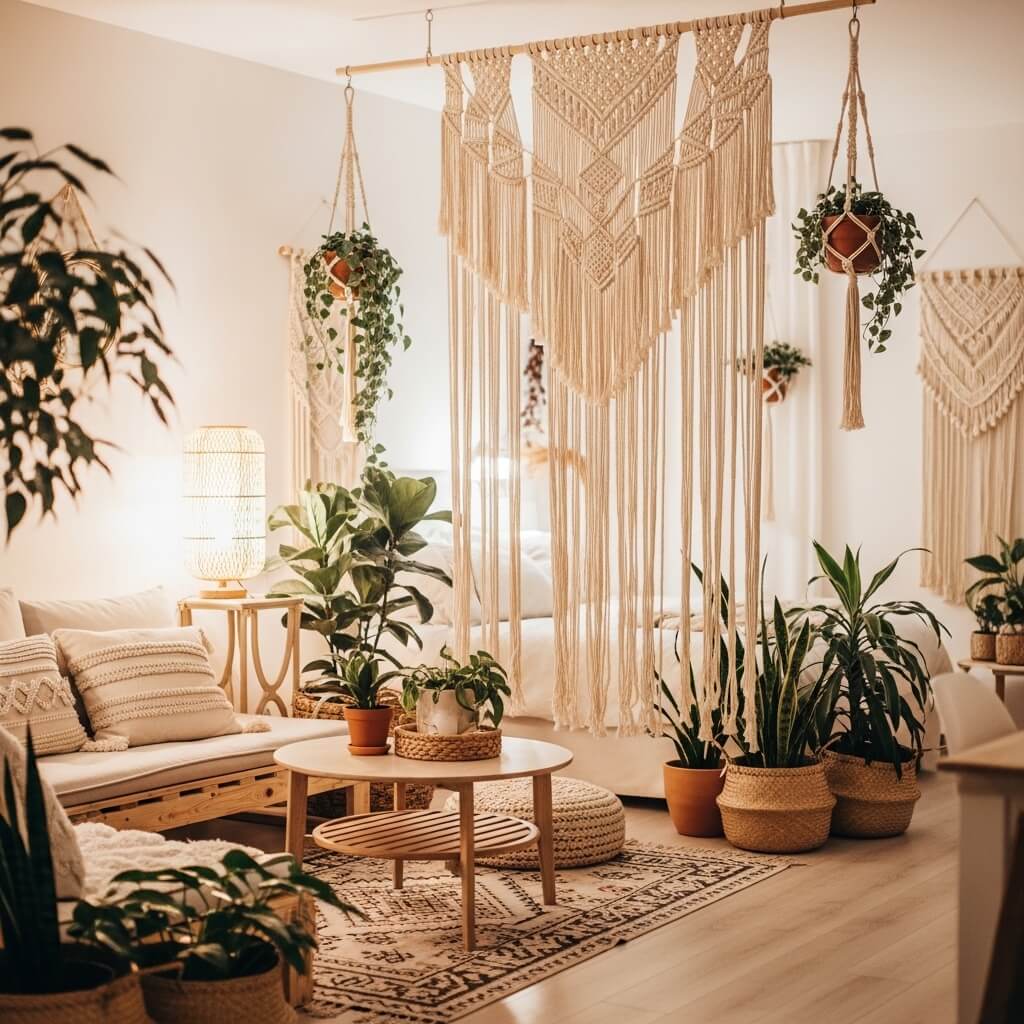
Okay, I know what you’re thinking. “Macrame? Isn’t that just for plant hangers and your aunt’s craft room?” Hear me out. Macrame curtain dividers have made a serious comeback, and when done right, they add this beautiful bohemian texture that softens a space like nothing else.
I was skeptical too until I visited a friend’s place where she’d hung one between her bedroom and dressing area. The intricate knotwork created this gorgeous pattern, and the way it moved slightly when you walked past gave the space a living, breathing quality. Plus, she made it herself over a weekend—which, FYI, is totally doable if you’re even remotely crafty.
The Boho Appeal
These dividers work exceptionally well if you’re going for that laid-back, eclectic vibe. They’re lightweight, easy to install (just a ceiling-mounted rod), and you can find them in countless patterns—from simple geometric designs to elaborate, almost lace-like creations.
Benefits worth noting:
- Texture central: Adds warmth and visual interest without solid barriers
- Customizable length: Hang them floor-to-ceiling or shorter for different effects
- Budget-friendly: DIY options are super affordable
- Rental-friendly: No permanent installation required
The downside? Privacy is minimal. You’re getting definition and aesthetic appeal, not a solid barrier. So maybe don’t use this for your bathroom divider situation 🙂
Indoor Plant Green Wall Divider
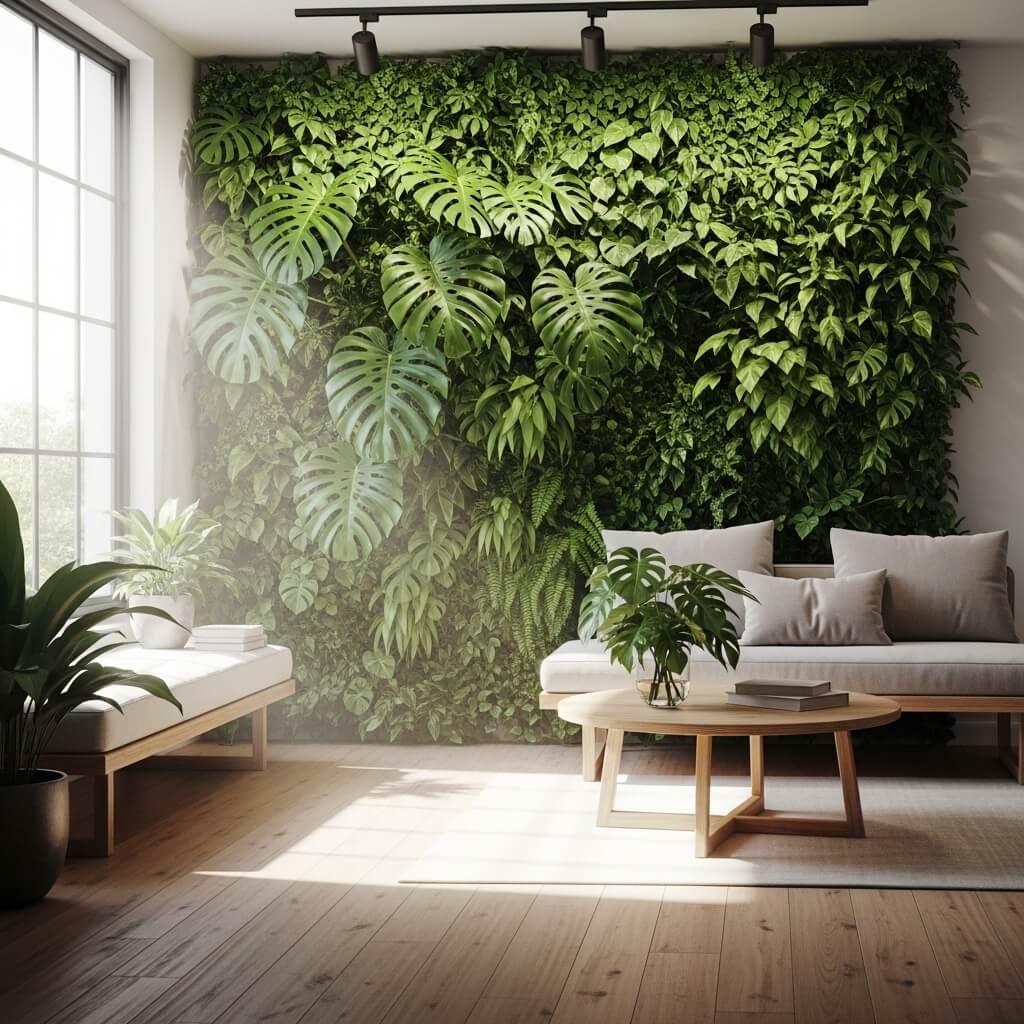
Now we’re talking. Living plant walls as dividers are for people who want to bring the outdoors in and aren’t afraid of a little maintenance. Imagine walking past your divider and being greeted by lush ferns, pothos, or even herbs. It’s functional art that literally cleans your air while dividing your space.
I tried a smaller version of this—a freestanding planter with multiple shelves housing different plants. Did it require more attention than other dividers? Absolutely. Was it worth watching guests stop in their tracks to admire it? You bet.
Creating Your Green Barrier
You’ve got options here. You can go full vertical garden with a hydroponic system (fancy, but requires setup), or you can choose a modular plant stand approach where you arrange plant shelves to create a natural barrier. Both work beautifully.
What makes plant dividers special:
- Air purification: Your divider actually improves air quality
- Biophilic benefits: Plants reduce stress and boost mood (science says so)
- Unique aesthetic: No two plant walls look identical
- Height flexibility: Stack and arrange to your preferred size
Just remember—plants need light and water. If your space is dark or you travel constantly, maybe reconsider. Dead plants as a divider aren’t exactly the vibe we’re going for.
Also Read: 10 Creative Room Inspo Ideas for a Perfect Aesthetic Look
Frosted Glass Panel Divider
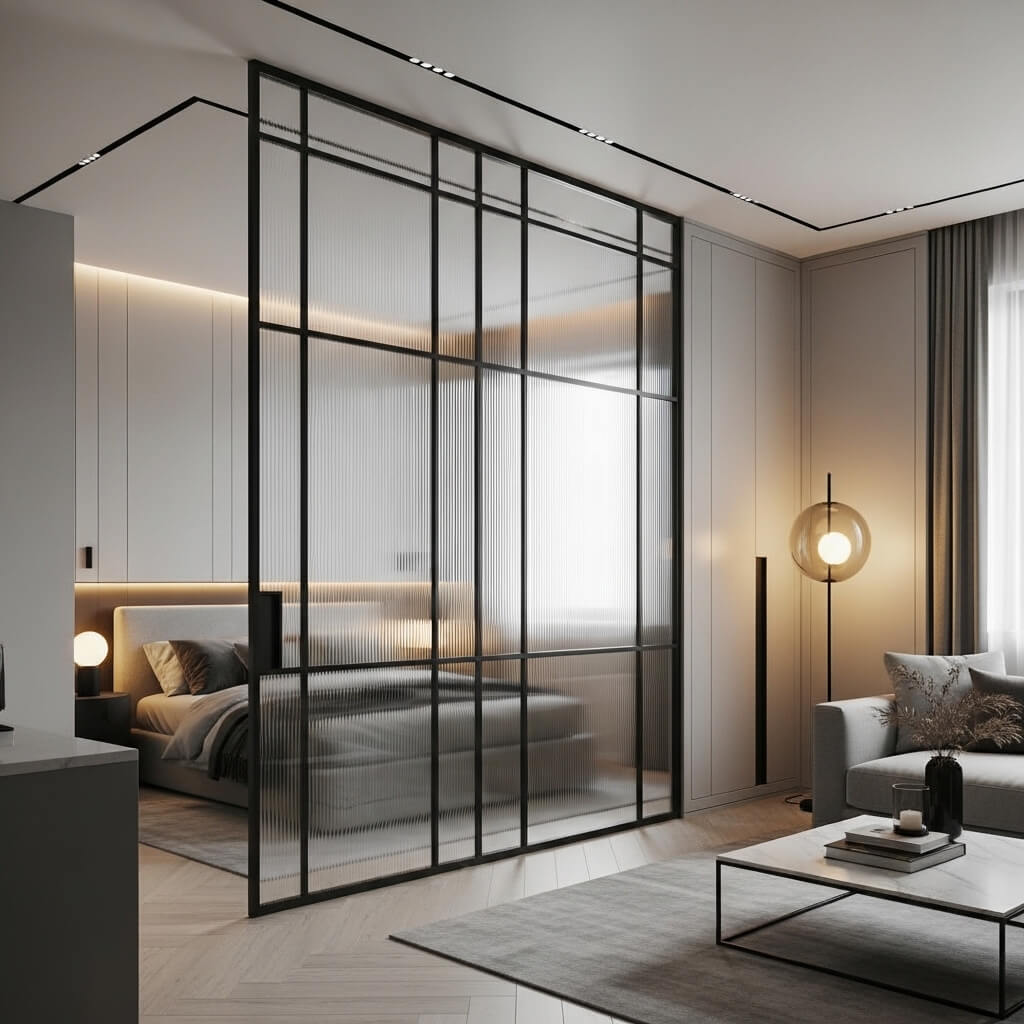
Want to feel fancy? Frosted glass panels bring that upscale, modern edge to any space. They’re particularly brilliant for maintaining an open, airy feel while still creating clear boundaries. Light passes through beautifully, but you get actual privacy—unlike those macrame curtains we talked about earlier.
I’ve seen these used incredibly well in home offices and bathrooms. One friend installed them between her open-plan kitchen and dining area, and the effect was stunning. The glass kept sight lines open enough that the space didn’t feel chopped up, but defined the zones clearly.
The Sophisticated Choice
These come in various styles—fully frosted, partially frosted with clear sections, textured patterns, you name it. You can mount them as stationary panels or on a track system for sliding functionality.
Why they’re worth considering:
- Light transmission: Maintains brightness throughout your space
- Modern aesthetic: Clean lines and minimalist appeal
- Durability: Tempered glass lasts forever with minimal maintenance
- Perceived spaciousness: Doesn’t make rooms feel smaller
The reality check? Glass panels aren’t cheap, and installation requires some skill. You’ll probably need professional help unless you’re particularly handy. Also, fingerprints. So many fingerprints. Keep a cleaning cloth handy.
Bookshelf Open Storage Divider
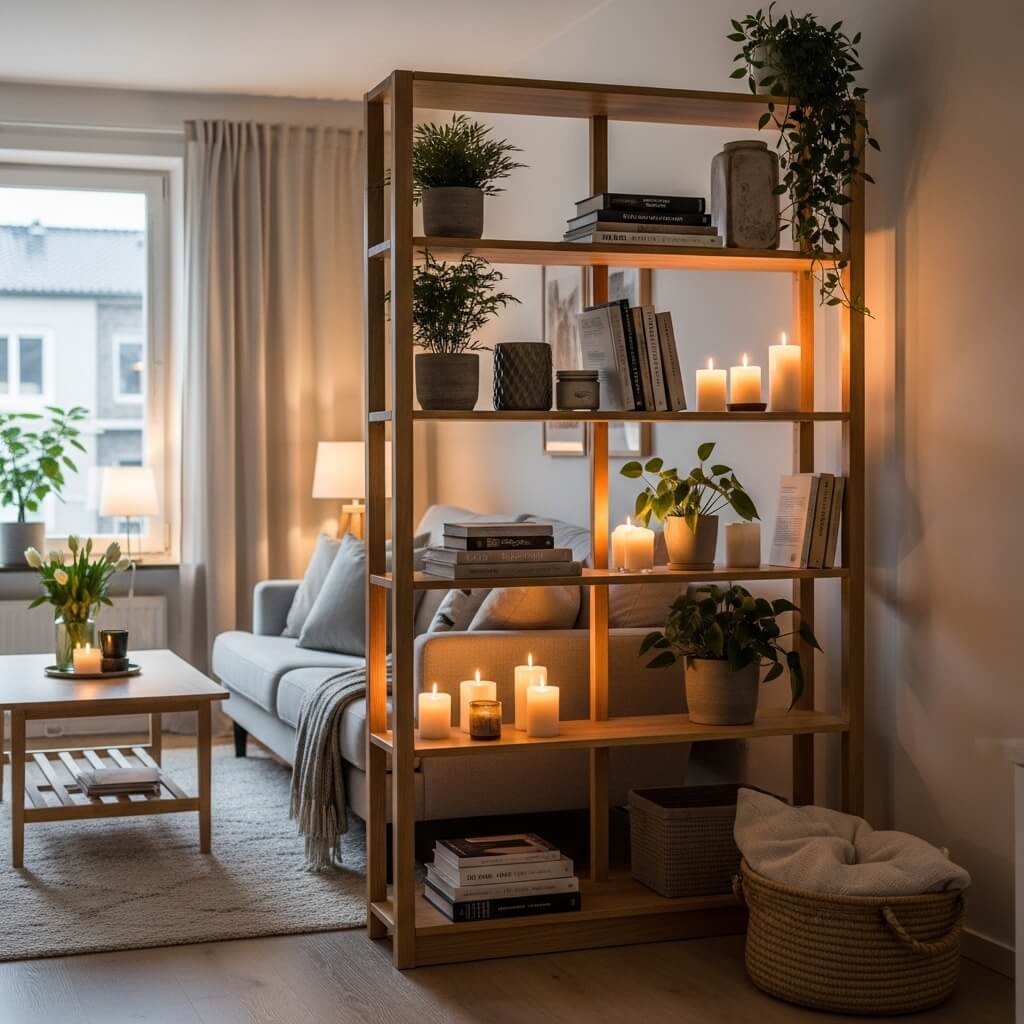
Here’s where function meets form in the most practical way possible. Open bookshelf dividers give you storage, display space, AND room division all in one piece of furniture. IMO, this is probably the most versatile option on this list because it works in literally any room and serves multiple purposes.
I used a large bookshelf to separate my living room from my entryway in my last apartment. One side displayed books and decorative items for the living room view, while the other side (facing the entry) held baskets with keys, mail, and other everyday essentials. Double duty at its finest.
Storage That Divides
The genius of bookshelf dividers is their accessibility from both sides. You’re not creating a solid wall—you’re creating a functional piece that enhances both spaces it touches. Plus, you can style it differently depending on what each “room” needs.
Key advantages:
- Maximum functionality: Storage, display, and division combined
- Easy to relocate: Unlike built-ins, you can move these around
- Variety of styles: From industrial metal to traditional wood
- Cost-effective: Many affordable options available
Choose open back designs rather than those with backing panels. You want light and sight lines to pass through, even partially. And yes, you’ll need to keep it organized because both sides are visible—consider that your motivation to finally tackle that clutter.
Folding Wooden Screen Divider
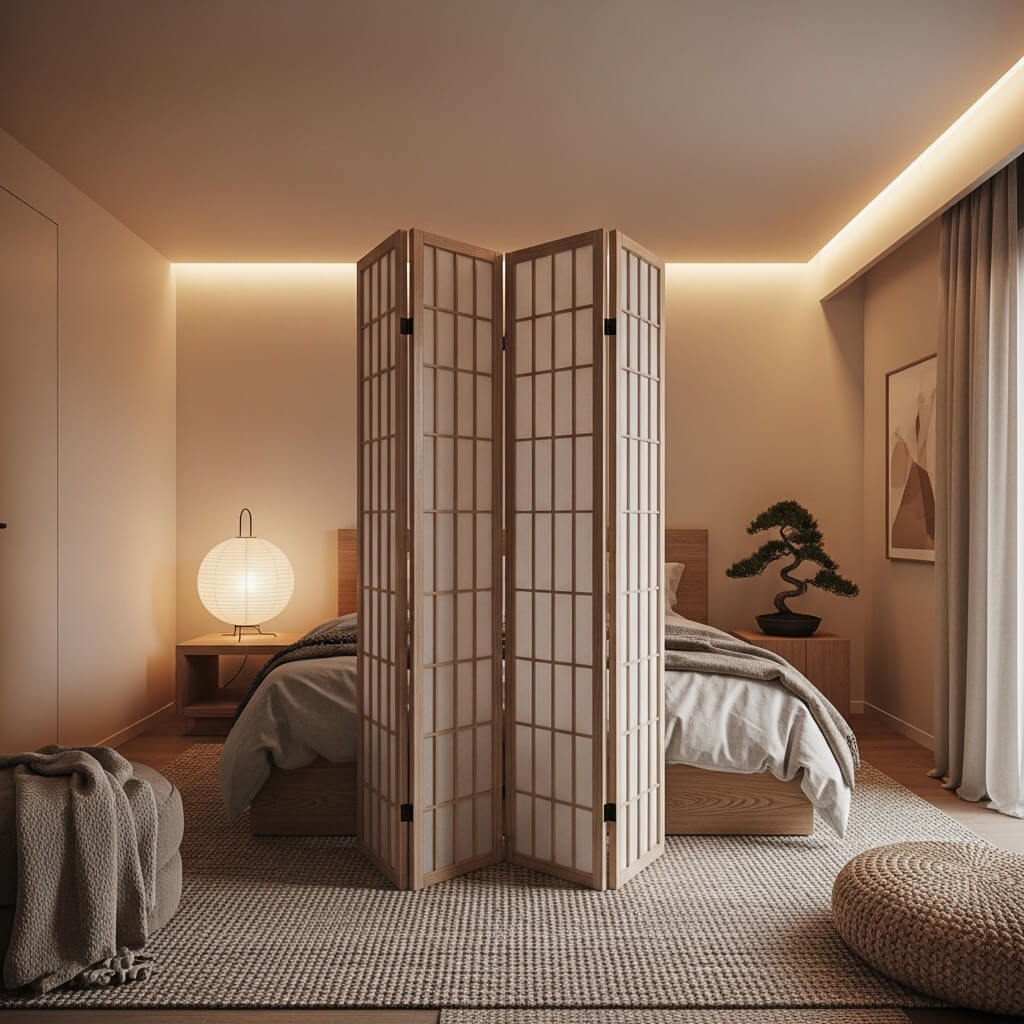
Classic, portable, and endlessly useful—folding wooden screens are the OGs of room dividers. They’ve been around forever for good reason. You can position them wherever needed, fold them up when you don’t need them, and they add instant architectural interest to any space.
I keep one near my guest bed. When someone’s staying over, I unfold it to create a makeshift “closet” area where they can hang clothes and have some privacy from the rest of the room. When it’s just me, it folds up and leans decoratively against the wall. Zero permanent commitment required.
The Flexibility Factor
These screens typically come in three, four, or five-panel configurations. The more panels, the longer your divider, but also the more floor space it requires. They’re freestanding, which means you can literally place them anywhere without installation.
What makes them special:
- Ultimate portability: Move them room to room as needed
- No installation required: Perfect for renters
- Decorative element: Many feature beautiful carved or painted designs
- Instant privacy: Unfold and you’ve got a barrier
The limitation? They’re not super stable. A curious pet or toddler can knock them over (ask me how I know). And they work best in corners or against walls rather than in the middle of open spaces where they might get bumped.
Also Read: 10 Easy Landscaping Ideas for a Fresh Outdoor Makeover
Bamboo Curtain Divider Setup
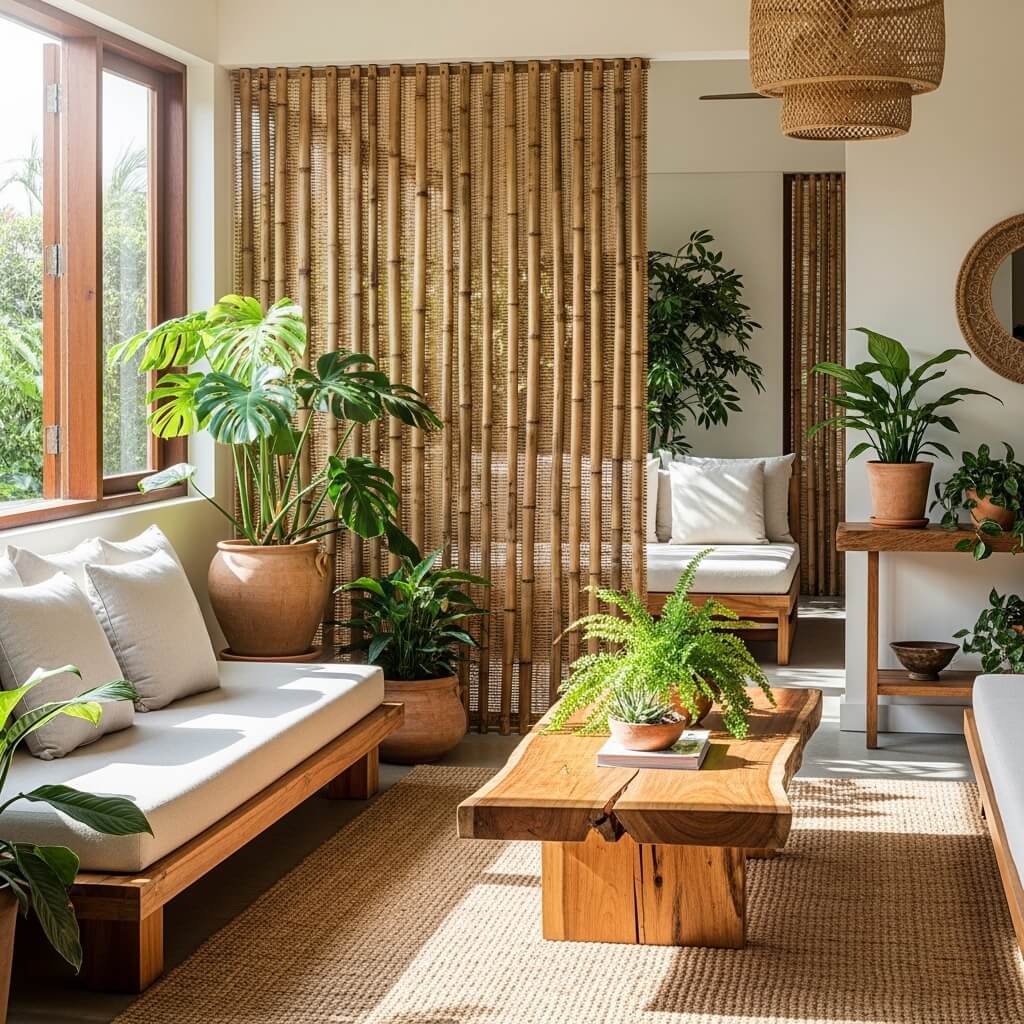
If you want something lightweight, natural, and slightly exotic-feeling, bamboo curtain dividers hit that sweet spot. They’ve got this relaxed, tropical vibe that makes any space feel more vacation-like and less “Monday morning deadline stress.”
I used bamboo curtains to separate my balcony from my living room during summer months. They filtered the harsh afternoon sun beautifully while still letting breezes through. The soft clacking sound they made when moved was oddly satisfying—way more pleasant than heavy drapes.
Natural and Light
Bamboo curtains come in different weaves and densities. Some are tightly woven for more privacy, while others have larger gaps that let more light and air through. You can hang them from tension rods, ceiling tracks, or regular curtain rods.
Benefits include:
- Eco-friendly material: Sustainable and renewable
- Lightweight: Easy to install and adjust
- Natural aesthetic: Complements organic, earthy design styles
- Affordable: Generally budget-friendly option
Just know that bamboo isn’t for every climate. In super humid environments, they can warp. And they provide visual screening but not much sound dampening—you’ll still hear everything from the other side.
Industrial Metal Frame Divider
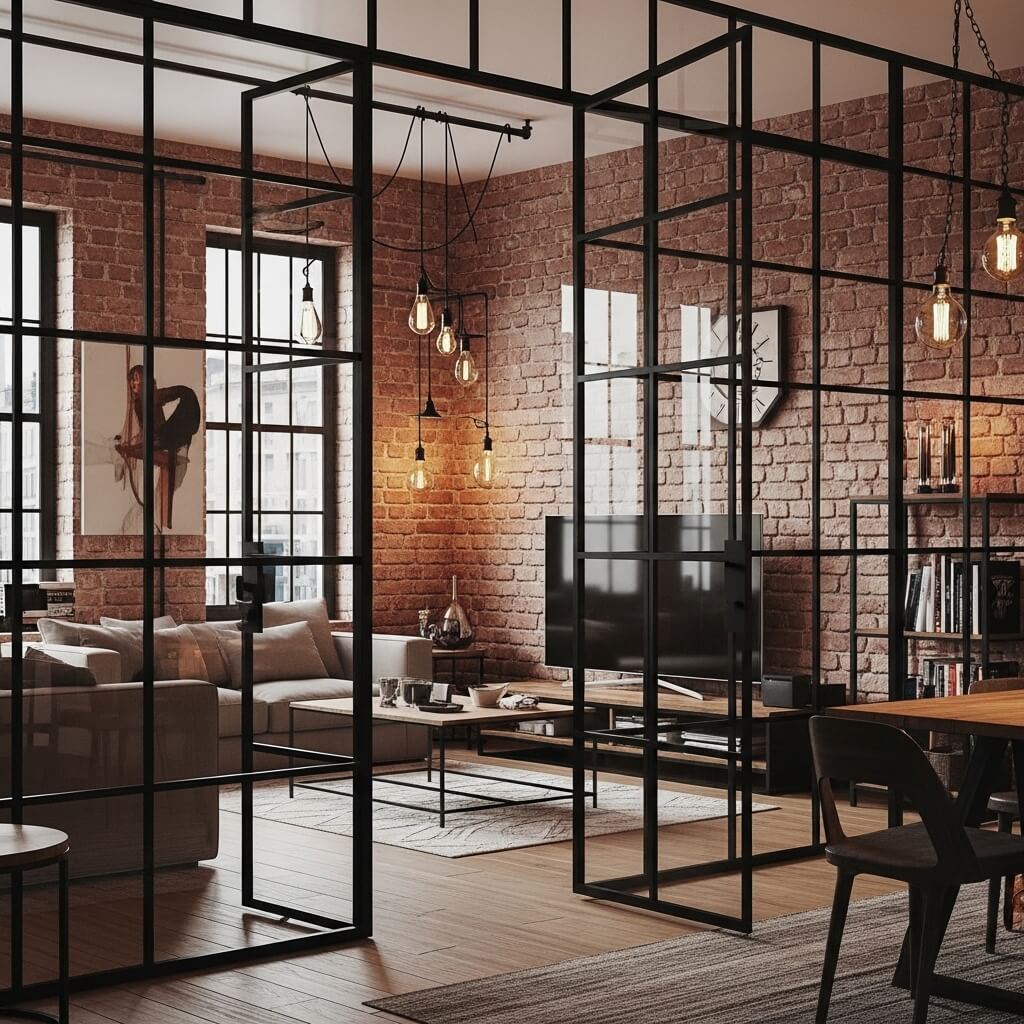
Want that edgy, urban loft vibe? Industrial metal frame dividers bring serious style points. These typically feature black metal frames—sometimes with glass, mesh, or left open—that create bold architectural statements while dividing spaces.
I’m a sucker for this aesthetic. There’s something about the clean lines and matte black finish that just works, especially in modern or industrial-style spaces. I’ve seen these used brilliantly in home gyms (separating workout zones) and studios (dividing sleep areas from living spaces).
The Modern Edge
These dividers often mimic the look of factory windows or warehouse partitions—think grid patterns with square or rectangular sections. Some include frosted glass panels within the frames, while others stay open or use mesh screening.
Why they stand out:
- Strong visual impact: Makes a definite design statement
- Sturdy construction: Metal frames are durable and stable
- Versatile styling: Works with multiple design aesthetics
- Custom options: Many companies offer made-to-measure sizing
The consideration here is weight and installation. Metal frames aren’t exactly lightweight DIY projects. You’ll likely need help moving them into position, and if they’re ceiling-mounted, professional installation is smart. Also, they tend to be pricier than fabric or bamboo alternatives.
DIY Rope and Wood Partition Wall
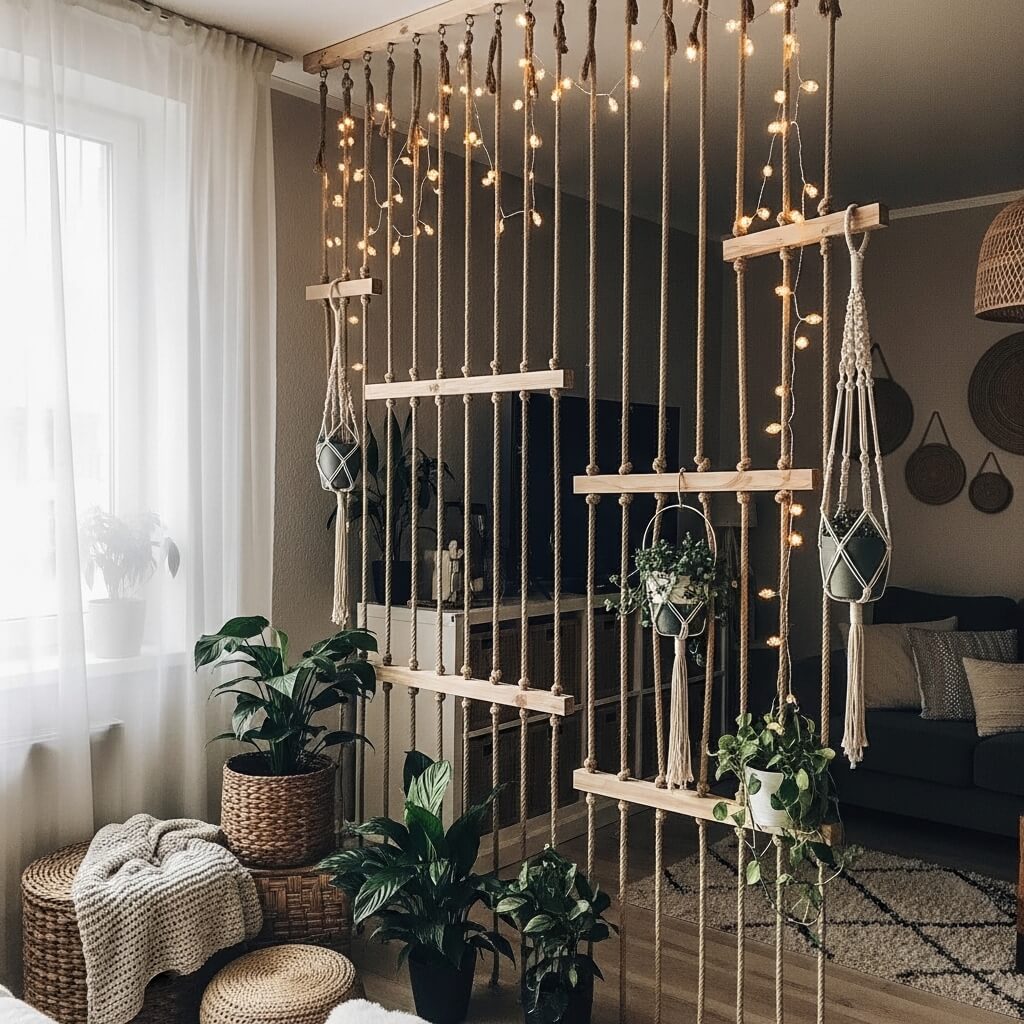
Alright, creative folks, this one’s for you. Rope and wood partition walls are basically the DIY darling of room dividers—totally customizable, surprisingly easy to make, and they look way more expensive than they actually are. Ever wondered why these pop up constantly on home makeover shows? Because they’re photogenic and achievable for weekend warriors.
I built one for my reading nook using thick rope and wooden dowels. Total cost? Maybe $60. Total time? One Saturday afternoon. The satisfaction of telling people “I made that”? Priceless. The project involves creating a frame and stringing rope vertically (or in patterns) between wood sections.
The DIY Satisfaction
This option lets you control every design element—rope thickness, spacing, wood stain color, dimensions, everything. You can make it rustic with rough-hewn wood and natural rope, or sleek with painted dowels and dyed rope.
What makes it great:
- Budget-friendly: Materials are inexpensive
- Customization heaven: Literally design exactly what you want
- Skill level: Beginner-friendly if you can measure and drill
- Personal accomplishment: You made functional furniture!
Just be realistic about your skills. If you’ve never handled a drill, maybe watch a few tutorials first. And measure twice, cut once—trust me on this. My first attempt had uneven spacing that drove me nuts until I redid it.
Also Read: 10 Genius DIY Grill Station Cheap Ideas for Small Spaces
Fabric Panel Ceiling Track Divider
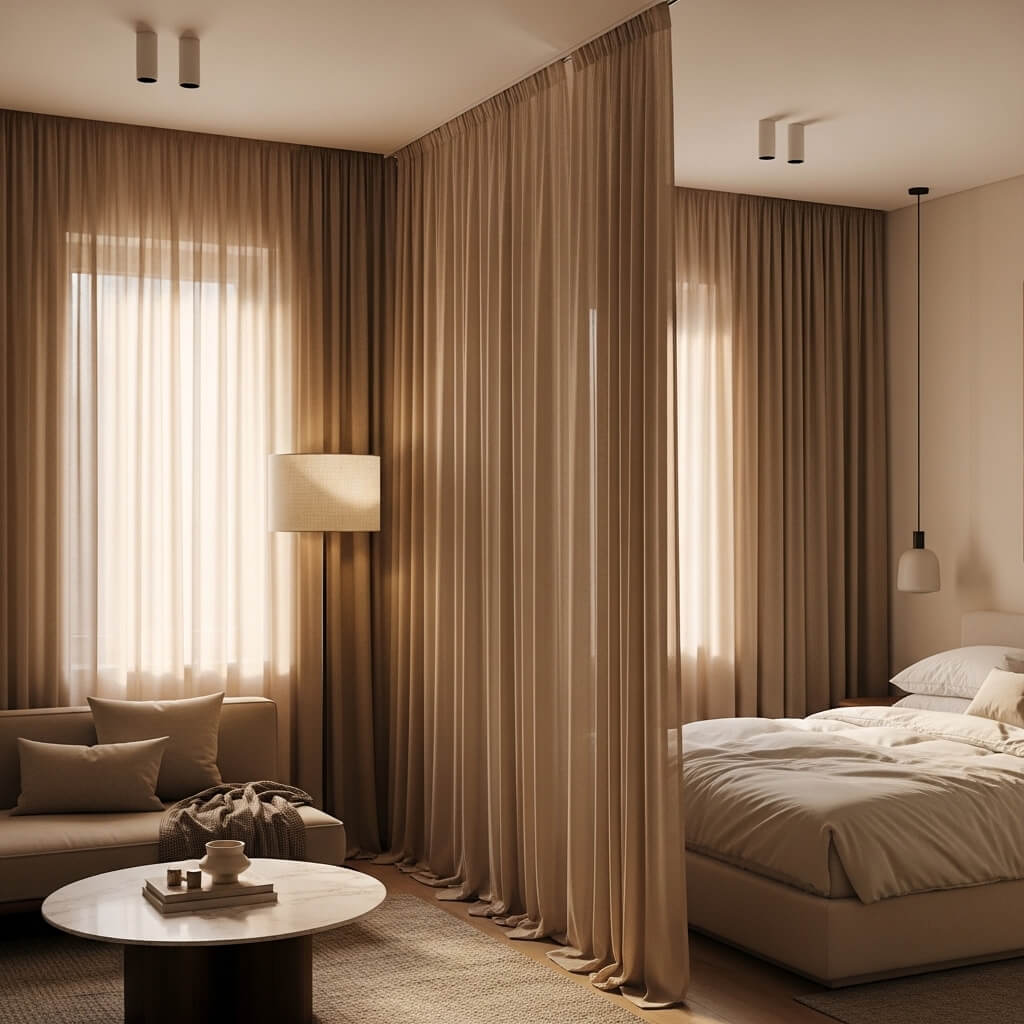
Last but definitely not least, we’ve got fabric panel ceiling track dividers—basically fancy curtains on steroids. These panels slide along ceiling-mounted tracks, giving you smooth operation and a clean, contemporary look. They’re particularly popular in studio apartments and open-plan homes where you need functional division without permanent walls.
My cousin installed these between her bedroom and home office space when she started working remotely. She chose a heavy linen fabric in gray that matched her aesthetic, and the ceiling track made the whole setup look built-in and intentional. When she’s working, she closes the panels. When she’s done, she slides them open. Simple and effective.
The Sleek Solution
The magic is in the ceiling track system—it creates this floating effect where panels seem to glide effortlessly. You can choose from countless fabrics: sheer for light filtering, blackout for privacy, textured for visual interest, whatever fits your needs.
Advantages worth noting:
- Full customization: Choose any fabric you want
- Sound absorption: Fabric dampens noise between spaces
- Easy operation: Quality tracks make opening/closing effortless
- Professional appearance: Looks polished and intentional
Installation requires ceiling mounting, which means finding studs or using proper anchors. The track systems themselves can range from affordable IKEA options to high-end designer solutions. Your choice depends on budget and how permanent you want the installation to be.
Bringing It All Together
Listen, I’ve thrown a lot at you here. Ten different approaches to dividing space, each with its own personality and practical considerations. The truth is, there’s no universally “best” room divider—just the best one for YOUR space, YOUR style, and YOUR lifestyle.
Think about what you actually need. Is it privacy? Go with frosted glass or fabric panels. Is it storage? That bookshelf divider is calling your name. Want to make a statement? Industrial metal or those gorgeous wooden slats will do the trick. Working with a tight budget and feeling crafty? DIY rope and wood could be your weekend project.
I’ve personally cycled through several of these options over the years (downsizing, moving, lifestyle changes, you know how it goes), and each served its purpose perfectly at the time. The folding screen was ideal when I needed flexibility. The bookshelf worked beautifully when I needed storage. The sliding wooden slats became my favorite when I wanted something permanent but elegant.
Here’s my actual advice: start with your practical needs, then layer in the aesthetic preferences. A room divider should solve a problem first and look pretty second—though ideally, it does both. Don’t just buy something because it looks amazing on Instagram if it won’t actually work in your space.
And hey, most of these options are reversible decisions. That’s the beauty of dividers versus actual walls. You’re not committing to permanent structural changes. You can try something, live with it, and if it doesn’t work? Change it up. Your home should evolve with you, not lock you into design decisions you made three years ago when you were really into that whole minimalist thing.
The dream home setup you’re imagining? It’s totally achievable. Sometimes it just takes the right room divider to make everything click into place. Now go forth and divide (your space, not your sanity). You’ve got this!