10 Unique Shop Interior Design Ideas for Modern Brand Look
- Shop Design
 Ben
Ben- 0
- 36 minutes read
Look, I’ll be straight with you—walking into a shop with boring, cookie-cutter design is about as exciting as watching paint dry. You know what I’m talking about, right? That generic white-walled store with random shelves that screams “we didn’t even try.” Your shop’s interior isn’t just about putting products on display; it’s your brand’s personality coming to life, and honestly, it can make or break whether customers actually want to spend time (and money) in your space.
I’ve spent way too many hours wandering through retail spaces, mentally redesigning them while pretending to browse (sorry, retail workers), and I’ve picked up a thing or two about what actually works. Whether you’re opening your first boutique or giving your existing shop a much-needed facelift, these 10 interior design ideas will help you create a space that doesn’t just look good on Instagram—it actually converts browsers into buyers.
Minimalist Modern Boutique Store Layout
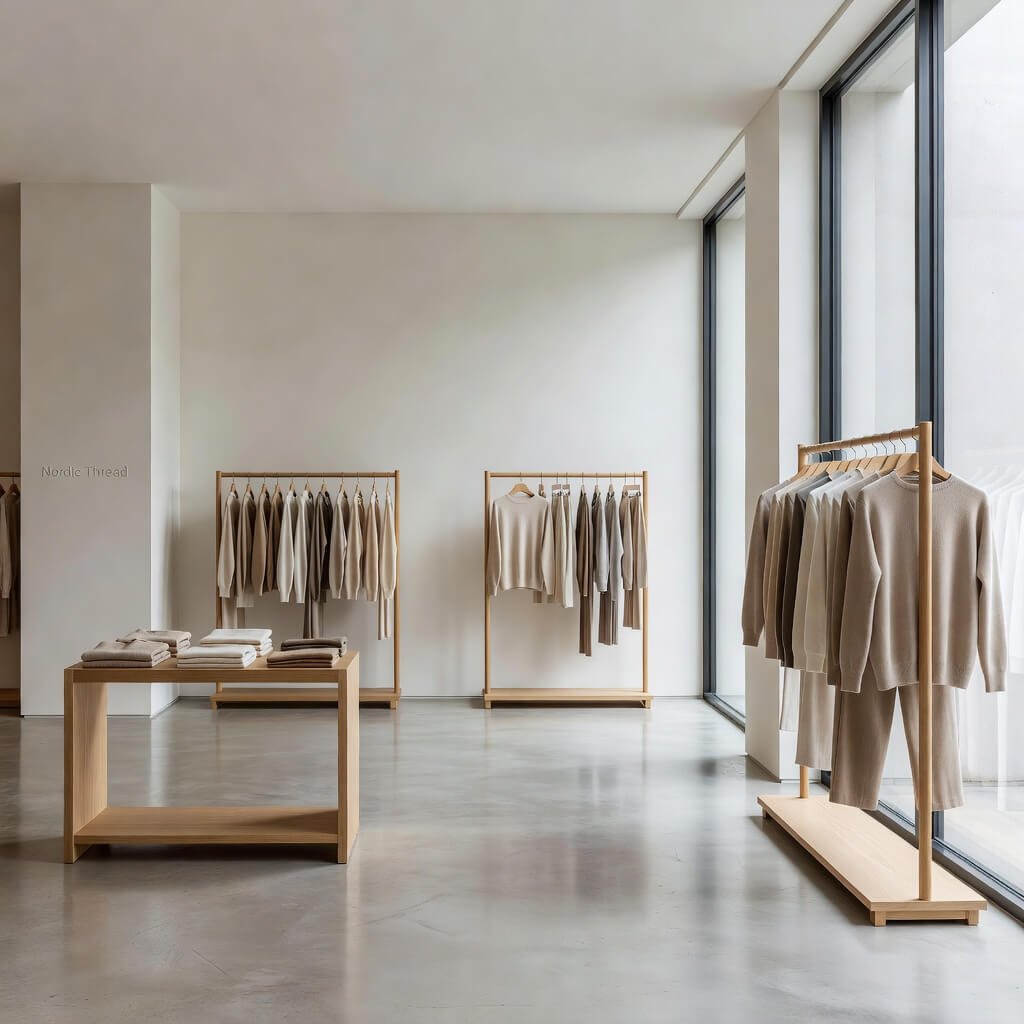
Ever notice how the most expensive stores somehow have the least stuff on display? That’s not an accident, friend. Minimalist design works because it tells customers, “We’re so confident in our products, we don’t need to overwhelm you with options.”
I once redesigned a friend’s boutique using minimalist principles, and her sales jumped 30% in two months. We stripped everything down to the essentials—clean lines, neutral color palettes (think whites, grays, and beiges), and strategic pops of black for contrast. The magic happens when you give each product breathing room.
Key Elements That Make It Work
Here’s what you need to nail this look:
- Open floor space: Don’t cramp your layout. Leave at least 60% of your floor space open for movement
- Limited color palette: Stick to 2-3 main colors maximum
- Quality over quantity: Display fewer items but make them count
- Sleek fixtures: Chrome, brushed metal, or white lacquered display units
- Hidden storage: Keep backup inventory completely out of sight
The beauty of minimalist design? It forces you to curate ruthlessly. You can’t hide mediocre products behind visual noise. Everything you display becomes a statement piece. Your customers won’t feel overwhelmed trying to decide between 47 different options—they’ll appreciate the carefully selected collection you’ve presented.
Pro tip: Add one dramatic focal point—maybe a statement light fixture or a single piece of bold artwork. This breaks the monotony without cluttering the space.
Luxury High-End Fashion Shop Interior Concept
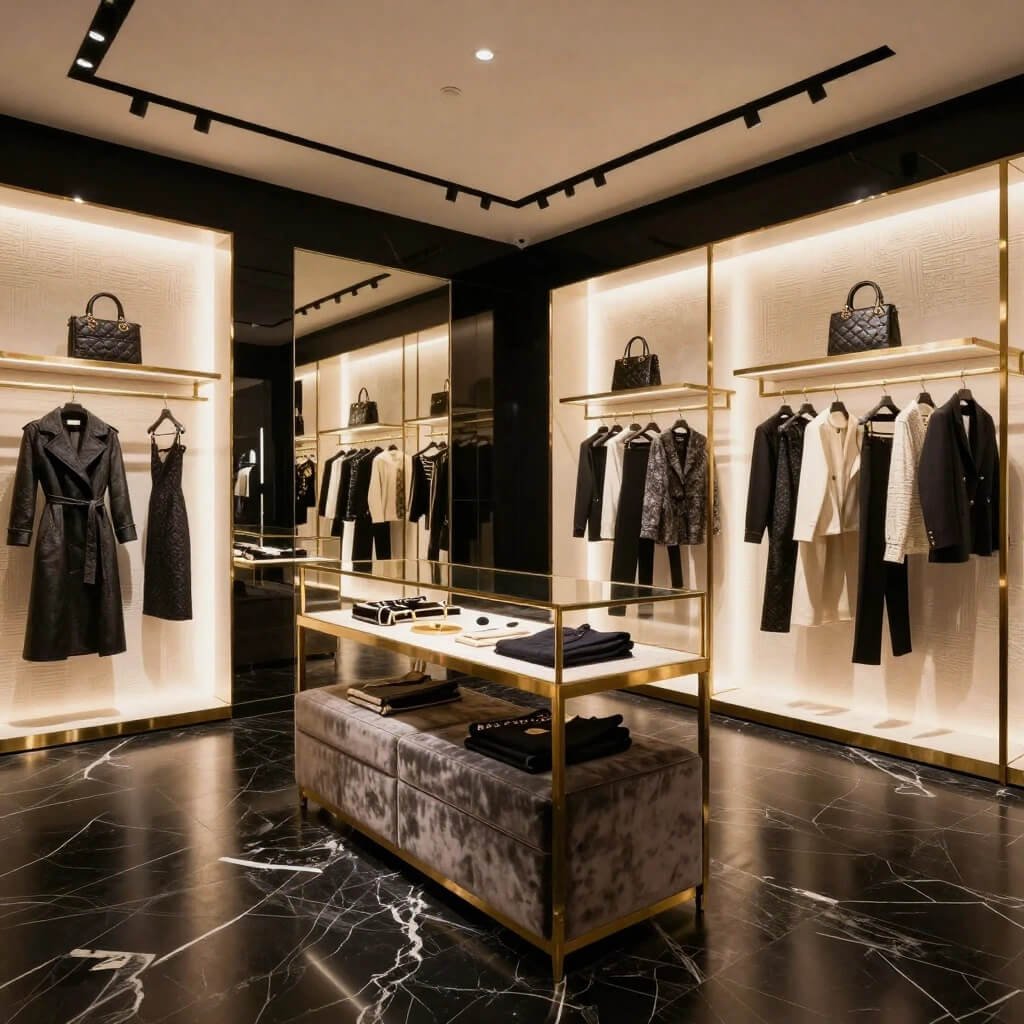
Want your customers to feel like they’re shopping somewhere fancy even if your price points aren’t Gucci-level? The luxury look is all about creating an experience that screams “exclusive.”
I’m talking marble (or really good marble-look tiles, because let’s be real about budgets), plush seating areas, and lighting that makes everyone look like they just got back from a spa vacation. The psychology here is simple: people treat spaces—and products—with more respect when the environment feels upscale.
Creating That High-End Vibe
You don’t need a massive budget to pull this off. Here’s what actually matters:
- Rich textures: Velvet seating, silk curtains, or leather accents
- Metallic finishes: Gold, brass, or rose gold details on fixtures
- Statement mirrors: Large, ornate mirrors make spaces feel bigger and fancier
- Soft, layered lighting: Chandeliers paired with subtle spotlights
- Fresh flowers or high-end artificial arrangements: Nothing says luxury like fresh blooms
- Personalized service areas: A dedicated checkout counter that feels like a concierge desk
The trick? Mix one or two genuinely expensive elements (like a real marble countertop) with high-quality look-alikes elsewhere. Most customers can’t tell the difference between real brass and brass-finished steel, FYI.
Don’t forget about scent! Luxury retailers pump specific fragrances through their stores. You can grab a signature scent diffuser for under $100 that completely transforms the atmosphere.
Small Space Retail Shop Smart Design Setup
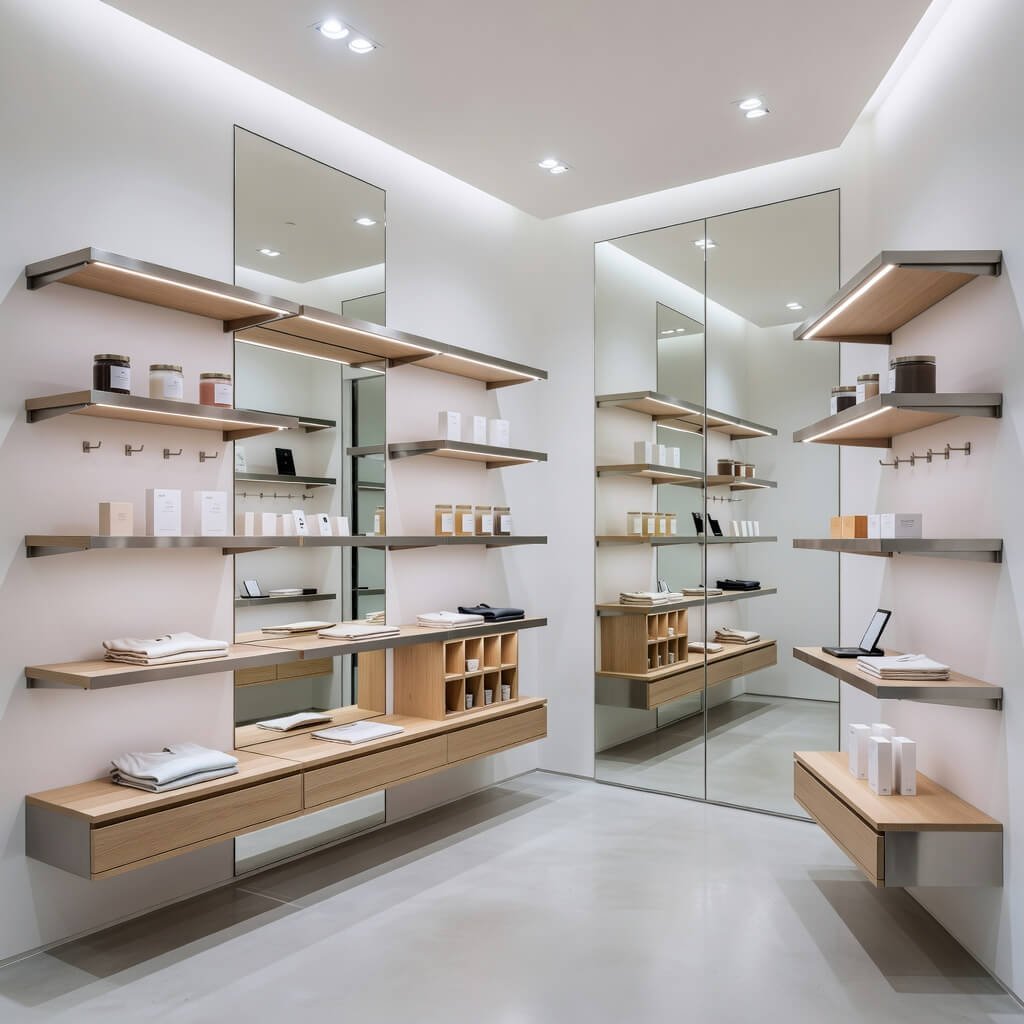
Okay, so you’ve got a shop the size of a shoebox. Join the club! Some of the coolest stores I’ve visited have been tiny, and they’ve used their space limitations as a creative challenge rather than a handicap.
Small spaces force you to get creative, and honestly, that’s when the best design happens. I helped a vintage clothing seller design her 200-square-foot shop, and we managed to display over 300 pieces without making it feel cramped. How? Strategy, baby.
Smart Space-Maximizing Tricks
Check out these game-changers:
- Vertical everything: Use your walls from floor to ceiling. Install high shelving and display racks
- Multi-functional furniture: Benches with storage underneath, display tables that fold away
- Mirrors on strategic walls: They literally double your perceived space
- Sliding fixtures: Rolling racks you can move based on traffic flow
- Corner utilization: Those awkward corners? Perfect for rotating displays or statement pieces
- Transparent materials: Glass shelves and acrylic displays don’t visually crowd the space
Here’s something most people miss: small shops should actually have FEWER items on display than larger stores. I know, sounds backwards, right? But overcrowding a small space makes customers claustrophobic. They’ll leave faster than you can say “summer clearance sale.”
Color psychology matters here too. Light colors on walls make spaces feel larger, while one dark accent wall can create depth. Play with it until it feels right.
Also Read: 10 Unique Shop Front Design Ideas for Attractive Storefronts
Wooden Rustic Handmade Craft Shop Interior Style
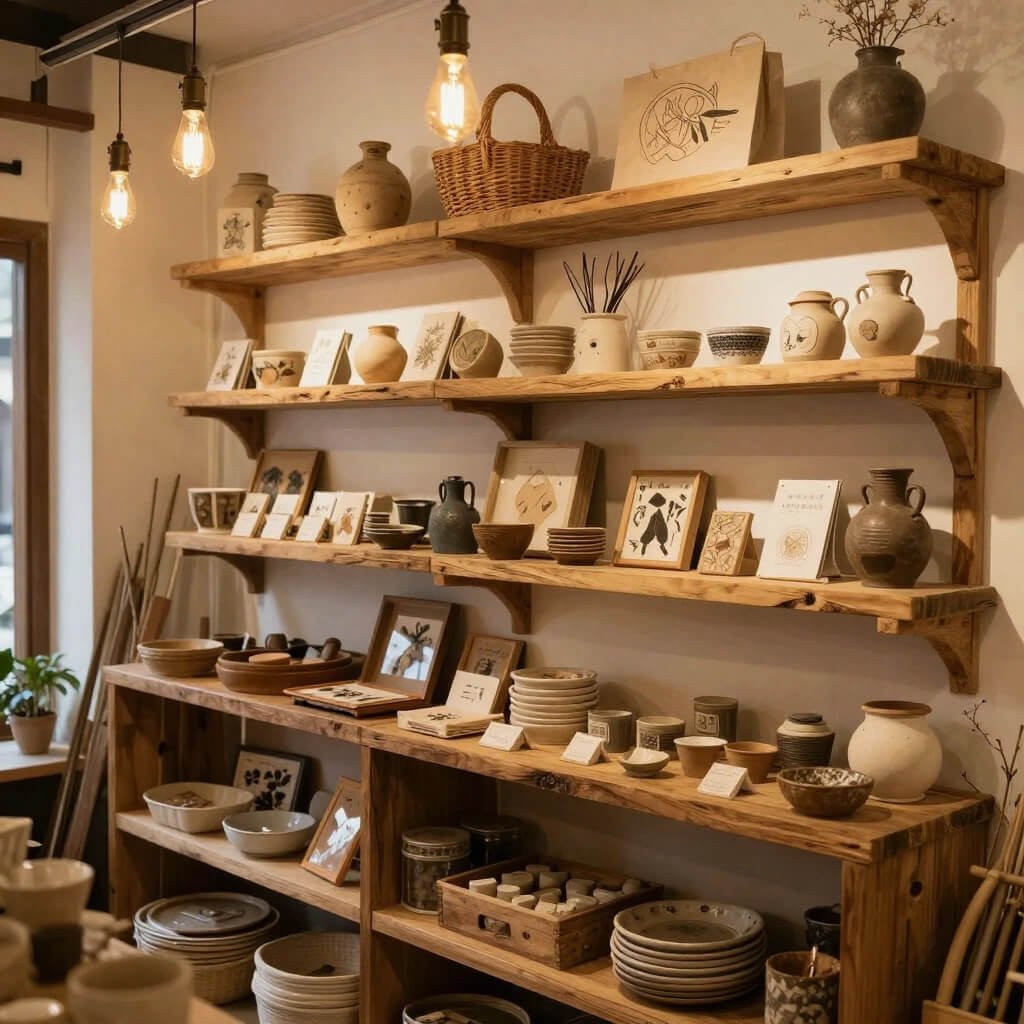
There’s something genuinely comforting about walking into a space filled with natural wood, isn’t there? The rustic aesthetic works beautifully for craft shops, artisan goods, or anything handmade because the setting reinforces the product story.
I visited this incredible pottery shop in Vermont (random, I know) where literally everything was wood and exposed brick. The space felt like walking into a craftsperson’s workshop, and customers ate it up. They spent an average of 40 minutes browsing—that’s forever in retail time.
Nailing the Rustic Charm
Here’s how you build that authentic workshop vibe:
- Reclaimed wood: For shelving, display tables, and wall treatments. Bonus points—it’s often cheaper than new wood
- Exposed elements: Show those brick walls, pipes, or beams if you’ve got them
- Edison bulbs: Warm-toned, vintage-style lighting that isn’t too bright
- Natural fiber accents: Burlap, jute, or cotton for texture
- Greenery: Plants, plants, and more plants. Nothing says “natural” like actual nature
- Metal accents: Black iron or aged copper for fixtures and hardware
The beauty of rustic design? Imperfection is your friend. That wonky shelf made from an old barn door? That’s a feature, not a bug. Customers shopping for handmade goods appreciate authenticity, and a too-polished space would actually work against you.
One warning though—rustic doesn’t mean messy. You still need organization and cleanliness. Think “curated artisan workshop,” not “someone’s cluttered garage.”
Neon Aesthetic Streetwear Shop Design Ideas
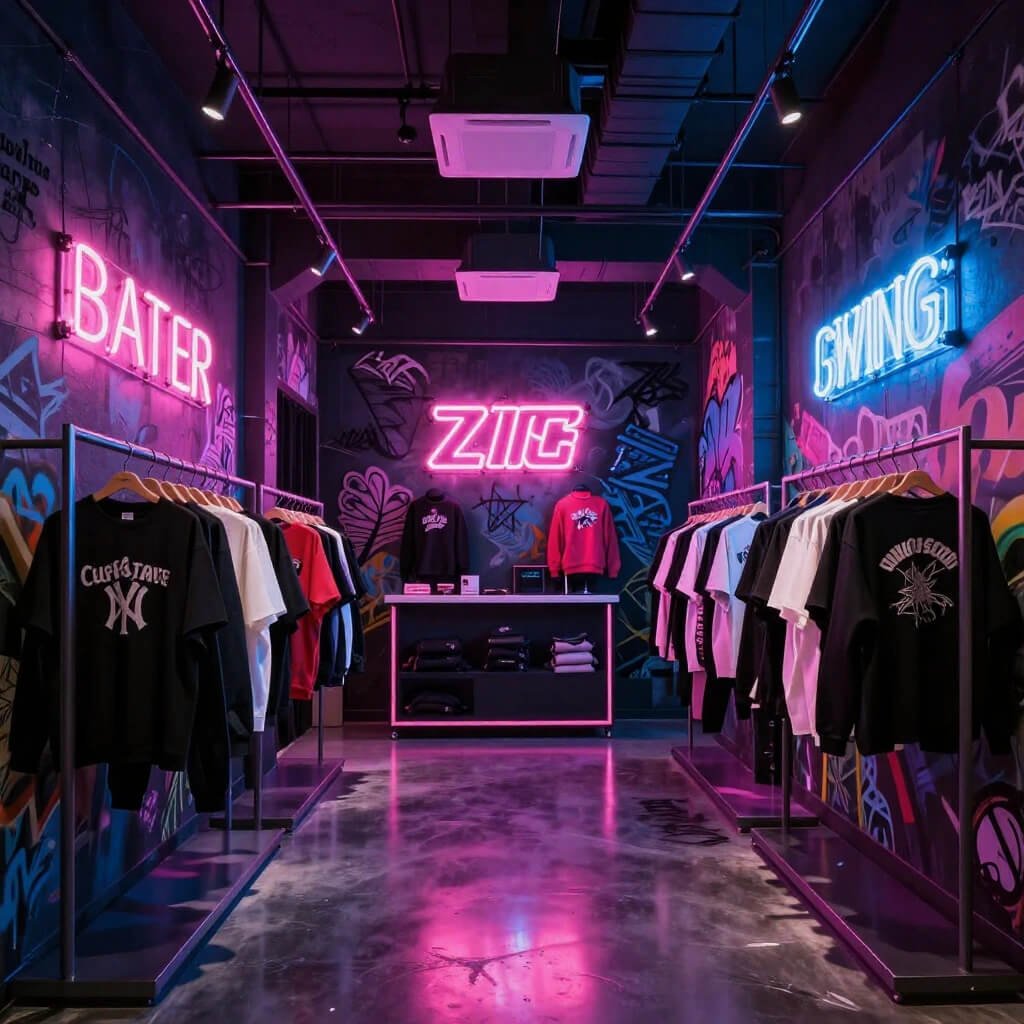
Alright, let’s talk about the complete opposite end of the spectrum. If rustic is warm and cozy, neon streetwear design is bold, unapologetic, and very “look at me.” And you know what? It works incredibly well for the right brands.
I’m slightly obsessed with this aesthetic, not gonna lie 🙂 The combination of urban edge with vibrant neon creates an energy that resonates perfectly with younger, fashion-forward customers. Think Supreme meets cyberpunk, and you’re on the right track.
Creating That Urban Edge
Here’s your shopping list for neon excellence:
- Custom neon signage: Your logo, catchphrases, or brand statements in bright neon
- Concrete or industrial flooring: Polished concrete or concrete-look tiles
- Black or dark gray walls: Makes neon colors absolutely pop
- Metal grid displays: Industrial shelving and hanging systems
- LED strip lighting: Programmable RGB strips you can change based on mood
- Urban art elements: Graffiti-style murals or local street artist collaborations
- Digital displays: Screens showing product videos or brand content
The neon look requires commitment. You can’t just slap one neon sign on a beige wall and call it done. The entire environment needs to support that aesthetic. But when you nail it? Your shop becomes incredibly Instagrammable, and that free social media marketing is worth its weight in gold.
IMO, the best streetwear shops mix neon with raw, unfinished elements. That contrast between polished technology (the neon, the screens) and rough materials (concrete, exposed metal) creates visual tension that keeps things interesting.
Modern Glass Display Retail Store Interior Look
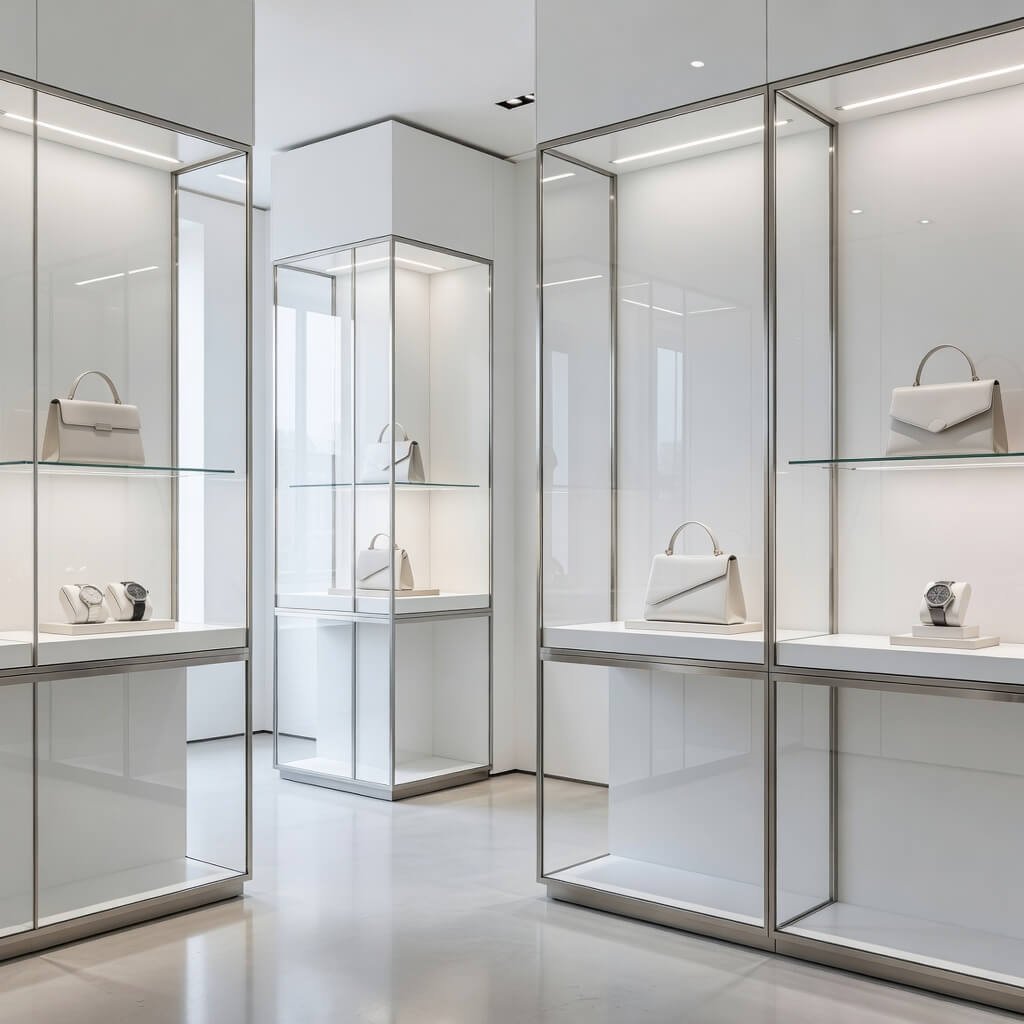
Glass displays elevate any retail space by adding sophistication while keeping products fully visible. I’ll admit, I used to think glass was boring until I saw it done right—now I’m a total convert.
The modern glass aesthetic works particularly well for jewelry, watches, tech accessories, or any smaller items where you want customers to see everything without touching (theft prevention is a nice bonus too, let’s be honest).
Making Glass Work For You
Here’s how to implement this sleek look:
- Floor-to-ceiling glass cabinets: Create a gallery-like atmosphere for your products
- Backlit displays: LED lighting behind or beneath glass shelves makes products glow
- Minimalist framing: Black or brushed metal frames keep the focus on products
- Floating glass shelves: Wall-mounted shelves that appear to float
- Glass checkout counter: Transparent counters maintain the open, airy feel
- Strategic spotlighting: Focused lights that highlight individual pieces
One thing people mess up with glass displays? Fingerprints and smudges. You need to commit to constant cleaning if you’re going this route. I’ve walked into shops with beautiful glass displays that looked horrible because they were covered in smudges. Keep microfiber cloths handy and make cleaning part of your opening routine.
Also, consider the height of your glass displays carefully. Eye-level is prime real estate—that’s where your best products go. Lower shelves work for less expensive items or backup inventory displays.
Also Read: 10 Stylish Pharmacy Counter Design Ideas for Modern Pharmacies
Cozy Boutique Clothing Shop Warm Lighting Design
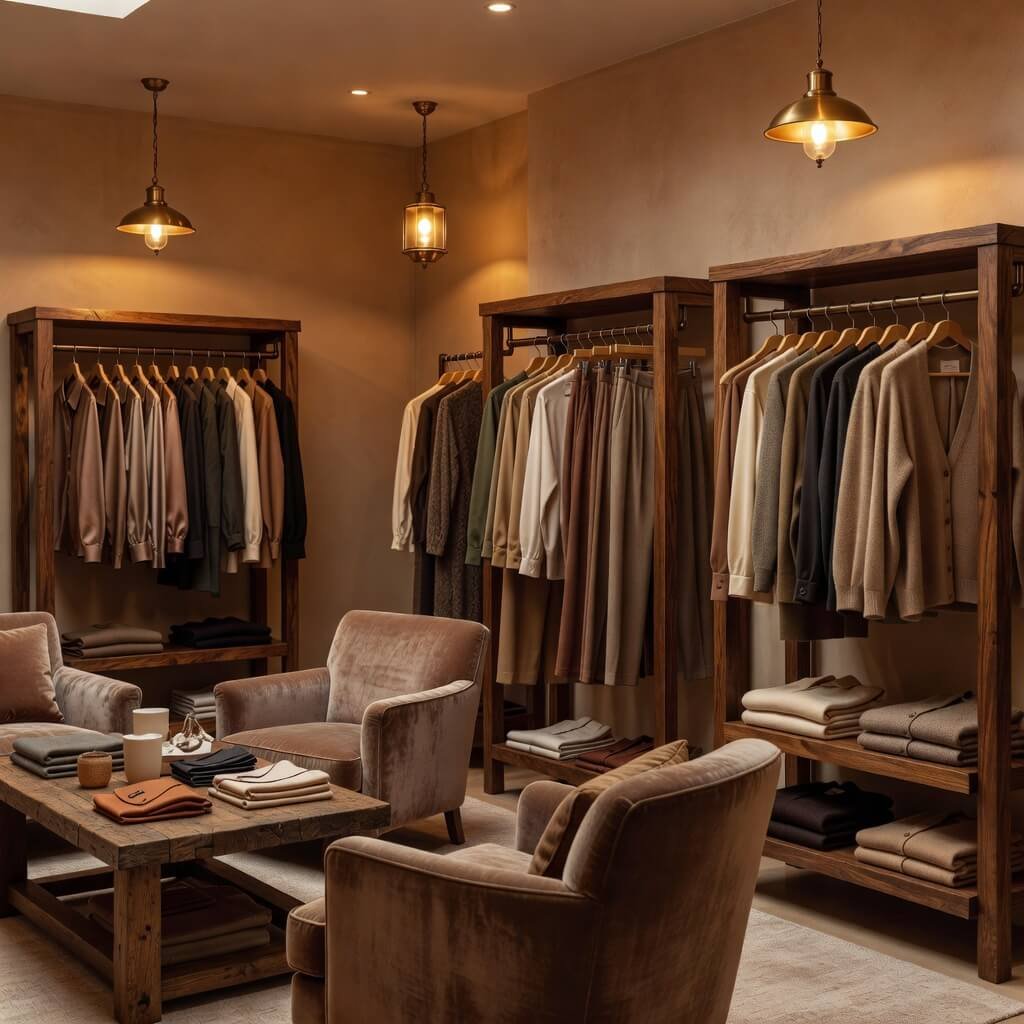
Can we talk about lighting for a second? Because honestly, lighting makes or breaks a shop’s atmosphere faster than anything else. I’ve watched shops transform from “meh” to “amazing” just by switching up their lighting game.
Warm lighting creates an inviting, comfortable atmosphere where customers actually want to linger. Cool fluorescent lighting (shudder) makes everyone look terrible and sends people running for the exits. Your fitting room lighting especially needs attention—nobody’s buying clothes when the lights make them look like they haven’t slept in a week.
Lighting Techniques That Actually Work
Here’s your roadmap to perfect lighting:
- Layered light sources: Combine ambient (overall), task (specific areas), and accent (highlighting) lighting
- Warm color temperature: Aim for 2700K-3000K—that cozy, golden glow
- Dimmable systems: Adjust brightness based on time of day or desired mood
- Statement fixtures: Chandeliers, pendant lights, or unique lamps as design elements
- Natural light maximization: Keep windows clear and use sheer curtains to diffuse harsh sunlight
- Strategic spotlights: Highlight featured products or displays without overwhelming the space
- Fitting room perfection: Install lights on multiple sides of mirrors to eliminate shadows
I once helped a boutique owner redesign her lighting, and she told me customers started commenting on how “different” the shop felt—in a good way. Sales improved, but more importantly, people stayed longer. They felt comfortable, and comfortable customers are buying customers.
Quick tip: Never, ever rely on overhead fluorescent lights alone. If your space came with them, supplement heavily with warm-toned alternatives or just replace them entirely.
Industrial Style Urban Retail Shop Interior Concept
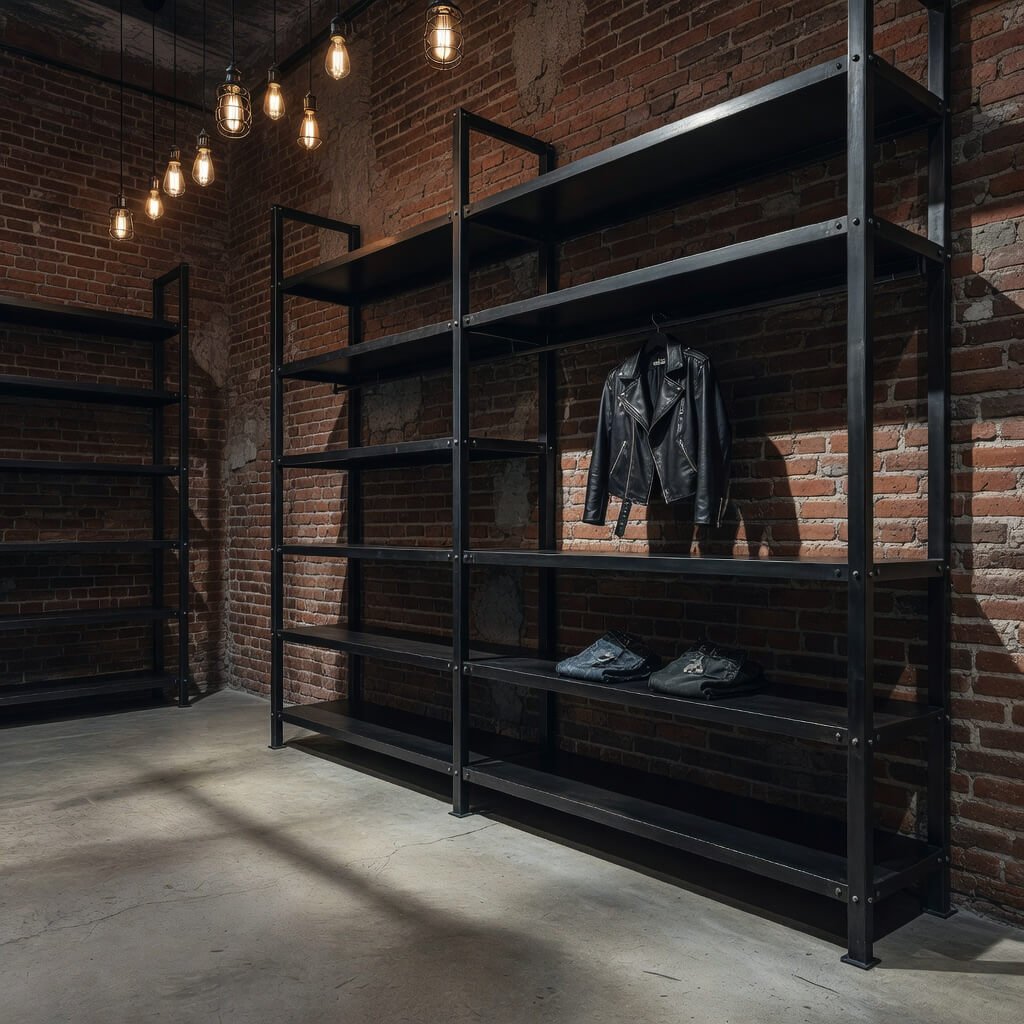
The industrial look has been trendy for a while now, but unlike some design fads, this one has staying power. Why? Because it’s practical, relatively budget-friendly, and works for multiple retail categories.
I love industrial design for shops because it’s forgiving—you can mix high and low, old and new, and it all somehow works together. That vintage cart you found at a flea market? Perfect industrial display piece. Those exposed pipes you wanted to hide? Nah, they’re features now.
Building Your Industrial Aesthetic
Here’s what makes industrial design work:
- Exposed ceiling elements: Show those beams, ductwork, and pipes
- Metal fixtures: Steel, iron, or galvanized metal for shelving and displays
- Brick or concrete walls: Real or convincing faux finishes
- Weathered wood accents: Pairs perfectly with metal elements
- Industrial lighting: Cage lights, metal pendant fixtures, track lighting
- Vintage industrial furniture: Old factory carts, metal stools, workbenches repurposed as displays
- Open shelving: No closed cabinets—everything on display
The industrial style tells customers you’re authentic and unpretentious. You’re not trying too hard to be fancy. This works incredibly well for shops selling vintage items, menswear, outdoor gear, or artisan goods.
One mistake I see? Going too cold. Pure industrial without any warming elements feels like a warehouse, not a shop. Add some plants, warm lighting, or textile elements to balance all that hard metal and concrete.
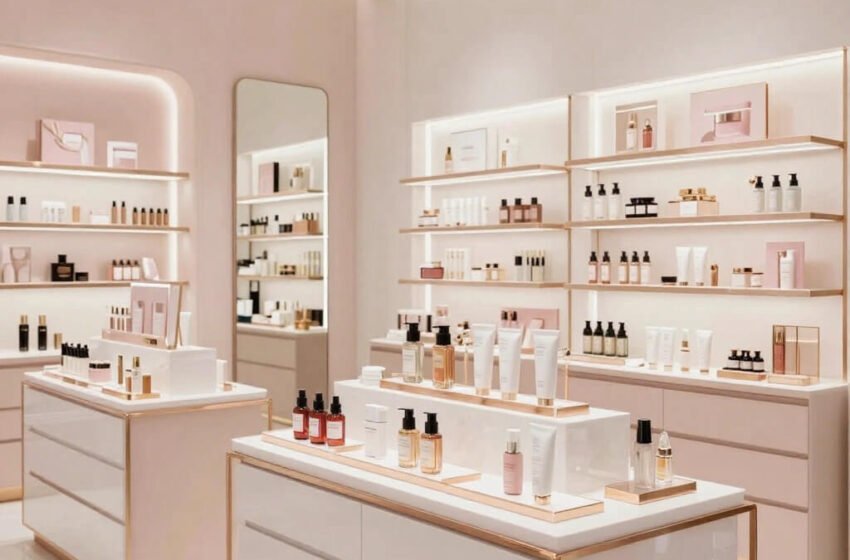
Elegant Cosmetic Store Interior Display Ideas
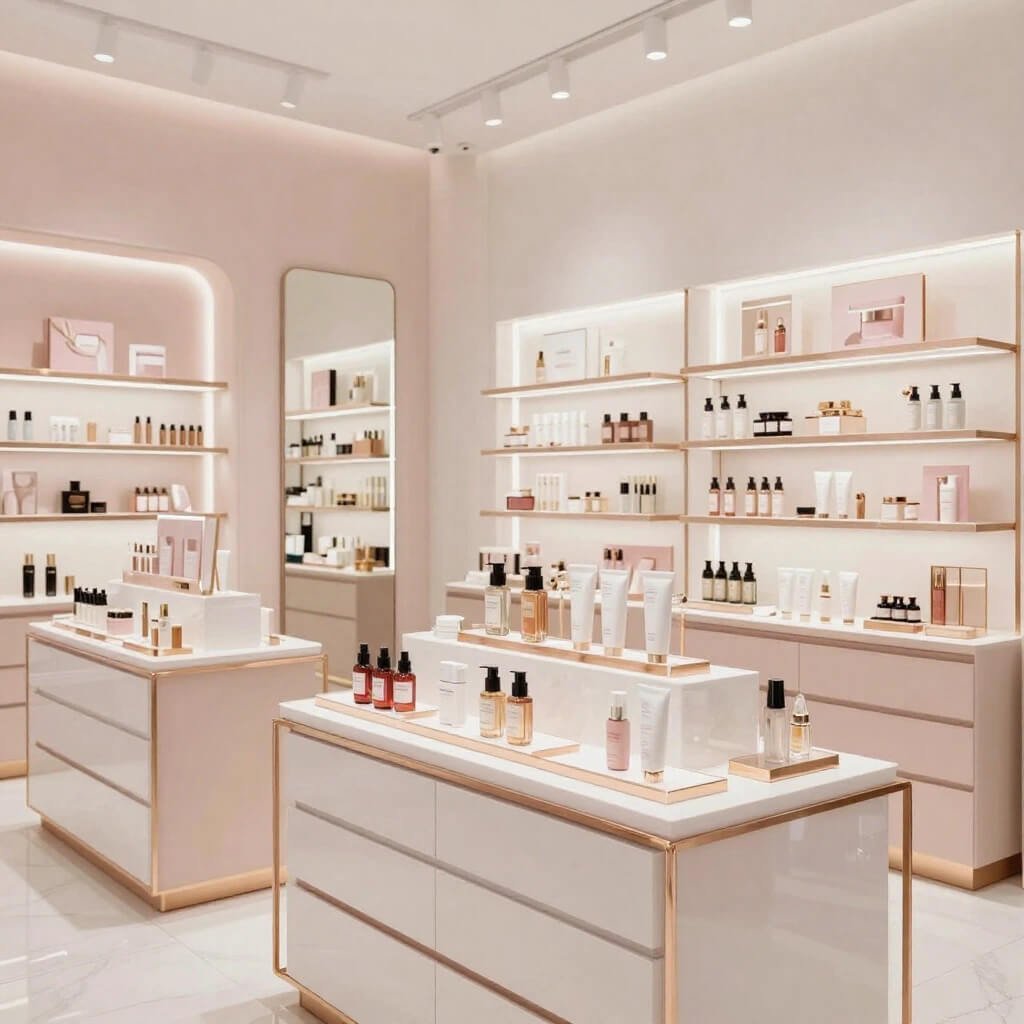
Cosmetic shops face a unique challenge: you need to display hundreds of tiny products in a way that feels organized, accessible, and beautiful. Mess this up, and your shop looks like a chaotic drugstore. Nail it, and you’ve created a beauty destination.
The best cosmetic shops I’ve visited feel like a mix between a boutique and a modern art gallery. Products become objects of desire rather than just functional items. It’s all about presentation and organization.
Cosmetic Display Essentials
Here’s your design framework:
- Backlit product shelving: Makes packaging colors pop and creates a luxe atmosphere
- Categorized zones: Skincare, makeup, fragrance—each gets its own distinct area
- Testing stations: Clean, well-lit areas where customers can try products
- Integrated mirrors: Throughout the space, not just at testing stations
- White or neutral backgrounds: Let product packaging provide the color
- Acrylic or glass organizers: Keep small items visible and accessible
- Dedicated fragrance area: Separate from other products to avoid scent confusion
- Professional lighting: True-tone bulbs so customers see accurate colors
I watched a small cosmetic shop redesign their layout based on customer flow patterns, and their conversion rate jumped significantly. They positioned their best-sellers and new releases near the entrance, created an Instagram-worthy testing station in the middle, and placed gift sets near checkout. Simple changes, massive impact.
Also, cleanliness is absolutely critical for cosmetic shops. Dusty products or dirty testing areas will send customers running. Build in time for constant maintenance and organization.
Also Read: 10 Luxury Buffet Counter Design Ideas for Dream Homes
Compact Corner Shop Space Optimization Design
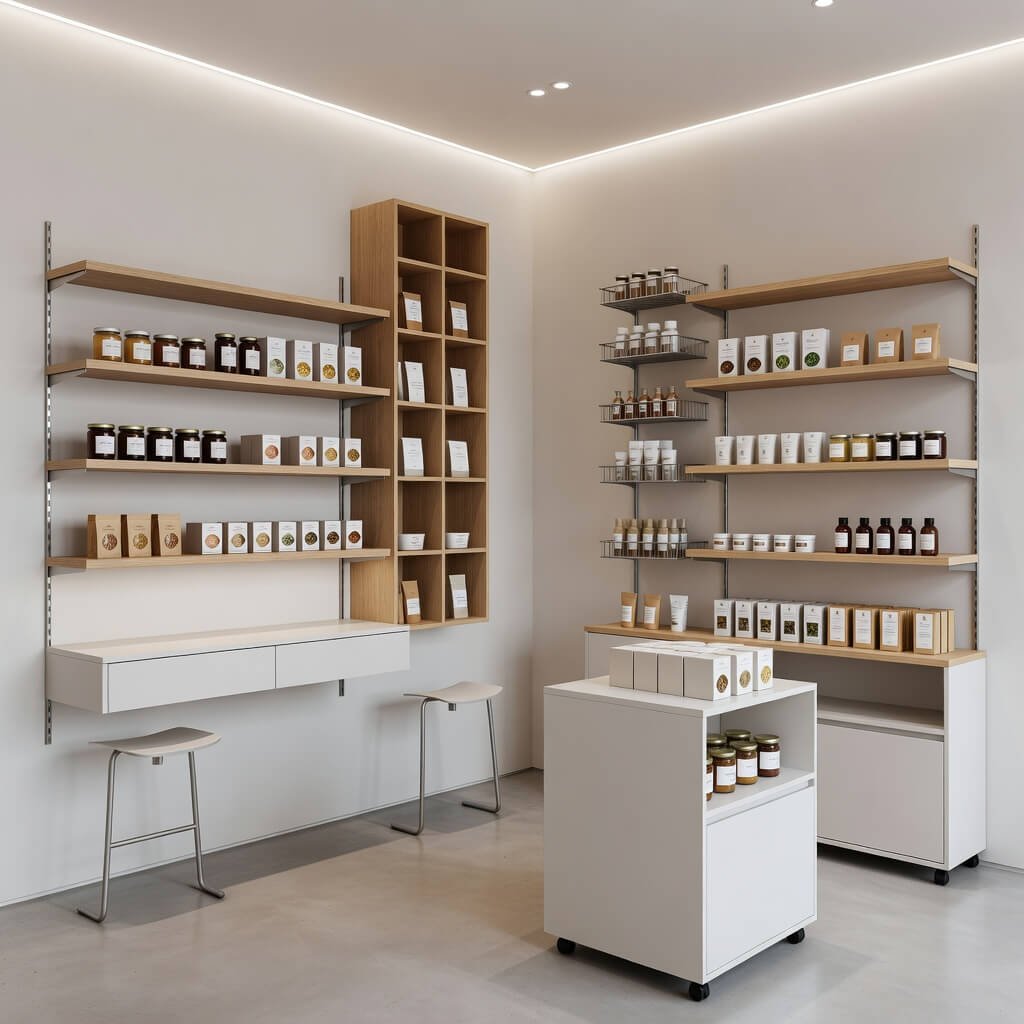
Got a corner shop with weird angles and limited square footage? Stop seeing it as a problem and start seeing it as an opportunity! Corner spaces actually have unique advantages if you know how to work with them.
I’ll be honest—corner shops intimidated me at first. All those angles and sightline issues seemed like nightmares. But after designing a few, I realized they create natural flow patterns and focal points that rectangular spaces have to manufacture artificially.
Maximizing Your Corner Space
Here’s how to make corner shops work beautifully:
- Diagonal pathway: Create a clear path from one entrance to the other (most corners have two entry points)
- Corner focal point: Use the actual corner as your statement display area
- Curved fixtures: Soften sharp angles with rounded display units
- Window displays on both sides: Double your street-facing visibility
- Vertical space utilization: Even more critical in compact corners
- Flexible modular displays: Easily reconfigure based on seasonal needs
- Mirror placement: Strategically positioned to open up tight areas
- Clear sightlines: From any entrance, customers should see the entire shop
The psychology of corner shops is interesting. Customers enter from the street, naturally gravitate toward the corner (the furthest point), then circle back toward checkout. Design your layout to support this natural flow rather than fighting it.
One thing that works brilliantly in corner shops? Creating distinct mini-zones for different product categories. The two walls created by the corner give you natural boundaries for these zones.
Bringing It All Together
Here’s the thing about shop interior design—there’s no one-size-fits-all solution. What works for a luxury fashion boutique would look ridiculous in a rustic craft shop, and that’s perfectly fine. Your interior needs to match your brand, your products, and your customers’ expectations.
I’ve walked you through 10 completely different aesthetics because I want you to see the possibilities. Maybe you’ll go all-in on one style, or maybe you’ll mix elements from several. The minimalist approach with some industrial accents? Could be amazing. Rustic meets cozy warm lighting? Absolutely works.
The most important thing? Authenticity. Don’t choose an aesthetic just because it’s trendy or because you saw it work for someone else. Choose a design direction that genuinely represents your brand and creates the right atmosphere for your specific products. Your customers will sense when a space feels genuine versus when you’re just copying what’s popular.
Start with these core questions: Who are my customers? What experience do I want them to have? What story does my brand tell? Once you answer those, the right design direction becomes much clearer.
And look, you don’t need to get everything perfect on day one. Shop design evolves. Test things, pay attention to how customers interact with your space, and adjust accordingly. That beautiful display you created might look great but block traffic flow—fix it. The lighting you loved in theory might cast weird shadows—change it.
Your shop interior is your brand’s physical manifestation. Make it count. Make it memorable. Make it somewhere people actually want to spend time. Do that, and you’re already miles ahead of the competition still using random shelving and calling it a day.
Now go create something beautiful :/