10 Smart Washbasin Counter Design Ideas for Compact Spaces
- Counter Design
 Ben
Ben- 0
- 50 minutes read
Look, I get it. You’re staring at your tiny bathroom wondering how on earth you’ll fit a decent washbasin without making the space feel like a phone booth. Been there, done that, got the bruised shin from bumping into poorly placed furniture.
Here’s the thing about compact bathrooms – they’re basically design puzzles waiting for the right solution. And honestly? Small spaces force you to get creative in ways that larger bathrooms never do. I’ve spent the last few years obsessing over washbasin counter designs (yeah, I’m that person), and I’ve discovered that limitations actually breed some seriously clever solutions.
Whether you’re dealing with a cramped city apartment, a guest bathroom that’s barely bigger than a closet, or you just want to maximize every square inch, the right washbasin counter can completely transform your space. We’re talking functional, gorgeous, and smart – the holy trinity of bathroom design.
So grab your coffee (or wine, no judgment here), and let me walk you through 10 washbasin counter designs that’ll make your compact space work harder than a caffeinated overachiever. These aren’t just pretty pictures – I’m breaking down what actually works, what doesn’t, and why you should care about each option.
Floating Minimal Marble Washbasin Counter
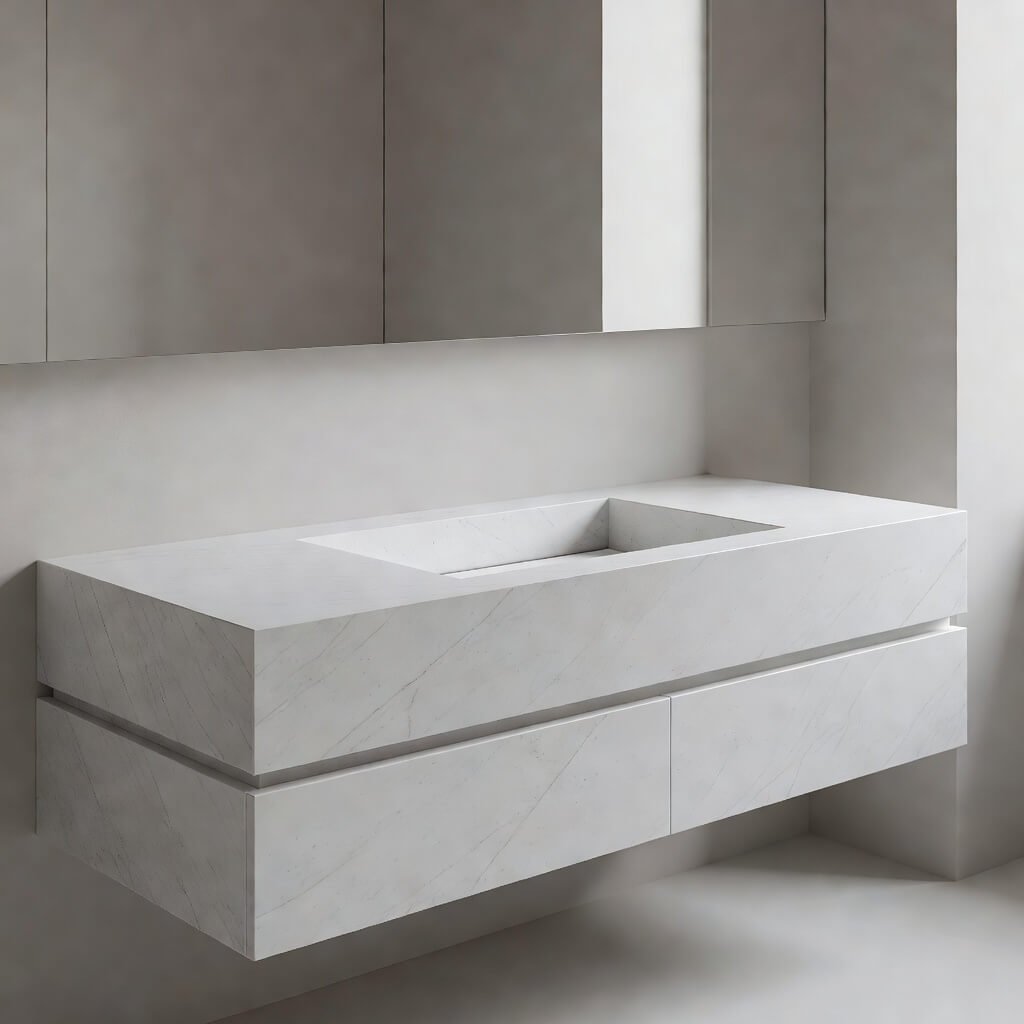
Oh, you want to talk about visual magic? Floating counters are basically the optical illusion your small bathroom desperately needs.
I installed one of these bad boys in my guest bathroom last year, and the difference blew my mind. When you mount a marble washbasin counter to the wall without any visible supports or bulky vanity underneath, you create the illusion of more floor space. Your eyes register that uninterrupted floor line, and suddenly the room feels way more spacious than its actual measurements.
Why Marble Works for Small Spaces
Here’s where the marble part comes in – and no, I’m not just being bougie. Marble has this naturally reflective quality that bounces light around the room. Light colors especially (think white Carrara or pale gray) maximize this effect. Plus, the veining in marble draws the eye horizontally, which makes the counter (and by extension, your bathroom) feel wider.
Key benefits you’ll actually notice:
- Floor space remains visible and uncluttered
- Easier to clean underneath (seriously, game-changer)
- Creates a high-end look without eating up square footage
- Makes your ceiling feel higher because the counter doesn’t extend to the floor
Now, real talk – floating counters need proper wall support. You can’t just slap one up on drywall and hope for the best. I learned this the expensive way when my contractor initially tried to cut corners. Make sure you’ve got solid backing or you’ll be dealing with a structural nightmare down the line.
Installation Tips That Actually Matter
You want the counter height at about 32-36 inches from the floor. I went with 34 inches and it’s perfect for both tall and average-height people. Keep the depth around 18-20 inches – any deeper and you’re wasting space, any shallower and you’re splashing water everywhere like a toddler.
One more thing – choose an integrated or undermount sink rather than a vessel sink. Vessel sinks look cool in showrooms, but they add unnecessary height and reduce your usable counter space. Trust me on this one.
Luxury Double Sink Wooden Vanity Design
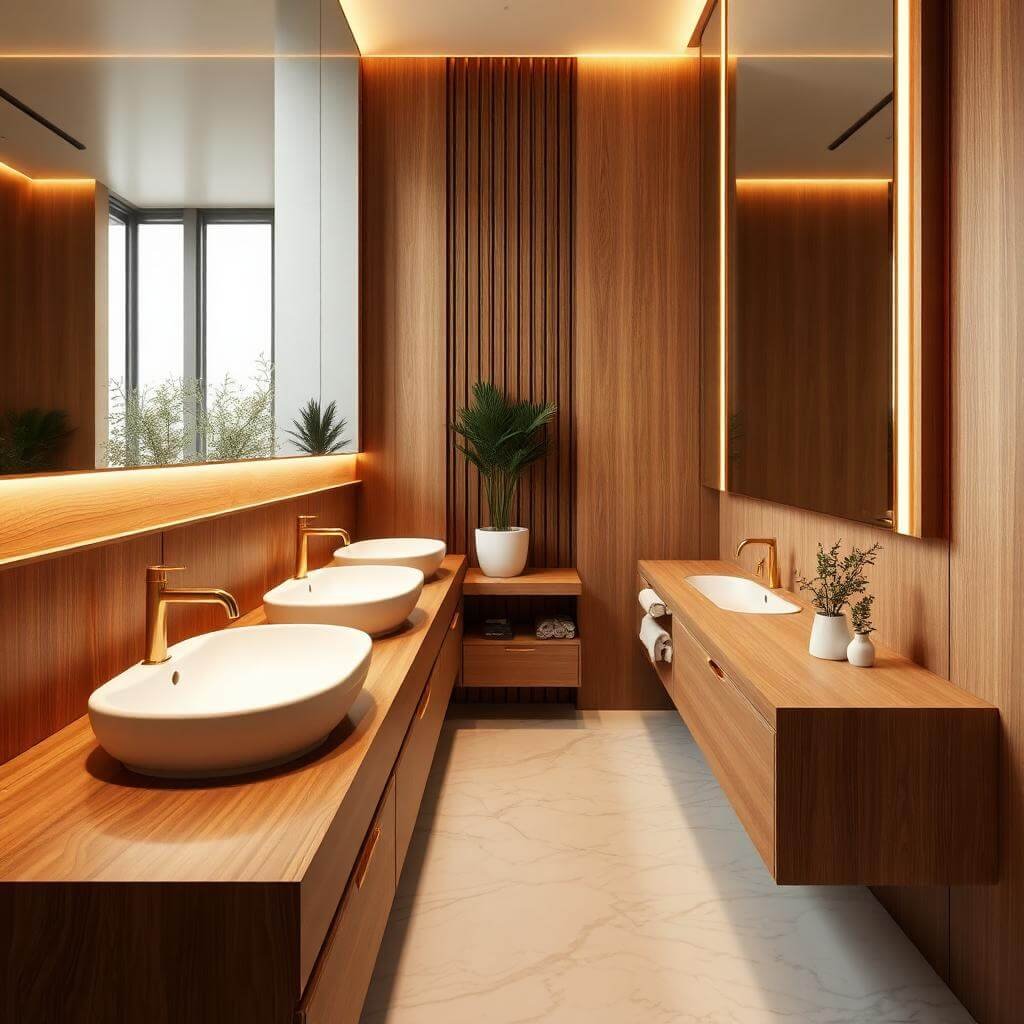
Wait, double sinks in a compact space? Am I crazy? Maybe a little, but hear me out.
If you’re sharing that small bathroom with a partner, the morning rush becomes World War III with only one sink. I’ve literally watched couples navigate this with military precision – “You brush while I wash my face, then we switch.” Exhausting, right?
Making Double Sinks Work in Limited Space
The trick is choosing a long, narrow wooden vanity instead of a standard deep one. You want something around 48-60 inches wide but only 16-18 inches deep. This gives you two functional sinks without turning your bathroom into an obstacle course.
Wood brings warmth that’s especially important in compact spaces. Small bathrooms can feel cold and clinical, but wood (especially in lighter tones like oak or ash) creates that cozy vibe. Plus, wood grain adds visual texture without overwhelming the space the way busy tile patterns would.
Smart design features to look for:
- Slim profile faucets that don’t protrude too far
- Shallow rectangular sinks rather than round bowls
- Open shelving below instead of closed cabinets
- Light wood finishes (dark woods shrink the space visually)
I’ve seen people install these with floating brackets to maintain that airy feel we talked about earlier. You get the double-sink functionality with the visual lightness of a floating design. Best of both worlds, honestly.
Storage Solutions That Don’t Bulk Things Up
The wooden vanity needs to earn its keep with smart storage. Look for designs with narrow pull-out drawers between the sinks and open cubbies below. Those open cubbies? Perfect for pretty baskets that hide the ugly stuff while keeping frequently-used items accessible.
FYI – avoid wooden vanities with those chunky legs that traditional furniture has. You want clean-lined, modern legs (if any) that take up minimal visual space. Think tapered, metal, or even better – floating with discreet brackets.
Small Space Wall Mounted Washbasin Setup
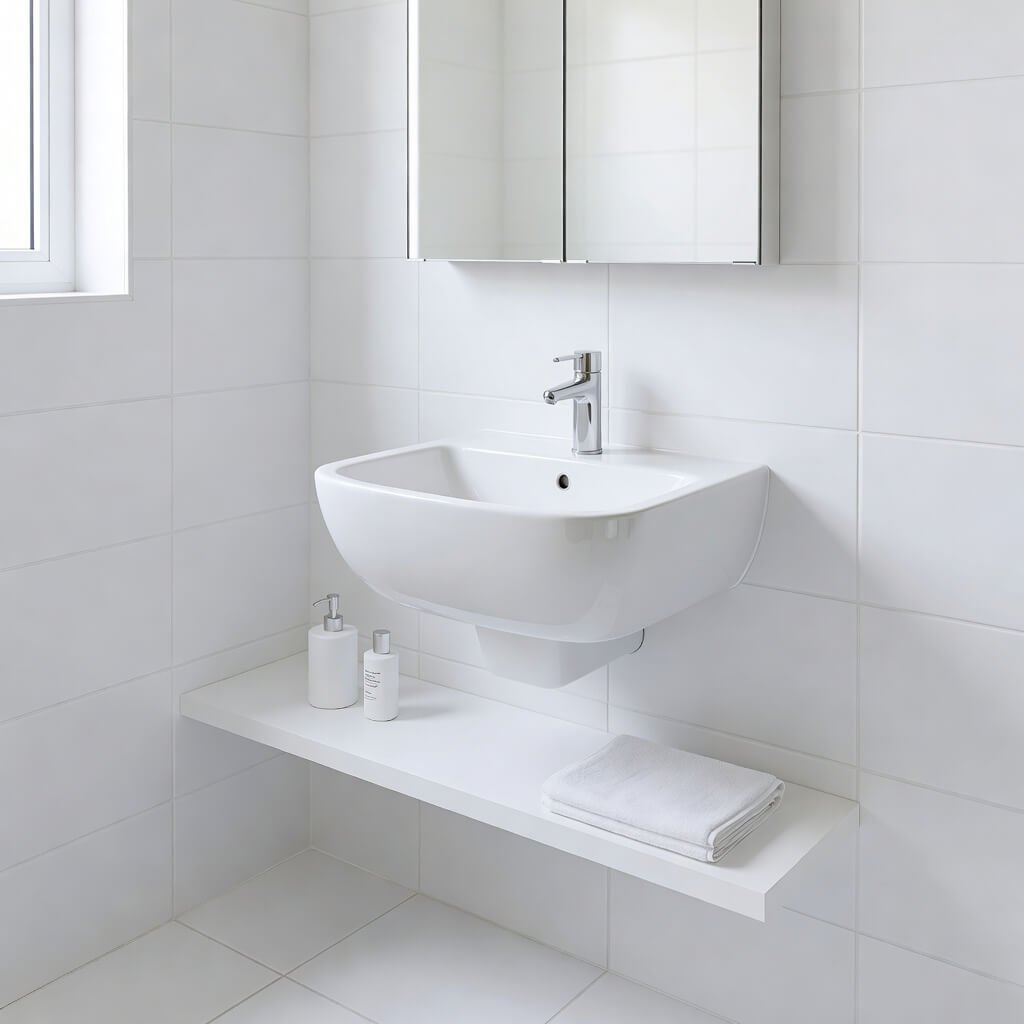
This is the MVP of compact bathroom solutions. Like, if space-saving were a sport, wall-mounted washbasins would win Olympic gold every single time.
I installed my first wall-mounted setup in a tiny powder room that measured maybe 4×5 feet. The transformation? Chef’s kiss. Suddenly I could actually turn around without doing some weird contortionist move.
The Genius of Going Wall-Mounted
Wall-mounted washbasins attach directly to the wall with the plumbing hidden behind. No vanity, no pedestal, just the basin floating there looking effortlessly cool. This design exposes maximum floor space, which tricks your brain into perceiving the room as larger.
Here’s what makes this setup brilliant for compact spaces:
Practical advantages:
- You reclaim every inch of floor space
- Cleaning becomes ridiculously easy (no base to navigate around)
- You can install it at your perfect height (customization for the win)
- Wheelchair accessible if needed
- Costs less than full vanity installations
The minimalist aesthetic works especially well in modern or Scandinavian-style bathrooms. But even if that’s not your vibe, a simple white wall-mounted basin adapts to pretty much any design style. It’s the chameleon of bathroom fixtures.
Dealing with the Storage Issue
Okay, the elephant in the room – where do you put your stuff? Wall-mounted basins don’t come with storage, which can be a dealbreaker for some people.
My solution? I installed a shallow medicine cabinet above (recessed into the wall, not protruding) and added a slim rolling cart next to the basin. The cart slides into the space beside the toilet when I need it and tucks away when I don’t. Problem solved without permanent bulk.
You can also mount floating shelves on either side of the basin or install a narrow tower cabinet in a corner. The key is keeping storage vertical and off the floor to maintain that spacious feeling.
Also Read: 10 Brilliant Restaurant Counter Design Ideas for Smart Layouts
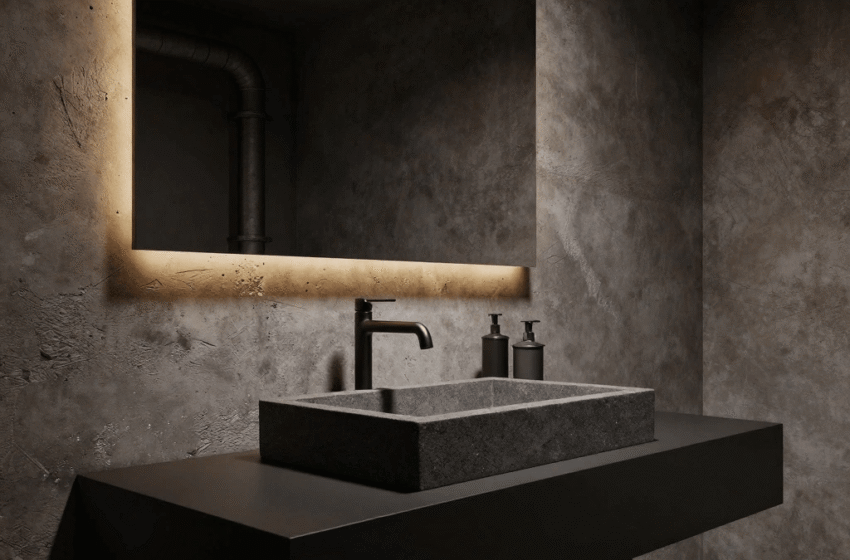
Modern Black Matte Industrial Counter Basin
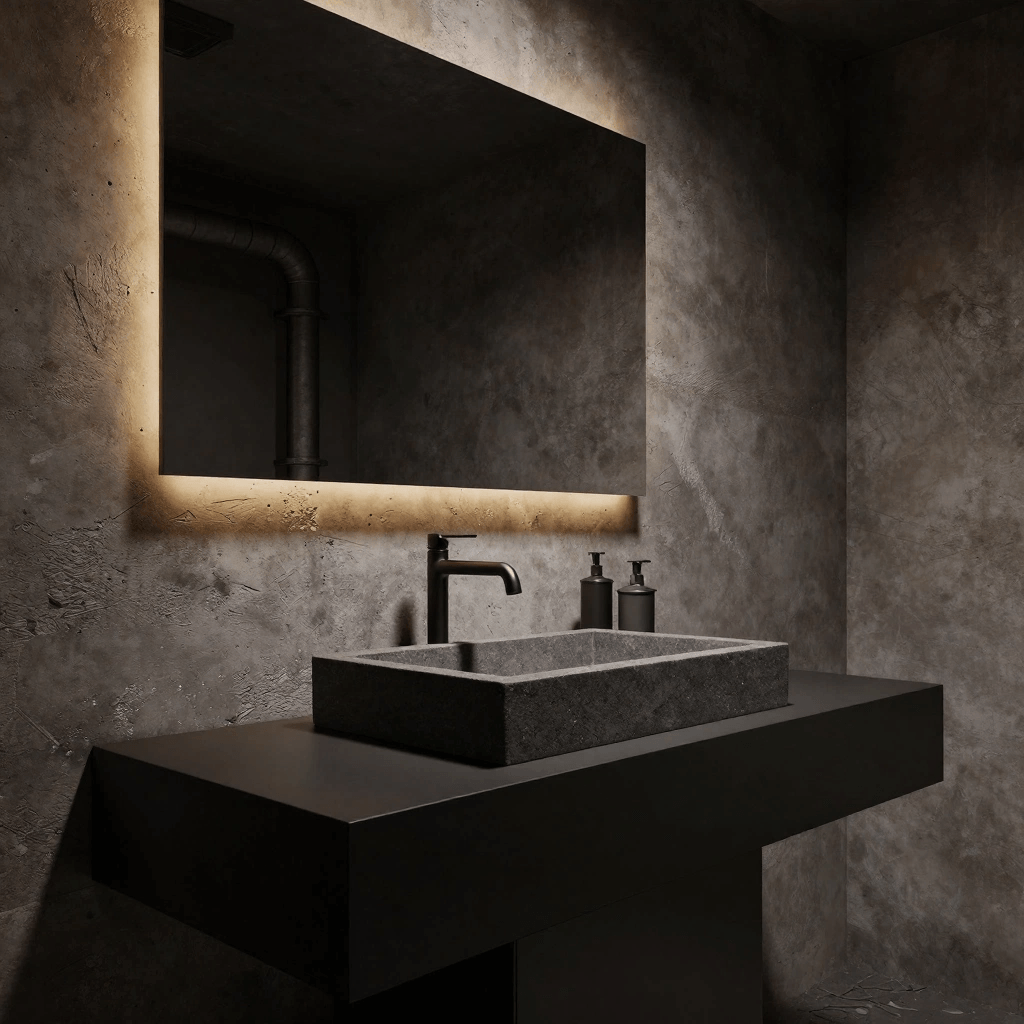
Let me tell you about the first time I saw a black matte industrial basin in person. I walked into this tiny Brooklyn loft bathroom, and my jaw literally dropped. The space was maybe 50 square feet, but that black basin made it look like it belonged in a design magazine.
Why Black Works (When Everyone Says It Doesn’t)
Conventional wisdom says dark colors make small spaces feel smaller. And yeah, that’s often true. But – and this is a big but – when you use black as an intentional accent rather than covering everything in it, the rules change.
A black matte counter basin creates a focal point that draws the eye immediately. This actually helps in small spaces because it gives your brain something specific to focus on rather than emphasizing the room’s limitations. Weird psychological trick, but it totally works.
The industrial aesthetic brings:
- Bold contrast that adds depth
- Low-maintenance surface (fingerprints and water spots basically disappear)
- Masculine or edgy vibe that’s refreshing in bathroom design
- Pairs beautifully with metallic fixtures (brass, copper, or chrome)
I paired mine with white subway tiles and raw wood elements. The contrast made the black pop without overwhelming the space. The matte finish is crucial here – glossy black can feel heavy, but matte has this sophisticated, almost soft quality.
Styling the Industrial Look Without Going Overboard
Industrial design can quickly veer into “cold warehouse” territory if you’re not careful. You need to balance the hard edges with softer elements.
Add warm lighting (those Edison bulb fixtures work great), incorporate natural materials like wood or rattan, and throw in some greenery. I keep a small potted plant next to my black basin, and it completely transforms the vibe from stark to stylish.
The basin itself should have clean geometric lines – think rectangular or square rather than round. Industrial style loves angles and structure. Mount it on a slim metal frame or a floating concrete-look counter (lots of affordable laminate options that mimic concrete these days).
One warning though – if your compact bathroom has limited natural light, you might want to reconsider going full black. I made this mistake initially in a windowless bathroom, and it felt like a cave until I added serious artificial lighting. Learn from my errors, people! :/
Elegant White Quartz Bathroom Vanity Design
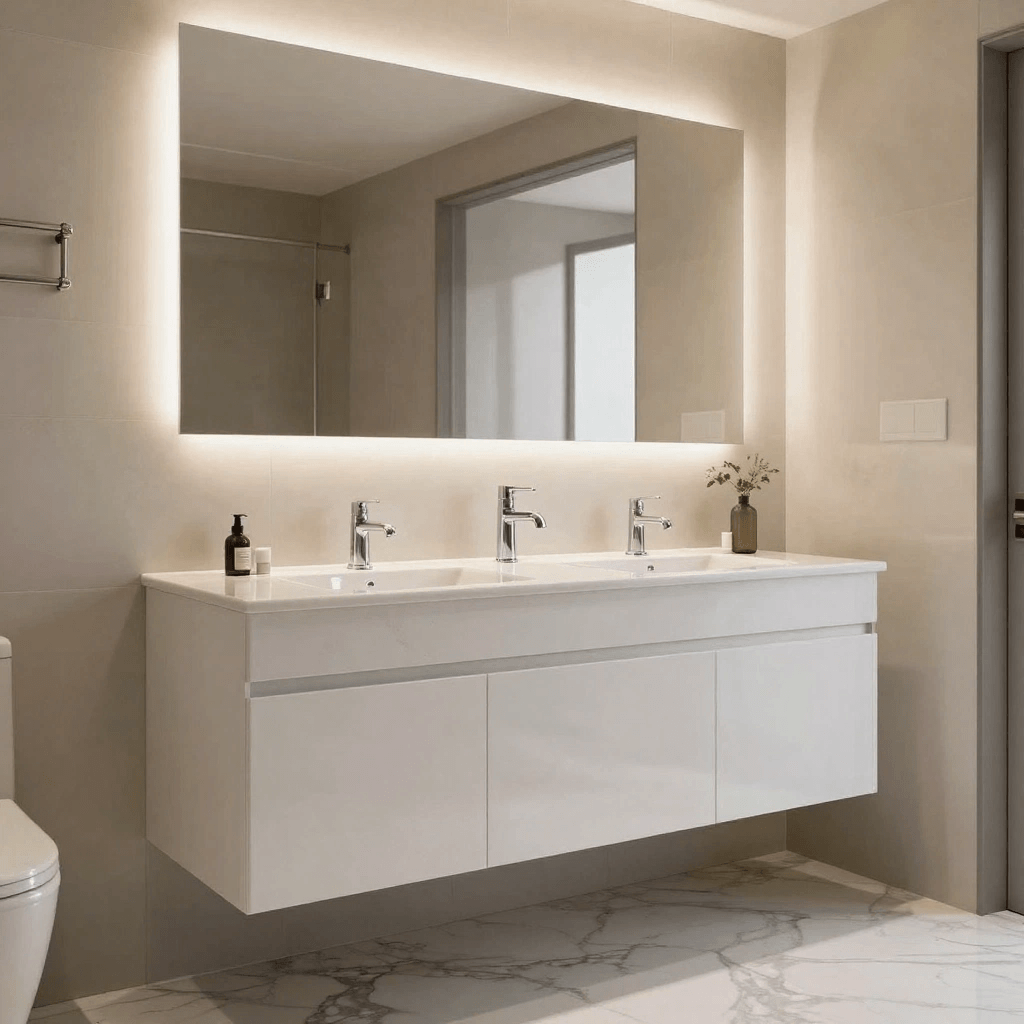
White quartz is basically the overachiever of bathroom counter materials. It looks expensive, requires minimal effort to maintain, and makes compact spaces feel larger. What’s not to love?
I replaced my old laminate counter with white quartz two years ago, and I’m still not over how much brighter my bathroom feels. The material has this subtle luminosity that you don’t get with solid-colored laminate or even some natural stones.
Quartz vs. Other Materials for Small Spaces
Let me break down why quartz specifically works so well:
Advantages of white quartz:
- Non-porous surface (no sealing required unlike marble)
- Reflects light beautifully without being overly shiny
- Consistent color and pattern (no unexpected veining surprises)
- Incredibly durable and stain-resistant
- Available in various white tones to match your specific aesthetic
I went with a pure white quartz with tiny silver flecks. Those little sparkly bits catch the light and add visual interest without being busy or overwhelming. In a small bathroom, you can’t afford to have surfaces that compete for attention – you want cohesive calm.
Design Elements That Maximize the Impact
To really make white quartz sing in a compact space, you need to think about the whole design package. The counter shouldn’t just sit there – it should integrate seamlessly with everything else.
I used a waterfall edge on one side of my vanity (where the counter material continues down the side to the floor). This creates a sculptural element that adds luxury without adding bulk. Plus, it’s just really fun to look at. Is that weird? Maybe, but I stand by it.
Keep the vanity profile slim – no deeper than 21 inches if you can help it. Choose integrated sinks where the sink and counter are one continuous piece of quartz. This eliminates seams, looks ultra-modern, and makes cleaning stupid-easy (just wipe across, no crevices for gunk to hide).
For hardware, I went with minimal chrome handles that almost disappear against the white. The vanity has two drawers with internal organizers that maximize every cubic inch of storage. Because if you’re investing in quartz, you might as well make the whole setup as functional as it is beautiful.
LED Backlit Mirror Washbasin Counter Style
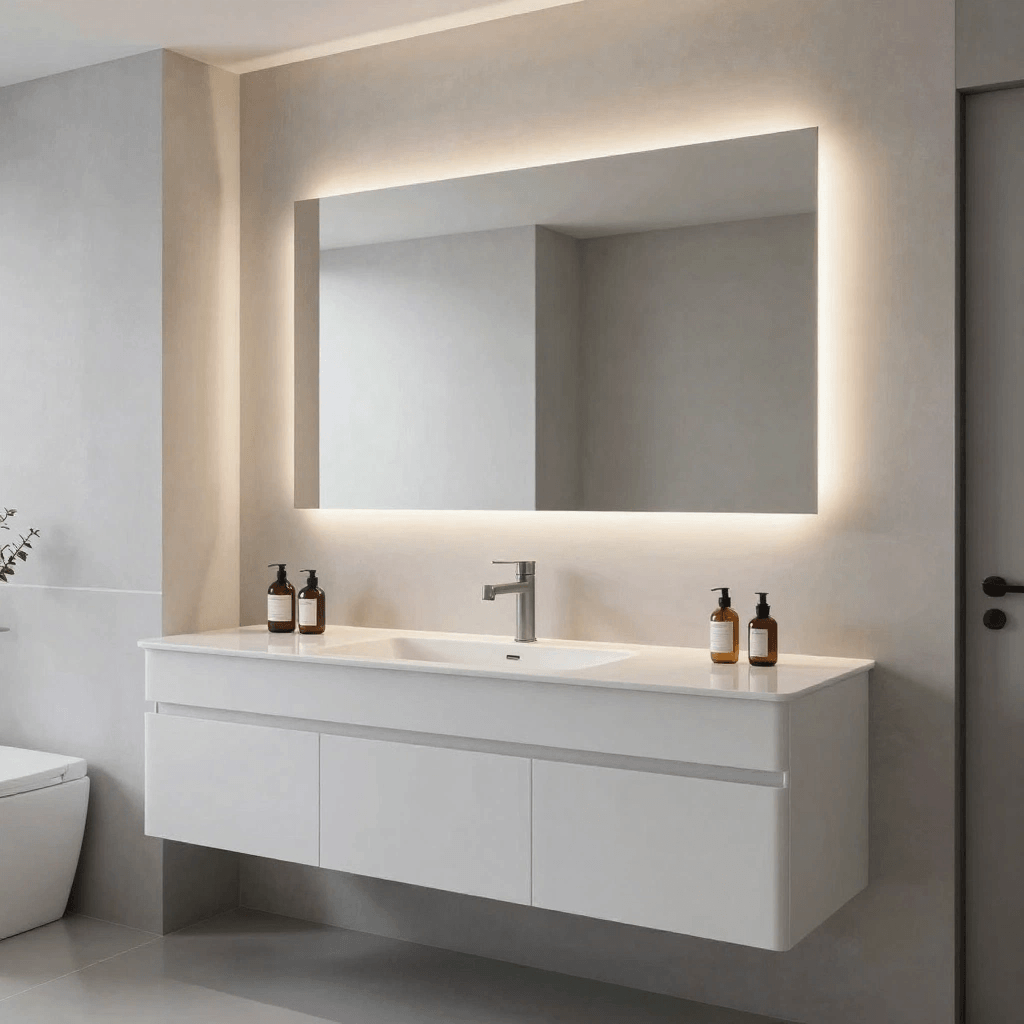
Okay, this is where we get a little fancy. LED backlit mirrors transformed from “luxury hotel feature” to “totally achievable in your compact bathroom” over the past few years, and I am here for it.
The first time I experienced a backlit mirror was at a boutique hotel in Portland. I walked into the tiny bathroom (seriously, hotel bathrooms are often compact space masterclasses) and was immediately struck by how… serene it felt? The soft glow from behind the mirror created this ambient lighting that made everything look better. Including my jetlagged face, which was a miracle in itself.
The Lighting Trick That Changes Everything
Here’s what most people don’t realize about compact bathrooms – harsh overhead lighting emphasizes how small they are. It creates sharp shadows and makes every corner feel closed in. But LED backlighting diffuses light around the mirror, creating a gentle glow that expands the perceived space.
When you combine a backlit mirror with your washbasin counter, you’re creating a cohesive design feature that serves multiple purposes:
Functional benefits:
- Better lighting for grooming tasks (no weird shadows on your face)
- Ambient light option (great for nighttime without blinding yourself)
- Makes the mirror appear to float (adds that spacious feeling)
- Energy-efficient (LEDs use minimal electricity)
- Often includes anti-fog features (because who has time for that?)
I installed mine above a simple white floating counter with an undermount rectangular sink. The mirror is the star of the show, so I kept everything else minimal. The LED glow reflects off the white counter surface, which doubles the lighting effect.
Choosing the Right Mirror Size and Style
In compact spaces, you might think smaller mirrors make sense. Wrong. Go as large as your wall allows (while maintaining a few inches of clearance on each side). A big backlit mirror actually makes the room feel more expansive because it reflects more of the space and distributes light better.
I went with a rectangular mirror that’s about 36 inches wide and extends almost to the counter surface. The LED backlighting is warm white (around 3000K color temperature) rather than cool white. Cool white can feel clinical and harsh – warm white creates that spa-like atmosphere everyone’s after.
Most modern LED mirrors come with touch controls or even motion sensors. Mine turns on automatically when I walk in and has a dimmer function. Total game-changer for 3am bathroom visits when you don’t want to assault your eyeballs with bright light.
Pro tip: Make sure your washbasin counter and mirror are centered on the wall. Sounds obvious, but I’ve seen so many installations where they’re off-center because someone tried to work around existing plumbing. Spend the extra money to move the plumbing if needed – symmetry matters big time in small spaces.
Also Read: 10 Modern Clothing Store Counter Design Ideas for Trendy Stores
Compact Corner Washbasin Space Saving Design
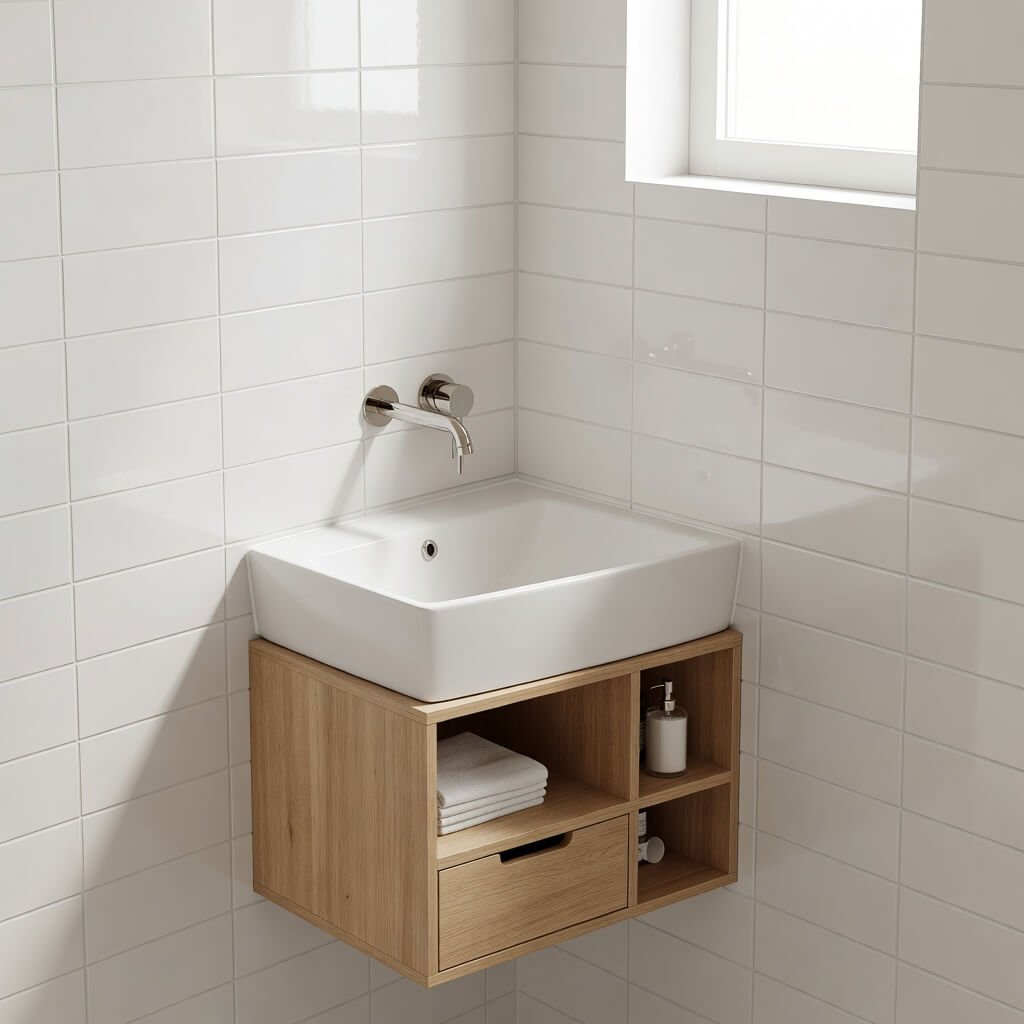
Corner installations are the unsung heroes of small bathroom design. Like, why do people overlook corners so much? They’re literally free real estate that often goes completely wasted.
I have a half-bath under my stairs that’s oddly shaped and ridiculously tiny. A standard vanity setup would’ve blocked the door from opening fully (seriously, that’s how tight it was). Enter the corner washbasin design, which transformed an awkward, unusable space into a perfectly functional bathroom.
Making Dead Space Work for You
Corners in compact bathrooms usually end up as dead zones where maybe you stick a toilet brush holder or just… nothing. But a corner-mounted washbasin counter activates that space without encroaching on the room’s usable area.
The best corner designs have a triangular or curved counter that fits snugly into the 90-degree angle. The basin itself can be round or square depending on your style preference. I went with a round one because it felt softer and more space-efficient.
Why corner installations rock:
- Use space that would otherwise remain empty
- Keep the center of the room open (crucial for tiny bathrooms)
- Often cheaper than full vanity setups
- Create interesting visual geometry
- Can fit in impossibly small spaces (I’m talking 2×2 feet)
You can find corner washbasins as wall-mounted units, pedestal styles, or even small corner vanities with limited storage underneath. I chose a wall-mounted version to keep the floor clear and make the space feel larger.
Styling Challenges and Solutions
Not gonna lie – corner setups can look awkward if you don’t style them thoughtfully. The corner itself creates these diagonal sight lines that can emphasize the room’s small size if you’re not careful.
My solution? I installed corner shelving above the basin that follows the same angular lines. This creates a cohesive design element that looks intentional rather than “we shoved a sink in the corner because nothing else fit.”
I also added a small corner mirror (about 24 inches across) that reflects light from the window. Mirrors in corners do this cool thing where they bounce light into multiple directions, which brightens up the whole space.
For faucets, choose a compact wall-mounted option rather than one that sits on the counter. You want to maximize every inch of counter space, and wall-mounted faucets free up the entire basin area for actual use.
Hotel Style Luxury Marble Basin Countertop
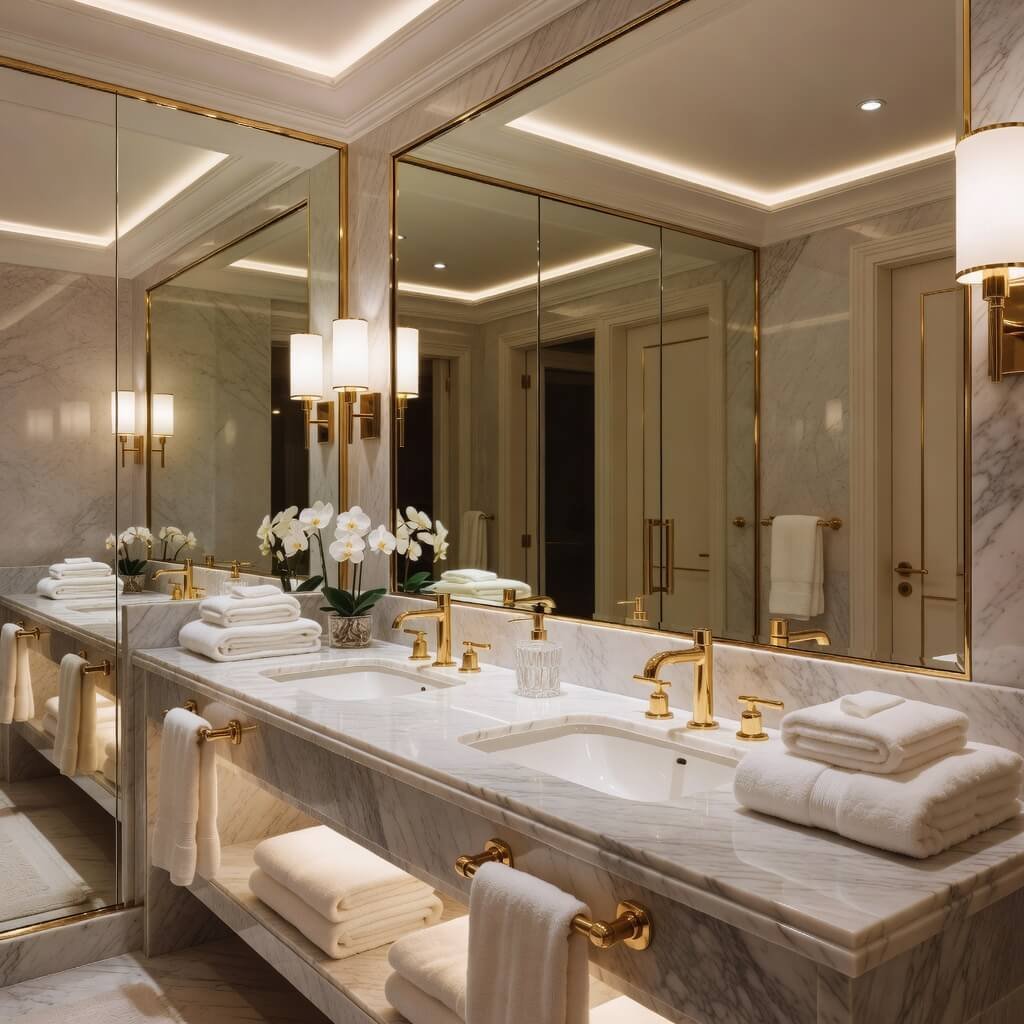
Ever walk into a five-star hotel bathroom and think “yeah, this is living”? That luxury hotel aesthetic isn’t just for people with unlimited square footage – you can totally achieve it in compact spaces. Actually, IMO, it works even better in smaller bathrooms because every element has maximum impact.
I visited a boutique hotel in Barcelona (humble brag, sorry not sorry) that had the tiniest bathroom, but the marble countertop made it feel absolutely luxurious. The room was maybe 6×5 feet total, but that gleaming marble elevated everything.
The Elements of Hotel-Style Luxury
Hotel designers know something most of us miss – quality over quantity. They invest in fewer, better pieces rather than cramming everything possible into a space. For washbasin counters, this means choosing premium materials and keeping the design clean and uncluttered.
The hotel-style marble countertop usually features:
Key design characteristics:
- Thick marble slab (at least 2-3 inches thick)
- Undermount rectangular basin (sleek and simple)
- Wall-mounted faucet (creates that spa-like feel)
- Minimal or no visible storage (clean lines are everything)
- Excellent lighting (hotels nail this every time)
I went with Calacatta marble for my version – it’s got those dramatic gold and gray veins that photograph beautifully (because let’s be real, you’re gonna Instagram this). The thick slab rests on a slim metal frame or discrete floating brackets, maintaining that airy aesthetic.
Achieving the Look Without the Hotel Budget
Full disclosure – actual marble is pricey. Like, really pricey. But you have options that deliver similar visual impact without requiring a second mortgage.
Budget-friendly alternatives:
- Porcelain slabs that mimic marble (seriously, they’re amazing now)
- Quartz with marble-like veining (more durable anyway)
- Marble-look laminate (if you’re on a tight budget)
I actually used a porcelain slab that looks like Calacatta marble, and I’ve had multiple people ask which marble quarry it came from. The technology has gotten insane. Plus, porcelain doesn’t stain, doesn’t need sealing, and costs about 40% less than real marble.
To really nail the hotel vibe, add high-quality hand towels (white or neutral), a simple soap dispenser (nothing with busy branding), and maybe a small orchid or succulent. Hotels keep accessories to an absolute minimum, which makes the marble really pop as the focal point.
The lighting is crucial – hotels use warm, layered lighting that flatters both the materials and the people using the space. Add a dimmer switch if you can. There’s something incredibly luxurious about controlling your bathroom’s ambiance, you know?
Wooden Rustic Washbasin Vanity with Storage
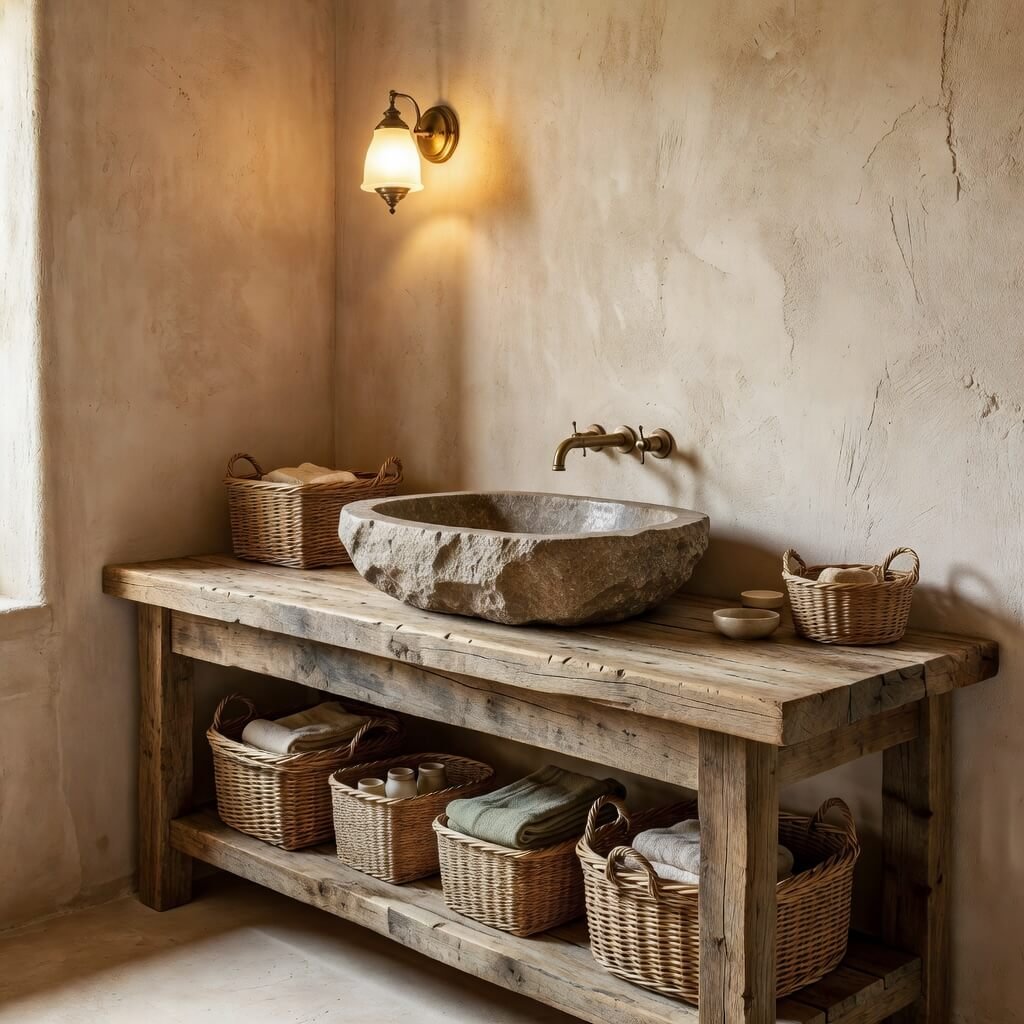
Alright, let’s switch gears completely. If sleek marble and industrial black aren’t your vibe, maybe you’re more of a rustic, lived-in, cozy-cabin kind of person. And yes, you can absolutely achieve that in a compact bathroom.
I grew up in a house with lots of wood and natural materials, so rustic designs feel like home to me. When I renovated my cottage’s tiny bathroom, I went full rustic with a reclaimed wood vanity, and it completely changed the space’s energy.
Bringing Warmth to Small Bathrooms
Small bathrooms can feel cold and sterile, especially if they lack natural light. Wood – particularly rustic wood with visible grain and imperfections – adds instant warmth and character. It makes a compact space feel cozy rather than cramped.
The trick is choosing the right wood finish and style. You don’t want anything too chunky or heavy-looking. I used reclaimed barn wood that had been sanded smooth but still showed its age and character. The vanity is only 20 inches deep and 36 inches wide, but it provides surprising storage.
Rustic vanity features that work in small spaces:
- Open shelving (creates an airy, farmhouse feel)
- Weathered or distressed finishes (adds character without bulk)
- Natural wood tones (avoid anything too dark)
- Metal accents like wrought iron handles (emphasizes the rustic aesthetic)
- Vessel or semi-recessed basins (adds vertical interest)
I paired mine with a white ceramic vessel sink and an oil-rubbed bronze faucet. The contrast between the rustic wood and clean white ceramic creates visual interest without feeling busy.
Maximizing Storage in Rustic Designs
Here’s where rustic vanities really shine – they naturally incorporate lots of visible storage that doesn’t feel cluttered. Those open shelves and cubbies? They’re not just decorative; they’re incredibly functional.
My vanity has two open shelves below the counter where I keep rolled towels, a wicker basket for toiletries, and some decorative elements like mason jars with cotton balls (yes, I’m that person). Everything is visible but organized, which actually makes the small space feel less clausted.
I added hooks on the side of the vanity for hanging hand towels and a small basket. Using vertical space on the vanity itself is genius for compact bathrooms – you’re not taking up any additional room but you’re adding functionality.
For the counter itself, I went with a live-edge wood slab sealed with marine-grade polyurethane. Live edge means one side retains the natural edge of the tree, and it’s gorgeous. The organic, irregular shape actually helps soften the bathroom’s hard angles and rectangular fixtures.
One warning – wood and water aren’t natural friends. Make sure whatever wood vanity you choose is properly sealed and maintained. I reseal mine once a year, which takes maybe 30 minutes. Totally worth it for the aesthetic.
Also Read: 10 Inspiring Showroom Counter Design Ideas for Shop Upgrade
Ultra Modern Glass Top Washbasin Counter Design
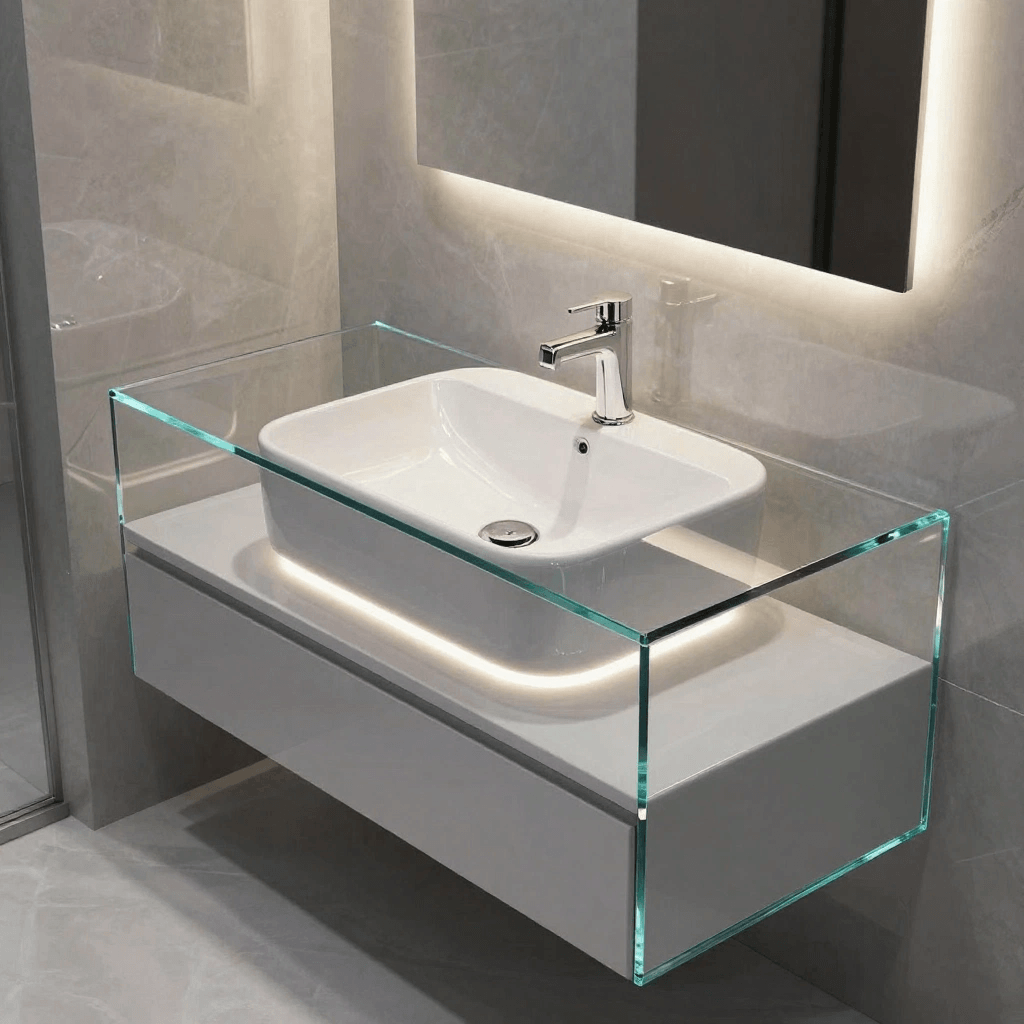
Last but definitely not least, let’s talk about glass counters. When I first heard about glass washbasin counters, I thought “that’s either going to look incredibly cool or incredibly ridiculous.” Turns out, it’s the former – when done right.
I installed a glass counter in my modern apartment’s guest bathroom, and it’s consistently the feature guests comment on. There’s something almost futuristic about it that really commits to the modern aesthetic.
The Transparency Advantage
Glass counters do something unique – they don’t just reflect light like other materials, they allow light to pass through. This creates an almost disappearing effect that’s perfect for compact spaces. Your bathroom gains functional counter space without the visual weight of an opaque material.
I used a thick frosted glass (about 1.5 inches thick) rather than clear glass. Clear glass looked too stark and showed every water drop and fingerprint. Frosted glass has this soft, ethereal quality while being much more forgiving with maintenance.
Why glass works in small bathrooms:
- Creates visual lightness (the counter seems to barely exist)
- Reflects and transmits light (brightens the whole space)
- Ultra-modern aesthetic (perfect for contemporary designs)
- Easy to clean (when properly treated)
- Pairs beautifully with other materials like chrome or white ceramics
The glass sits on a minimal chrome frame with an undermount white ceramic basin. I keep the styling super simple – just a sleek soap dispenser and hand towel. The glass itself is the statement, so you don’t need much else.
Addressing the Obvious Concerns
Yeah, I know what you’re thinking. Glass? In a bathroom? Won’t it break/scratch/look dirty constantly?
Valid concerns, my friend. Here’s the reality: Modern tempered glass counters are incredibly durable. Mine has survived three years of daily use, a dropped shampoo bottle, and various other minor impacts with zero damage. Tempered glass is designed to withstand way more than regular use throws at it.
For cleaning, I use regular glass cleaner and a microfiber cloth. Takes maybe two minutes, and it looks perfect. The frosted finish hides water spots and fingerprints way better than clear glass would.
The key is choosing quality materials. Cheap glass will look cheap and might not be properly tempered. Invest in a reputable supplier who specializes in bathroom glass products. I spent about 30% more for quality glass, and it’s been worth every penny.
Installation must-haves:
- Tempered or toughened glass (non-negotiable)
- Proper support brackets (don’t skimp on this)
- Sealed edges to prevent water infiltration
- Professional installation (seriously, don’t DIY this one)
The overall effect in my compact bathroom is this light, airy, ultra-modern space that feels way bigger than its actual dimensions. The glass counter practically disappears, which keeps the room feeling open while still providing full functionality.
One last thing – glass counters work best with LED strip lighting underneath. The light shines through the frosted glass and creates this amazing glow effect. I installed warm white LEDs under mine, and it transforms the bathroom into a spa-like space at night. Total mood lighting magic 🙂
Wrapping It All Up
So there you have it – 10 washbasin counter designs that prove compact bathrooms don’t have to compromise on style or functionality. Whether you’re vibing with minimalist marble, rustic wood, or futuristic glass, there’s a solution that’ll make your small space work harder and look better.
The real secret to small bathroom design? Intentionality. Every element needs to earn its place by being either incredibly functional, incredibly beautiful, or ideally both. You can’t afford to waste space on stuff that doesn’t serve a purpose.
I’ve tried most of these designs in various spaces over the years (yes, I move a lot and renovate obsessively – it’s a whole thing), and each one works brilliantly when executed thoughtfully. The floating options create airiness, the wooden designs add warmth, the corner installations maximize awkward spaces, and the luxury materials elevate everything.
Your bathroom doesn’t need to be massive to be amazing. Sometimes the constraints actually push you toward more creative, more interesting solutions than you’d choose in a larger space. Plus, smaller bathrooms are way cheaper to renovate, which means you can splurge on those premium materials you’ve been eyeing.
Start with the design that speaks to you most, consider your specific space constraints and style preferences, and don’t be afraid to mix elements from different approaches. My personal bathroom actually combines floating installation, LED backlighting, and rustic wood – rules are meant to be broken, folks.
Now go transform that compact bathroom into something spectacular. And maybe send me pictures because I genuinely love seeing bathroom renovations. Is that weird? Probably. Do I care? Not even a little bit.