10 Luxury Jewellery Shop Design Ideas Premium Style
- Shop Design
 Ben
Ben- 0
- 45 minutes read
So you want to open a jewellery shop that doesn’t scream “dated mall kiosk from 1987”? Smart move. Look, I’ve walked into enough jewellery stores that felt like stepping into your grandma’s velvet-lined jewellery box—and not in a good way. The truth is, your shop’s design can be the difference between someone walking past your window or walking through your door with their credit card ready.
Here’s the thing: luxury jewellery deserves a luxury setting. You wouldn’t serve champagne in a plastic cup, right? Same logic applies here. Whether you’re working with a boutique-sized space or a sprawling showroom, the design choices you make will either elevate your pieces or fight against them. And honestly? After visiting countless jewellery shops and watching how customers react to different environments, I’ve learned what works and what absolutely tanks.
Let me walk you through 10 luxury jewellery shop design ideas that’ll make your space look like it belongs on an Instagram feed while still being functional enough to actually, you know, sell jewellery. These aren’t just pretty concepts—they’re practical approaches I’ve seen transform ordinary retail spaces into destinations people actually want to visit.
Minimal Luxury Glass Jewellery Boutique Concept
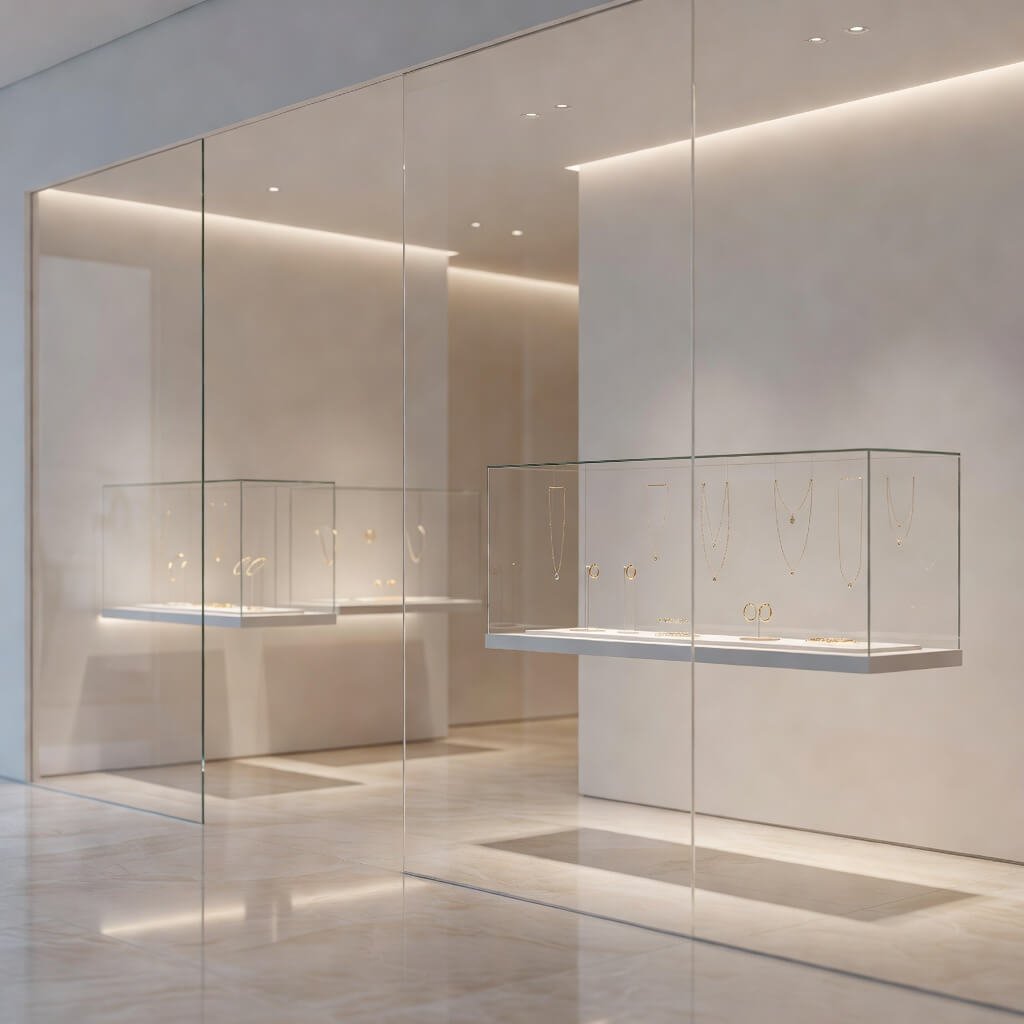
Ever walked into an Apple Store and felt that instant sense of clean, sophisticated luxury? That’s what the minimal luxury glass concept does for jewellery shops. This design approach strips away everything unnecessary and lets your jewellery become the star of the show.
The core of this concept revolves around transparency—literally. You use floor-to-ceiling glass panels, transparent display cases, and open sightlines that make the entire space feel larger and more inviting. The psychology here is brilliant: when customers can see everything clearly without visual clutter, they feel more comfortable browsing and less pressured.
I remember visiting this boutique in London that nailed this concept perfectly. They used frameless glass display cases that seemed to float (hidden mounting, clever stuff), white lacquered walls, and absolutely minimal furniture. The jewellery pieces sat on individual glass pedestals with hidden LED lighting underneath. The result? Each piece looked like a museum-quality artifact.
Here’s what you need to make this work:
- Frameless glass display cases with anti-reflective coating
- Neutral color palette: whites, grays, maybe a soft beige
- Hidden storage so you don’t ruin the minimalist vibe
- Strategic lighting that highlights products without harsh glare
- Quality over quantity in your display—fewer pieces, more impact
The beauty of minimal design is that it forces you to curate carefully. You can’t just throw every piece you own into the display and hope something sticks. Each item you choose to showcase needs to earn its spot, which actually helps customers make decisions faster because they’re not overwhelmed.
One warning though: minimal doesn’t mean cold or sterile. You still need warmth, which you can introduce through strategic use of warm lighting, maybe a single statement plant, or a plush seating area. Otherwise, you risk creating a space that feels more like a dentist’s office than a jewellery boutique. :/
Modern Gold Accent Jewellery Showroom Design
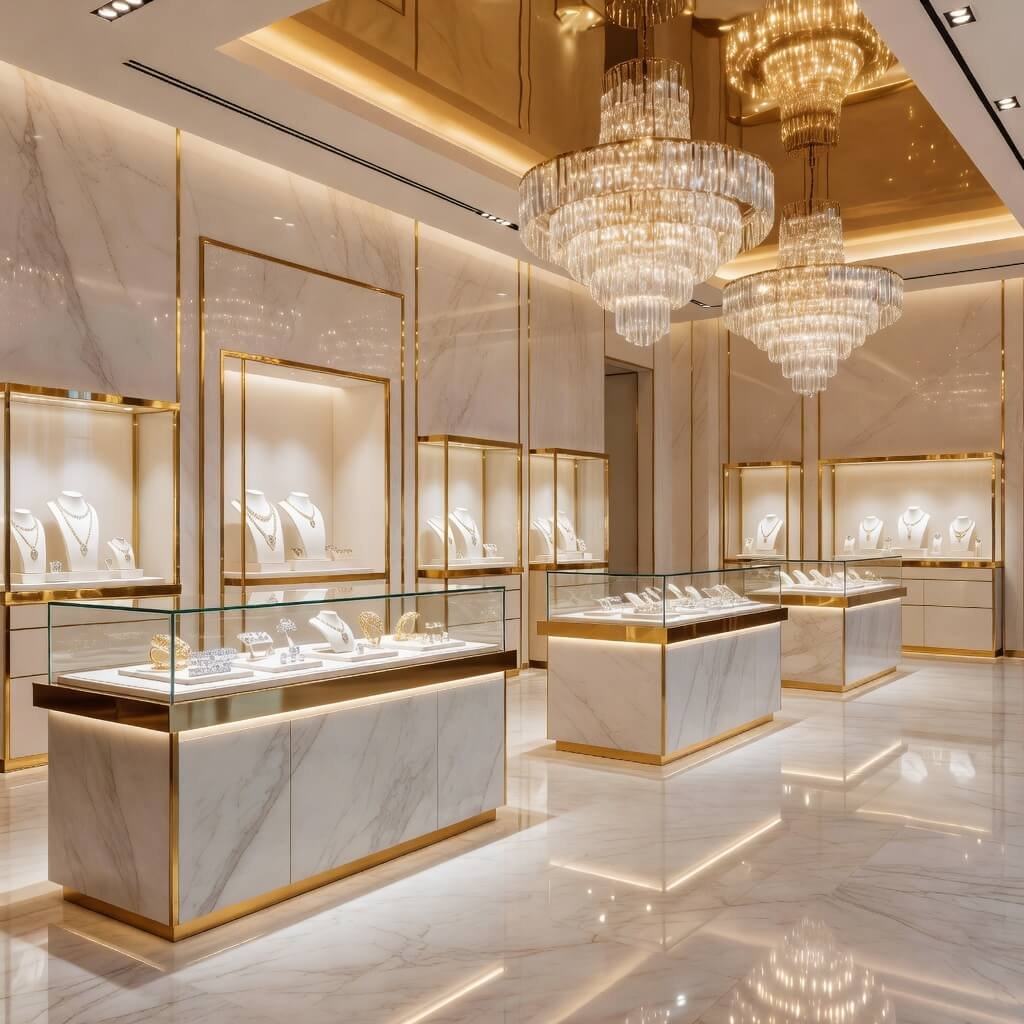
Want to know a secret? Gold never goes out of style. But the way you use gold in your design absolutely matters. I’m talking about modern gold accents—not the gaudy, overwhelming gold-everything approach that makes your shop look like a rapper’s mansion circa 2005.
Modern gold accents work as sophisticated punctuation marks throughout your space. You use gold sparingly and strategically: gold-framed mirrors, brushed gold display edges, gold lighting fixtures, or gold geometric shelving. The key word here is “accent”—gold should complement, not dominate.
I visited a showroom in Dubai (where they really understand luxury, FYI) that used this approach brilliantly. The base design was predominantly white and gray marble with dark walnut wood elements. Then they introduced brushed gold accents on display case edges, a stunning gold geometric ceiling installation, and gold-rimmed seating. The effect was luxurious without being ostentatious.
This design approach works particularly well because:
- Gold complements most jewellery metals beautifully
- It creates visual interest without competing with your products
- It photographs incredibly well for social media marketing
- It signals luxury in a universally understood design language
- It’s versatile enough to work with contemporary or classic styles
The trick is choosing the right gold finish. Brushed or matte gold reads more contemporary and sophisticated than shiny, reflective gold. Rose gold accents can add warmth and work beautifully with feminine jewellery collections. Brass with a patina finish gives you that gold look with an artisanal, vintage edge.
Balance is everything here. I’d recommend limiting gold to about 20-30% of your visual elements. Use it on handles, frames, fixtures, and maybe one statement piece like a geometric wall installation or a custom display unit. Pair it with materials like marble, velvet, or dark wood to create contrast and depth.
Small Space High-End Jewellery Shop Layout
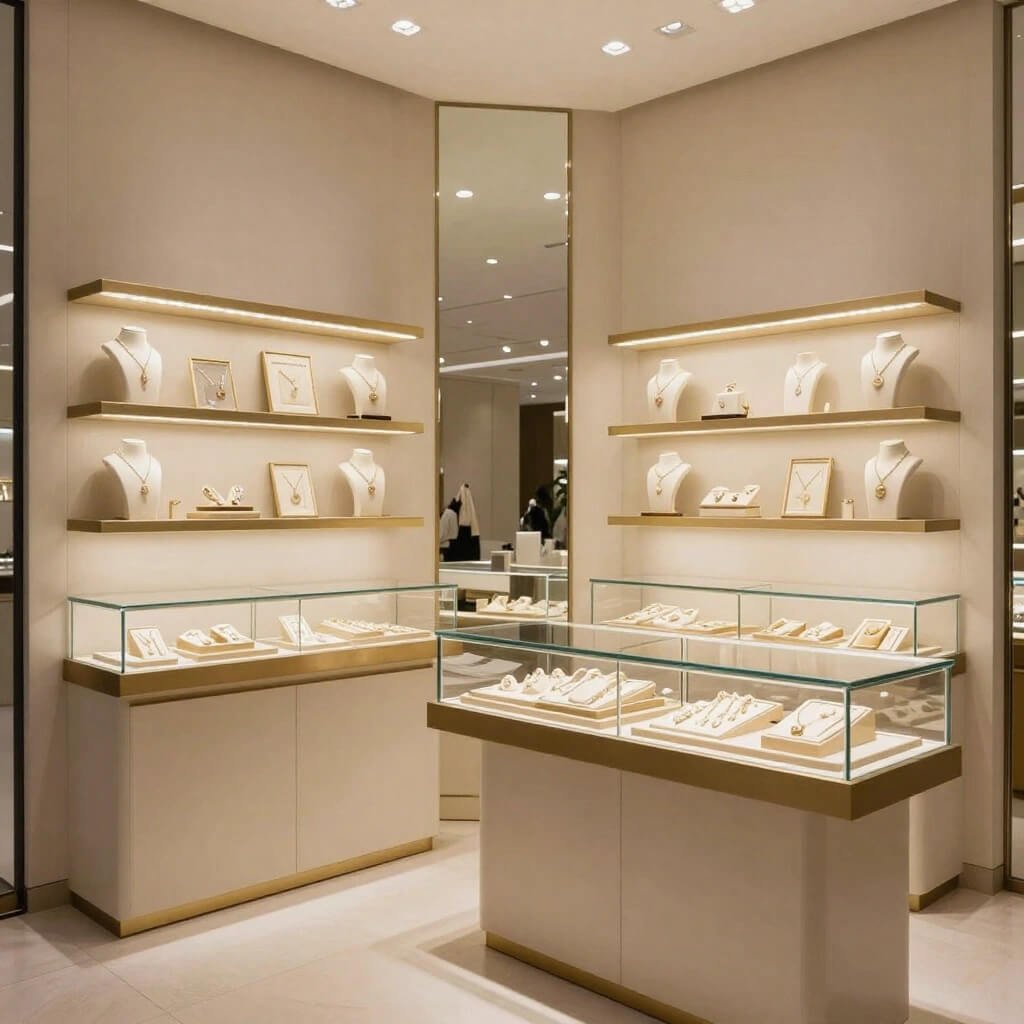
Not everyone gets a massive retail footprint, and honestly? Some of the most memorable jewellery shopping experiences I’ve had were in tiny boutiques that used their space brilliantly. Working with a small space doesn’t mean compromising on luxury—it means getting strategic.
The fundamental principle of small-space luxury design is intentionality. Every single square inch needs to serve a purpose. You can’t waste space on decorative elements that don’t add function or value. Sounds limiting, but it actually forces you to create a more focused, curated experience.
Here’s how you maximize luxury in minimal square footage:
- Vertical displays: Use wall height to your advantage with tall, slim display cases
- Multi-functional furniture: A beautiful display case that also serves as a consultation counter
- Mirrors strategically placed to create the illusion of more space
- Light, reflective materials instead of dark, heavy ones
- A single, stunning focal point rather than multiple competing elements
I worked with a friend who opened a jewellery boutique in a space that was maybe 300 square feet—tiny, right? But she made it work by installing floor-to-ceiling built-in displays along one wall, using a single central island with glass display on all four sides, and creating a small but luxurious consultation nook with velvet seating. Customers actually loved how intimate and exclusive it felt, like they were being let into a secret.
The layout needs to follow a clear path. You want customers to naturally flow through your space without feeling cramped or confused about where to look next. Consider a boutique hotel lobby approach: create distinct zones even in a small space. Maybe a display zone, a browsing zone, and a private consultation zone.
One thing I can’t stress enough: declutter ruthlessly. Small spaces magnify mess. You need hidden storage solutions for inventory, cleaning supplies, and all the operational stuff that keeps a retail space running. Built-in drawers, under-display storage, and back-room organization systems are non-negotiable.
Also Read: 10 Affordable Shop Design Ideas for Budget Friendly Stores
LED Spotlight Luxury Display Jewellery Store
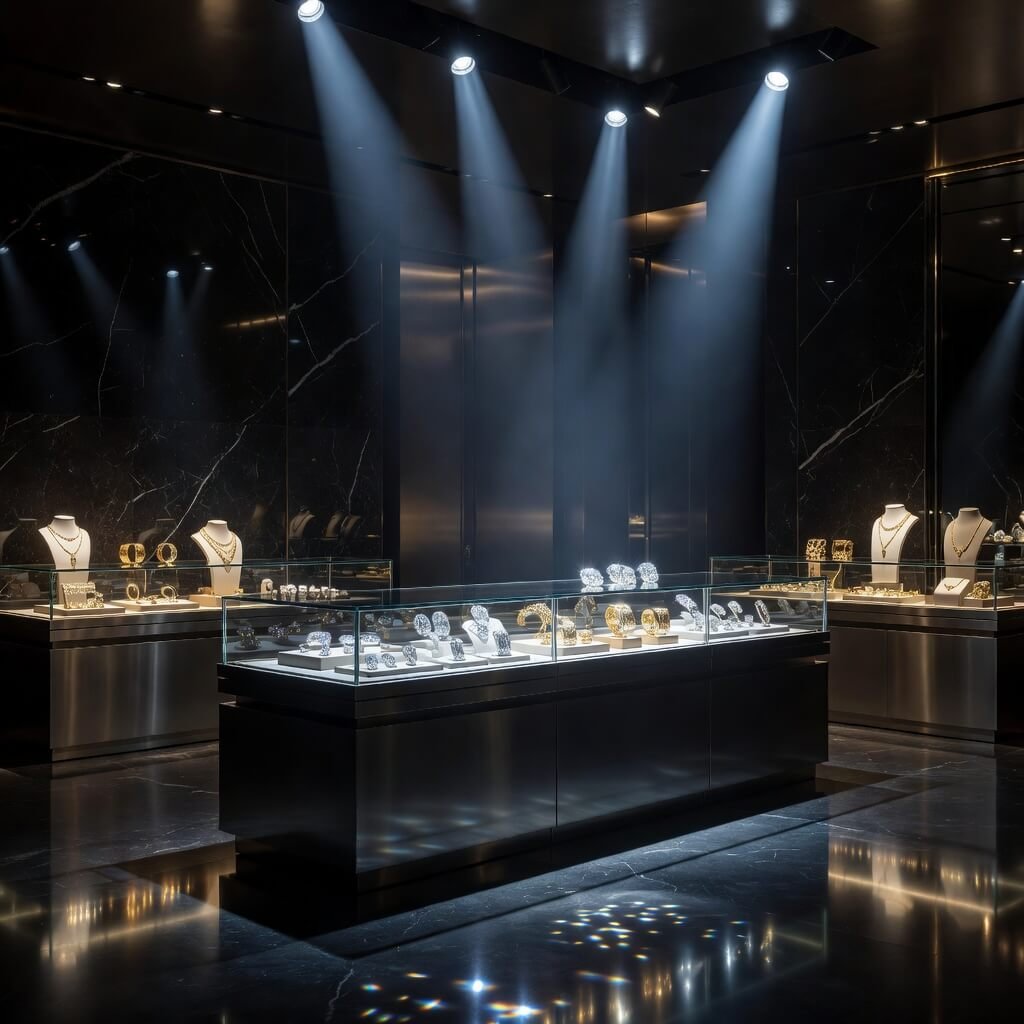
Let me tell you something most people overlook: lighting can make or break your jewellery display. I’ve seen $10,000 diamond rings look like costume jewellery under bad fluorescent lighting, and I’ve seen semi-precious stones look absolutely stunning under properly designed LED spotlights. Lighting isn’t just functional—it’s theatrical.
LED spotlights give you precision control over how customers see your jewellery. Unlike general overhead lighting, spotlights create drama, highlight specific pieces, and guide customer attention exactly where you want it. Plus, modern LEDs don’t generate heat that could damage sensitive pieces or make your shop uncomfortably warm.
Here’s what makes LED spotlight design so effective:
- Adjustable focus lets you change displays without rewiring
- Color temperature control ensures accurate representation of metals and stones
- Energy efficiency keeps operating costs down
- No UV emission protects delicate pieces from fading or damage
- Creates depth through layered lighting levels
The secret to spotlight luxury is layering your light sources. You need three levels: ambient lighting (general illumination), accent lighting (spotlights on featured pieces), and task lighting (at consultation areas where customers examine pieces closely). Each layer serves a different function and together they create a complete lighting environment.
I remember walking into this jewellery store in New York where they absolutely nailed the spotlight approach. They used narrow-beam LED track lights positioned to create small pools of light on individual pieces. The rest of the display area was intentionally dimmer, which made the spotlit pieces practically glow. Customers naturally gravitated toward those highlighted pieces—basic human nature, we’re drawn to light.
Pro tip: Use 3000K color temperature for a warm, inviting feel that flatters both gold and silver tones. Avoid anything cooler than 4000K unless you’re specifically showcasing white diamonds or platinum pieces where you want that crisp, cool aesthetic.
Position your spotlights at a 30-45 degree angle from the piece you’re highlighting. This creates dimension and sparkle without harsh shadows. And please, invest in quality fixtures with good color rendering index (CRI) ratings—aim for CRI 90 or higher so colors appear true and vibrant.
Marble Finish Premium Jewellery Retail Interior
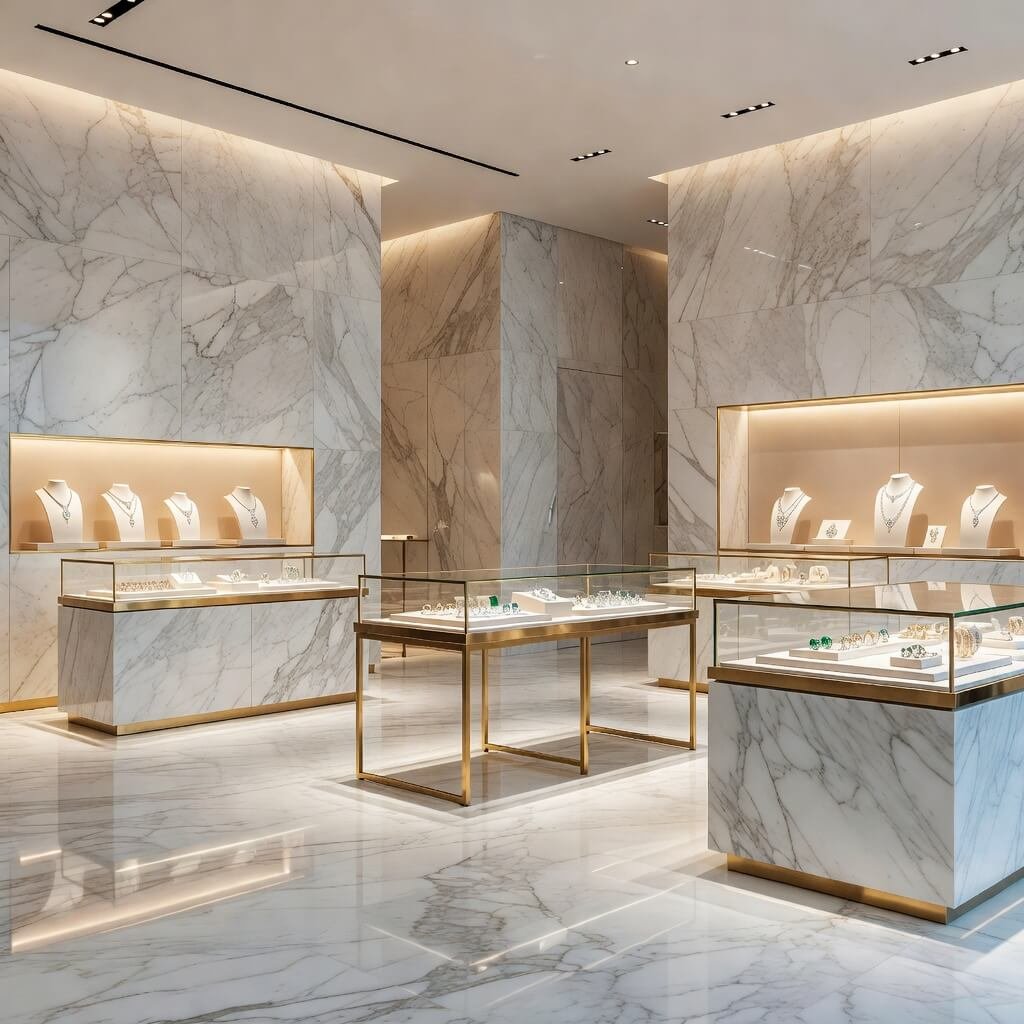
Want instant luxury credibility? Marble. Seriously, nothing says “we’re high-end” quite like natural stone, and marble specifically carries associations with palaces, luxury hotels, and wealth. But here’s where it gets interesting: you don’t need to marble everything to get the effect.
Strategic marble placement creates luxury touchpoints throughout your space. You might use marble for flooring in the entrance, marble display counters, marble accent walls, or marble pedestals for featured pieces. The natural veining and unique patterns of marble add visual interest while maintaining elegance.
I’ve seen this done exceptionally well in several high-end jewellery stores. One approach I particularly loved used white Carrara marble for the main display counter with gold veining—it became this stunning centerpiece that customers would literally photograph. The rest of the store used complementary materials like dark wood and soft gray walls, so the marble stood out without overwhelming.
Here are your marble options and where they work best:
- White Carrara: Classic, elegant, with subtle gray veining—perfect for display surfaces
- Calacatta: Bolder veining, more dramatic—use as statement wall or feature counter
- Black Marquina: Sophisticated and modern—excellent for flooring or accent pieces
- Green marble: Adds color and uniqueness—use sparingly as artistic accent
- Emperador brown: Warm tones that work beautifully with gold jewellery displays
Now, real marble can be expensive and heavy. IMO, there’s absolutely no shame in using high-quality marble-finish materials like porcelain tiles that replicate marble or engineered stone with marble aesthetics. The visual effect is nearly identical, and they’re often more practical for retail environments—easier to maintain, more durable, and more budget-friendly.
The key is balancing marble with softer materials. Pair marble floors with plush area rugs in consultation areas. Use marble counters but add velvet-lined trays for actual jewellery display. Combine marble walls with warm wood shelving. This prevents your space from feeling cold or museum-like.
Maintenance matters too. Marble is porous and can stain, so you need to seal it properly and clean it correctly. For retail spaces with high foot traffic, choose honed (matte) finishes rather than polished in walkways to prevent slipping—nobody wants a lawsuit because someone slipped on your fancy marble floor.
Traditional Royal Style Jewellery Shop Design
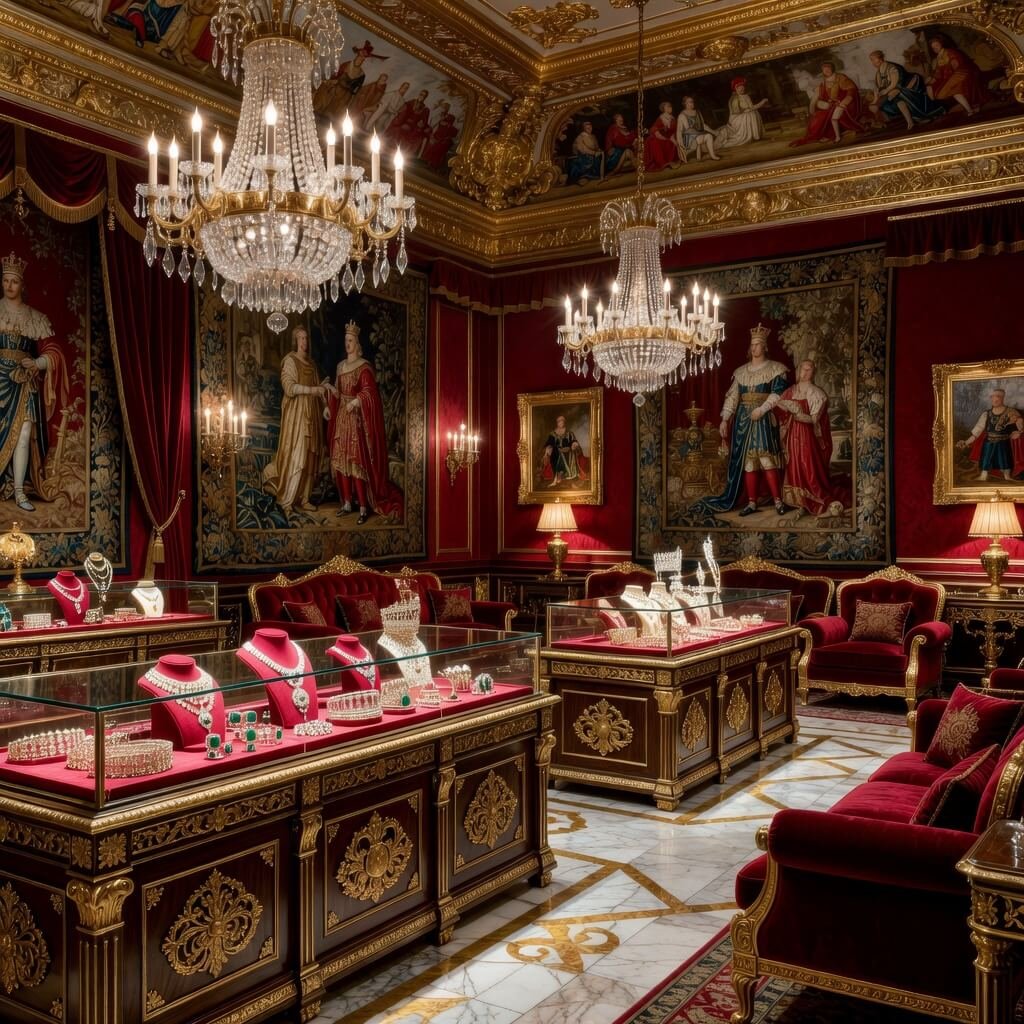
Sometimes traditional is exactly what your brand needs. If you’re selling heritage pieces, vintage jewellery, or catering to clients who appreciate classical elegance, a traditional royal style might be your perfect match. Think Victorian opulence meets modern functionality.
Royal traditional design draws on historical luxury aesthetics: rich woods, ornate details, velvet upholstery, crystal chandeliers, and classical architectural elements. But here’s the crucial part—you’re not creating a museum or a period film set. You’re creating a functional retail space with traditional aesthetic elements that feel current, not dated.
I visited a jewellery shop in Vienna (which knows a thing or two about imperial style) that executed this beautifully. They used rich mahogany display cases with subtle carved details, burgundy velvet display trays, a crystal chandelier as the centerpiece, and ornate gold-framed mirrors. But they balanced these traditional elements with clean lines, uncluttered displays, and modern lighting. The result felt elegant and timeless rather than stuffy.
Elements that define traditional royal style:
- Rich wood tones: Mahogany, walnut, or cherry wood with quality finishes
- Ornate but refined details: Crown molding, carved elements, wainscoting
- Luxurious fabrics: Velvet, silk, or damask for seating and display
- Classical lighting: Chandeliers, wall sconces with traditional designs
- Symmetrical layouts: Balanced, formal arrangements that feel intentional
- Antique or antique-inspired furniture: Display cases that reference historical cabinet-making
The challenge with traditional design is avoiding the “antique shop” vibe where everything feels old and dusty. You want to channel royal elegance, not grandma’s attic. Keep displays uncluttered, maintain impeccable cleanliness, and ensure your lighting is bright enough to feel welcoming rather than dim and museum-like.
Color palette matters enormously. Traditional royal style typically uses deep, saturated colors: burgundy, navy, forest green, or deep purple as accents against neutral bases of cream, beige, or soft gray. Gold is your friend here—ornate gold frames, gold hardware on furniture, gold accents on architectural details.
One modern twist I love is combining traditional elements with contemporary display methods. Imagine an ornate mahogany cabinet, but instead of glass doors, you install a backlit display with modern LED lighting. Or pair a crystal chandelier with sleek, minimalist display cases underneath. This fusion prevents your design from feeling like a time capsule.
Also Read: 10 Unique Shop Interior Design Ideas for Modern Brand Look
Contemporary Black and Gold Jewellery Store Concept
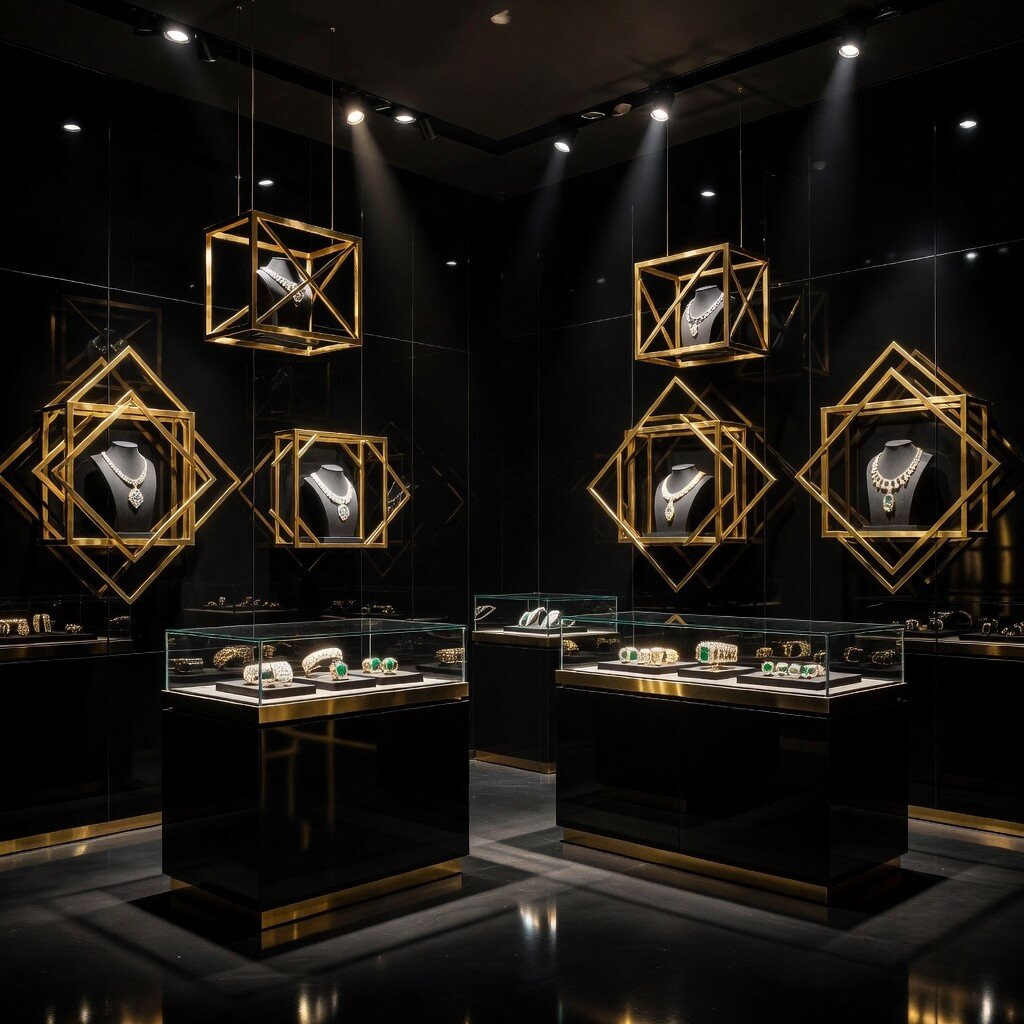
If minimal white spaces feel too stark and traditional styles feel too ornate, the contemporary black and gold concept might be your sweet spot. This design approach is bold, dramatic, and undeniably sophisticated. It’s the interior design equivalent of a little black dress with gold jewellery—timeless, elegant, and always appropriate.
Black and gold creates instant visual drama that photographs beautifully and makes jewellery pop. The dark background makes diamonds sparkle more brilliantly, highlights the warmth of gold pieces, and creates a gallery-like atmosphere that elevates the perceived value of everything in your shop.
Here’s what makes this combination work so well:
- High contrast draws the eye and creates visual interest
- Black backgrounds make gemstones and metals stand out brilliantly
- Gold accents add warmth and prevent the space from feeling too dark or severe
- Contemporary edge appeals to modern, style-conscious customers
- Versatility works with both modern and classic jewellery styles
I saw this concept executed spectacularly in a boutique in Los Angeles. They used matte black walls with gold geometric shelving, black velvet display trays with gold bases, and stunning gold linear lighting fixtures. The floor was polished black concrete with gold inlay creating geometric patterns. Every piece of jewellery looked like a work of art against those dark backgrounds.
The psychology is interesting too. Dark retail spaces create a sense of intimacy and exclusivity. They feel more like private galleries than conventional shops, which can actually make customers feel special and more willing to invest in higher-price pieces. It’s the opposite of the bright, open retail model—both work, but for different customer experiences.
But—and this is important—you need to get the lighting absolutely right. Dark spaces with insufficient lighting feel unwelcoming and make it hard for customers to actually see details on pieces they’re considering. You need layered, sophisticated lighting that compensates for the dark surfaces without creating harsh glare.
My recommendation: Use a combination of recessed spotlights for general illumination, display case lighting for product highlighting, and statement lighting fixtures (in gold, obviously) as both functional light sources and design elements. Aim for warm lighting (around 2700-3000K) to complement the gold accents and create a welcoming atmosphere.
Material choices matter here too. Matte black finishes feel more contemporary and sophisticated than glossy black, which can read as too shiny or plastic. For gold elements, consider mixing finishes—brushed gold for larger elements like shelving or fixtures, and polished gold for smaller details and accents.
Boutique Style Compact Jewellery Display Setup
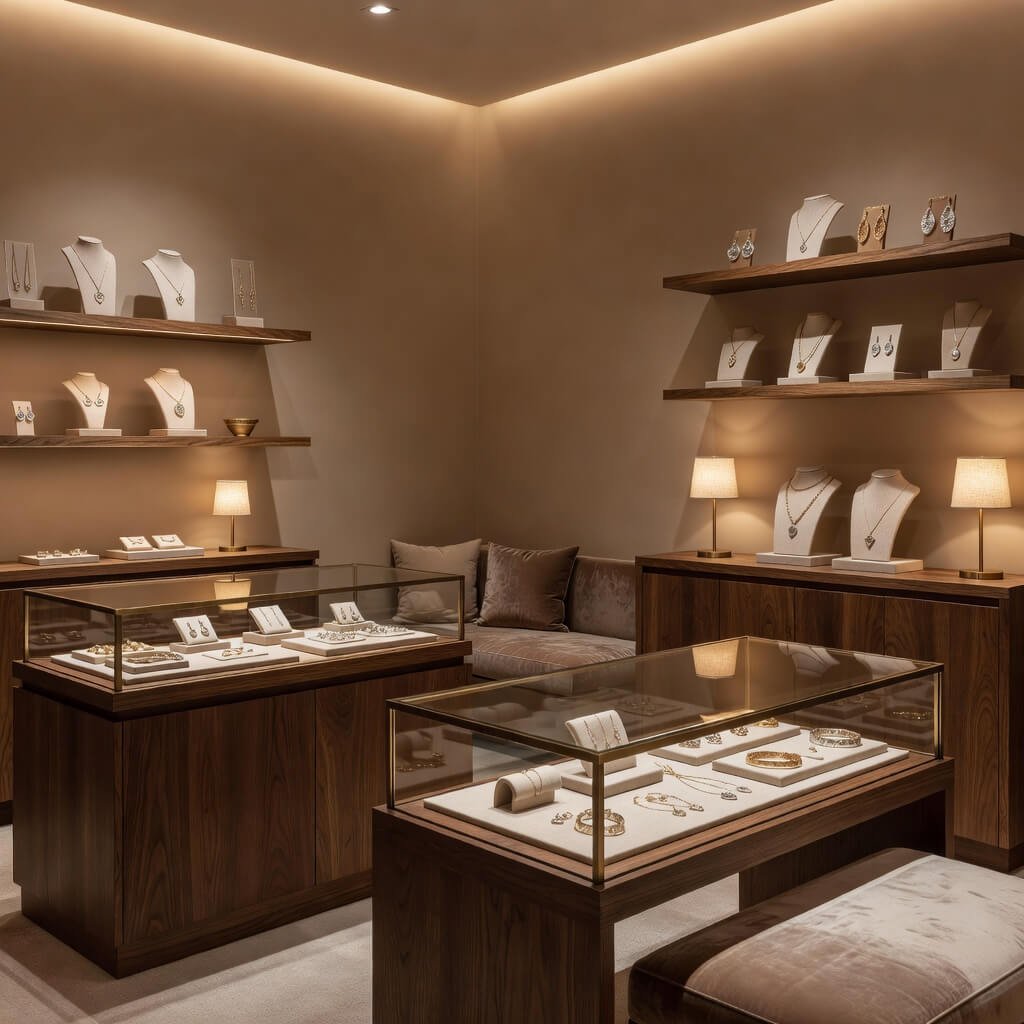
Here’s a reality check: most independent jewellery businesses aren’t working with department store-sized spaces. You’re probably looking at a compact boutique setup, and guess what? That’s actually an advantage if you play it right. Boutique-style displays create curated, high-touch shopping experiences that larger stores can’t replicate.
Boutique style prioritizes quality over quantity in both your product display and your design elements. You’re creating an intimate, personalized environment where customers feel like they’re discovering carefully selected pieces rather than shopping a massive inventory.
The foundation of boutique-style display is curation. You don’t show everything you have—you show your best, most representative pieces and rotate displays regularly. This approach serves multiple purposes: it keeps your space from looking cluttered, it gives customers a clear idea of your style and quality level, and it gives people reasons to visit repeatedly to see what’s new.
Key elements of boutique-style compact displays:
- Individual presentation: Each piece gets its own space and breathing room
- Mixed display methods: Combine cases, stands, wall-mounted options for visual variety
- Seating areas: Even in small spaces, create a spot for comfortable consultation
- Personal touches: Artwork, books, or objects that reflect your brand personality
- Flexible fixtures: Display elements you can rearrange as your collection changes
I worked with a jewellery designer who had maybe 200 square feet to work with. She created a boutique setup using three distinct display zones: a wall-mounted display with floating shelves and individual spotlit pedestals, a central glass display case that doubled as a consultation counter, and a small lounge area with two velvet chairs and a side table for trying on pieces. The setup felt curated and personal, like shopping in a friend’s impossibly chic home.
The boutique approach also allows you to create themed displays or tell stories with your presentation. Maybe you group pieces by designer, by style era, by occasion, or by gemstone. This gives customers context and helps them understand your collection’s breadth even when you’re only showing a fraction of your inventory.
Display furniture in boutique setups needs to work hard. Look for pieces with built-in storage, displays that can serve multiple functions, and fixtures that are beautiful enough to be design elements themselves. A stunning vintage cabinet that’s been retrofitted with modern lighting and secure display areas? Perfect. Custom-built units that maximize every inch while looking like furniture rather than retail fixtures? Ideal.
High-End Wall Mounted Jewellery Showcase Design
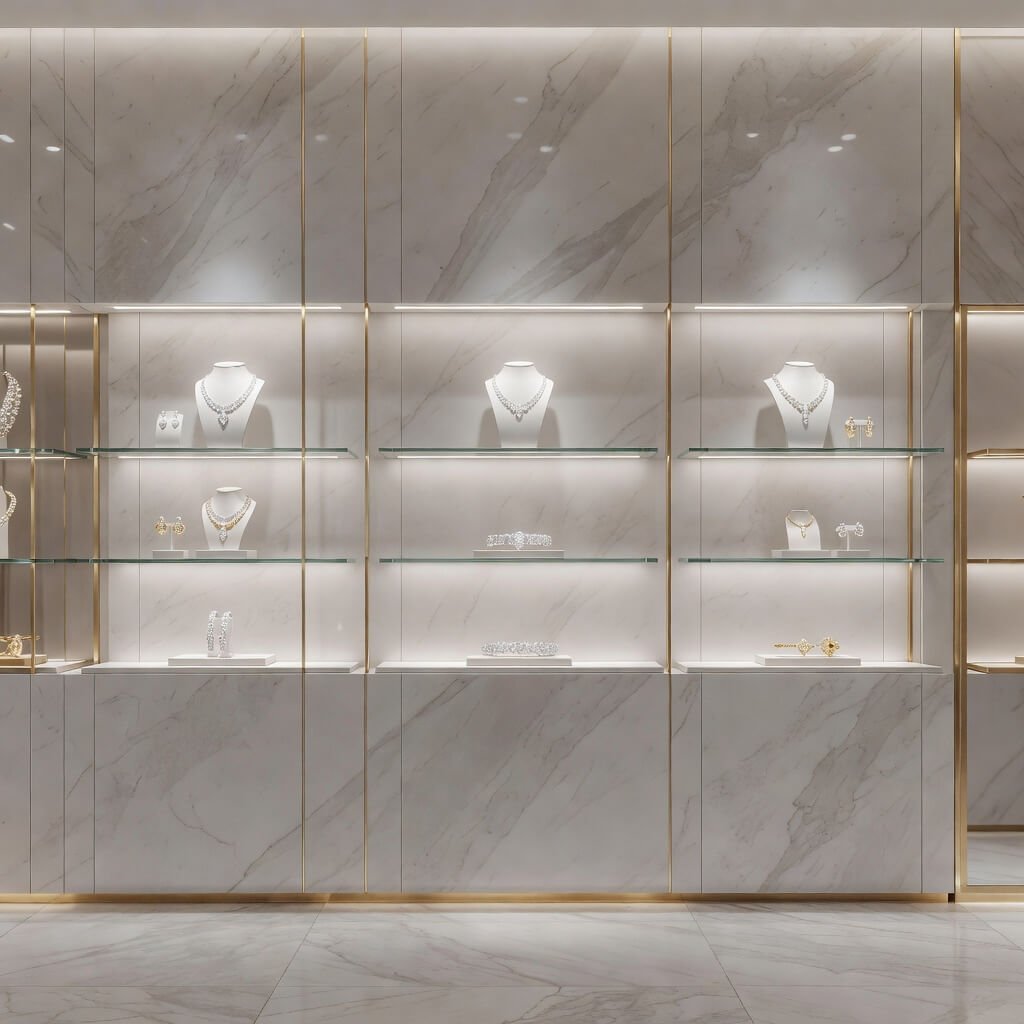
Ever notice how high-end boutiques often make brilliant use of vertical space? Wall-mounted showcases are underutilized in jewellery retail, which is crazy because they offer so many advantages: they maximize floor space, create eye-catching displays, and add architectural interest to your walls.
Wall-mounted showcases transform your walls into display real estate while keeping floor space open for customer movement and seating areas. This approach is particularly brilliant for small shops where every square foot of floor space is precious.
Here’s why wall-mounted displays work so well:
- Space efficiency: Uses vertical space that’s often wasted
- Visual impact: Draws eyes upward, making spaces feel larger
- Security: Can be designed with lockable glass fronts and secured to walls
- Flexibility: Can be installed at various heights for optimal viewing
- Modern aesthetic: Floating displays feel contemporary and sophisticated
The execution is where this gets interesting. You’re not just nailing some shelves to the wall—you’re creating architectural display elements that become part of your interior design. Think backlit shadow boxes with individual jewellery pieces, floating glass shelves with hidden LED strips, or custom-built display niches with luxurious materials lining each compartment.
I remember visiting this jewellery store in Tokyo (they really understand retail design there) where the entire back wall was a floor-to-ceiling display system. Individual compartments in various sizes, each backlit with adjustable spotlights, housed different jewellery pieces. It looked like an art installation, and customers spent ages just looking at the wall arrangement before even asking to see specific pieces.
Installation quality is crucial here. Wall-mounted displays need to be seriously secured—you’re potentially putting thousands or tens of thousands of dollars worth of jewellery on your walls. Use proper anchoring systems, especially if you’re mounting on drywall. Consider working with professional installers who understand both the aesthetic requirements and the security needs.
Material choices dramatically affect the look and feel. Glass shelves with chrome or brass brackets create a light, contemporary feel. Wood compartments with velvet lining feel warmer and more traditional. Acrylic displays with LED backlighting create a modern, gallery-like atmosphere. Mix materials to create visual interest while maintaining a cohesive overall design.
Lighting integration is non-negotiable with wall-mounted displays. Hidden LED strips, individual spotlights, or backlit panels turn your displays into glowing focal points. The lighting serves double duty: it makes the jewellery look incredible and creates ambient lighting for your entire space.
Also Read: 10 Unique Shop Front Design Ideas for Attractive Storefronts
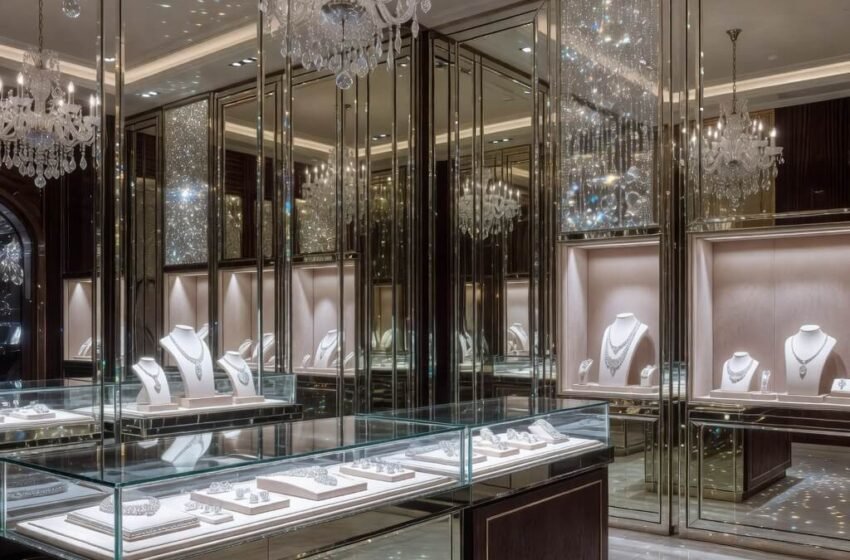
Elegant Mirror & Crystal Jewellery Store Interior
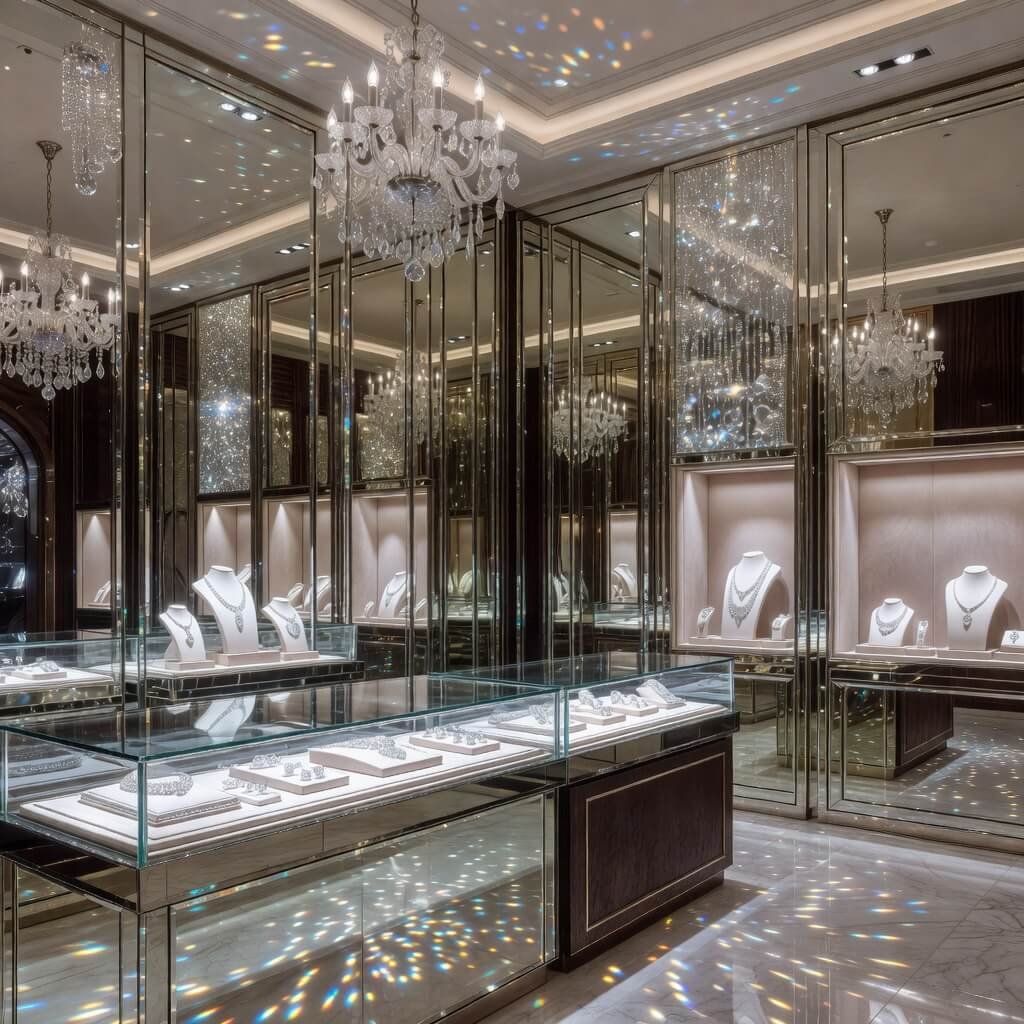
Want to create a sense of spaciousness, luxury, and glamour all at once? Mirrors and crystal elements are your best friends. This design approach is all about reflection, refraction, and creating visual magic that makes your space feel larger and more opulent than its actual square footage.
Mirrors multiply your space visually while adding a classic luxury element that feels appropriate for high-end jewellery retail. But we’re not talking about generic wall mirrors—we’re talking about statement mirrors as design elements, mirrored surfaces on display fixtures, and strategic mirror placement that creates interesting visual effects.
Crystal takes it a step further. Crystal chandeliers, crystal hardware, crystal display elements, and crystal decorative objects all contribute to an atmosphere of refined elegance. The way crystal catches and refracts light creates movement and sparkle that complements jewellery beautifully.
Here’s how to incorporate these elements effectively:
- Statement mirrors: Large, ornately framed mirrors as focal points
- Mirrored surfaces: Display case backs or sides that reflect jewellery
- Mirror walls: One full mirrored wall to double the visual space
- Crystal chandeliers: As central lighting features that add glamour
- Crystal hardware: Drawer pulls, cabinet knobs, or display stand elements
- Crystal decorative objects: Vases, sculptures, or display props
I visited a jewellery boutique in Paris (naturally) that mastered this approach. They used a massive gilt-framed mirror as the focal point behind their main display counter, creating the illusion of double the inventory. Mirrored side panels on display cases made jewellery pieces visible from multiple angles without customers having to ask staff to remove items. And a stunning vintage crystal chandelier created prismatic light effects throughout the space. 🙂
The technical considerations here are important. Mirrors need to be placed thoughtfully—you want to create visual interest and expand space, not disorient customers or create awkward sightlines where people constantly see themselves from unflattering angles. Position mirrors to reflect your best displays or architectural features, not to reflect cluttered work areas or the backs of display cases.
Quality matters enormously with both mirrors and crystal. Cheap mirrors can distort and ruin the effect you’re trying to create. Authentic crystal has a clarity and brilliance that glass imitations simply can’t match. If budget is a concern, invest in one or two statement pieces—a single gorgeous vintage mirror or a quality crystal chandelier—rather than lots of lower-quality elements.
Maintenance is the less glamorous reality of this design approach. Mirrors show fingerprints, smudges, and dust. Crystal requires regular cleaning to maintain sparkle. You need to factor in regular cleaning as part of your operational routine. But honestly? The visual impact is worth it.
The lighting strategy needs special attention in mirror and crystal spaces. Every light source is potentially multiplied by reflection, so you need to plan carefully to avoid overwhelming brightness or unwanted glare. Use dimmer switches, adjustable fixtures, and test different configurations to find the sweet spot where everything sparkles without becoming uncomfortable.
Pulling It All Together
Look, designing a luxury jewellery shop isn’t about randomly choosing pretty elements and hoping they work together. It’s about understanding your brand, your customer, and your space, then making intentional design choices that create the right environment for both showcasing jewellery and closing sales.
Each of these 10 design approaches offers a distinct aesthetic and creates a different customer experience. The minimal glass concept appeals to contemporary, minimalist-loving customers who appreciate clean lines and uncluttered spaces. Traditional royal style speaks to customers who value heritage, craftsmanship, and classical elegance. Black and gold contemporary attracts style-conscious shoppers who want modern drama.
Your job is figuring out which approach aligns with your brand identity and customer base. Actually, you might even combine elements from multiple approaches—maybe a base of minimal luxury with gold accents and crystal lighting? Or contemporary black and gold with wall-mounted displays? The possibilities are pretty much endless.
A few universal principles apply regardless of which design direction you choose:
Lighting is everything. You can have the most beautiful displays and the most stunning jewellery, but if your lighting is wrong, nothing looks good. Invest in quality lighting systems with adjustable options, proper color rendering, and multiple layers.
Less is more in display. Overcrowding cases and surfaces makes everything look less valuable and overwhelms customers. Edit ruthlessly and rotate inventory to keep things fresh.
Comfort matters. If customers feel uncomfortable, rushed, or unwelcome, they won’t stay long enough to fall in love with your pieces. Include seating, create appropriate temperature control, and design traffic flow that feels natural.
Security without fortress vibes. You need to protect your inventory without making your shop feel like a prison. Integrate security measures into your design seamlessly—lockable displays that don’t look like bank vaults, security systems that aren’t visually intrusive, and staff positioning that feels helpful rather than surveillance-like.
Your space tells a story about your brand. Every design choice communicates something to customers about who you are, what you value, and whether you’re worth their investment. Make sure the story your design tells aligns with the story you want to communicate.
The most successful jewellery shop designs I’ve seen share one common trait: they create an experience, not just a transaction space. Customers remember how your shop made them feel, the atmosphere you created, and the care you put into presenting your collection. That emotional connection is what transforms browsers into buyers and one-time customers into loyal advocates.
So whether you’re building a new shop from scratch or refreshing an existing space, think beyond just “where do I put the display cases?” Consider the entire customer journey, from the moment they see your window display to the moment they leave with a purchase. Design for that journey, create memorable touchpoints throughout, and you’ll build a jewellery shop that’s as valuable as the pieces you’re selling.
Now get out there and create something beautiful. Your jewellery deserves it, and so do your customers.