
10 Amazing Front Yard Garden Design Ideas for Dream Homes
- Garden Design
 Ben
Ben- 0
- 41 minutes read
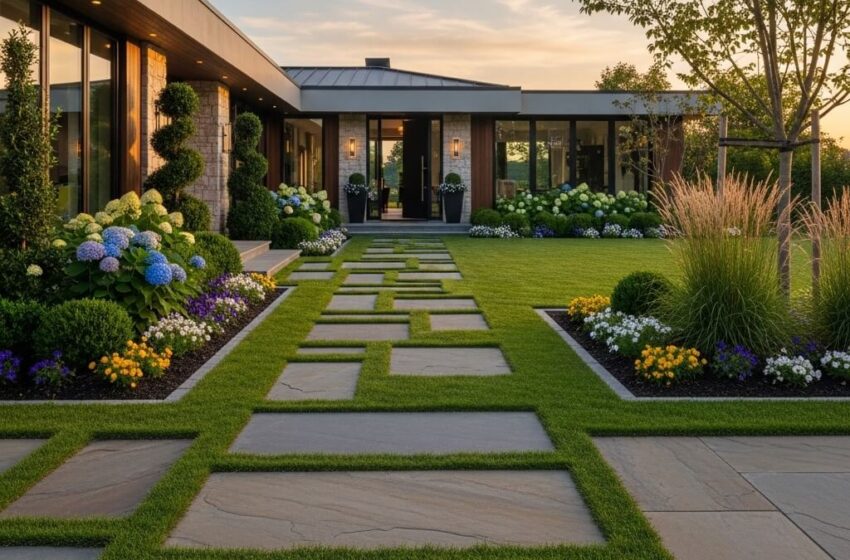
You know that feeling when you pull up to your house and the front yard just makes you smile? Yeah, most of us don’t have that. Instead, we’re stuck with patchy grass, random shrubs we didn’t plant, and maybe a sad-looking garden gnome someone gifted us five Christmases ago. But here’s the thing—your front yard doesn’t have to be an afterthought or a source of neighborhood shame.
I’ve spent the last few years obsessing over front yard transformations (totally normal hobby, right?), and I’ve learned that the right design can completely change how you feel about your home. Whether you’re working with a tiny strip of land or a sprawling lawn, there’s a design idea that’ll work for you. So grab your coffee, get comfortable, and let’s talk about ten front yard garden designs that’ll actually make your neighbors stop and stare—in a good way this time.
Minimal Modern Front Yard Pathway Design
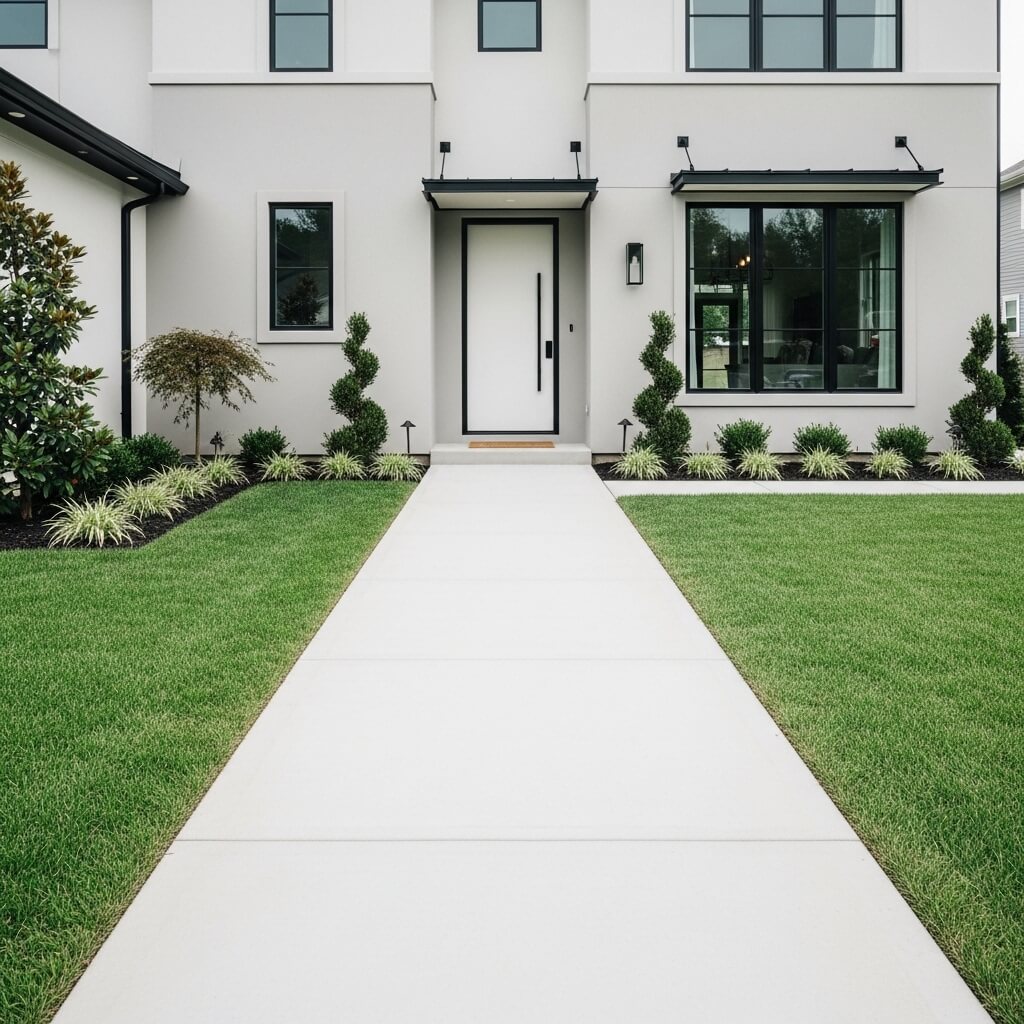
Let me start with my personal favorite: the minimal modern pathway. If you’re someone who thinks “less is more” should be tattooed on every design magazine, this one’s calling your name.
The concept here is beautifully simple. You create clean lines with concrete pavers or sleek stone slabs, usually in neutral tones like gray, white, or black. These pathways cut through your front yard with purpose—no curves, no fuss, just straight geometric perfection. I installed one of these at my place last year, and honestly? Best decision ever.
Here’s what makes this design work so well:
- Simplicity creates impact: You’re not overwhelming the eye with colors or textures
- Low maintenance: No intricate patterns mean less upkeep and fewer headaches
- Versatile styling: Works with almost any home architecture, from mid-century modern to contemporary builds
- Cost-effective: Large format pavers actually cost less than complex installations
The trick is pairing your pathway with the right plants. I went with ornamental grasses on one side and a strip of mondo grass on the other. The contrast between the structured pathway and the soft, swaying grasses? Chef’s kiss. You want plants that complement the minimalism without competing for attention.
Making It Work for Your Space
Ever wondered why some minimal designs look cold and uninviting? It’s because people forget the “warm” element. Add a single feature tree—something sculptural like a Japanese maple or a well-pruned olive tree. This gives your eye somewhere to rest without cluttering the design.
Also, consider the pathway width. I made mine 4 feet wide because I learned the hard way that 3 feet feels cramped when you’re carrying groceries. Trust me on this one.
Cottage Style Front Garden with Flower Borders
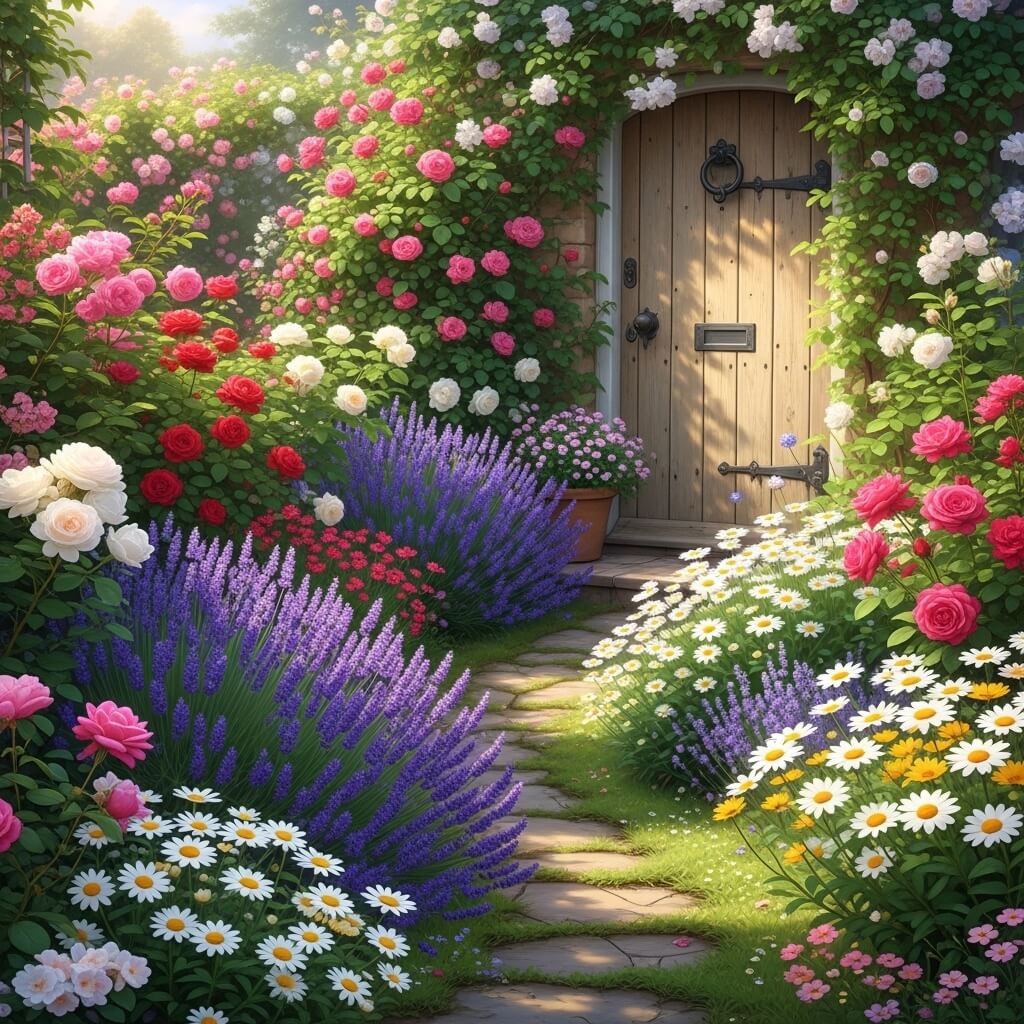
Okay, complete 180 from the minimal vibe. If you’re more into that English countryside aesthetic where everything looks slightly wild but somehow perfect, cottage style is your jam.
Picture this: overflowing flower borders in soft pastels, a charming stone or brick pathway that meanders (yes, meanders!), and that lived-in look that screams “I’ve been gardening here for decades” even if you moved in last month. IMO, cottage gardens are the most forgiving design style because they’re supposed to look a little chaotic.
I helped my aunt create one of these last spring, and watching it come together was magical. We planted:
- Roses (because you literally can’t have a cottage garden without them)
- Lavender for that purple haze and incredible smell
- Foxgloves for vertical interest
- Daisies and coneflowers for that wildflower meadow feel
- Catmint spilling over the edges of the pathway
The beauty of cottage gardens is the layered planting. You put taller plants at the back, medium-height bloomers in the middle, and low growers spilling onto the path. This creates depth and makes even a small front yard feel abundant.
The Reality Check
Now, I’ll be honest—cottage gardens aren’t low maintenance. You’ll deadhead flowers, manage the “organized chaos,” and probably spend more on plants than you planned. But there’s something deeply satisfying about cutting fresh flowers from your front yard every week. Plus, your front yard becomes a pollinator paradise, and bees basically throw parties in your garden. Win-win? 🙂
Drought-Resistant Front Yard Xeriscape Layout
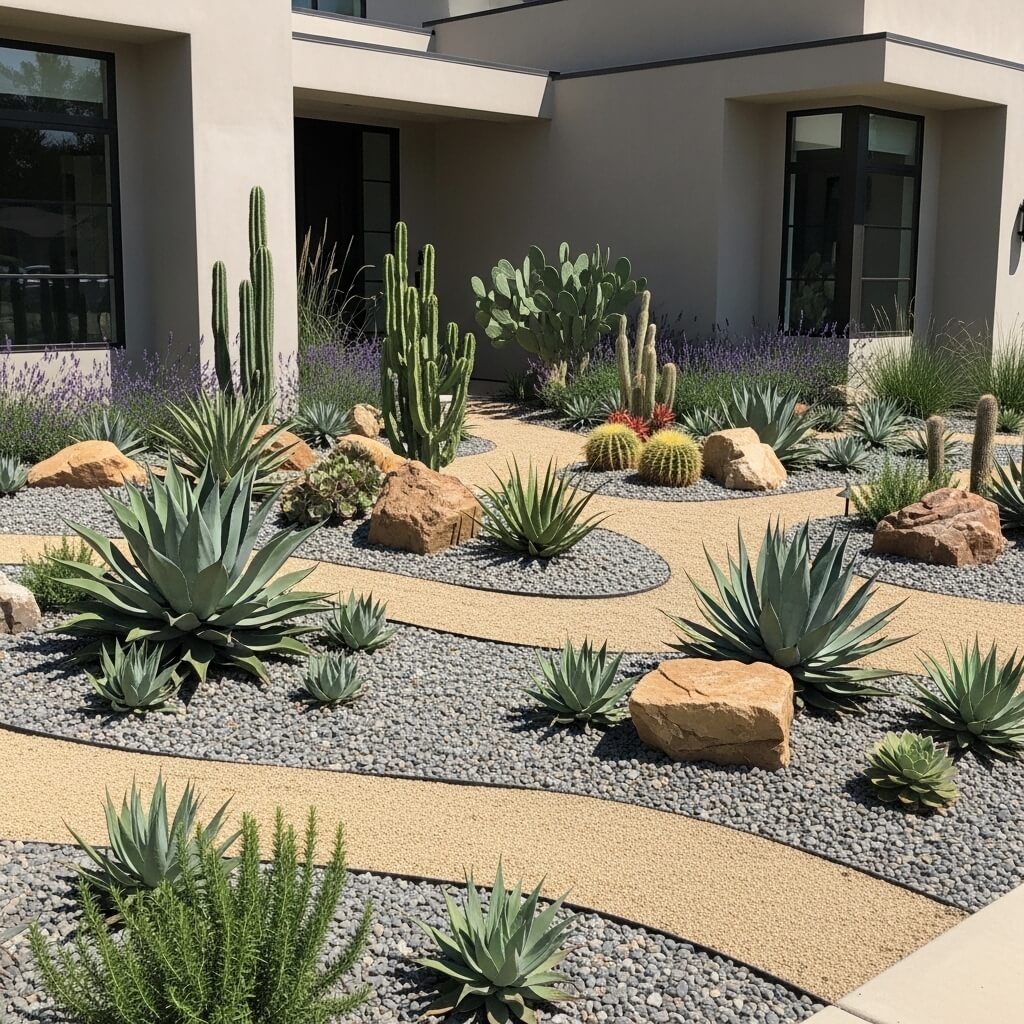
Let’s talk about the elephant in the room—water bills and climate change. If you live somewhere with water restrictions or you’re just tired of watching your lawn turn brown every summer, xeriscaping is your new best friend.
Xeriscaping sounds fancy, but it just means designing a landscape that needs minimal water. I converted my sister’s front yard to a xeriscape design two years ago, and her water bill dropped by 60%. Sixty percent! That’s vacation money right there.
Here’s the game plan for creating a drought-resistant front yard:
- Remove the water-hungry lawn (or most of it)
- Add drought-tolerant plants like agave, yucca, Russian sage, and sedum
- Use mulch or decorative rock to retain soil moisture
- Group plants by water needs so you’re not overwatering some to keep others alive
- Install drip irrigation for efficiency (way better than sprinklers)
The aesthetic is naturally more desert or Mediterranean, with sculptural plants taking center stage. Think spiky agaves, silvery artemisia, and those gorgeous purple blooms of salvia. You can create incredible texture and color without a single blade of thirsty grass.
Addressing the Stereotypes
Some people think xeriscape means “ugly gravel yard with cacti.” Wrong! I’ve seen xeriscapes that rival any lush garden in beauty. The key is thoughtful plant selection and good hardscaping. Use different sizes and colors of rock, add a boulder as a focal point, and choose plants with varying heights and textures.
FYI, you can even include small areas of grass if you really want it—just make them intentional accent features rather than the default setting.
Also Read: 10 Easy Terrace Garden Design Ideas for Fresh Green Vibes
Luxury Stone Walkway Front Yard Landscape
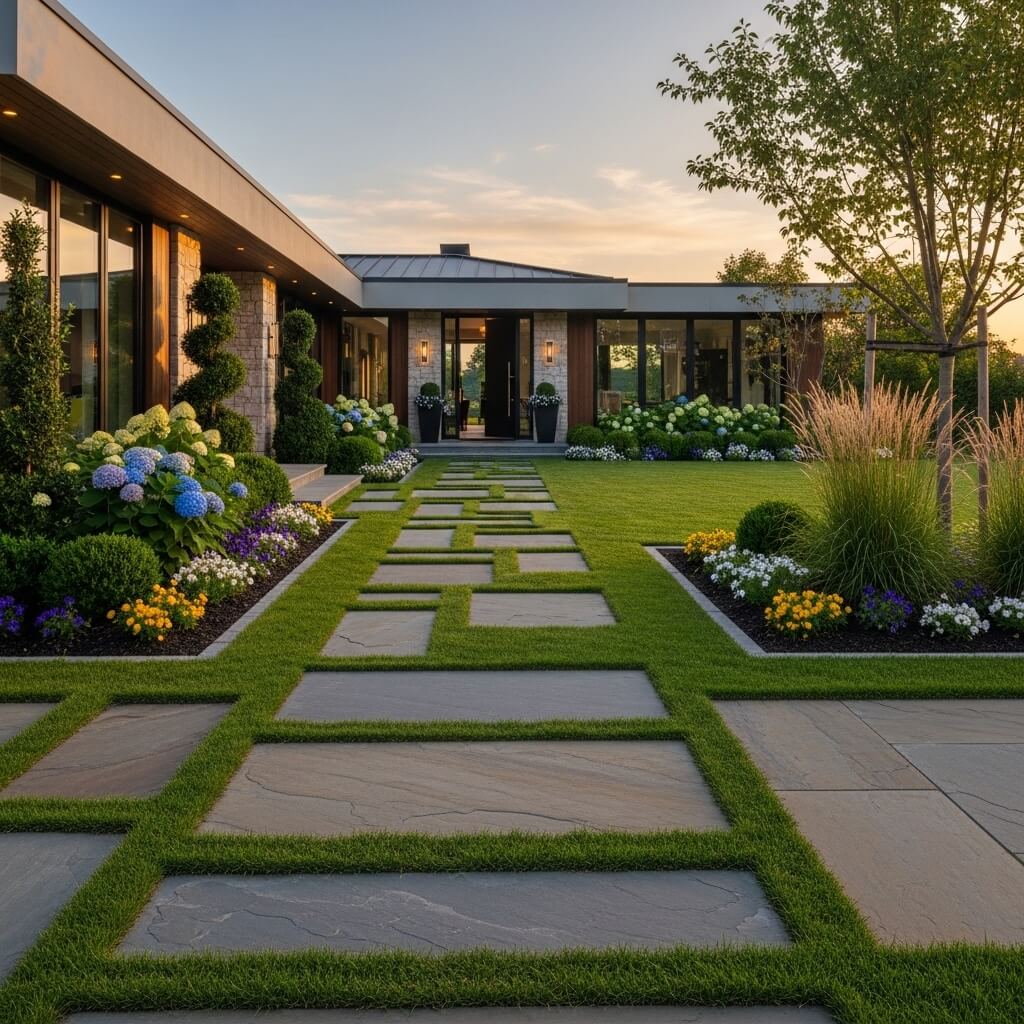
Want to feel like royalty every time you walk to your front door? A luxury stone walkway might be pricey upfront, but it transforms your entire property’s vibe.
I’m talking about natural stone like bluestone, flagstone, or travertine—materials that age beautifully and scream quality. When I visited my friend’s newly renovated home with a flagstone walkway, I literally felt fancier just walking on it. That’s the power of good materials.
The luxury factor comes from several elements:
- High-quality natural stone (not concrete pavers trying to look like stone)
- Professional installation with tight joints and perfect leveling
- Complementary landscaping like manicured boxwood hedges or ornamental grasses
- Ambient lighting along the pathway (we’ll talk more about lighting later)
- Symmetrical planting beds flanking the walkway
Creating the High-End Look
Here’s a secret: the plants surrounding your luxury walkway matter just as much as the stone itself. You can’t put a $10,000 bluestone pathway through a yard of weeds and expect it to look luxurious.
I recommend evergreen shrubs for structure, a feature tree (maybe a Japanese maple or ornamental cherry), and seasonal color from annuals you swap out. The maintenance commitment is real, but so is the curb appeal and property value boost.
Also, consider the color palette. Luxury landscapes often stick to a limited color scheme—maybe greens with white flowers, or greens with purple accents. This creates sophistication rather than that “bought every plant at the nursery” look we’ve all been guilty of.
Small Front Yard Vertical Garden Design
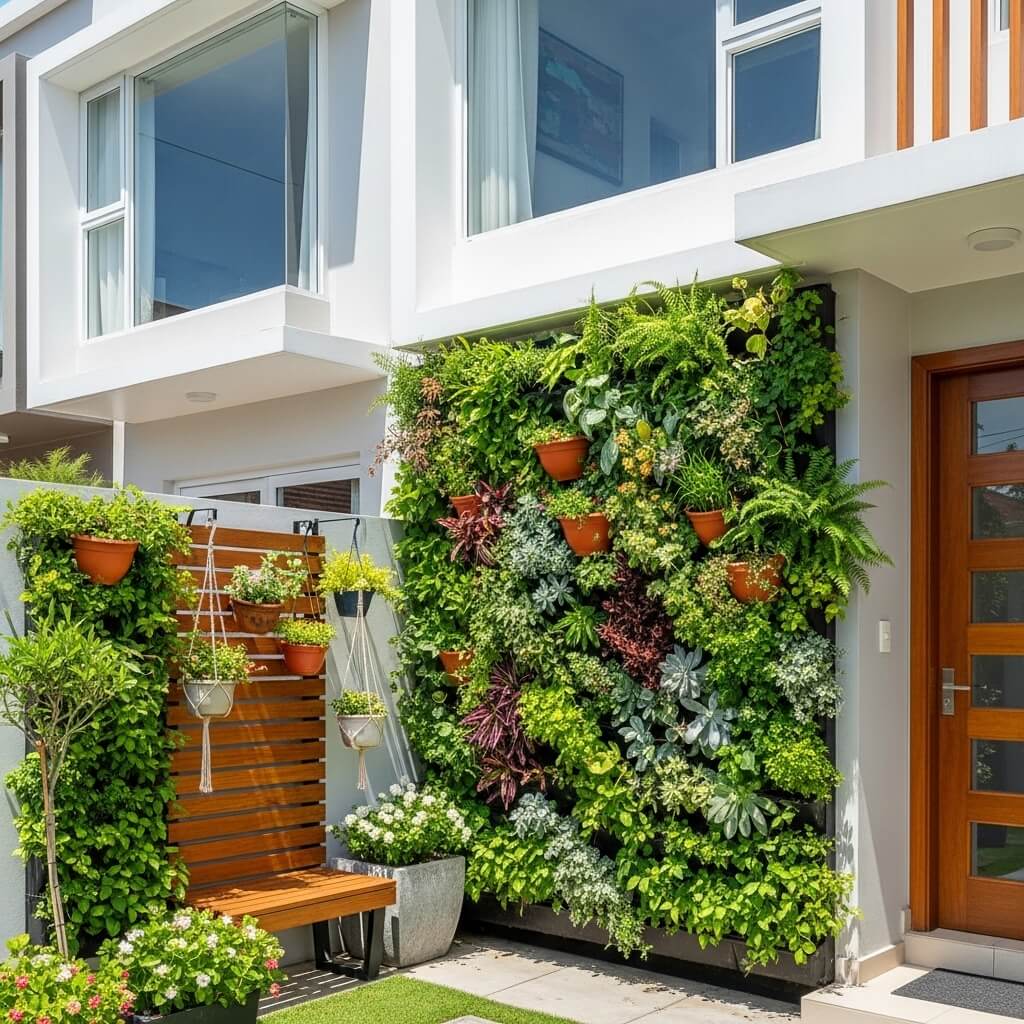
Got a tiny front yard? Join the club. But here’s where we get creative—when you can’t grow out, you grow up!
Vertical gardens maximize limited space by using walls, fences, and vertical structures to add greenery. I installed vertical planters on my narrow side yard, and suddenly I had room for herbs, flowers, and even some trailing succulents. The transformation was incredible, and people constantly ask about it.
Your vertical garden options include:
- Wall-mounted planters in geometric patterns
- Trellises with climbing plants like clematis, jasmine, or climbing roses
- Modular living wall systems (fancy but effective)
- Hanging planters from porch overhangs or arbors
- Stacked tiered planters that create height without taking floor space
The visual impact is immediate. A blank wall or fence becomes a living, breathing feature that adds color, texture, and personality. Plus, vertical gardens often become conversation starters because they’re still relatively uncommon in residential front yards.
Practical Considerations
Let me hit you with some real talk—vertical gardens need consistent watering. Plants in containers dry out faster than those in the ground, and if they’re up high, you might not notice they’re struggling until it’s too late.
I solved this with a drip irrigation system on a timer. Initial setup took a weekend and maybe $150 in materials, but now my vertical garden waters itself. Modern problems, modern solutions :/
Also, think about weight and structural support. If you’re mounting heavy planters to your house, make sure you’re hitting studs or using proper anchors. Nobody wants their gorgeous vertical garden crashing down during the first windstorm.
Symmetrical Green Lawn with Center Feature Tree
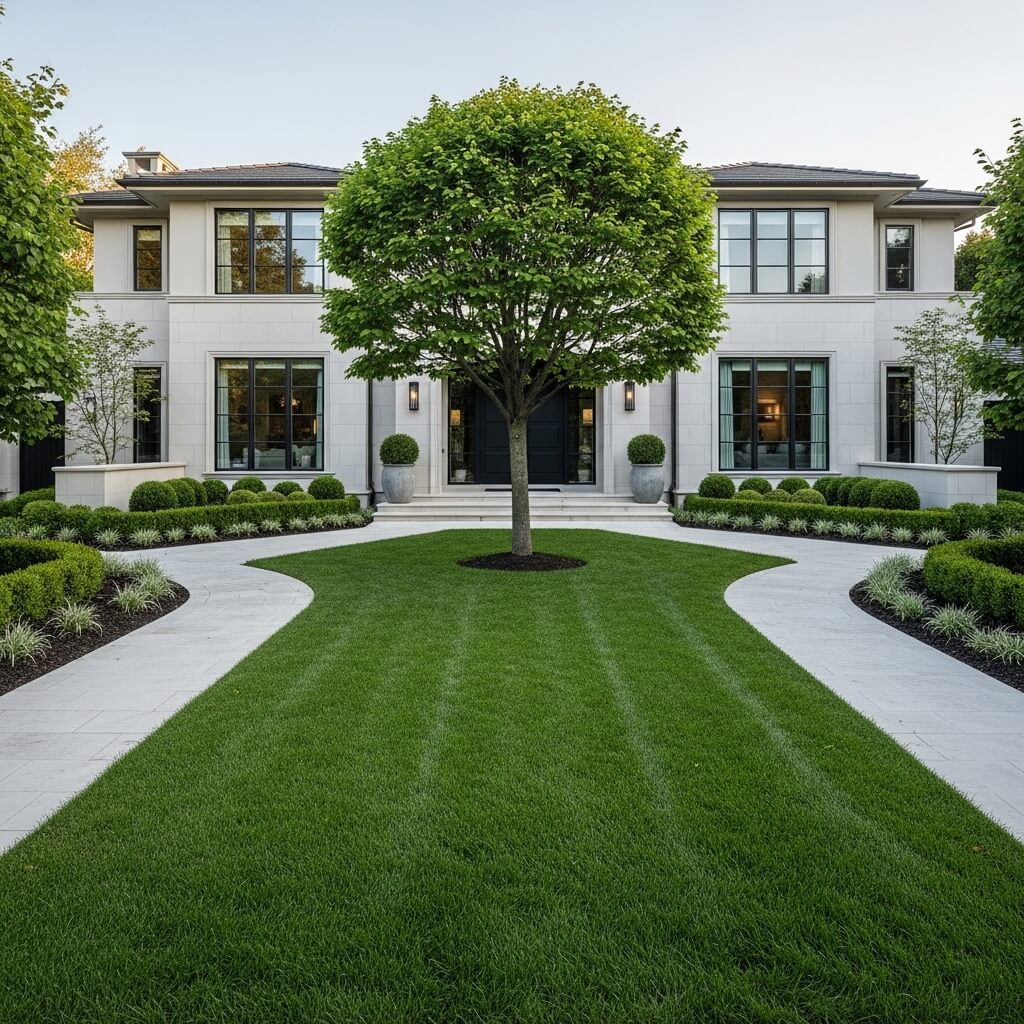
Sometimes you want classic elegance without overthinking it. Enter the symmetrical lawn design with a statement tree.
This design is timeless for a reason. You maintain a manicured green lawn, keep it symmetrically balanced, and plant one knockout tree as your focal point. I’m talking about specimens like:
- Japanese Maple (Acer palmatum) for stunning fall color and sculptural form
- Magnolia for those incredible spring blooms
- Flowering Dogwood for multi-season interest
- Redbud for early spring purple flowers
- Weeping Cherry for dramatic, cascading branches
The tree becomes your yard’s anchor and conversation piece. Everything else supports it. You might add simple hedge lines along the property borders, maybe some foundation plantings near the house, but the tree is the star.
Why This Works
Ever notice how formal gardens and estate homes often use this approach? There’s psychological power in symmetry—it reads as intentional, well-maintained, and established. Your brain recognizes the order and interprets it as “someone cares about this property.”
Plus, the maintenance is straightforward. Mow the lawn, prune the tree annually, edge the beds—that’s basically it. No complex plant combinations, no worrying about bloom times, just clean and classic.
I will say this design works best with medium to large front yards. If you’re working with a tiny space, a big tree might overwhelm rather than enhance. Know your proportions.
Also Read: 10 Lovely Home Garden Design Ideas for Aesthetic Backyard Charm
Japanese Zen Inspired Front Yard Garden

Alright, let’s get zen. Japanese-inspired gardens bring such a calming vibe that your front yard becomes a daily meditation spot (or at least looks like one).
The principles here are about balance, simplicity, and natural beauty. When I visited Japan a few years back, I became obsessed with their approach to landscape design. Everything has meaning, nothing is random, and the effect is deeply peaceful.
Key elements of a Zen-inspired front yard:
- Carefully raked gravel or sand representing water
- Stepping stones creating a meandering path
- Moss covering ground and rocks
- Carefully pruned shrubs like azaleas or Japanese holly
- A water feature (even a small bamboo fountain adds ambiance)
- Natural stone arrangements in odd numbers (3s and 5s)
- Bamboo fencing or screening for privacy
The color palette stays mostly greens, grays, and natural stone tones. You’re not going for explosive color; you’re creating a serene, contemplative space. The textures do the talking—smooth river rocks against rough stone, soft moss against hard pavers, the delicate leaves of a Japanese maple against a simple fence.
Getting the Balance Right
Here’s where people mess up Zen gardens: they add too much. The whole point is restraint and intentionality. Every rock placement should feel purposeful (even if you’re secretly just guessing).
I recommend starting with one or two Zen elements rather than going full-on temple garden immediately. Maybe add a gravel section with a few beautiful rocks, or plant a Japanese maple with an understory of moss. Build from there as you develop your eye for the aesthetic.
Colorful Seasonal Flower Front Yard Display
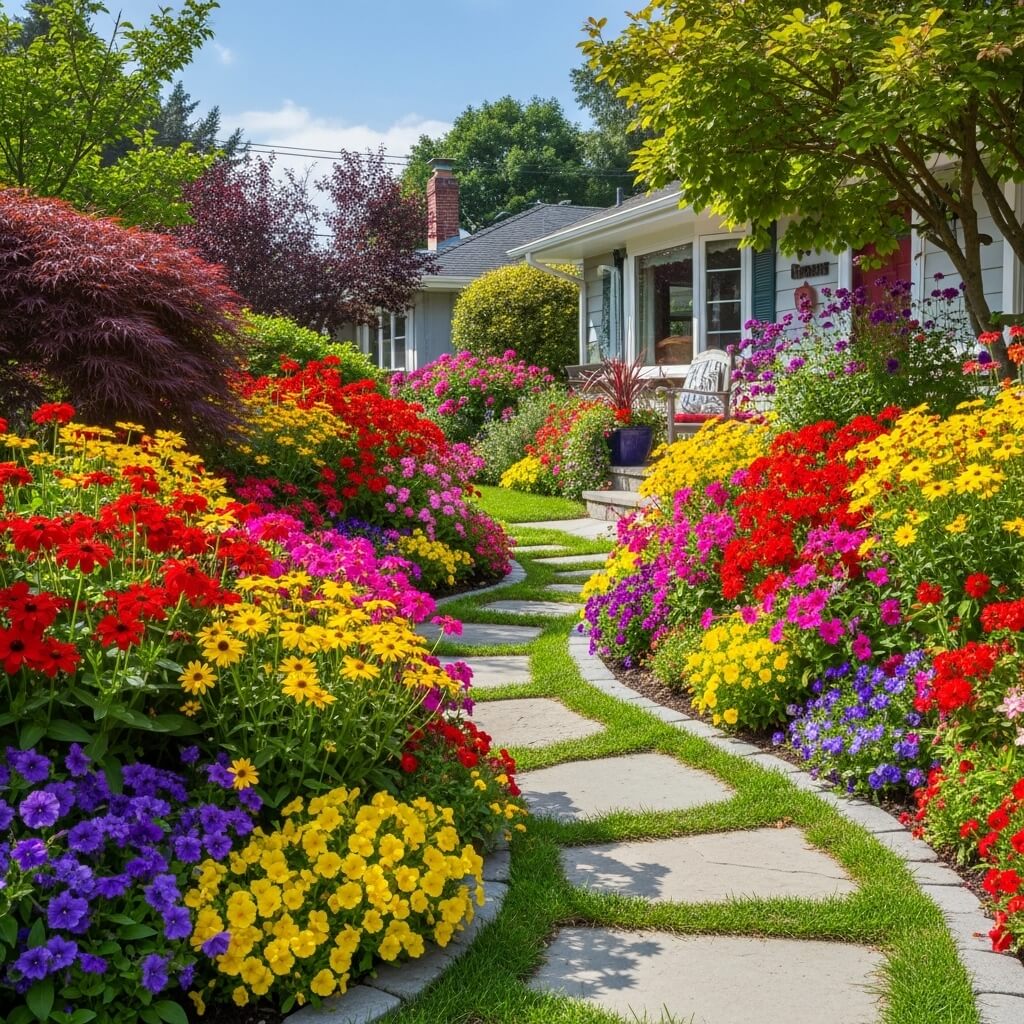
Want your front yard to be the neighborhood’s mood ring, changing with the seasons? A rotating seasonal flower display gives you that constantly fresh, always-blooming look.
This approach requires planning, but the payoff is huge. You basically design your front yard to have something spectacular happening in every season. I started doing this three years ago, and now neighbors literally time their walks to pass my house. (Okay, that might be my imagination, but the compliments are real!)
Here’s how to plan seasonal rotation:
Spring:
- Tulips, daffodils, and hyacinths for early color
- Pansies and violas for cool-season blooms
- Flowering shrubs like forsythia and lilac
Summer:
- Petunias, geraniums, and begonias
- Roses hitting their peak
- Daylilies and coneflowers for heat tolerance
Fall:
- Mums in oranges, burgundies, and yellows
- Ornamental cabbage and kale
- Asters for late-season pollinator support
Winter:
- Evergreens for structure
- Hellebores (Christmas rose) in milder climates
- Winterberry holly for red berry interest
The trick is planting in layers. You have permanent plants (shrubs, perennials) that form your garden’s bones, then you add seasonal annuals and bulbs for the wow factor.
The Real Talk on Maintenance
Let’s not pretend this is low maintenance—it’s definitely not. You’re planting bulbs in fall, swapping annuals 2-3 times per year, deadheading spent blooms, and staying on top of fertilizing.
But if you love playing in the dirt and watching things bloom (guilty!), this design style is incredibly rewarding. Plus, you can adjust your commitment level. Maybe you go all-out in spring and fall but keep it simple in summer. Your garden, your rules.
Gravel and Succulent Low-Maintenance Front Yard
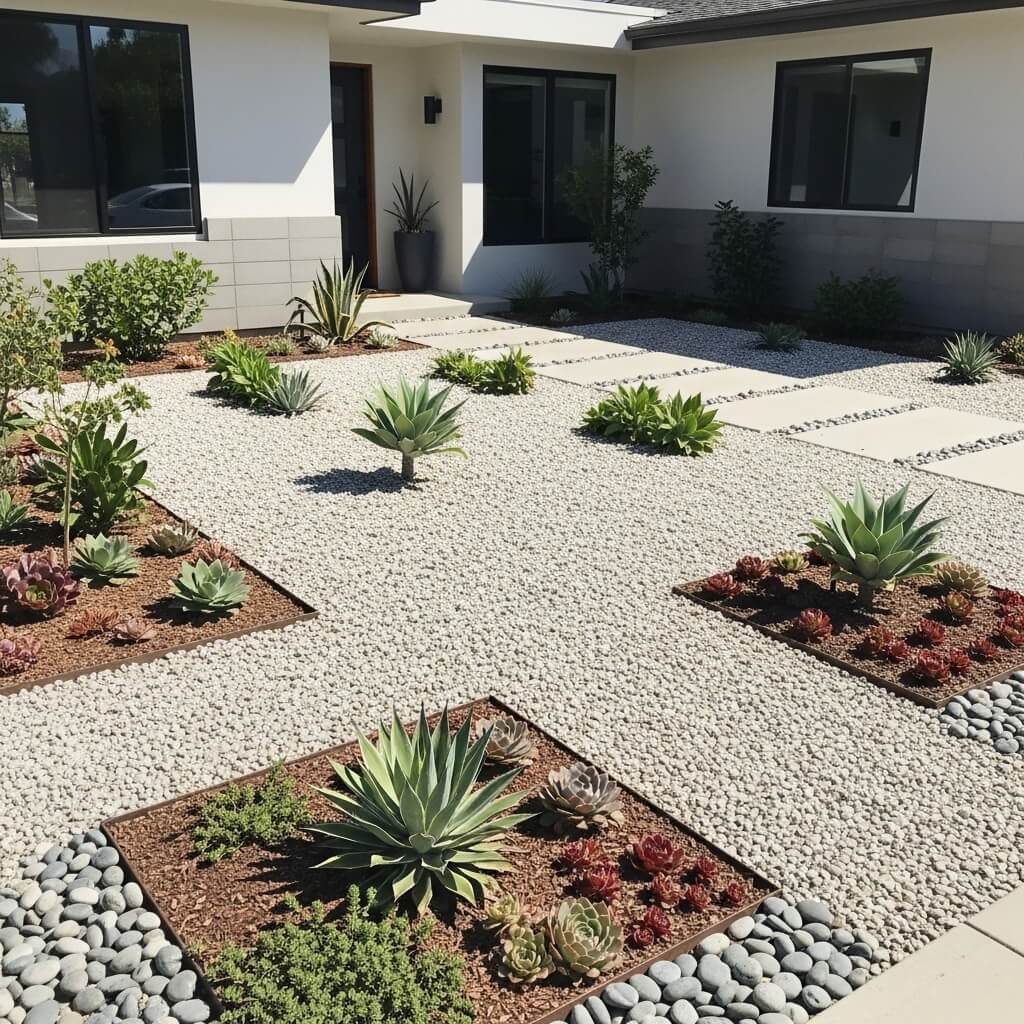
Can we talk about how succulents are basically the perfect plant? They’re drought-tolerant, come in wild colors and shapes, and forgive you for forgetting they exist. Pair them with gravel, and you’ve got a front yard that practically maintains itself.
This design is perfect for people who want an attractive front yard without becoming a weekend gardener. I convinced my perpetually busy brother to try this, and he’s gone from “plant killer” to someone with a legitimately impressive succulent garden.
The foundation is simple:
- Remove grass and install landscape fabric (prevents weeds)
- Add 2-4 inches of decorative gravel in colors that complement your home
- Plant succulents in groupings for visual impact
- Add a few rocks or boulders for scale and interest
- Install minimal drip irrigation or just water occasionally by hand
The succulent variety is endless. You can choose from:
- Echeveria in those perfect rosette shapes
- Sedum varieties in greens, reds, and purples
- Agave for dramatic spikes and structure
- Aloe for both beauty and practicality
- Ice plant for ground cover with bonus flowers
What I love about this design is the texture play. The smooth gravel contrasts with the fleshy, sculptural succulents. Add a few spiky varieties and some trailing types, and you’ve got a dynamic landscape that changes with the seasons (yes, succulents change too—some get incredible color in cooler months).
Making It Look Intentional, Not Lazy
Here’s the thing—gravel and succulents can read as “I gave up on my yard” if you’re not careful. The difference between “desert chic” and “abandoned lot” is intentional design.
Group your succulents in odd numbers (3, 5, 7) rather than spacing them evenly. Create height variation with different plant sizes and maybe a large pot or urn. Keep the gravel raked occasionally so it looks maintained. These small touches separate “low maintenance” from “no maintenance.”
Also Read: 10 Modern Vegetable Garden Design Ideas for Stylish Gardens
Contemporary Front Yard with Lighting Accents
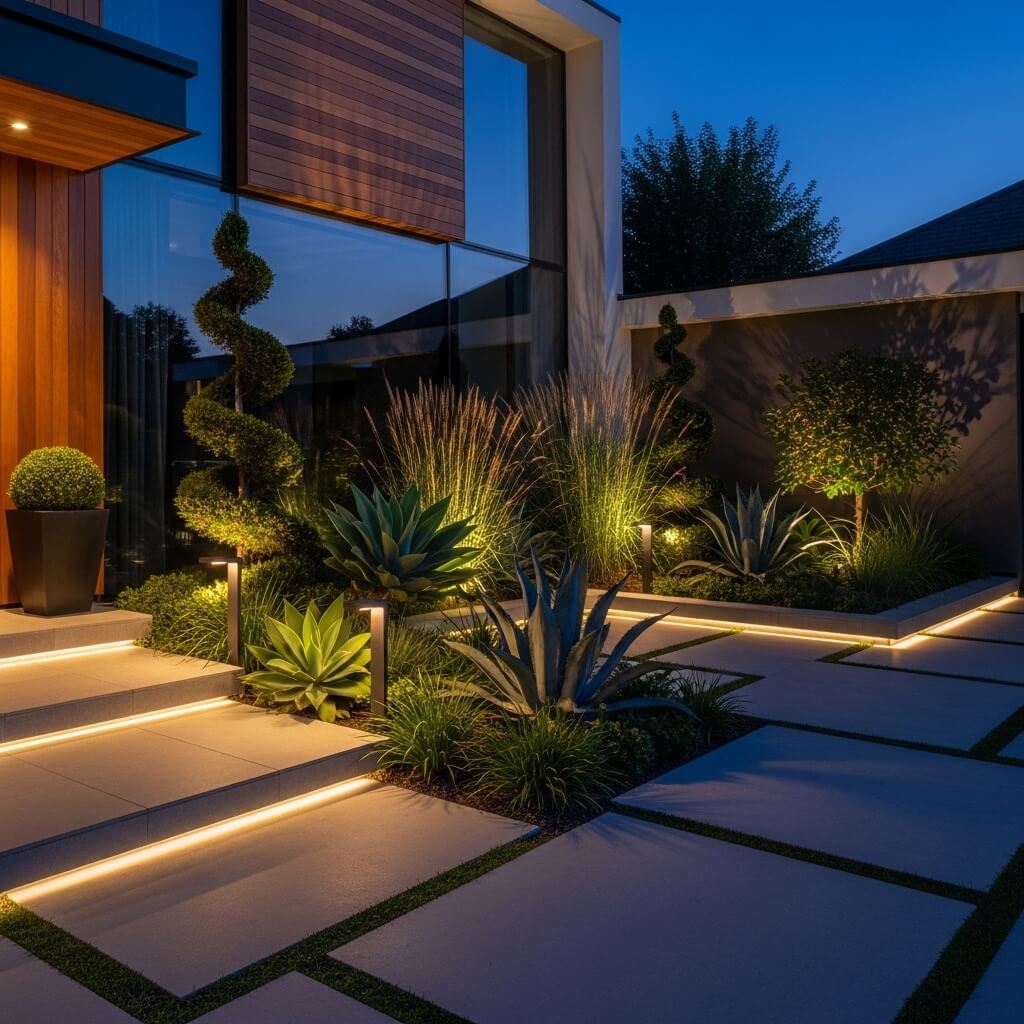
Let’s end with the design element that literally makes everything better: strategic lighting. A contemporary front yard with proper lighting isn’t just beautiful during the day—it becomes absolutely magical at night.
I upgraded my front yard lighting last fall, and the difference is unreal. My home went from “nice house” to “that house that glows like a boutique hotel.” And here’s the bonus: good lighting dramatically improves safety and security.
Contemporary lighting design includes:
- Pathway lighting to guide visitors and create ambiance
- Uplighting on feature trees or architectural elements
- Downlighting from eaves or structures for subtle illumination
- Accent lights highlighting specific plants or garden features
- LED strips for modern, linear effects
The contemporary approach favors clean-lined fixtures in materials like stainless steel, black metal, or concrete. You’re going for sleek and minimal rather than ornate and decorative. The light itself is the feature, not the fixture.
Layering Light Like a Pro
Professional landscape lighting uses multiple layers at different heights and intensities. You don’t just blast everything with flood lights (please don’t do this—your neighbors will hate you).
Instead, you create depth with:
- Low-level path lights casting pools of light every 8-10 feet
- Medium-height accent lights illuminating mid-sized plants or structures
- Uplights sending beams up through tree canopies or along walls
I also strongly recommend LED bulbs with warm white color temperatures (around 2700-3000K). Cool white LEDs make your yard look like a parking lot. Warm light creates that inviting, high-end atmosphere you’re after.
The technology has gotten so good that you can now control everything from your phone, set timers, and even change light intensity. My system automatically dims to 30% brightness after 10 PM, which keeps a nice glow without being obnoxious.
Budget-Friendly Lighting Tips
Professional landscape lighting installation can cost thousands. If that’s not in the budget, you can absolutely DIY this project. I started with:
- Solar path lights (technology has improved dramatically)
- Low-voltage LED kits you can install yourself
- Smart bulbs in existing fixtures for programmable control
Start with the essentials—pathway safety and one or two accent features—then build from there. Even basic lighting transforms your front yard’s nighttime presence.
Bringing It All Together
Look, your front yard sets the tone for your entire property. It’s the first thing you see when you come home and the first impression visitors get of your space. Why not make it something that genuinely makes you happy?
The ten designs we’ve covered range from minimal and modern to lush and traditional, from water-wise to flower-packed, from DIY-friendly to professionally installed. There’s genuinely something here for every style preference, climate, budget, and maintenance commitment level.
My personal approach? I cherry-pick elements from different styles. My front yard has the clean pathway from minimal modern, some drought-tolerant plants from xeriscaping, and the lighting strategy from contemporary design. Your front yard doesn’t have to be just one thing—it should reflect what you love and what works for your lifestyle.
The biggest mistake people make is thinking they need to redo everything at once. Start with one element—maybe a better pathway, or improved lighting or a feature tree. Build on that foundation over time. Your front yard can evolve with you, and honestly, that ongoing creative process is half the fun.
So which design spoke to you? Are you ready to finally tackle that front yard project you’ve been thinking about? Grab some graph paper, measure your space, and start dreaming. Your front yard has potential—it’s just waiting for you to unlock it. And trust me, there’s nothing quite like the satisfaction of pulling into your driveway and thinking, “Yeah, I created that.” Now get out there and make your neighbors jealous. You’ve got this.